
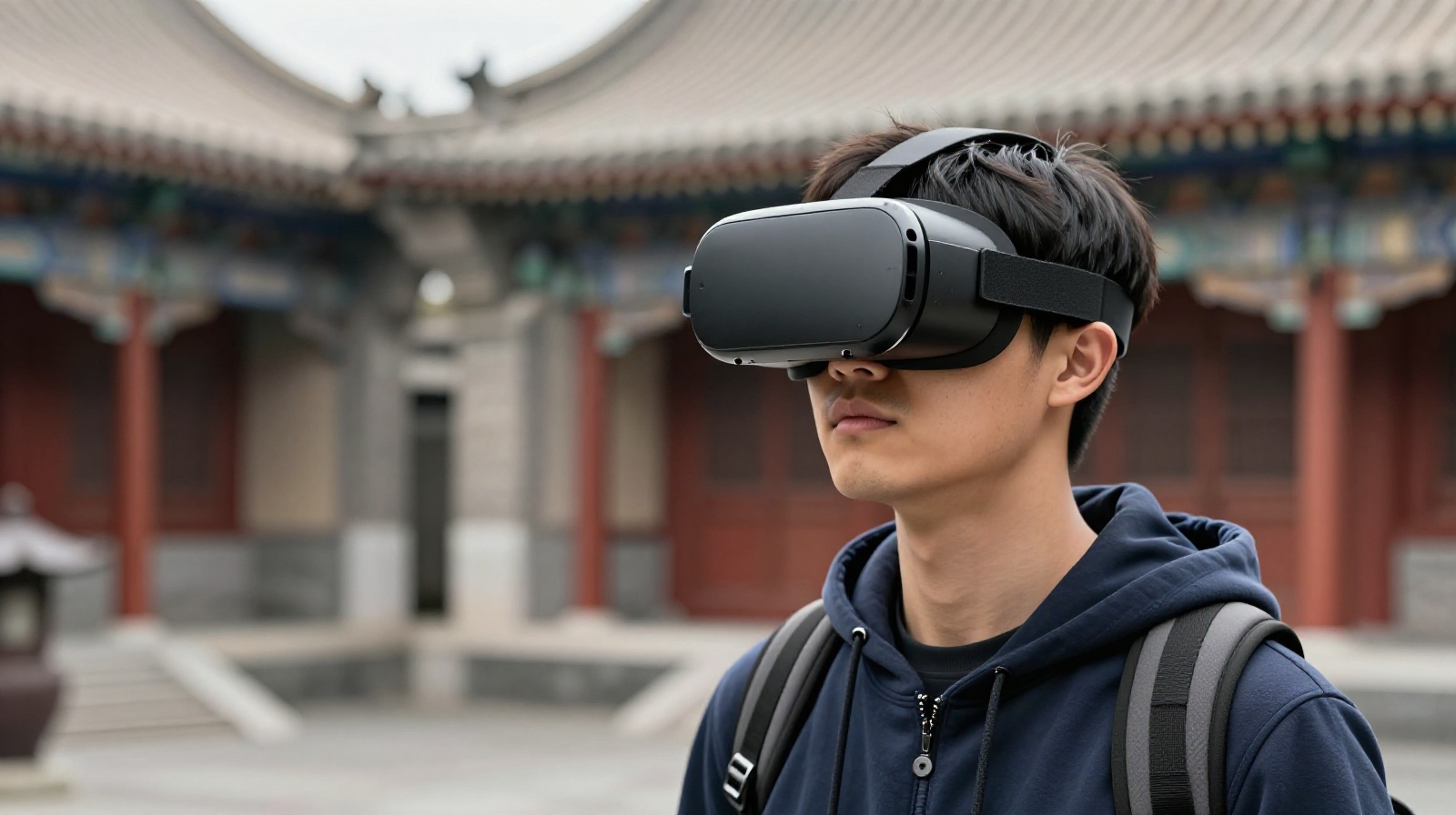

The Digital Gatekeeper
Li Wei stands before the massive stone gates of the Forbidden City in Beijing. He is not holding a ticket, nor is he waiting in the long queue that snakes around the block. Instead, he wears a lightweight VR headset and holds a controller that vibrates gently as his virtual hand touches the ancient wooden doors. Inside his headset, the courtyard is not just restored to its Ming Dynasty glory; it is populated by digital figures in period clothing, walking through the halls. For Li, a university student in Shanghai, this is not a replacement for visiting Beijing, but a way to experience a “forbidden” version of history before he ever buys a plane ticket.
This scene is becoming increasingly common across China. In the post-pandemic era, the integration of Virtual Reality (VR), Augmented Reality (AR), and high-definition live-streaming has moved from experimental novelty to standard infrastructure in cultural tourism. The goal is no longer just to dazzle tourists with technology, but to solve real problems: overcrowding, accessibility for the elderly or disabled, and the preservation of fragile historical sites.
Technology as a Time Machine
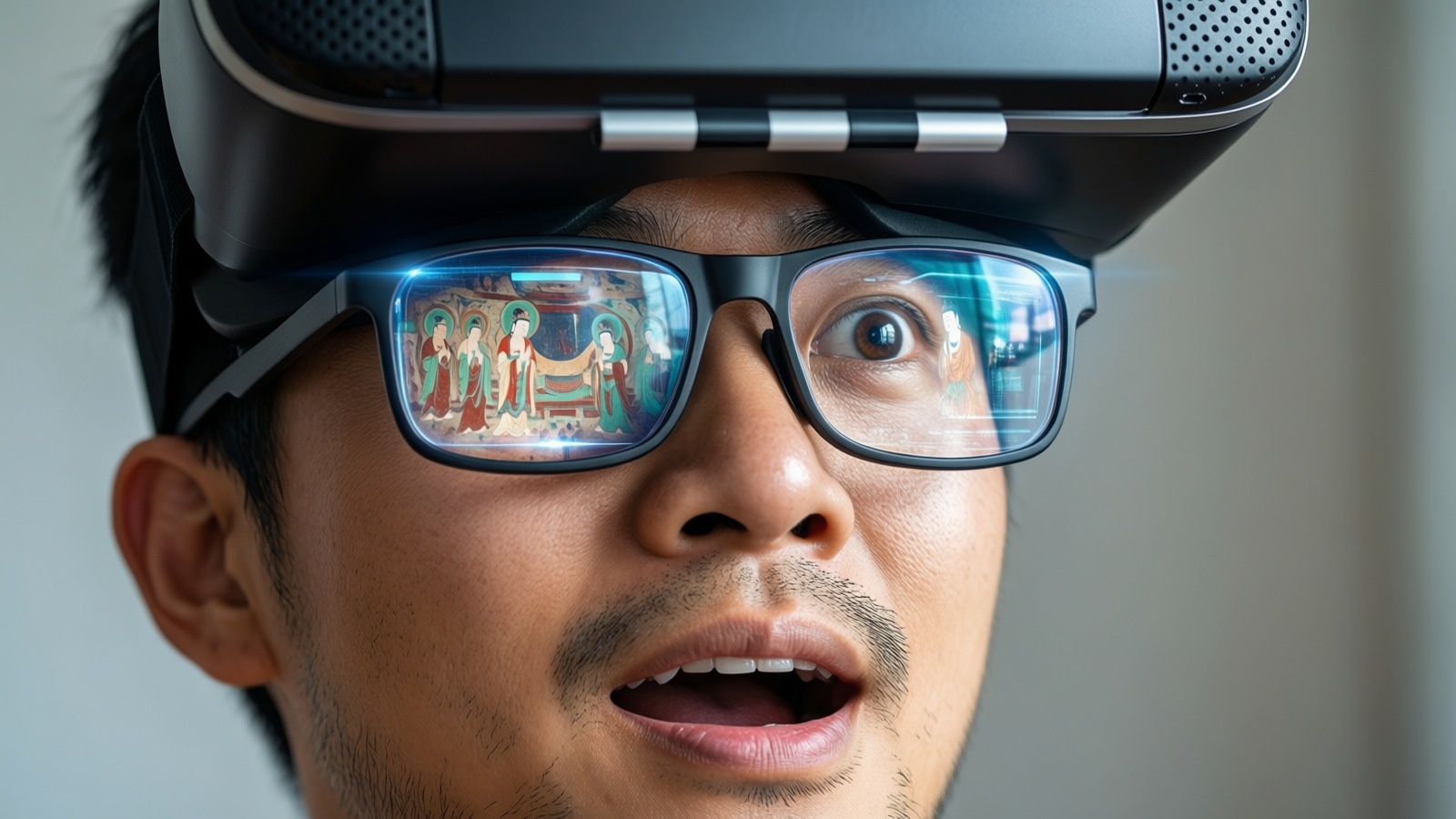
The technological experience in China’s top tourist destinations has shifted from simple audio guides to immersive historical reconstruction. At the Dunhuang Mogao Caves, a UNESCO World Heritage site in Gansu province, physical access to the most delicate murals is strictly limited to prevent damage from humidity and carbon dioxide emitted by human breath.
Instead, visitors are guided into a dedicated digital exhibition hall. Here, VR headsets allow them to “step inside” the caves. They can zoom in on details of Buddhist paintings that would be invisible to the naked eye, or watch the colors of the murals as they appeared 1,000 years ago, restored by AI algorithms based on historical data. This is not a cartoonish simulation; it is a high-fidelity digital twin. For many Chinese tourists, this “cloud tour” offers a deeper understanding of the culture than a rushed physical visit would allow.
The Live-Streaming Economy
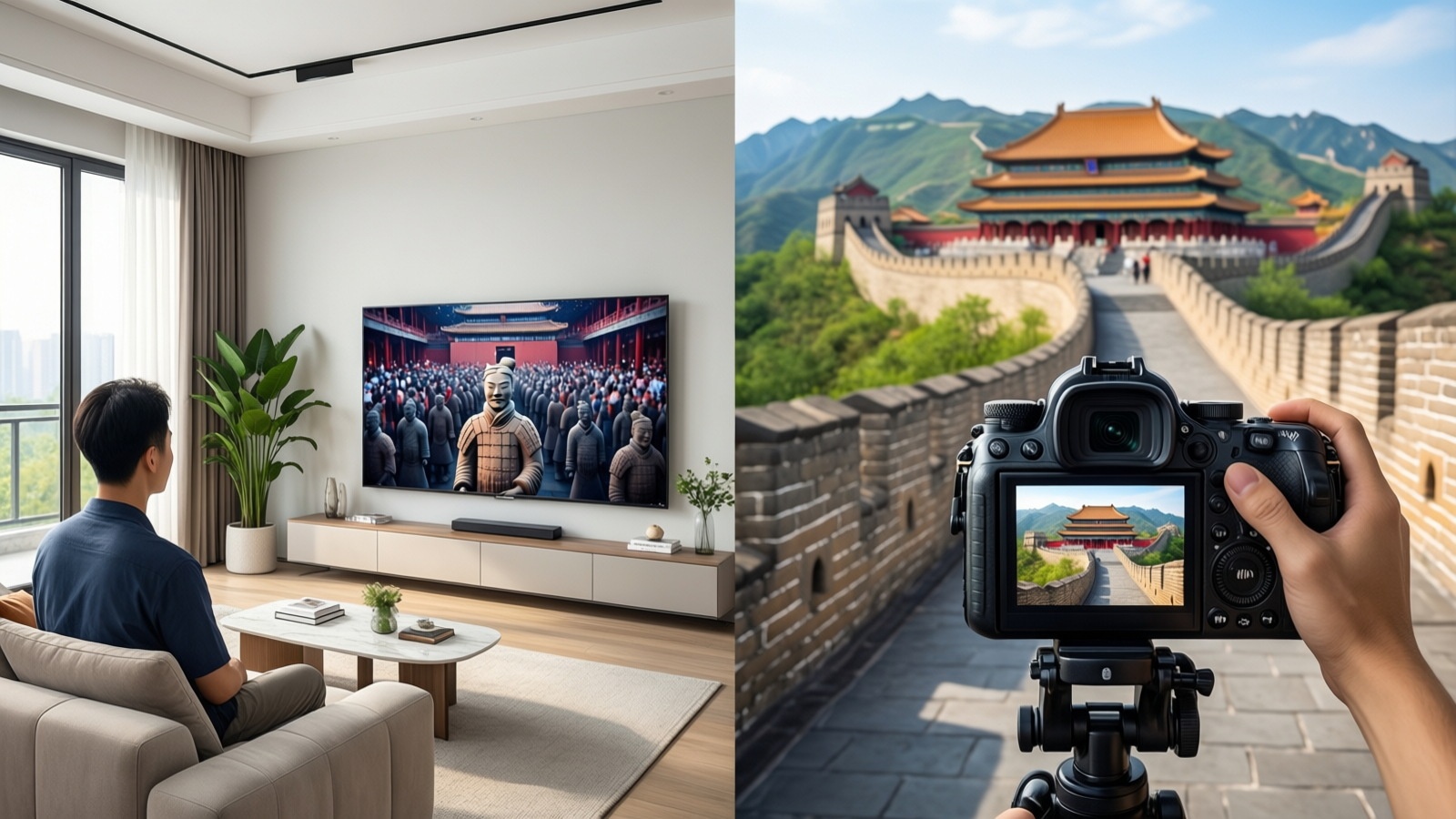
While VR offers immersion, live-streaming offers connection. In China, live-streaming is not limited to selling cosmetics or electronics; it has become a powerful tool for cultural tourism. Imagine a grandmother in a small town in Sichuan province sitting at home, watching a live video feed from the Terracotta Warriors in Xi’an. The host, often a local guide or even an archaeologist, doesn’t just show the statues. They answer questions from the chat in real-time, explain the historical context, and even take the camera to quiet corners of the museum that tour groups usually miss.
This model has created a new revenue stream for cultural institutions. Beyond traditional ticket sales, museums and scenic areas now sell “digital collectibles” (NFTs in the Chinese context) and virtual tour packages. These are not speculative assets for traders, but digital souvenirs—verified ownership of a high-resolution 3D model of a artifact—that users can keep forever. This shift allows cultural sites to monetize their digital presence without risking physical wear and tear on heritage objects.
Bridging the Gap, Not Replacing It
Despite the sophistication of these technologies, there is a clear consensus among users and industry experts: technology is an enhancer, not a substitute. The tactile reality of walking through a bamboo forest in Zhangjiajie, or the smell of street food in Chengdu, cannot be digitized. However, for those who cannot travel due to financial constraints, physical disabilities, or time limitations, these tools democratize access.
A recent survey by a major Chinese travel platform indicated that over 60% of young tourists use virtual tours as “pre-travel research.” They explore sites virtually to plan their itineraries, ensuring that when they do visit, their time is spent efficiently. For the elderly or those with mobility issues, VR provides a way to engage with national heritage that was previously inaccessible. This dual approach—using technology to prepare for and extend the physical experience—suggests a future where tourism is more inclusive, rather than less human.
The Future of Travel
As 5G networks expand and VR hardware becomes lighter and cheaper, the line between the physical and digital tour will continue to blur. We are likely to see more “phygital” experiences, where a physical visit is augmented by real-time data overlays. For example, pointing a smartphone at a ruined temple might instantly reveal its original structure and history through an app.
For the global tourism industry, China’s experiment offers a valuable lesson. Technology does not need to replace the joy of travel; it can amplify it. By removing barriers to entry and providing deeper layers of context, VR and live-streaming are not killing traditional tourism. They are expanding the definition of what it means to visit a place, making the world’s heritage accessible to anyone with an internet connection.