

A Morning in Wuyuan
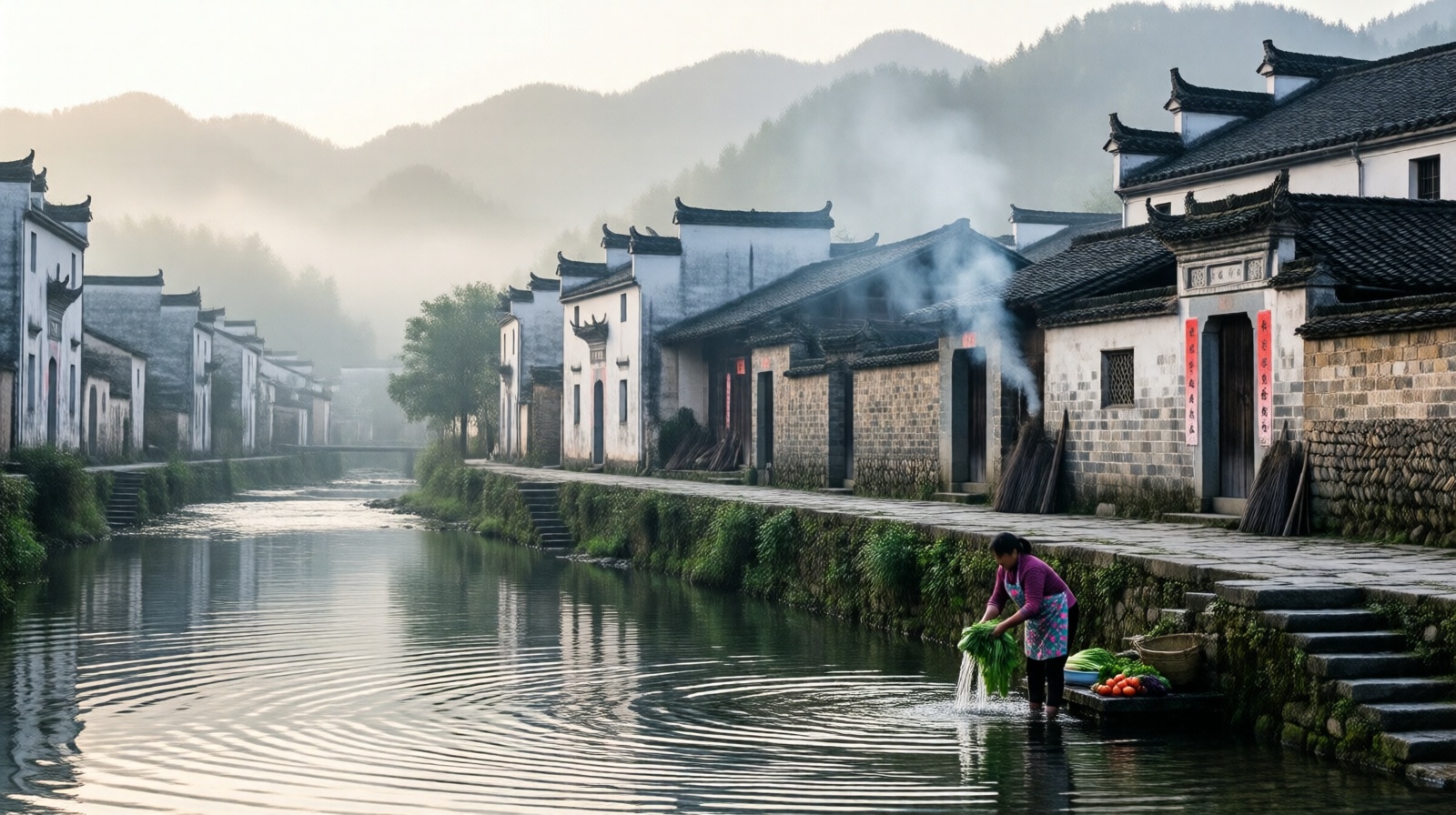
At 6:30 a.m., the village of Likeng is still wrapped in mist. On the stone steps by the river, a woman in a floral apron kneels to wash vegetables. A few meters away, an old man lifts the wooden lid of a steaming bamboo basket — the first batch of tofu for the day is ready. Smoke from kitchen chimneys mixes with the fog rising off the water. No tour groups have arrived yet. For the next hour, this ancient village in northeastern Jiangxi province belongs entirely to its residents.
Wuyuan is often described as “the most beautiful countryside in China.” The county covers 2,900 square kilometers, dotted with hundreds of villages dating back to the Ming and Qing dynasties. Their white walls, dark tiles, and carved wooden beams have been photographed countless times. But the images rarely show the people who keep these villages alive — the farmers, craftsmen, and shopkeepers whose daily routines are woven into the stone lanes and rivers that visitors admire.
This is the central tension in Wuyuan: how do you preserve a living culture while welcoming millions of tourists each year? The answer is not simple. It involves a mix of economic opportunity, local decision-making, and a stubborn attachment to ways of life that have survived for centuries.
Daily Life: More Than Just Scenery
In Huangling, a village known for its hilltop terraces and “shaiqiu” (sun-drying), the colorful crop displays are not a tourist invention. Farmers have dried grain in this way for generations. In autumn, they hang bright red chili peppers, golden corn, and orange persimmons on wooden racks to preserve them for the winter. Tourists snap photos; villagers go about their chores. The custom is both practical and beautiful, which is why it endures.

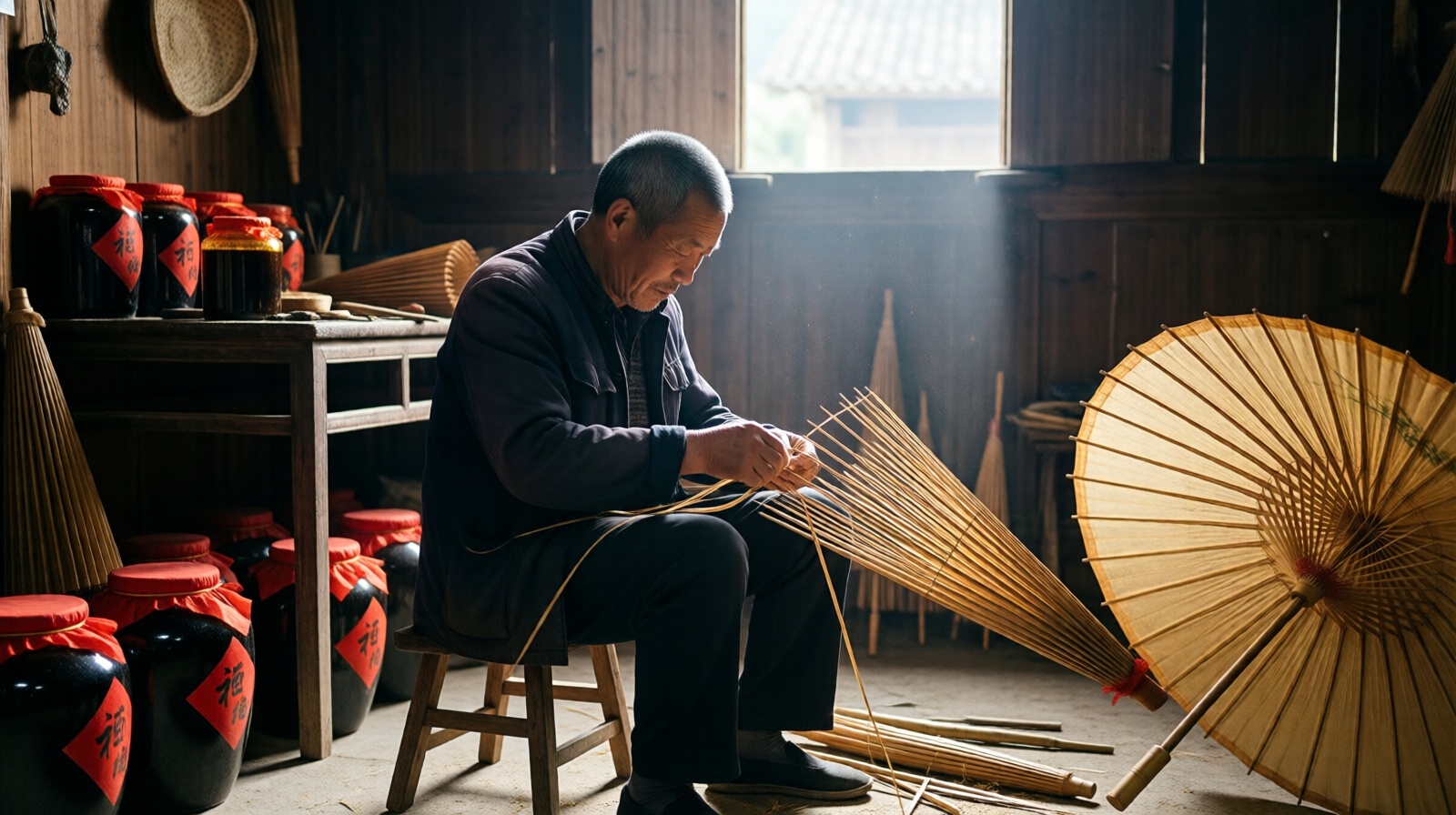
Down the road in Wangkou, a man in his sixties makes traditional oil-paper umbrellas. His workshop smells of tung oil and bamboo. He splits thin bamboo strips, binds them into a frame, then stretches paper over it and brushes on several coats of oil to make it waterproof. Each umbrella takes about three days to complete. He sells most of them to tourists, but some are ordered for local celebrations. “This is not a show,” he says. “I do this because it is a good craft, and I am still strong enough to work.”
In Likeng, a tofu shop opens at dawn. The owners, a couple in their late twenties, use a stone mill to grind soaked soybeans. The wife learned the recipe from her grandmother. By 8 a.m., locals line up for fresh soy milk and tofu pudding. “We could use a machine to speed things up,” the husband says, “but then the taste would change. Our customers would notice.” They have thought about selling to tourists at higher prices, but decided to keep their prices low, because their regulars are from the village.
The Ripple Effects of Tourism
Tourism has touched almost every part of Wuyuan’s economy. In the town of Jiangwan, old ancestral halls have become boutique hotels. A 28-year-old woman, Xiao Yu, left her job in Shanghai to run her family’s ancestral home as a guesthouse. She renovated the building with the help of local craftsmen, keeping the original wooden beams and replacing only the wiring. Her guests, many of them from other parts of China, come for the quiet courtyards and the view of rice terraces. “I can earn a living here,” she says. “That was not possible ten years ago.”
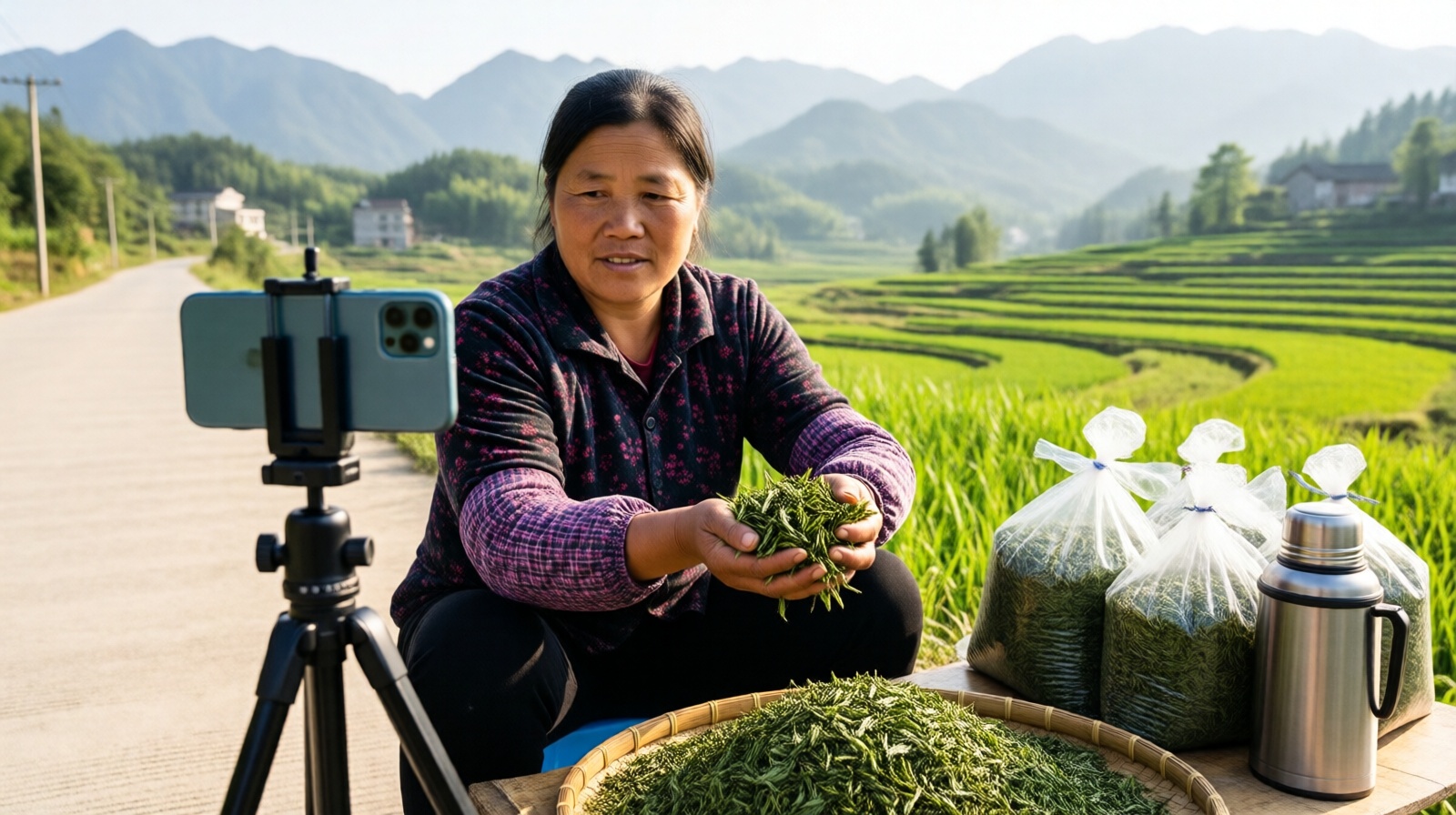
Not everyone is in the hospitality business. A tea farmer in her fifties sells her own oolong tea from a stall by the road. She has started using live-streaming apps to reach customers beyond the county. She holds up her phone to show the tea leaves in her hand, talks about the weather, and describes the brewing method. Her son, who works in a nearby town, helps her edit short videos after work. “It is a strange world,” she says with a laugh, “but if it sells tea, I will try.”
The construction trade is booming, too. Restoring an old house is a specialized job. Craftsmen who know how to carve wood, shape bricks, and mix lime mortar are in short supply. Their daily wages have climbed to levels that match urban jobs. But the demand also reveals a problem: the average age of these skilled workers is high. Few young people are willing to spend years learning the craft. Some families have started passing knowledge to apprentices, but the practice is not yet widespread.
A System of Unspoken Rules
One of the most striking aspects of Wuyuan is how well the villages manage crowds. Many communities have a “village council” made up of elected residents. In Likeng, the council has decided to cap the number of tour vehicles during peak season. When the parking lots are full, buses are turned away or rescheduled. This is not a rule imposed from above; it is a collective decision made by homeowners and shopkeepers who understand that too much crowds would harm the village’s appeal.
There are also economic incentives for preservation. The local government provides subsidies to families who repair their old houses using traditional materials and techniques. In return, the owners agree to open part of their home to visitors for a certain number of days each year. This way, private property stays private, but the public can still appreciate the heritage. The system is not perfect, but it creates a practical link between conservation and income.
Cleanliness is another shared priority. Most villages have adopted a “no litter on the ground” rule. Each household is responsible for the area in front of its door. Shopkeepers often sweep the stone paths several times a day. On busy weekends, volunteers in bright vests help direct visitors and remind them to dispose of trash properly. The result is that even after a festival, the lanes remain remarkably clean.
Concerns and Experiments
Tourism also brings complications. Some older residents complain that certain old streets have become too commercialized. In Wuyuan’s night market, bars and restaurants with loud music now occupy buildings that were once homes. A retired teacher, who has lived in Jiangwan for sixty years, shakes his head. “We want tourists to stay, but we do not want to lose our nighttime silence,” he says. The local government has tried to regulate noise, but enforcement is difficult.
Another worry is the survival of intangible heritage. The oil-paper umbrella master in Wangkou has no apprentice. The tofu couple may pass their recipe to their children, but the next generation may not want to work at 4 a.m. Some villages have started “cultural guardian” programs, funded by a portion of ticket revenue. Under these programs, selected masters receive a salary to teach their craft to young people. In Huangling, a 23-year-old man is learning bamboo weaving from a 70-year-old master. He spends four hours a day at the workshop and is paid a monthly stipend. “It’s not a lot of money, but I get to learn something real,” he says.
These are modest experiments, but they show that Wuyuan is not passive. The question of how to balance tourism and tradition is being addressed through trial and error. Sometimes mistakes are made, like the neon signs that appeared in a historic street and were later removed after protests from residents. But the fact that people push back is a good sign.
Finding Their Own Rhythm
By late afternoon, the tour buses begin to leave. The lanes become quiet. In a courtyard, a grandfather teaches his grandson to write Chinese characters with a brush. A woman hangs laundry on a bamboo pole that extends from a second-floor window. The golden light of the setting sun paints the white walls.
Wuyuan’s ancient villages are not frozen museums. They are places where people live, work, and adapt. The balance between tourism and tradition is not a fixed formula. It changes with the seasons, with the market, and with the needs of the community. What makes Wuyuan interesting is not perfection, but the ongoing negotiation between preservation and change.
As night falls, the river mirrors the warm lights of the houses. A dog barks in the distance. The restaurants have closed; the tourists have gone. The village returns to itself — until the next morning, when the mist rises again and the rhythm begins anew.
Start the discussion at forum.chinacomes.com