
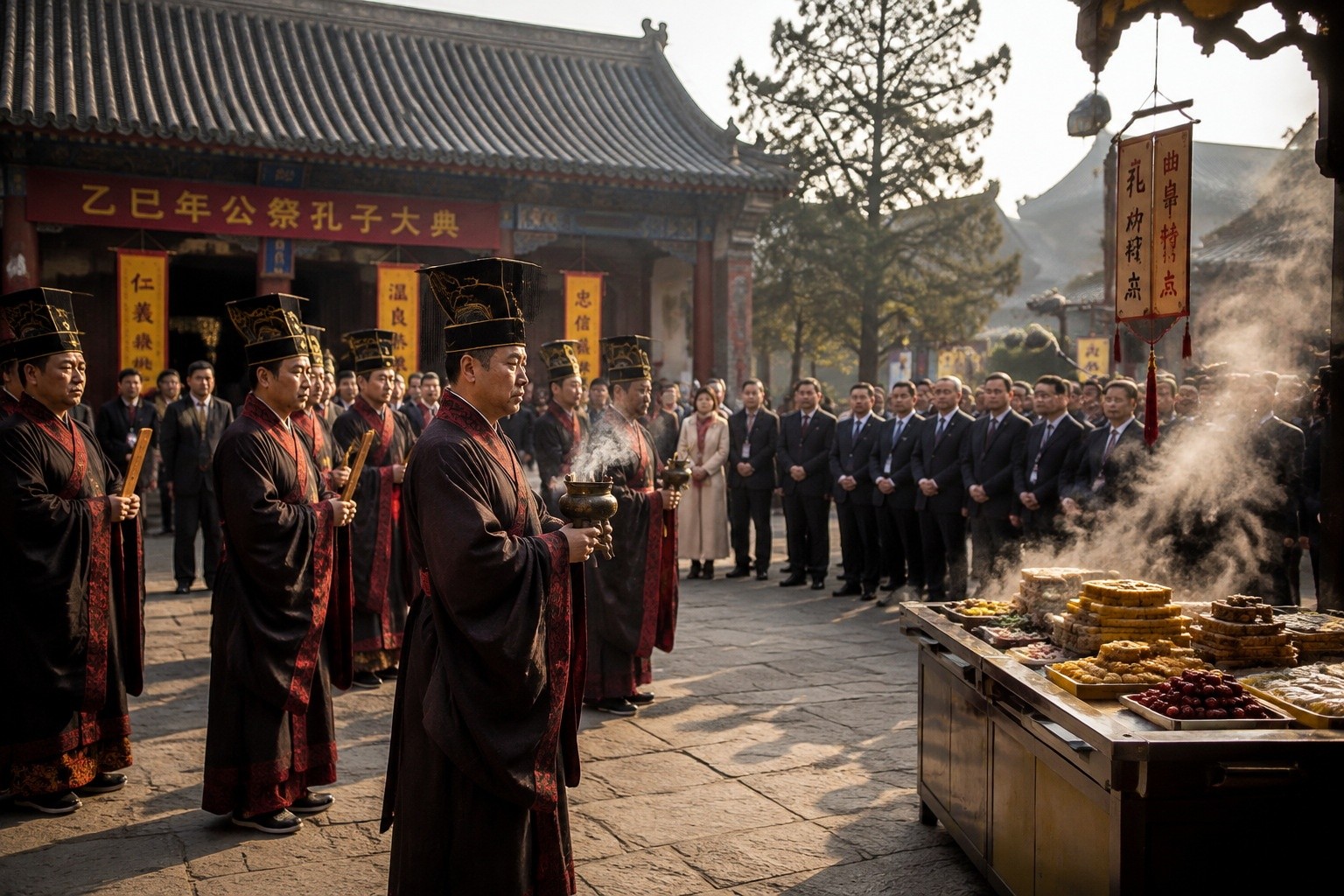

Morning in Qufu’s Old Town
At 6 a.m., the air in Qufu’s old town still carries the bite of late winter. Steam rises from a soybean milk stall near the temple gate, where the owner ladles out bowls of hot doujiang to early risers. A group of 20 Japanese visitors huddle together, adjusting their black formal suits. They have traveled from Tokyo, Osaka, and Kyoto to witness something many Chinese have never seen: a full Confucius ceremony held during the Spring Festival.
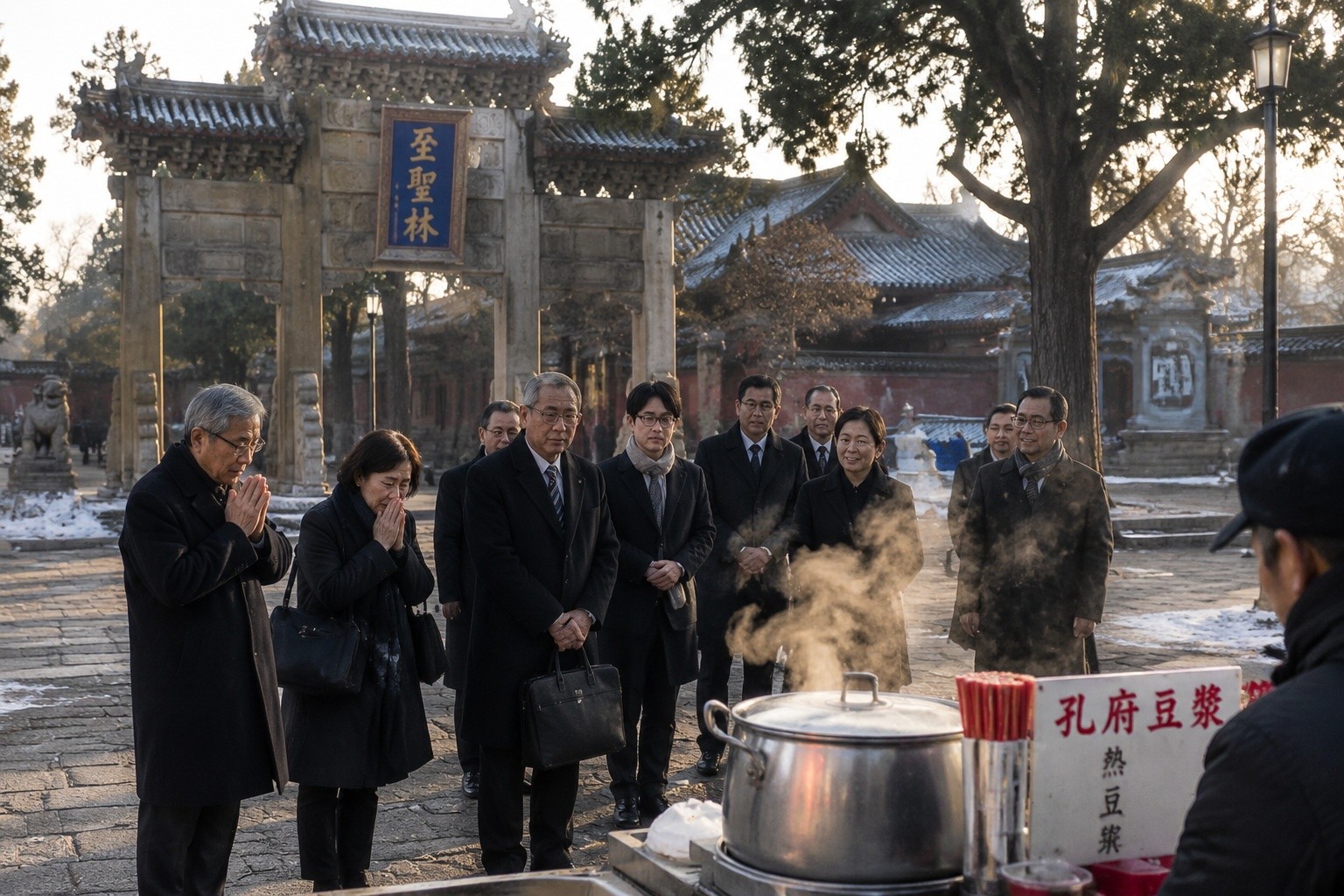
This is the annual Spring Festival Sacrificial Ceremony for Confucius in Qufu, Shandong—the birthplace of the ancient philosopher. The local government revived the tradition five years ago, but it wasn’t until last year that the event began attracting international attention. Half of the Japanese fan group—an informal club dedicated to Confucian rituals—have come for the fifth or even tenth time.
The Ceremony Unfolds
At exactly 7:30, a bell rings three times from inside the Confucius Temple. The main gate opens slowly, and a procession of scholars in Ming-dynasty robes steps out. They carry wooden tablets, incense burners, and silk banners. The Japanese guests stand in a reserved area, some bowing slightly as the procession passes.
The ceremony follows a strict sequence: offering of wine, reading of the eulogy, and three kneelings and nine prostrations. The rhythm is deliberate—each movement takes long seconds. “This is the closest we can get to a 2,500-year-old tradition that has been preserved in Korea and Japan but largely faded in China,” says Tanaka Hiroshi, a 52-year-old office worker from Tokyo, who started studying Confucian rites after retirement.
After the official ceremony, the local elders invite the Japanese guests to join a simpler version on the temple square. A 7-year-old boy from the town, dressed in a miniature scholar’s robe, recites a passage from the Analects. His voice is high but steady. Several Japanese visitors wipe their eyes.
A Shared Meal
The ceremony ends at 10 a.m., and the town’s women bring out large bamboo baskets filled with steamed buns, braised pork, pickled vegetables, and sticky rice cakes. This is the “blessing feast”—traditionally eaten by all participants after the ritual. The Japanese group sit on long wooden benches, sharing the meal with local villagers. A elderly woman teaches them how to wrap a bun with pickles and coriander. “The food is not fancy, but it is exactly how Confucius would have eaten—simple and respectful,” one visitor translates.
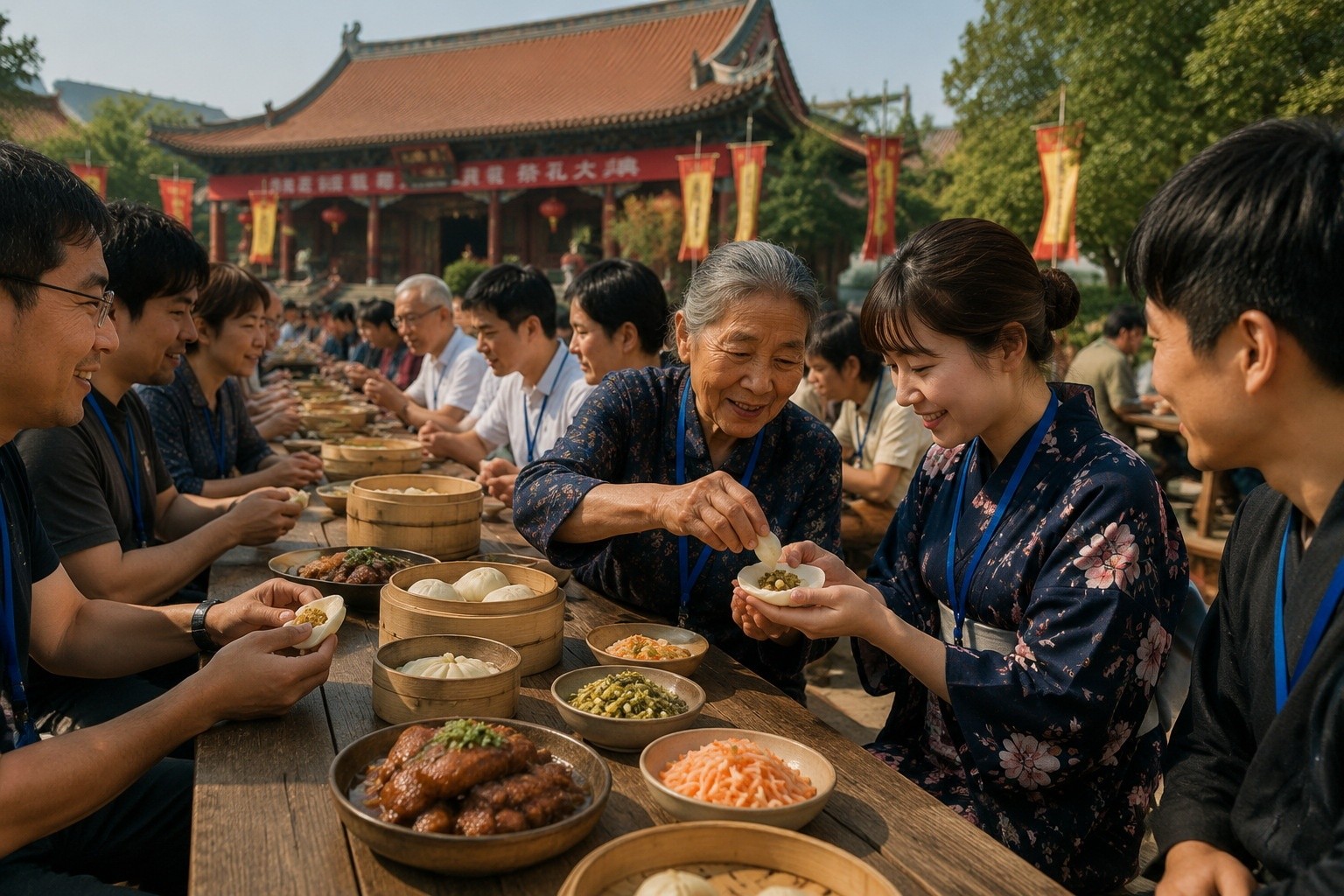
The food becomes a bridge. “I came for the ceremony, but the meal made me feel part of this community,” says Yamada Yuki, a 38-year-old graphic designer from Kyoto. She has been collecting recipes from previous trips and plans to recreate the blessing feast for her Japanese friends.
Why They Come Back
For many Japanese, Confucianism is not a distant philosophy. It shaped their writing system, family structure, and legal codes. But in modern Japan, the rituals have become commercialized or Disneyfied, says Tanaka. “Here in Qufu, it feels authentic. The town has not tried to impress tourists. They are doing it for themselves.”
The local government official in charge of the event, Mr. Li, acknowledges that the Japanese group’s dedication inspired them to improve the ceremony. “At first, we thought it was just a small tourist novelty. But when the same faces keep returning year after year, we realized we are preserving something that belongs to all of East Asia.”
How to Experience It Yourself
The ceremony is held annually on the fifth day of the first lunar month (typically February). The town is a 2-hour train ride from Jinan. Visitors can participate in the blessing feast but are advised to book through local travel agencies due to limited seating. For those interested in the Confucian tradition, Qufu also offers a quieter, less commercialized alternative to the bigger temples in major cities.
Start the discussion at forum.chinacomes.com