
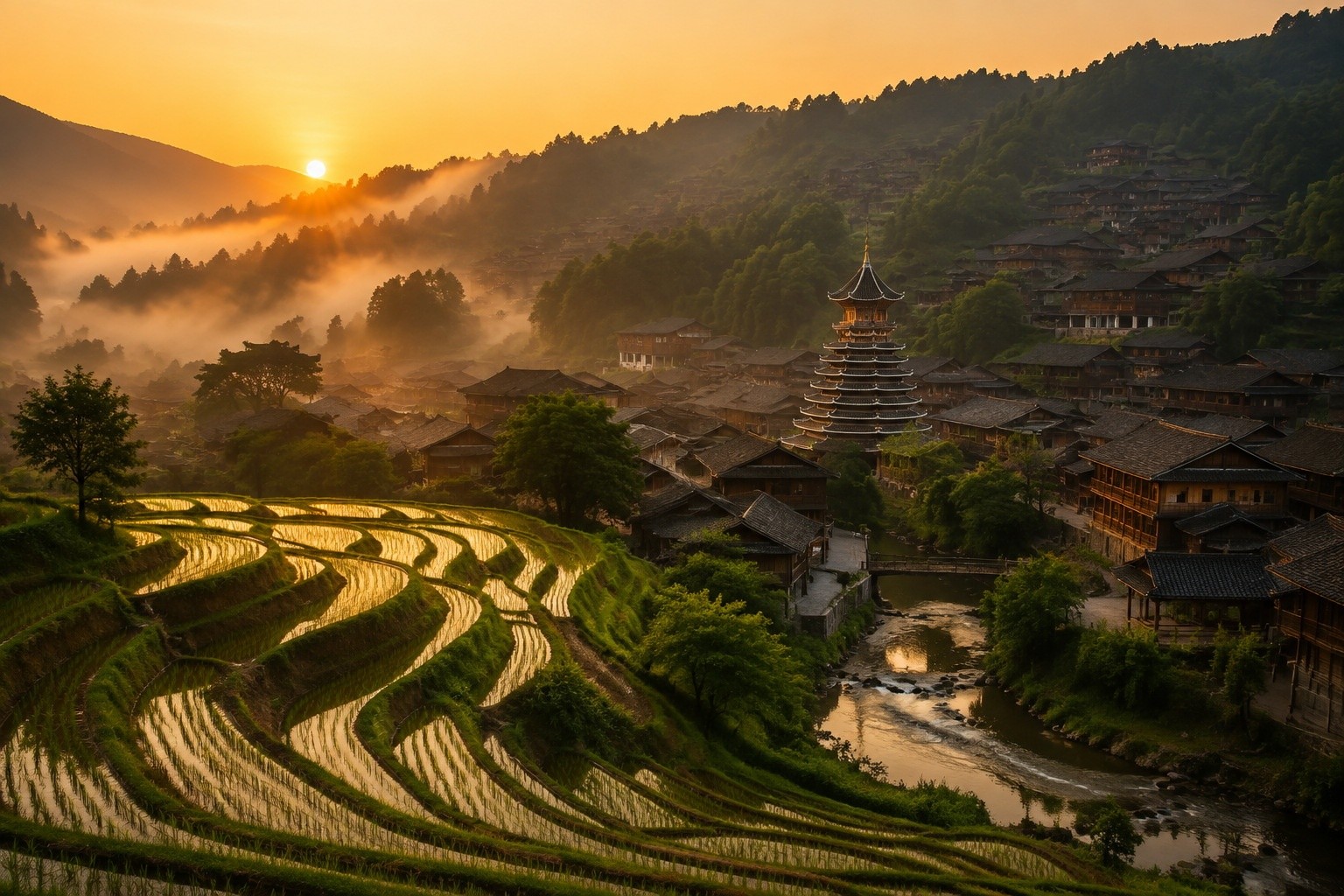

A Morning in a Dong Village
At 6:30 a.m., the mist is just lifting from the rice terraces that step down the mountainside. In the center of Dali Dong Village in southeastern Guizhou, an elderly woman sits on the wooden porch of her dark pine house, threading a needle for her embroidery. Roosters call, a stove crackles inside, and a young man passes by with two buckets of stream water.
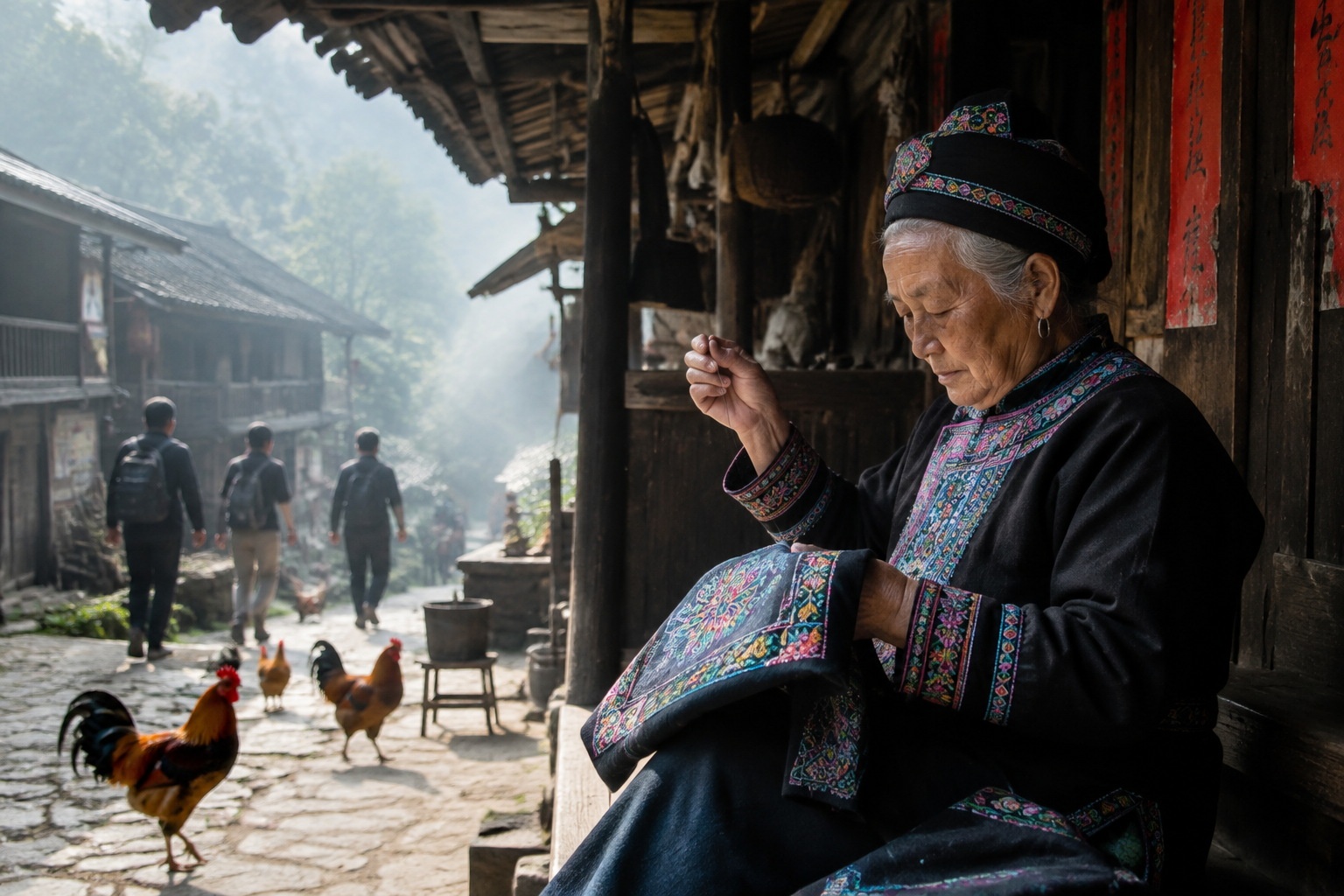
Just fifteen years ago, this scene might not have existed. Many homes were empty, roofs collapsed, and the young had moved to cities for work. Today, Dali is part of a quieter revolution in Chinese rural tourism—one that is reshaping villages beyond the famous Huangguoshu Waterfall.
Beyond the Waterfall: A Different Guizhou
For most travelers, Guizhou means Huangguoshu, the 77-meter-high waterfall that has drawn tourists for centuries. But the province is also home to hundreds of ancient ethnic-minority villages—home to Miao, Dong, Buyi and other communities—with wooden houses, drum towers, and stone paths that have survived for centuries. These are not just architectural relics; they are still lived-in communities.
In the past, poverty and limited access pushed many villagers to leave. Guizhou has long been one of China’s less-developed provinces. Village schools closed as families moved to cities, and historic buildings deteriorated for lack of care. According to the Ministry of Housing and Urban-Rural Development, over 6,800 villages nationwide have been designated as “Traditional Villages” since 2012, and Guizhou has one of the highest counts—a recognition of both cultural wealth and endangerment.
How Tourism Came to the Mountain
Transportation has been a game-changer. High-speed rail now links Guizhou with major cities like Guangzhou and Chengdu, cutting travel times from days to hours. The Guangzhou–Guiyang high-speed railway, opened in 2014, brings visitors from the Pearl River Delta within a day’s reach. Recent upgrades to provincial roads have made it possible to reach villages like Dali by car or bus.
In 2014, Dali was named one of China’s “Traditional Villages,” a national designation that came with funds for repair and preservation. Local government partnered with tourism companies to encourage homestays and guided tours. Unlike massive commercial projects such as Xijiang Qianhu Miao Village, which now hosts thousands of tourists daily, Dali chose a slower path—limiting large-scale development and focusing on small, community-based tourism.
Rebuilding Homes, Restoring Life
Walking through Dali, you see the restorations. The ancient wind-and-rain bridge, known as the “flower bridge,” has been rebuilt with fresh timber using traditional mortise-and-tenon joints. Old houses are being re-roofed with black tiles, while interiors are updated with modern bathrooms and Wi-Fi.
Lin Yang, a 45-year-old carpenter who left Dali to work in construction in the provincial capital, returned after the tourism project began. “I used to build concrete houses in the city. Now I’m restoring wood houses in my village,” he says. “The old ways came back to me.” He now leads a team of eight craftsmen, all locals, repairing heritage buildings.
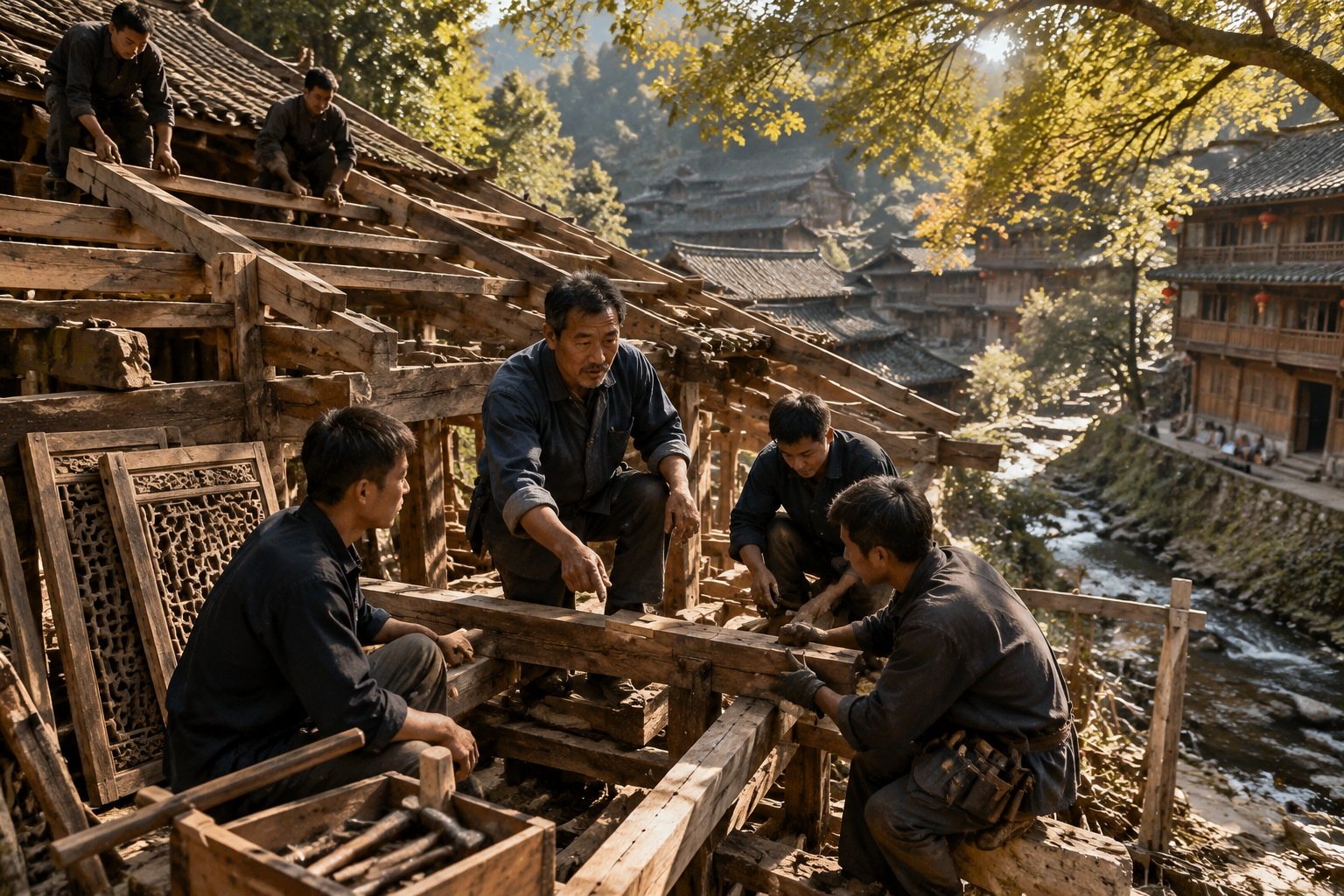
This is not just about aesthetics. The tourism boom has accelerated the restoration of more than a dozen historic buildings, using traditional techniques rather than cheap modern replacements. Local authorities also subsidize homeowners who keep the original facade while improving structural safety.
People Coming Back
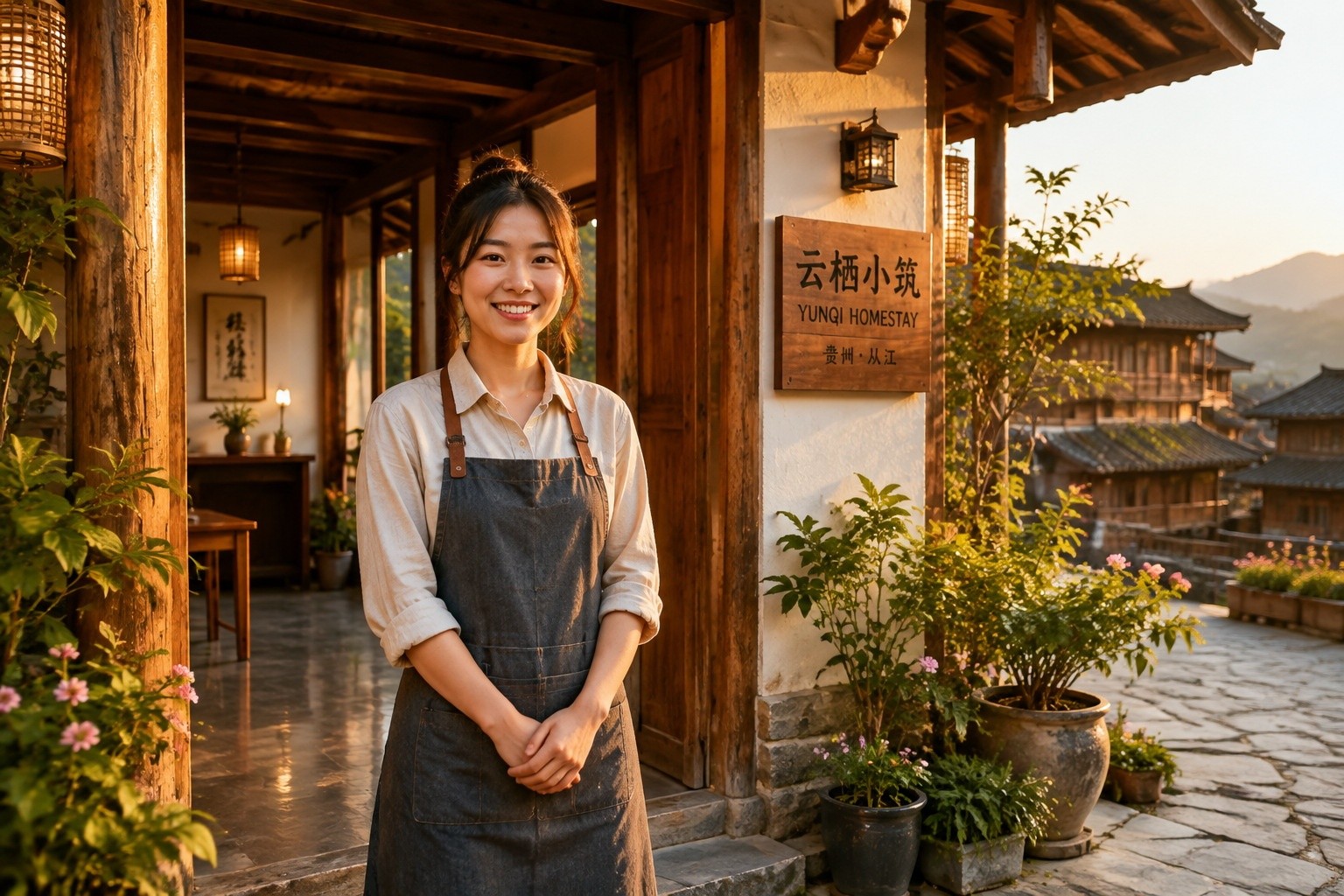
Tourism has also created jobs that didn’t exist before. In Dali, more than 20 homestays have opened in the past five years, most run by returned villagers. One are the Xiao family; their daughter Xiaoyu, 28, came back from Guangzhou after working in a factory. She renovated her grandmother’s two-story wooden house into a guesthouse with six rooms. In summer, the house is fully booked with travelers from Beijing, Shanghai, and even overseas.
“My grandmother thought I was crazy to give up a good salary,” Xiaoyu tells me, pouring a cup of locally grown cold tea. “But now she sees that I can make a living here and take care of her at the same time.” Xiaoyu’s guesthouse also sells embroidered cloth from her mother and aunts. She charges 480 yuan per night for a double room, which includes breakfast and a guide to a nearby waterfall. On a summer evening, the courtyard is filled with the smell of grilled river fish.
Crafts and Songs Find a New Audience
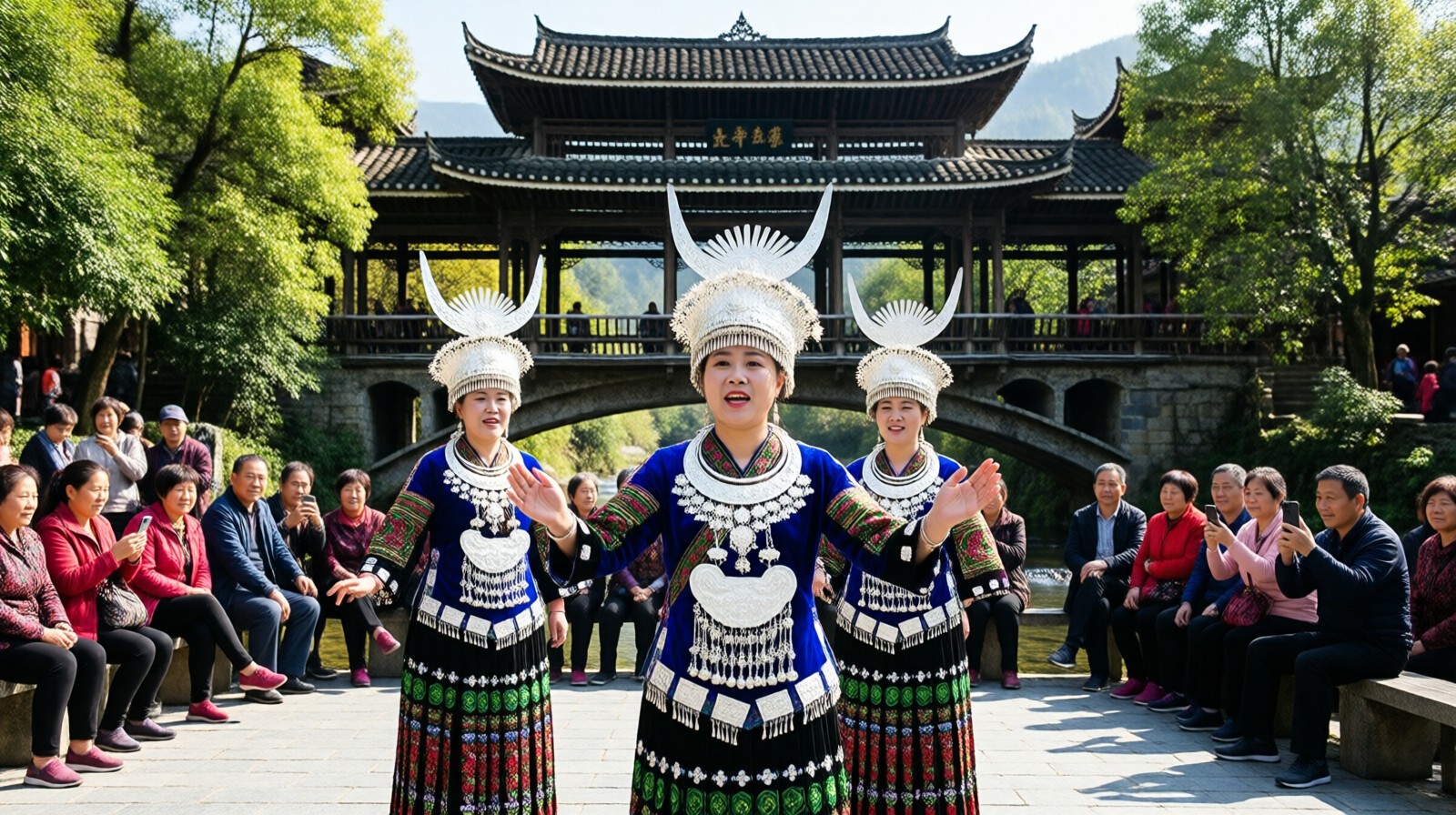
Rural tourism has revived interest in intangible heritage. Dong embroidery, silverwork, and the polyphonic Dong songs are no longer just family traditions; they are attractions. Women who used to embroider in private now sit together under the drum tower, their hands moving for visitors who eagerly buy their pieces.
“Tourists want to see our culture,” says Wu Lanzhen, 63, who has been singing Dong songs since childhood. She now leads a small performance group that performs for visitors twice a week. The group keeps the income; there is no middleman. In addition, the village school has restarted traditional singing classes for children, partly because parents and teachers see that these skills have value again. A pair of hand-embroidered shoes can sell for 500 yuan, enough to buy a week’s groceries in the village.
A Village Owns Its Future
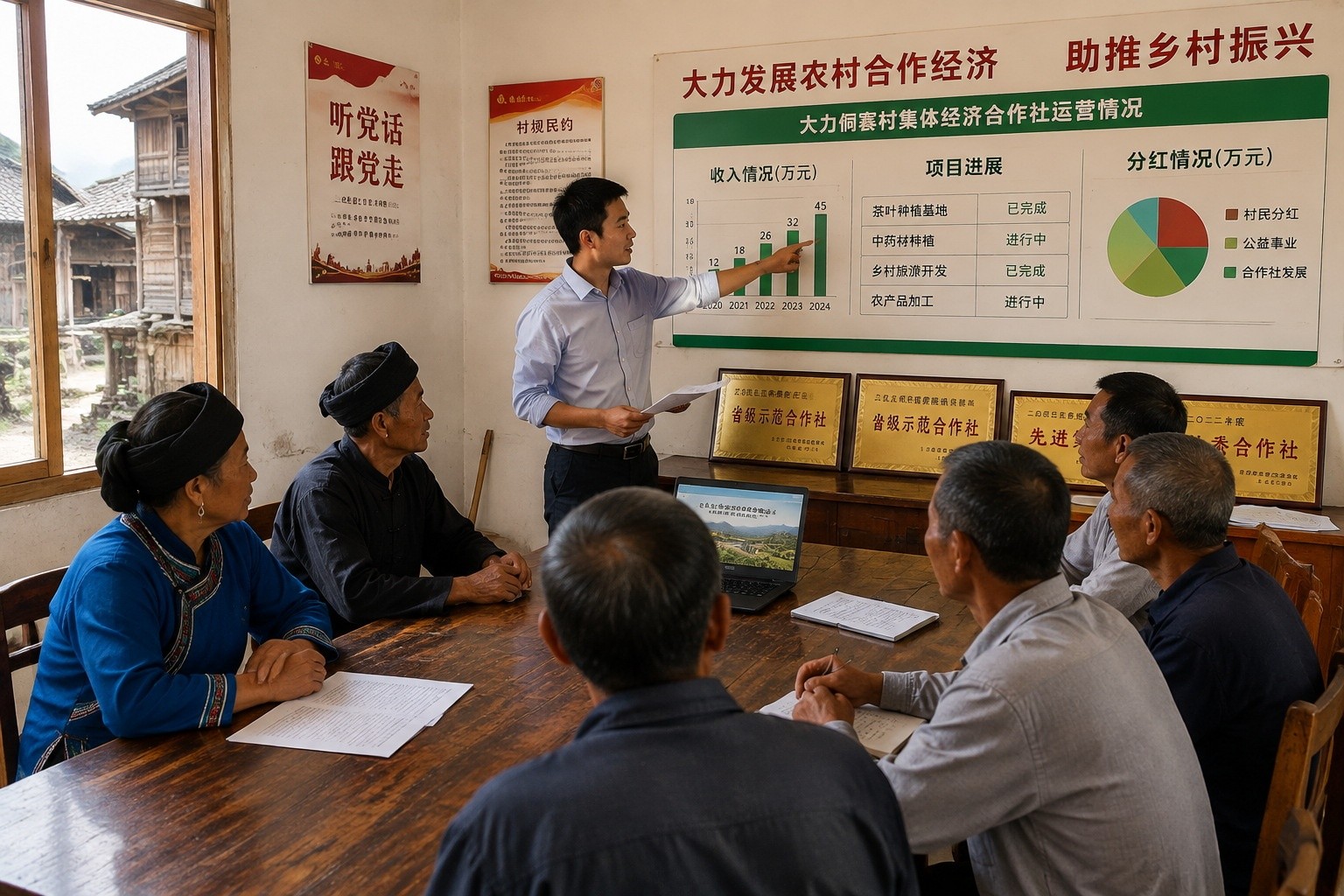
The governance of Dali’s tourism is notable. Unlike many commercialized developments, Dali is managed by a cooperative composed of villagers. Entry tickets (about 10 yuan, or $1.40) go into a communal fund that covers infrastructure repairs, healthcare subsidies, and scholar grants. Homestays are required to use a portion of their revenue for maintenance of the village’s historic fabric.
According to village records, in 2019 each household received a dividend of about 3,000 yuan. This structure is not perfect. Some residents complain that profits go mainly to the wealthier families with bigger houses. Others worry about the slow erosion of privacy as more strangers wander past their doors.
Keeping It Real in Hard Times
There are also external challenges. The COVID-19 pandemic brought tourism to a halt, and villages like Dali lost nearly all income for months. Even now, recovery is uneven; domestic tourists return, but international numbers are still low. Climate change is another pressure—droughts have affected drinking water sources.
Yet the resilience of these communities is striking. During the pandemic, villagers turned to e-commerce, selling dried mushrooms, rice, and crafts online. Some homestays offered long-stay deals to city dwellers looking for safe, remote getaways. The cooperative also used downtime to restore a collapsed section of a historic storage house.
Tourism or Way of Life?
Is Dali a “living museum” or a real village? It is both. Visitors come for the authenticity, but authenticity itself is always shifting. When a farmer hangs his daily laundry over the balcony, the sight is both mundane and photogenic—that is exactly the balance rural tourism thrives on.
What makes Dali different from a water town like Zhouzhuang is that tourism has not eclipsed everyday life. The village still has a school, a clinic, and agricultural work. One morning, I watched a young mother stop selling handmade rice cakes to help her son with his homework. That’s not a performance.
The Rebirth Beyond the Famous Name
Guizhou will always be synonymous with Huangguoshu, but its mountains and valleys hold experiences far richer than a single waterfall. In villages like Dali, tourism has not just restored wooden boards and rooftops. It has given people a reason to stay, a way to turn their heritage into a livelihood, and a means to keep their culture breathing.
The sound of the stream that runs through Dali is constant, like the village’s own evolving story. It’s a story happening all over rural China: ancient places finding a new future, not behind glass, but in the hands of those who call them home.
Start the discussion at forum.chinacomes.com