

The Morning the Valley Turns Pink
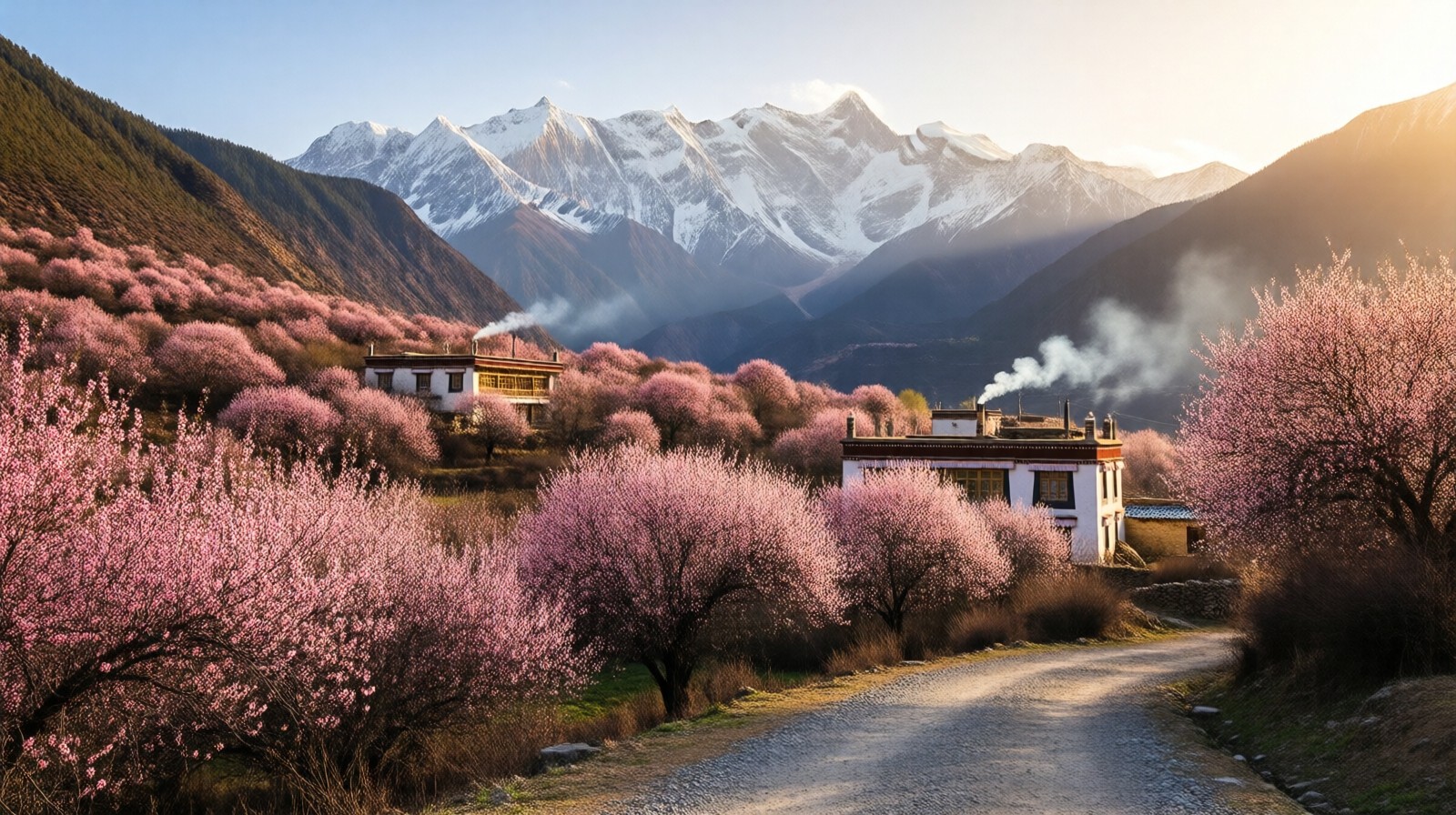
At 7 a.m., the valley below the Yarlung Tsangpo River is a hazy blue. Then, as the sun climbs over the snowy ridge, the peach trees catch fire in the softest way possible—pink, everywhere, as if someone had overturned a giant palette. Lhamo, a 45-year-old Tibetan mother, pushes open the red iron gate of her guesthouse and breathes in the same air travelers came from thousands of miles away to taste.
Her small family stay in Dowa Village, just outside Nyingchi town, is full. The rooms are basic—two thin mattresses on wooden floors, a shared bathroom with a solar-heated shower—but the welcome is warm. For the next three weeks, Lhamo and her family will go from farming to hospitality, wrapping sleeping bags in clean sheets, heating butter tea at dawn, and answering questions about the best spots to photograph the blossom.
This is the season when Nyingchi, known as the "Switzerland of Tibet" or the "Jiangnan of Tibet," turns into a postcard. Every year, from around March 25 to April 15, the wild peach trees that grow naturally in this part of the Himalayas burst into bloom. The snow-capped peaks hang behind them like quiet witnesses. Tibetan farmhouses bake in the warm light. It’s a scene that has drawn tens of thousands of visitors to this once-remote corner of the Tibet Autonomous Region. It has also produced a local phrase that appears on official banners and hotel brochures: "peach blossom economy."
Nyingchi: Where Snow and Peach Blossoms Mix
For many overseas travelers, Tibet is synonymous with cold desert, the Potala Palace, or the epic altitude of Lhasa (3,650 meters). Nyingchi is different. Located in the southeast of Tibet, its altitude is much lower—around 3,000 meters—and the landscape is shaped by moisture coming from the Indian Ocean. The Yarlung Tsangpo River carves a fertile valley, and the hills are covered with conifers and rhododendrons. It is a place where you can feel sick from the altitude one day and spend the next wandering through orchards that smell of spring.
But the star is the wild peach forest. No one planted it. The trees, some over a century old, are naturally distributed along both sides of the river and on the slopes of the Nyenchen Tanglha Mountains. Locals used to cut them for firewood. They had no value beyond providing shade for the barley fields. When tourists began to appear, residents could not quite understand why anyone would travel thousands of kilometers to see a bunch of bitter wild peaches. But they quickly learned.
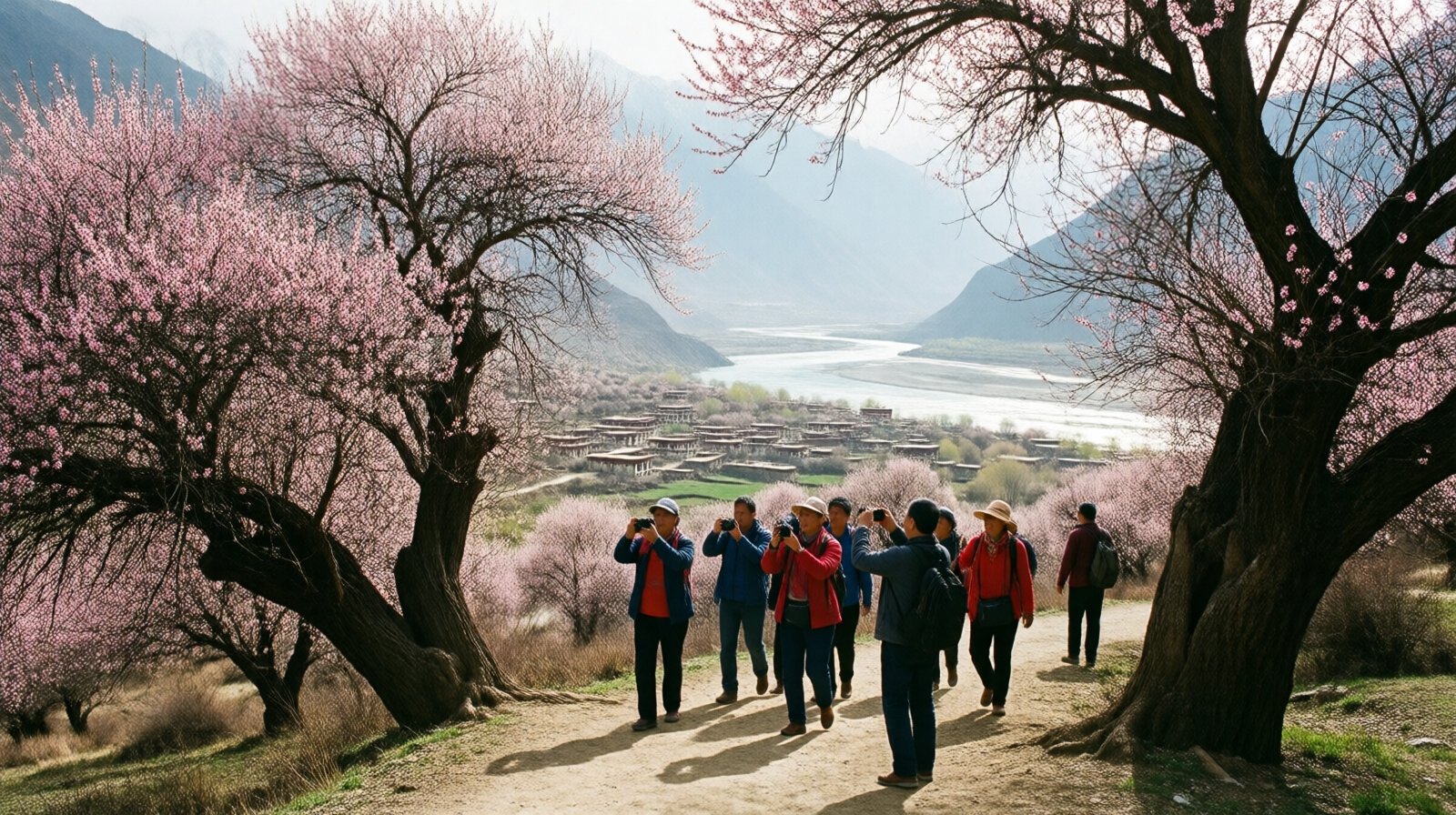
During the festival, the main sights are dotted throughout the area. The most popular are Dowa Village, Tagong Village, Bomi County, and the Lulang Forest area. Each location offers a different backdrop—more mountains, more villages, or wider river views. You don’t need to be a photographer to see why the scenes go viral on Chinese social media, with the tag #林芝桃花. The hashtag has been viewed millions of times.
Getting There: From Rough Road to a Smooth Railway
One of the turning points for Nyingchi was the improvement in transport. For decades, the main way from Lhasa was a 10-hour drive on the Sichuan-Tibet Highway, a winding road that could close at any moment due to snow or mudslides. In 2021, the Lhasa–Nyingchi Railway opened, cutting travel time to about four hours. The train runs through high-altitude tunnels and crosses the Yarlung Tsangpo on modern bridges. It’s a journey in its own right; many travelers, including this one, spend half the time with the window pointing at the peaks.
Nyingchi Mainling Airport is another lifeline. It’s a small airport, but the approach is dramatic—planes descend between mountains to a runway that sits at 2,951 meters. During the festival, flights from mainland China are booked up weeks in advance. Prices can spike drastically, and some tourists choose to fly to Chengdu and continue by bus or rail, a route that takes about two days. The railway, in particular, has made it possible for middle-class Chinese families to plan a weekend peach-blossom escape—something that was unthinkable 20 years ago.
The upgrade in transportation has transformed Nyingchi from a niche spot for hardcore backpackers into a mainstream destination for domestic tourism. And that change is precisely what brought the "peach blossom economy" to life.
How the Tourist Season Feeds the Local Economy
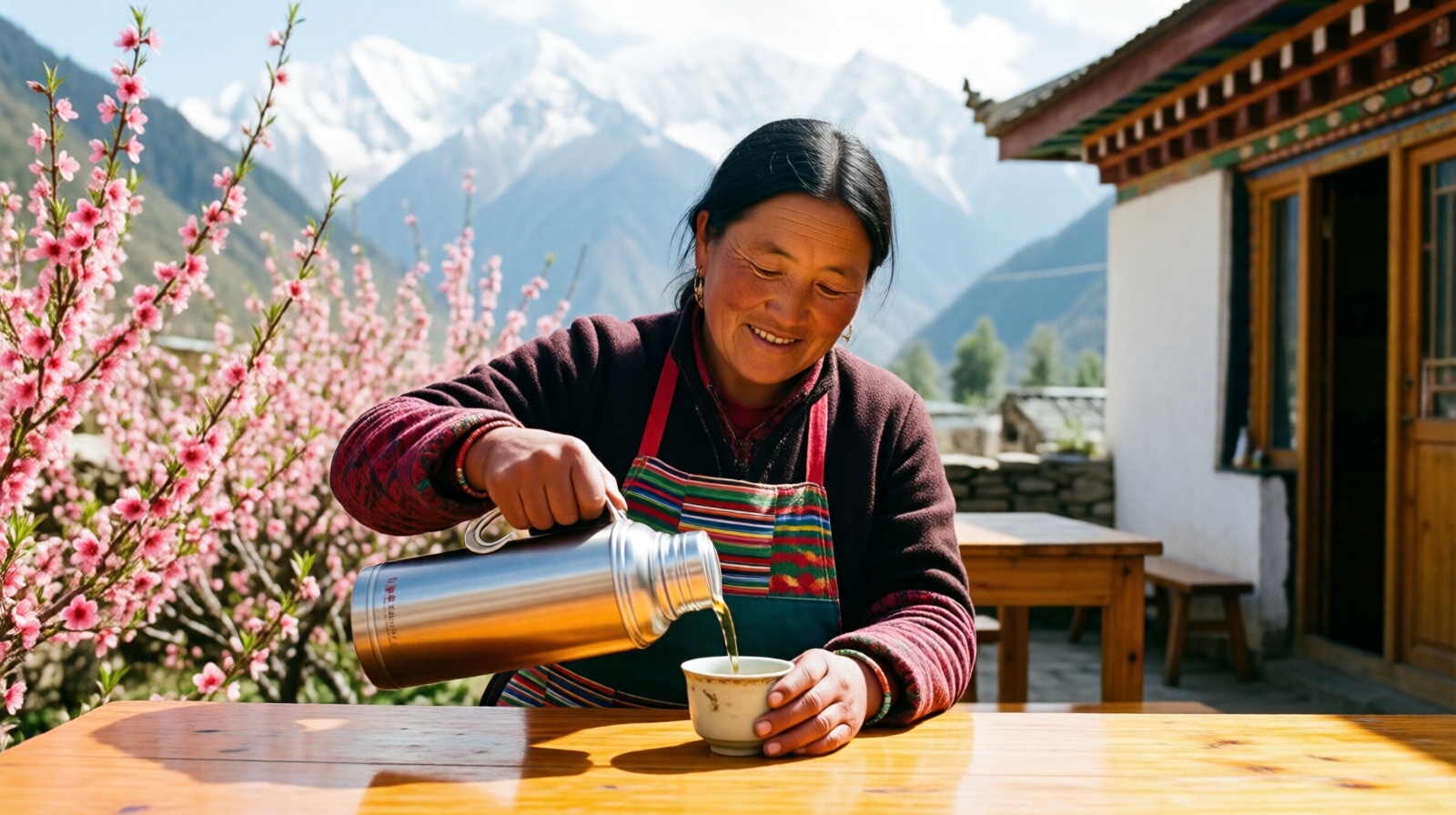
Travelers who stay overnight in a village family stay—like Lhamo’s—are directly supporting the economy. Lhamo first realized the potential in 2015, when the village got government assistance to install solar water heaters and modern toilets. She and her husband borrowed 80,000 yuan (around $11,000) to add two guestrooms. The first year, they charged 160 yuan a night and were constantly full. Now, in the high season, the same rooms cost 300 yuan each, and she has built four in total. "It’s more than a month of farming in a single week," she said, as she placed a fresh thermos of tea on the table.
The money spreads far beyond the door of her home. In Tagong Village, a row of temporary stalls sells wild honey, dried morel mushrooms, and homemade barley cakes. Some residents rent traditional Tibetan costumes, worth about 50 yuan for an hour of pictures. Others act as drivers, taking tourists to less crowded viewpoints in their pickup trucks. During the festival, local restaurants can’t cope with demand, and villagers who can cook an extra pot of noodles can make good money for a few weeks.
In official numbers, the impact shows. In 2023, according to local government figures, the Peach Blossom Festival attracted more than half a million visitors in the peak weeks, generating over 300 million yuan (about $40 million) in tourism revenue. That is money that would otherwise not have existed for these mountain communities. Compared with other tourist spots in Tibet, Nyingchi has a higher rate of home-stays run by ethnic Tibetan families. A 2020 government survey suggested that nearly 15% of households in the Nyingchi area earn some income from tourism. That doesn’t sound enormous until you remember that many of these households still live by semi-subsistence farming.
The Human Side of the Bloom
For visitors, the chance to stay in a Tibetan family home is a highlight. They can join the family for a meal of yak meat, barley tea, and momos. They can watch how butter lamps are made, and listen to stories about the mountains. For locals, giving visitors that kind of access can be a double-edged sword. Some complain that the festival period turns villages into a stage. Others worry about their children becoming too dependent on tourist money and not caring about agriculture.
But the general mood is positive. At a community meeting in Dowa, one elderly villager said: "When I was young, we had to walk two days to the nearest market. Now my grandchildren have learned Mandarin and English to talk to tourists. They see the world without leaving the village." That ambition is visible. Many guesthouses hang a small sign saying "Happy to help visitors," and some even have a spare phone for calling a taxi.
There are also real challenges. The season is short, and when the petals fall, so does the economy. In winter, Lhamo goes back to farming and stores the guestroom furniture under plastic sheets. The village’s small grocery store, which does a roaring trade in festival snacks, opens only a few days a week in the off-season. The income gap between the blossom months and the rest of the year is one of the biggest obstacles to sustainable development.
There is also the constant pressure on the natural landscape. Wild peach trees don’t like heavy traffic. In 2019, the local authorities introduced a shuttle bus to the most-visited area and prohibited cars from entering the core conservation zone. Some steps were taken to limit the size of tour groups and to ban single-use plastics in the festival area. These measures are imperfect, but they show that the "peach blossom economy" is not only about making money—it’s about protecting the very resource that brings in the cash.
Practical Tips for Your Visit
If the peach blossom season sounds like your kind of trip, here’s what you need to know. The festival dates shift each year depending on the weather, so always check the official announcement around mid-February. The best period is usually April 5–15, when the flowers are at full bloom but the first wave of visitors has passed. Flights and hotels are expensive, but far from impossible to book if you plan two to three months ahead. Because of Tibet’s travel regulations, foreigners are required to gate a "Tibet Travel Permit" for entry into Nyingchi, which is issued online through registered travel agencies. The permit is essential; independent travel in this region is highly restricted.
Once there, dress in warm layers. The mornings are cold, the afternoon sun can be intense, and rain might sprinkle without warning. Those stunning photos of travelers posing in a flowing dress next to a peach tree are usually taken between 9 a.m. and 11 a.m., when the light is soft and the crowds are still relatively thin. Aim for the villages rather than the popular viewpoints if you want to have a moment alone.
Finally, be aware that Nyingchi is still a genuine frontier. The amenities in some family guesthouses are basic—no air conditioning, shared baths, limited electricity—but that’s part of the experience. You will sleep under a thick quilt and wake up to the sound of wind through the peach branches. This is the reason many travelers call it "heaven on Earth." Not because it’s polished, but because it’s real.
The Real Miracle Is the People
The peach blossoms last only two or three weeks. The "peach blossom economy" lasts longer. As the sun sinks behind the ridge, Lhamo walks through the orchard that borders her house. She is planning to plant a few more flowers, build a fence, and buy a washing machine for the guesthouse. She says: "The flowers are a gift, but we are the ones who make sure they stay alive."
It’s a phrase that sums up Nyingchi’s story. In a country where rapid development often erases old landscapes, this small Tibetan town has found a way to keep its roots and share them with the world. And for those who happen to show up in the pink spring air, it’s hard not to imagine coming back next year. After all, the flowers will return, and so will the optimism.
Start the discussion at forum.chinacomes.com