
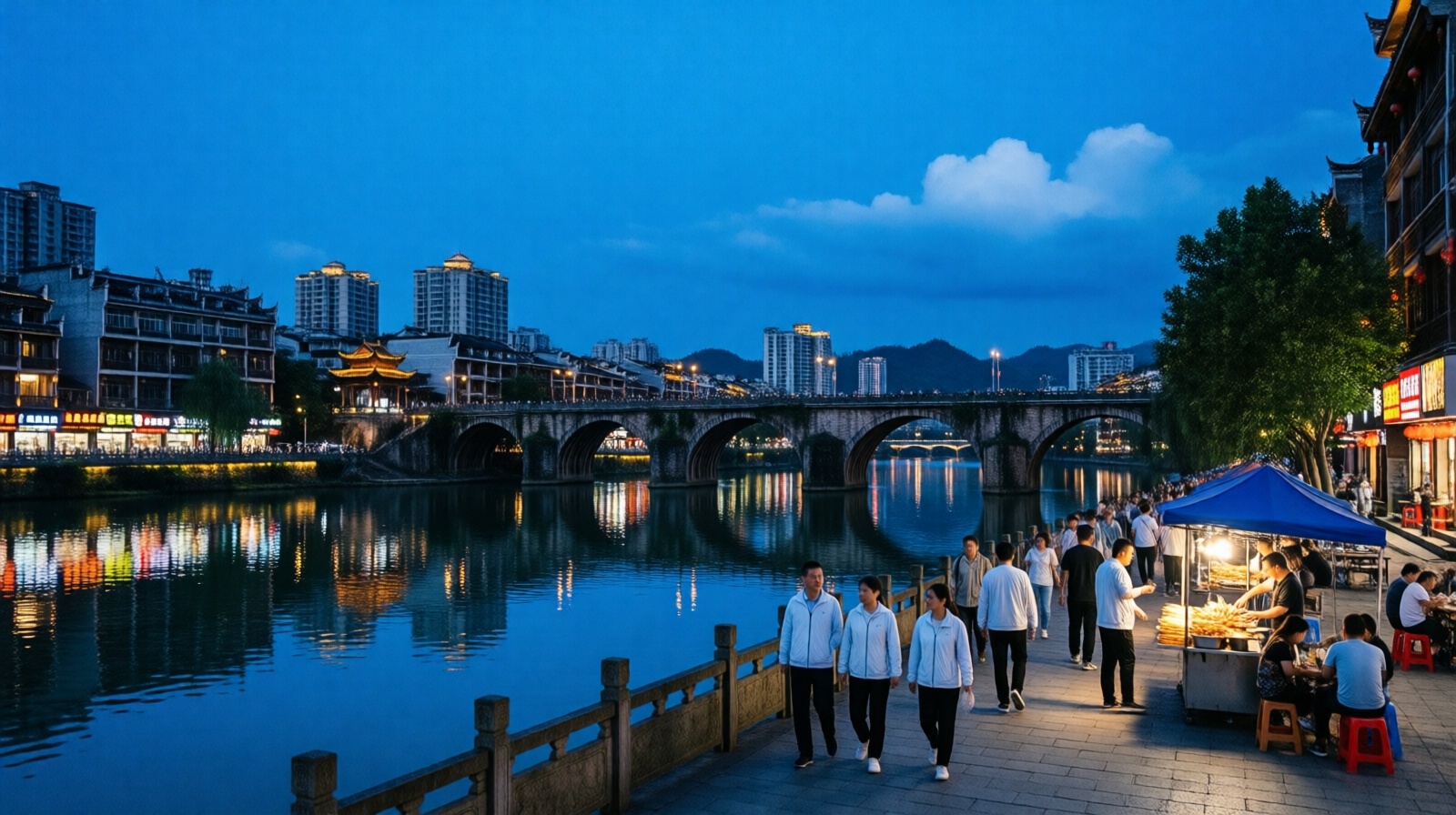

It’s 9 PM, and the City Is Just Getting Started
It’s 9 PM in downtown Guiyang, and the air is cool enough for a light jacket. On the banks of the Nanming River, families are strolling, young couples share ice cream, and a group of friends sit around a steaming hotpot at a roadside stall—despite the summer calendar. “In Guiyang, summer is not something you endure. It’s something you enjoy,” says Chen Wei, a local tour guide.
While many parts of China—and the world—are battling heatwaves, Guiyang, the capital of Guizhou Province, offers a natural escape. Sitting at an altitude of around 1,100 meters, the city enjoys a mild climate year-round. Its average high temperature in July is just 24°C, with evenings often dropping to 18°C. The city is surrounded by mountains and forests, which cover nearly 55% of its land area, creating a natural air conditioner.
Cool Weather, Hot Economy
Guiyang’s cool summer is not just a pleasant weather pattern; it’s a powerful economic engine. In 2023, the city welcomed over 128 million domestic tourists, many of them during the hot summer months. Hotels, homestays, and restaurants report near-full occupancy from June to August. Chongqing and Wuhan, famously known as “furnace cities” with summer highs above 40°C, are just a few hours away by high-speed rail. For residents there, a weekend trip to Guiyang feels like jumping from a sauna into a pool.
The tourism boom has a name: “cool tourism.” It drives everything from hotel bookings to ice-cold snacks. Local authorities have also jumped in, promoting Guiyang as “China’s Cool City” and organizing summer festivals, outdoor concerts, and night events designed to keep visitors entertained while temperatures drop.
What Visitors Actually Do Here
So, what do these millions of visitors do all day? The city has turned its cool climate into a menu of experiences.
Old Towns and Mountain Parks
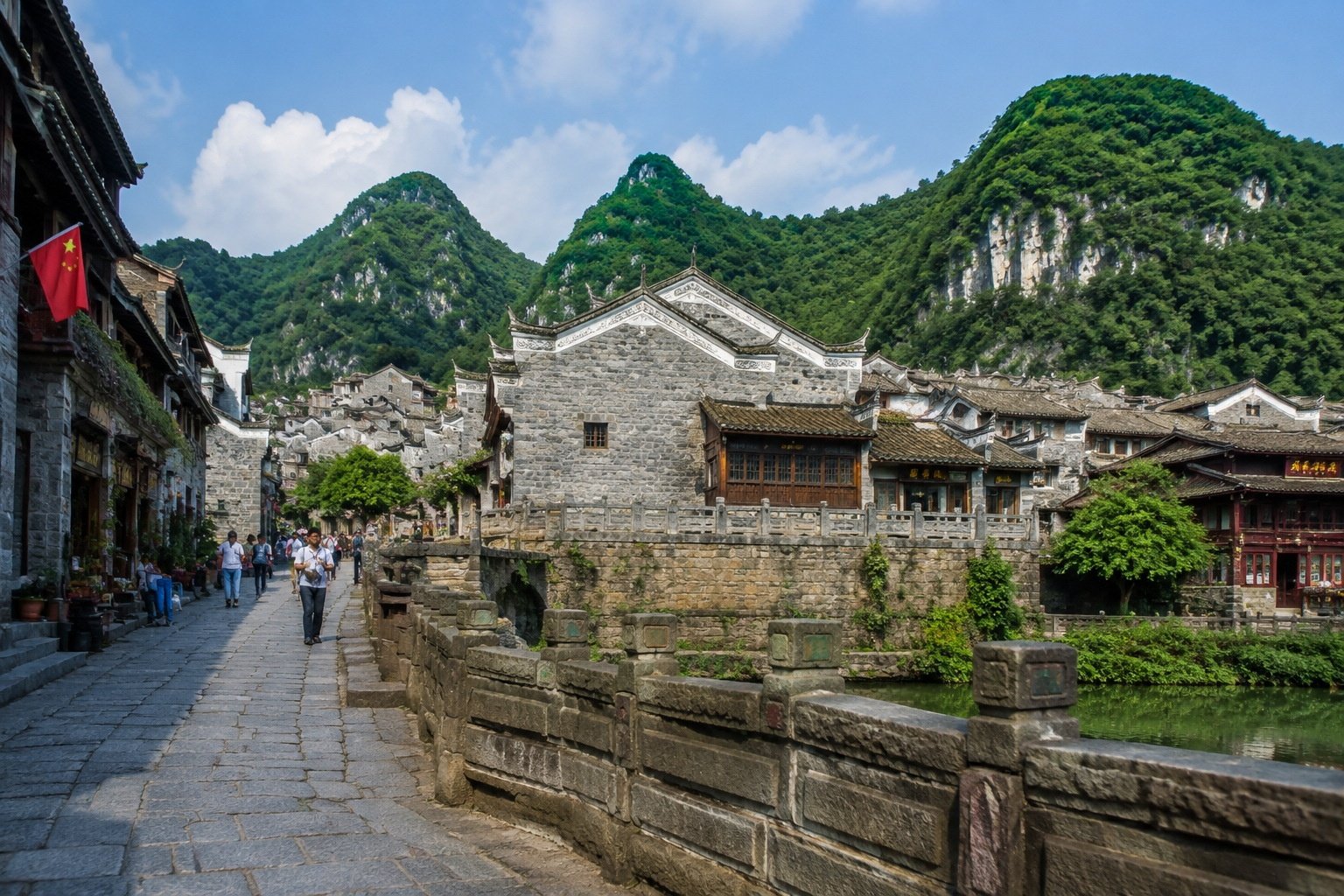
You can wander through the stone-paved alleys of Qingyan, an ancient town over 600 years old, where high walls block the sun and local snacks tempt you at every turn. Or hike up Qianling Mountain and enjoy a panoramic view of the city while the breeze keeps you comfortable.
Night Markets and Sour-Spicy Food
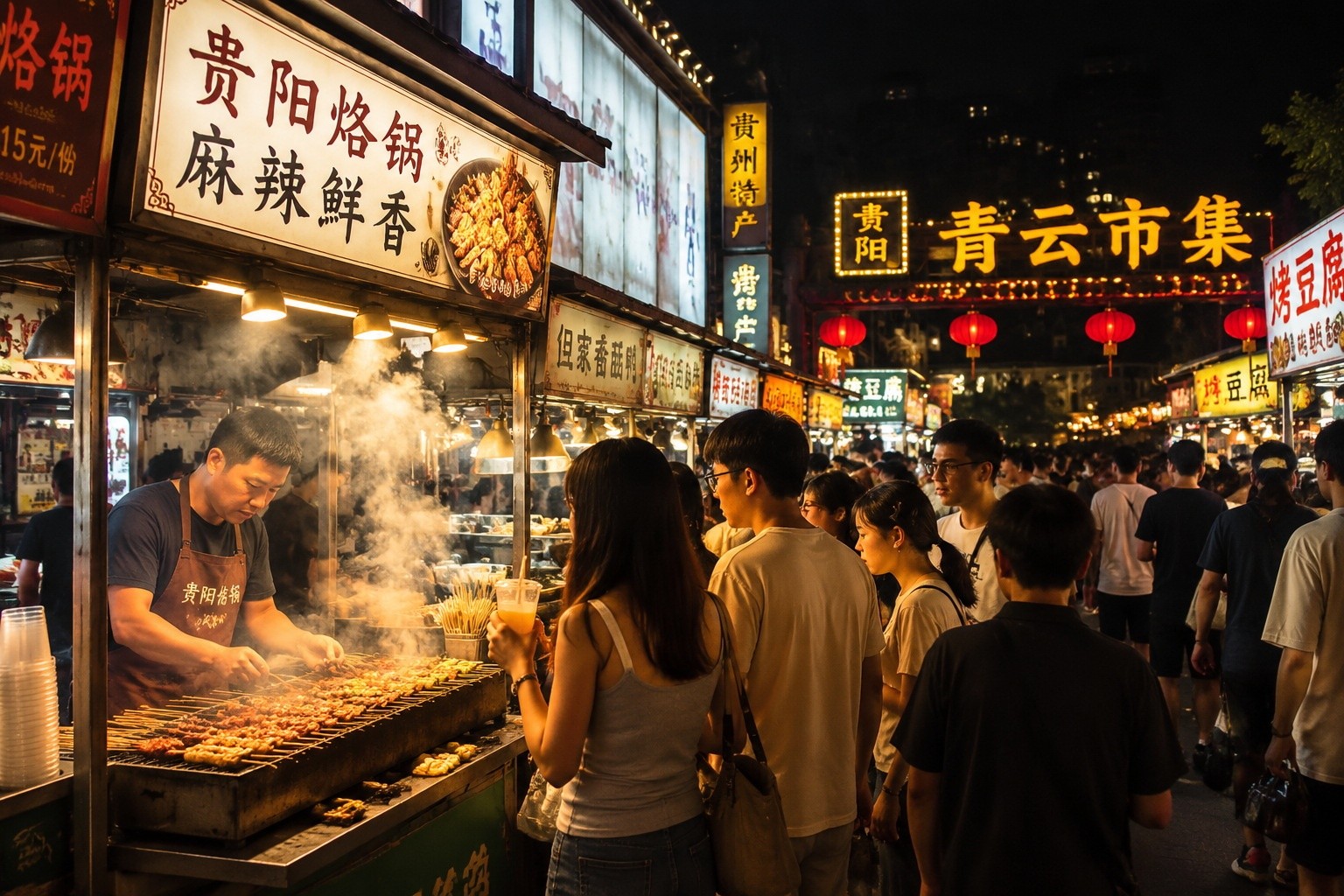
Guiyang’s food is another big draw. The city is famous for its sour and spicy flavors. Try the signature “changwang noodles,” rice noodles in chili oil, or “siwawa,” fresh vegetable wraps that are as crispy as they are refreshing. But the real joy is eating outside without sweating—something rare in southern China in July. The night market near Ertan Road is packed with stalls selling grilled skewers, cold beer, and local snacks, with street bands adding to the buzz.
Escapes to Nature
For those with more time, Guiyang is a gateway to some of China’s most stunning scenery. The Huangguoshu Waterfall, Asia’s largest, is just an hour and a half away. You can also visit ethnic Miao and Dong villages in nearby Qiandongnan Prefecture, where cool mountain air and ancient customs await.
Personal Impact: A Local Story
Tourism is not just a statistic. It changes lives.
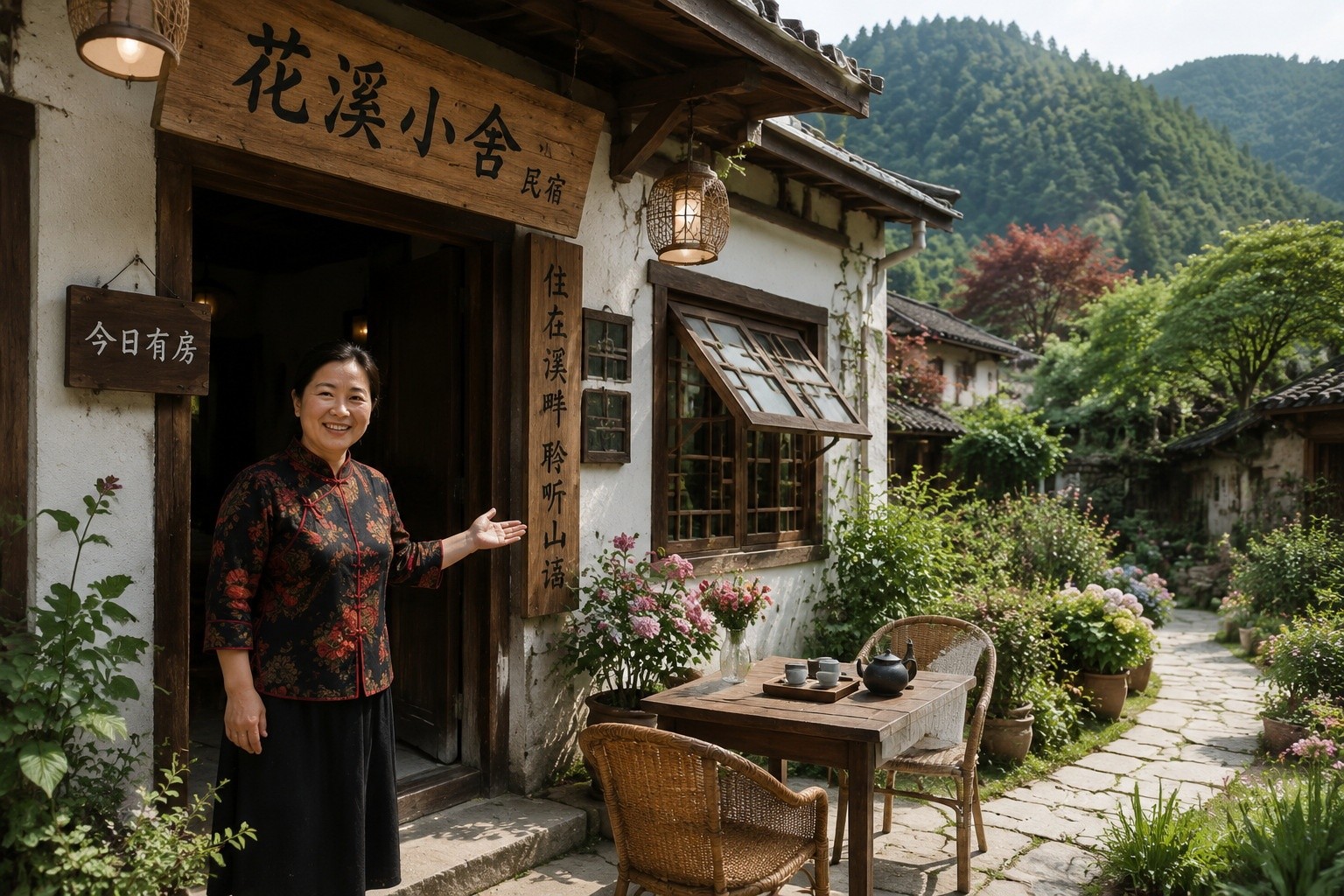
In the lakeside district of Huaxi, many residents have turned their spare rooms into budget homestays for summer visitors. “We rent out two rooms to tourists from June to September,” says Zhang Min, a retiree. “It’s an easy way to earn extra income, and we enjoy meeting people from all over.”
Not everything is perfect. The summer rush brings crowded buses, higher prices, and sometimes noise near popular spots. Some locals secretly wish for fewer visitors. But most agree that the tourism boom has created jobs and improved infrastructure—new metro lines, renovated public spaces, and better garbage collection are some of the visible changes.
Why It Works Beyond the Weather
Guiyang’s success does not rest on climate alone. The city has combined its natural advantage with culture, food, and easy transport. High-speed rail connects Guiyang to major Chinese cities within hours, and the airport handles direct flights from many countries. The local government invested in night-time economy measures, such as extended shopping hours and late-night bus services, making it easy for visitors to stay out late.
For younger Chinese, Guiyang has also become a fashionable summer trip. It’s a place to post photos of misty mountains and colorful night markets, a world away from the concrete heat of urban centers. In that sense, “cool tourism” here is as much about lifestyle as it is about temperature.
As global temperatures continue to rise, more travelers will look for places that offer relief. Guiyang has already positioned itself as a leader in this niche. For millions of visitors each summer, it’s not just an escape—it’s a reminder that summer can still be pleasant.

Start the discussion at forum.chinacomes.com