

A Grain That Was Once Dinner, Now a Pint
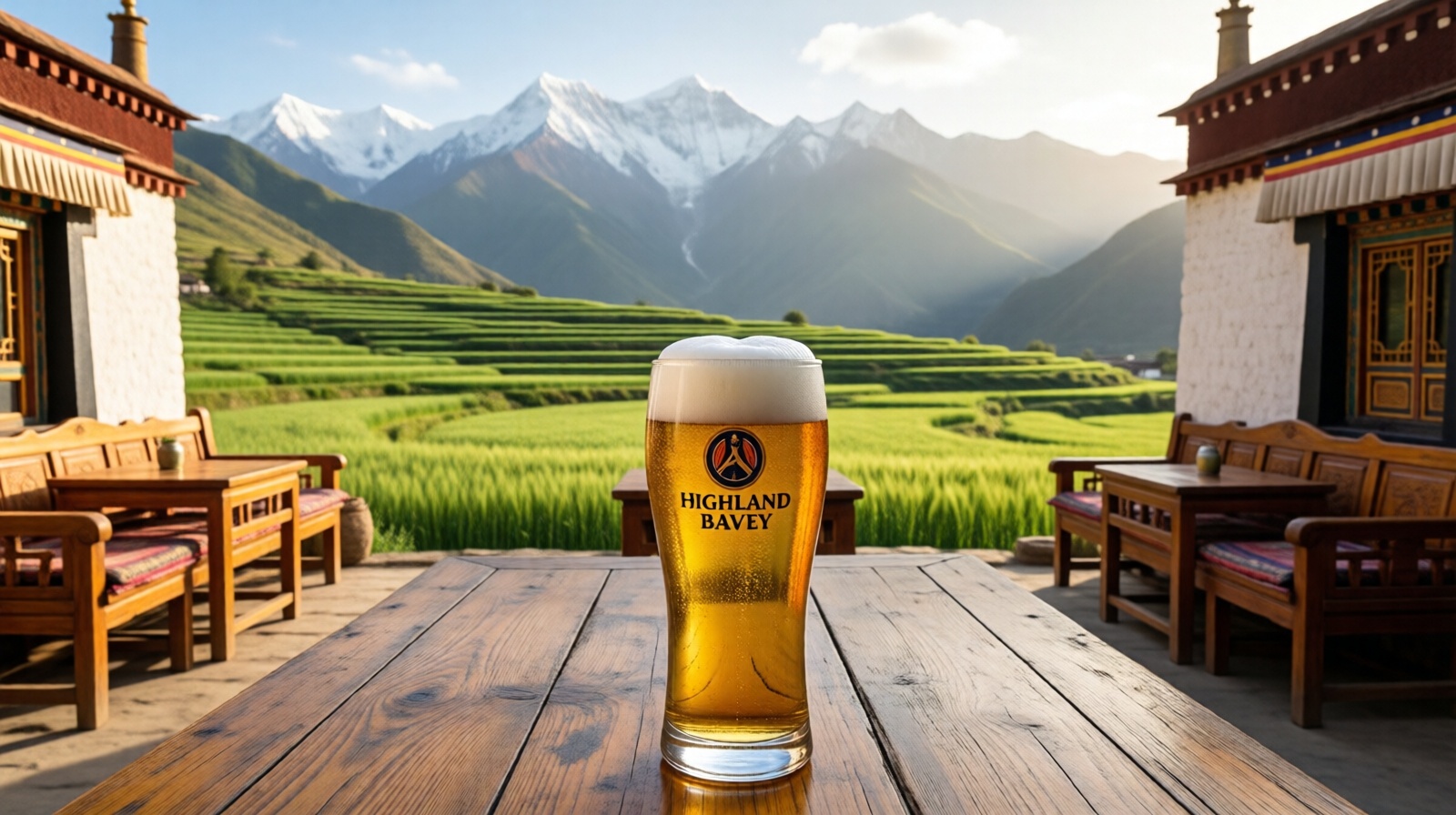
Lhasa is not the first place you’d expect to find a world-class pint. But on a windy night, I found one. I was curled up in a small brewpub near the Barkhor Street, where wind chimes and roasted barley aroma fight for attention. A glass of golden liquid arrived with a foamy head, smelling of warm toast and a whisper of chamomile. “This is qingke beer,” said the bartender, a Tibetan man in a flannel shirt. For a moment I stared at the glass, then at my bowl of tsampa on the table. Could this actually be the same old grain I’d been eating all day?
The answer is yes. And that one pint opened the door to a story larger than a glass of beer.
What Exactly Is Highland Barley?
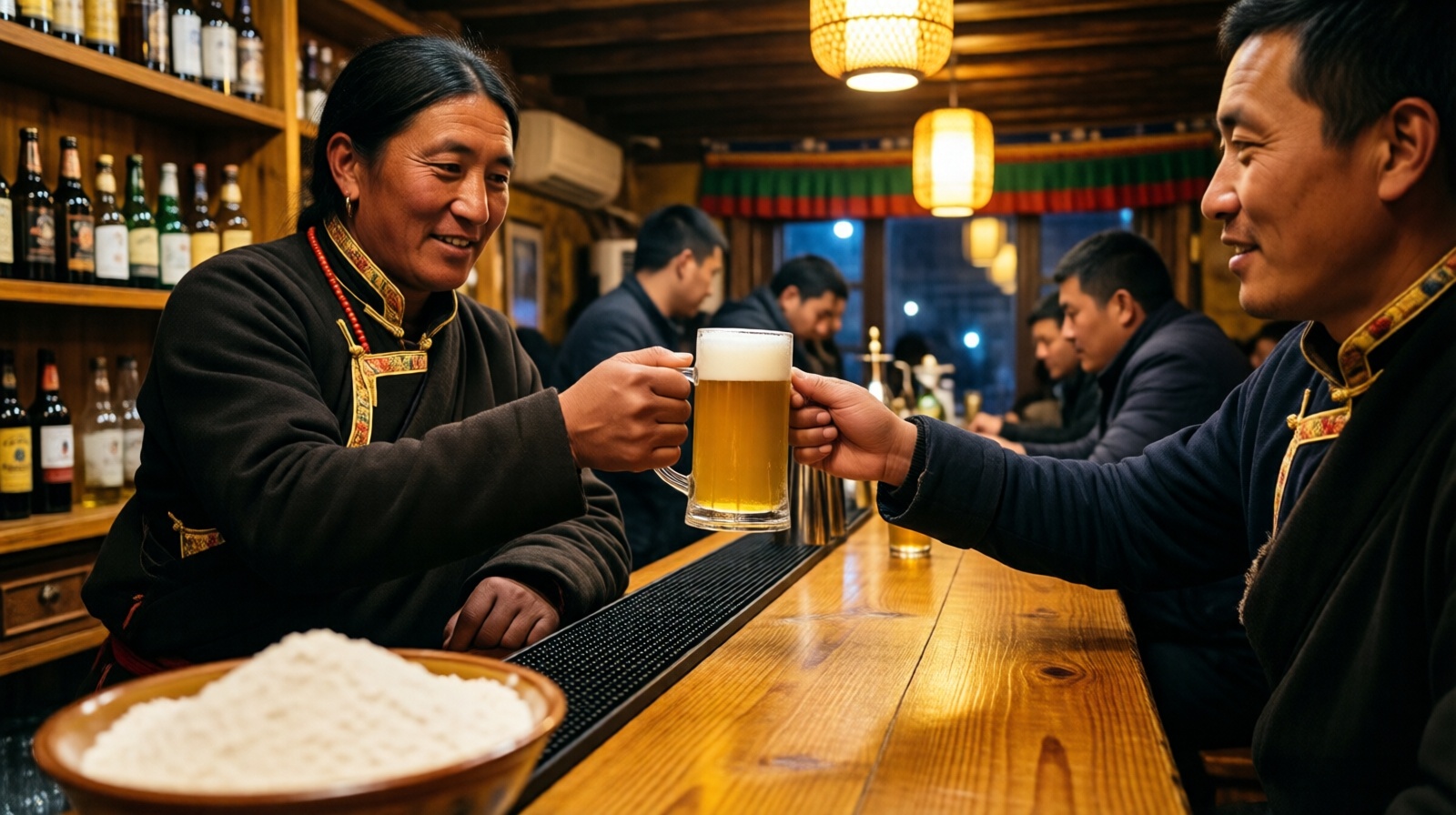
Highland barley, or qingke, is a tough, ancient, hull-less barley grown on the Qinghai-Tibet Plateau. It has been the foundation of Tibetan food for centuries, surviving at altitudes where other crops refuse to grow. Almost every Tibetan family keeps a sack of it. Roasted and ground, it becomes tsampa flour — the base of the doughy, buttery staple that fuels shepherds, farmers, and monks. Mixed with water or fermented, it turns into a low-alcohol, milky-looking drink called chang. For the villagers, chang is more like a rustic rice wine, sour and slightly fizzy, often served in a wooden bowl as a sign of hospitality.
If you live outside the plateau, you may never have tasted qingke. It sounds obscure, and it felt that way to most Chinese urbanites until a few years ago. Then craft beer went mainstream in China, and old grains started taking on a new identity.
Why Brewers Became Heart-eyes Over Qingke
Around 2015, Chinese cities like Beijing, Shanghai, and Chengdu were swept by craft beer fever. Young brewers, constantly hunting for hidden regional flavors, turned their attention to the highlands. Its rough, wild barley was a perfect story — and, more importantly, it brewed with an unexpected personality.
Qingke contains a high level of Beta-glucans and protein, which gives the finished beer a smooth, rounded mouthfeel. It also delivers a distinctly toasty and gently nutty character that can resemble a hybrid of regular barley and brown ale. For brewers, it’s a local twist nobody can copy: you can’t just import the vibe from Belgium or California. And there’s another perk: since qingke is a hull-less variety, many of them market it as a gluten-free-ish option, though technical details remain debated.
The Technical Marriage
But the grain doesn’t make it easy. For brewers used to malted barley, qingke behaves like a stiff and sticky partner. It lacks enough enzymes to convert its own starches into fermentable sugar effectively, and its high protein turns the mash into a porridge. Without careful temperature control, your beer will look like a muddy breakfast.
The solution is a marriage. Most commercial qingke beers blend qingke with a small portion of traditional barley malt, and brewers carefully design the mash schedule so that the enzymes from the barley can help the qingke release its sugars. The best ones don’t hide the qingke; they let it shine as the melody, with barley keeping the rhythm.
A Farmer’s New Numbers
I drove to Shigatse to meet Phuntsok, a soft-spoken farmer who grows qingke on terraced fields that look like golden stairs. In the past, he sold most of his crop to a local grain-buying station at around 2.5 yuan ($0.35) per kilogram, a transaction that barely covered his fertilizer costs. The first time a brewer from Nyingchi contacted him about contract farming, he thought it was a joke. Why would a beverage company want his heavy, thick-headed barley?
Today, Phuntsok’s fields feed a small brewery in eastern Tibet. The brewery pays a premium of nearly three times his old price, guarantees to buy every kilogram, and even provides seed input. “I used to think of qingke as food for poor farmers,” he told me as we watched his combine harvester sweep the golden field. “Now it’s like a small bank I can harvest.”
His story is repeated across the region. The qingke industry, long seen as a backward sector, is slowly forming a new economic equation. Villages now speak of “contract prices” and “production deadlines” — two concepts that didn’t belong to their grandparents’ vocabulary.
From Lhasa Bars to Shanghai Shelves
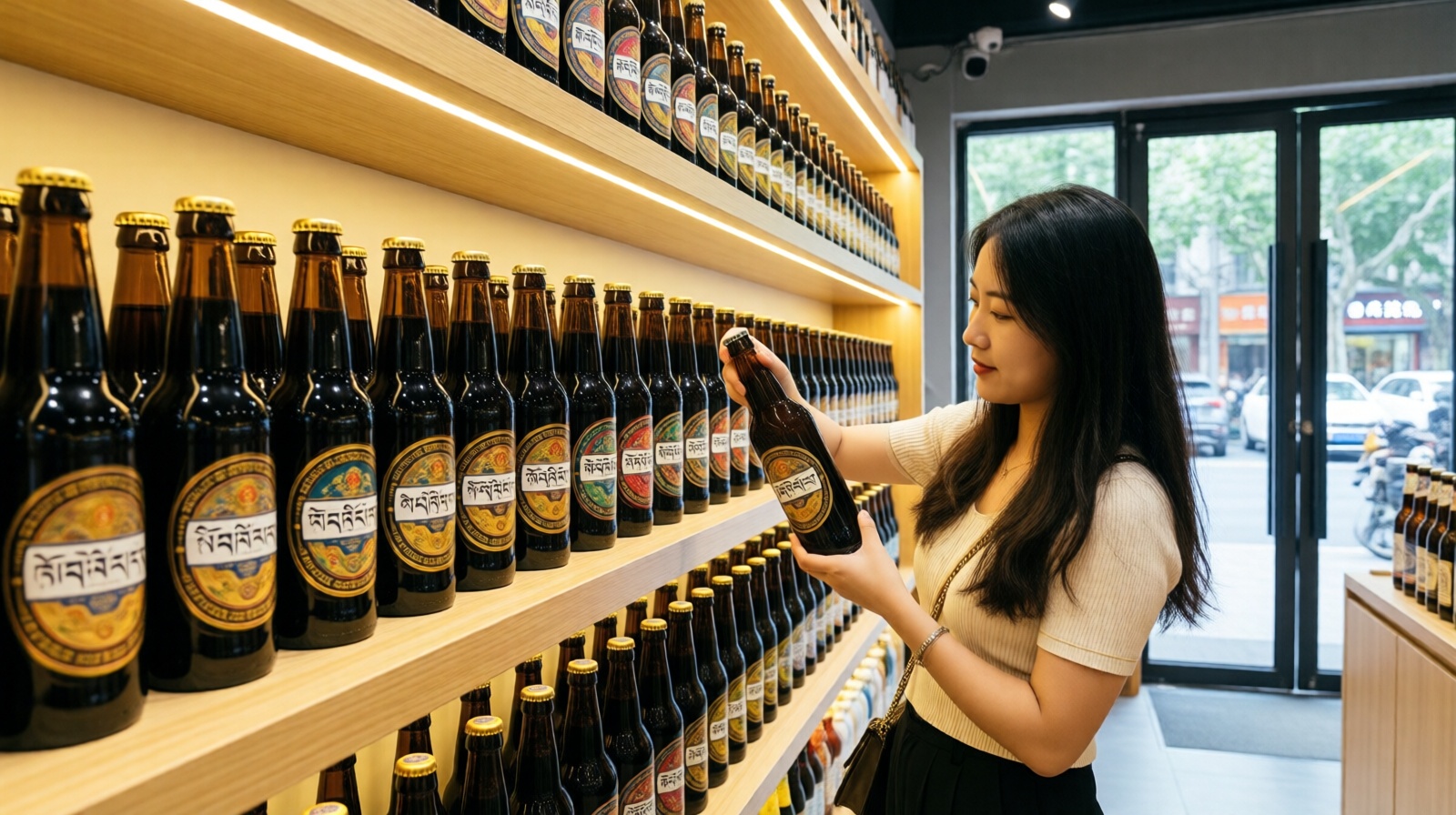
What started in Tibet’s small brew pubs has travelled far. On a business trip to Shanghai, I found a well-stocked bottle shop that carried at least five different qingke beers. Some came from breweries in Tibet itself; others from craft breweries in Yunnan, Sichuan, or even Xinjiang that like to play with the grain. In a hip Chengdu pub, qingke beer sat next to IPA taps, drawing curious stares from first-timers.
Just two years ago, such bottles were rare. Today, China’s largest e-commerce platforms like Tmall and Taobao have dozens of pages of qingke beer. The price ranges from 15 to 40 yuan per bottle – modest for craft beer, but a fortune for a grain that used to sell for a few yuan per kilogram.
There’s also a social-media energy around it. On Xiaohongshu, the Chinese lifestyle app, posts like “what does the Himalayas taste like?” illustrate how the beer taps into a craving for purity and altitude. Not everyone is a serious connoisseur; many are just curious to try a chocolate-smooth sip that comes from a place they might never visit.
What Does It Actually Taste Like?
If you imagine a syrupy, heavy “plateau beer,” think again. The most common qingke styles are crisp and surprisingly light. They often pour pale gold, with an ivory head that feels creamy. On the nose, there’s melted butter, toasted bread crust, honey, and a delicate herbaceousness like chamomile. On the palate, expect a moderate hop bitterness, a round, smooth body, and a dry finish.
Some brewers push further. I once tried a sour qingke aged with fruit from Lhasa’s markets, reminiscent of a Flemish red with a Tibetan twist. Another was a smoked style that tasted like campfire and dark chocolate, ideal for a cold night. Almost everyone agrees that the best examples are made by small lots: the fragility of qingke means that the freshness matters immensely.
What Holds It Back?
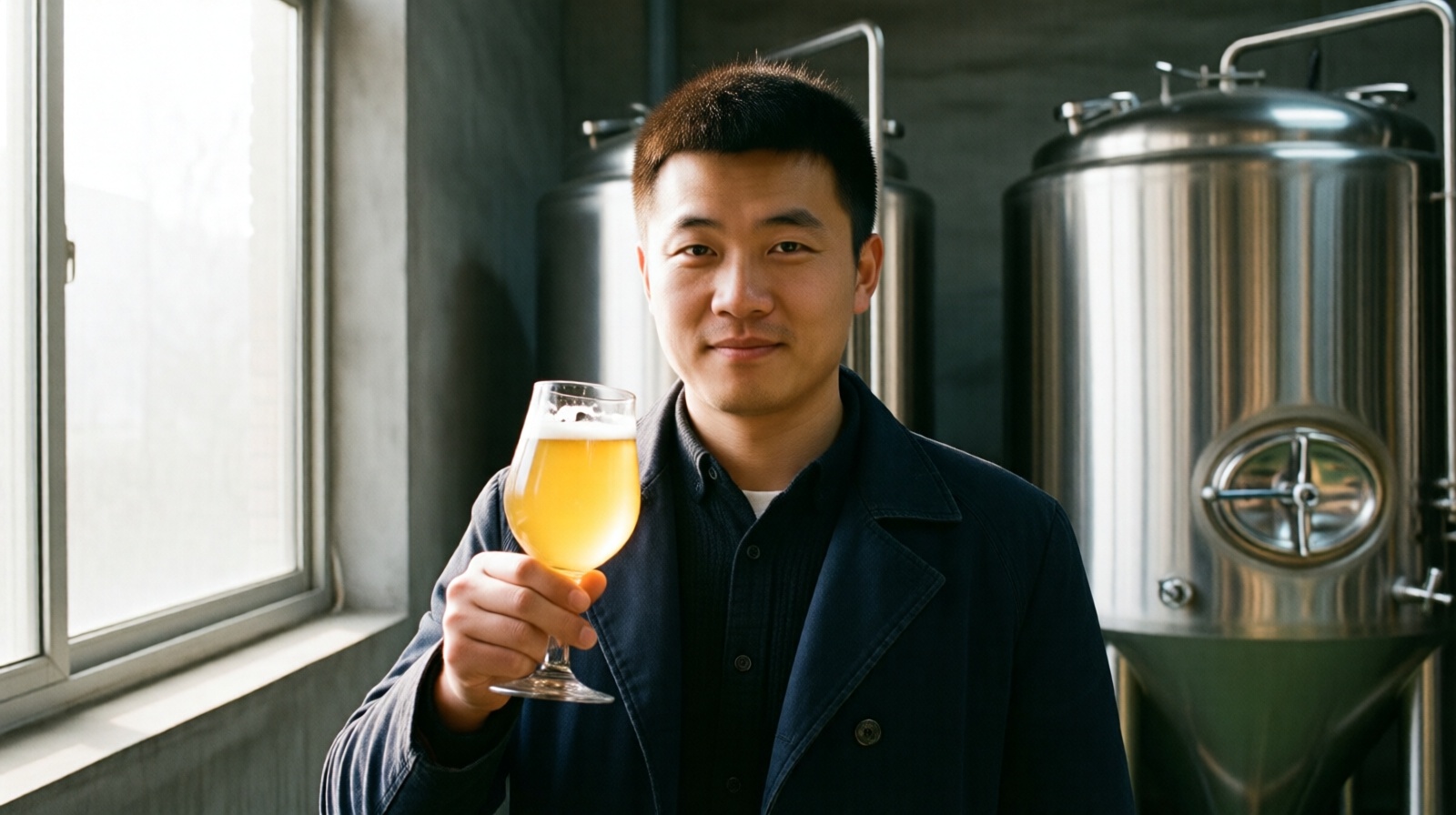
Honesty requires acknowledging a few limitations. Qingke beer is not yet as polished as its Western counterparts. The raw grain can produce a slightly dusty or astringent taste when overused. Money is also a factor; these beers are generally pricier and not always available in local Chinese convenience stores. The supply of qingke itself is constrained by the plateau’s environmental limits, so total production is small. But these limitations are also part of its character: it’s a terroir-driven product, not a commodity.
Why It Matters Beyond Beer
The shift is not just a beverage fad. For the Tibetan Plateau, qingke is more than a crop; it’s a source of cultural identity and food security. By creating a commercial demand for the grain, the craft beer movement sends money directly back to the highlands. Breweries contract directly with farmers. They fund seed research and sometimes invest in local infrastructure. In a region where youth often leave for city jobs, a stable income from qingke could support a small but meaningful livelihood.
In the wider picture, this is one example of China’s food system transforming: from grain-producing for basic calories to producing for experience, provenance, and story. Young Chinese consumers are increasingly hungry for local identity, and qingke beer gives them a taste of the frontier without leaving town.
The Future Is a Mixed Glass
Nobody predicts qingke will replace barley in the global lager supply chain. But its future looks promising as a niche, premium product. Expect more experimental styles: barrel-aged versions, Pilsener hybrids, even zero-alcohol qingke drinks. As more Tibetan entrepreneurs get involved, the ownership of the narrative will likely shift.
When I asked the bartender in Lhasa what he hopes people will feel when they drink his qingke beer, he thought for a moment and replied, “I want them to know that highland barley is not just a food from old photos. It’s alive. It can surprise you.”
Try It Before You Judge It
If you’re in China, step into a craft beer shop and ask for “qingke beer” or “highland barley ale.” It may be hidden among the IPA cans and Belgian triples. Look for labels that mention the Qinghai-Tibet Plateau, or packaged by small breweries in Lhasa, Shangri-La, or Nyingchi. Pair it with yak meat hotpot, spicy Sichuan snacks, or even a simple chocolate dessert.
As for me, I no longer look at tsampa with the same old eyes. Next time I have a bowl, I’ll pause and imagine the fields of golden grain, and the long way it has to travel to become a drink that makes people raise a glass to the roof of the world.
Start the discussion at forum.chinacomes.com