

A Lunch That Costs Less Than a Coffee
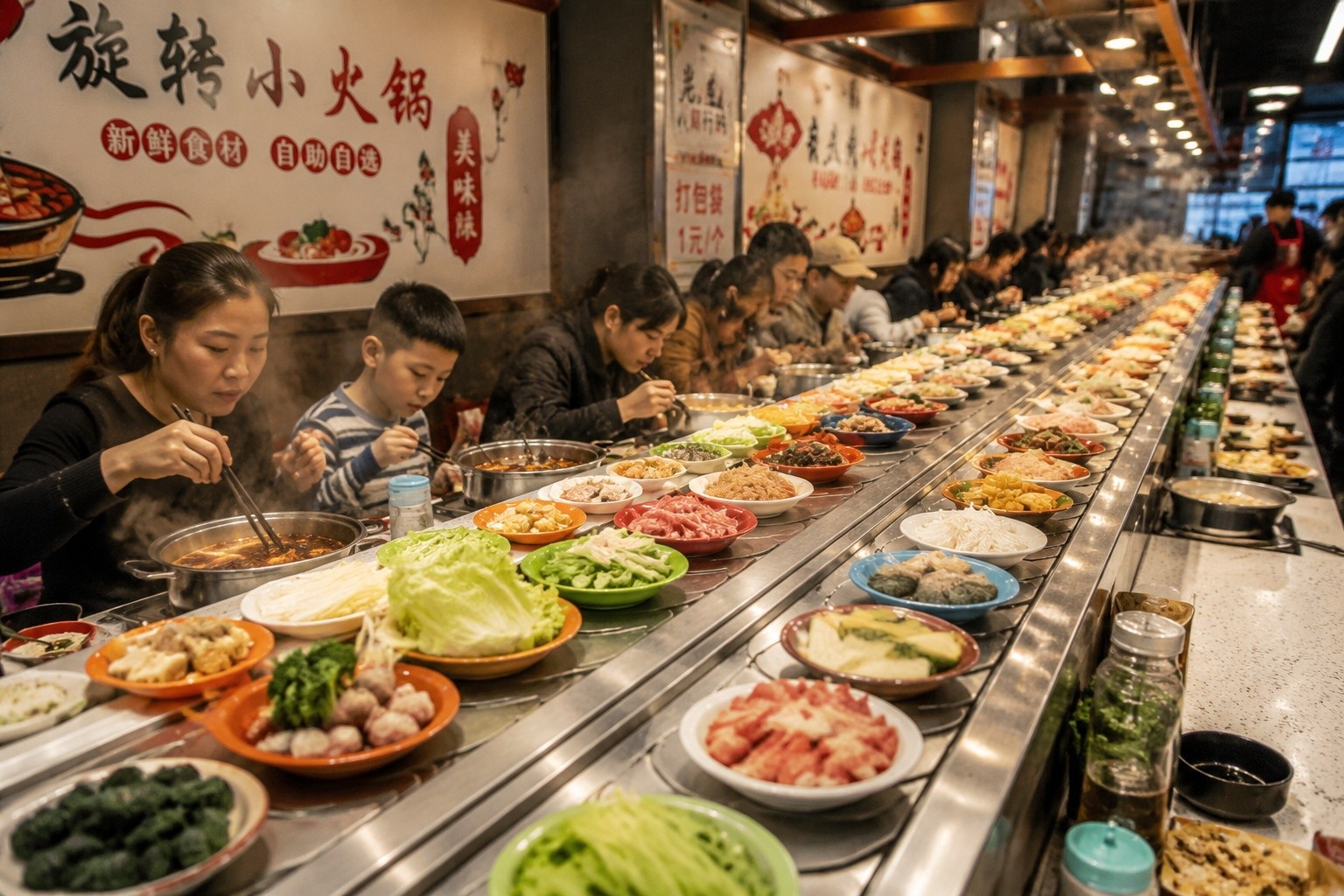
The first thing you notice is the sound. It is not loud, but it is constant: the soft click of metal plates touching the conveyor belt, the low hiss of gas burners, the occasional clatter of chopsticks against porcelain. The air is thick with steam from a dozen small pots, each one bubbling in front of a diner who stares at a slow-moving river of food.
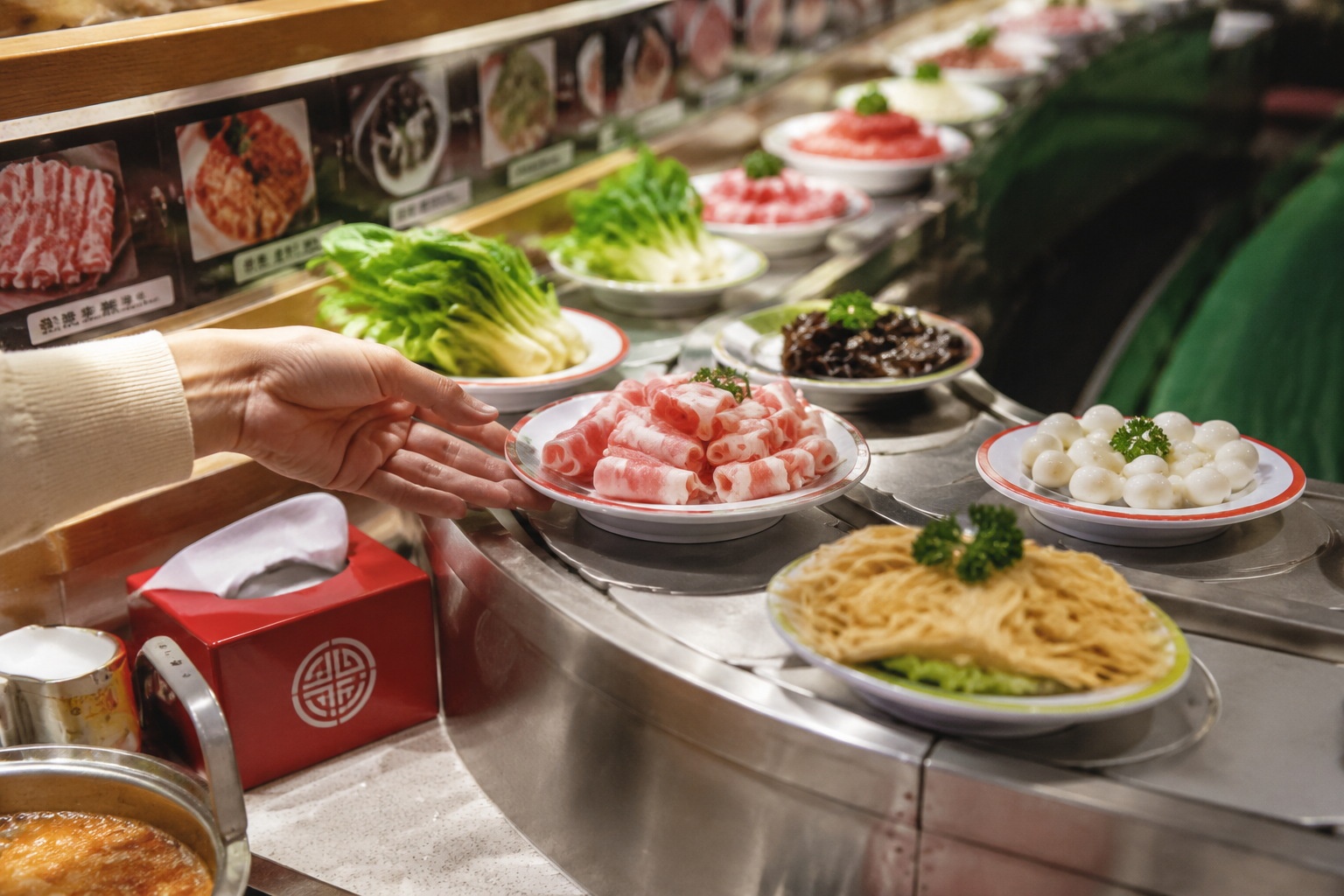
At 1:15 p.m. on a Tuesday, the rotating hot pot shop near my apartment in Chengdu is almost full. I find a stool at the long counter and drop my bag on the floor. In front of me is a small stove with a knob, a pair of chopsticks, and a napkin dispenser. The conveyor belt is already moving — a parade of tiny plates, each holding a single serving of something fresh and raw. There is baby bok choy, thinly sliced lamb, quail eggs, lotus root, tofu skin, enoki mushrooms, and dark red slices of beef tripe, which in Sichuan is almost a religious obligation.
I reach for a plate of tripe before I have even settled. Then a plate of lamb, then a handful of mushrooms, then a disk of lotus root. The plates are color-coded: white is 2 yuan, yellow is 4, red is 6. No menu needed. The color system is the menu.
How to Eat Like a Local
Above the belt, a handwritten sign lists the broth options: Sichuan spicy, tomato, mushroom, and original. I choose spicy because the guy next to me is eating spicy and his pot smells like the whole street outside got compressed into one simmering bowl. I twist the knob, and within a few minutes my own pot is roaring.
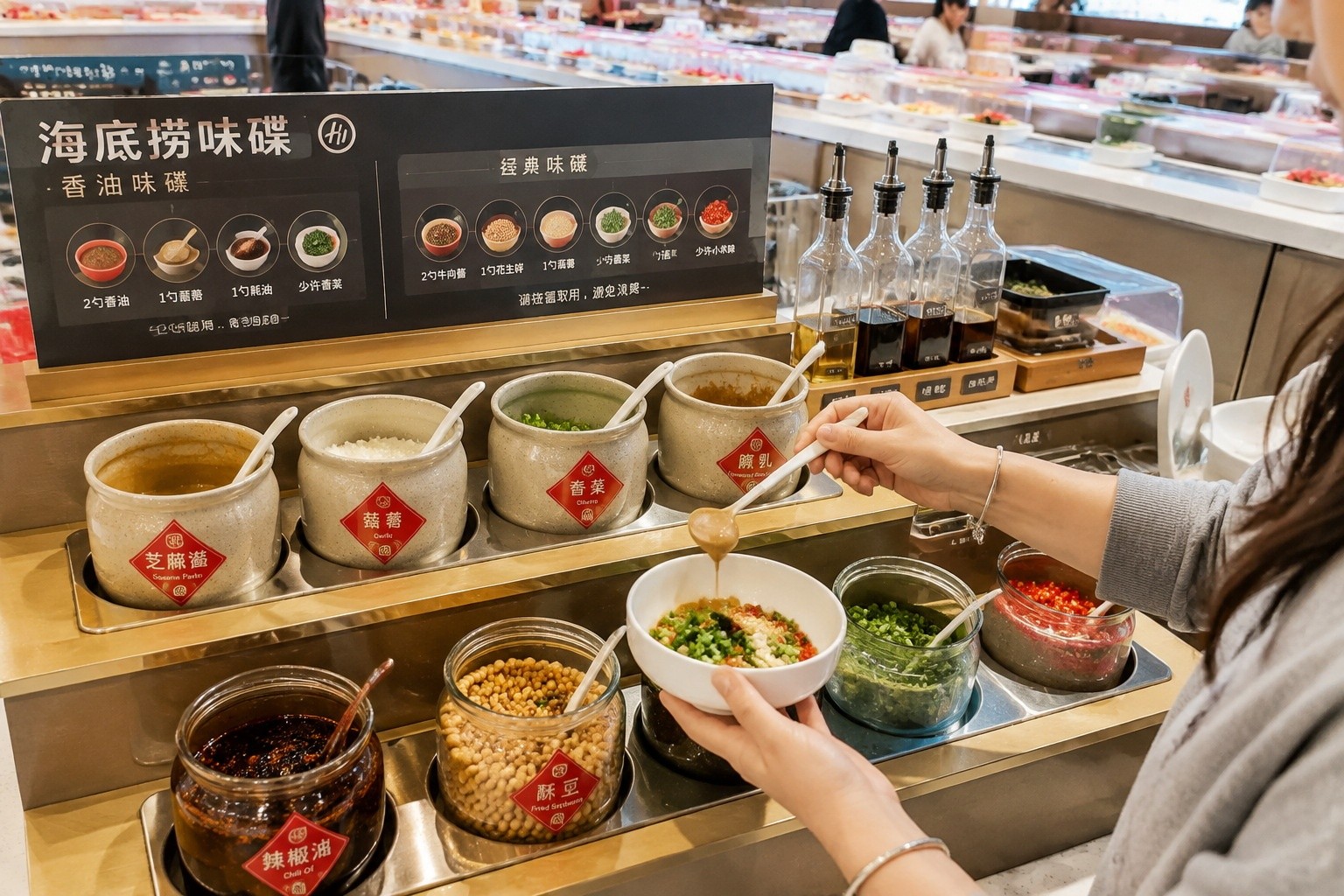
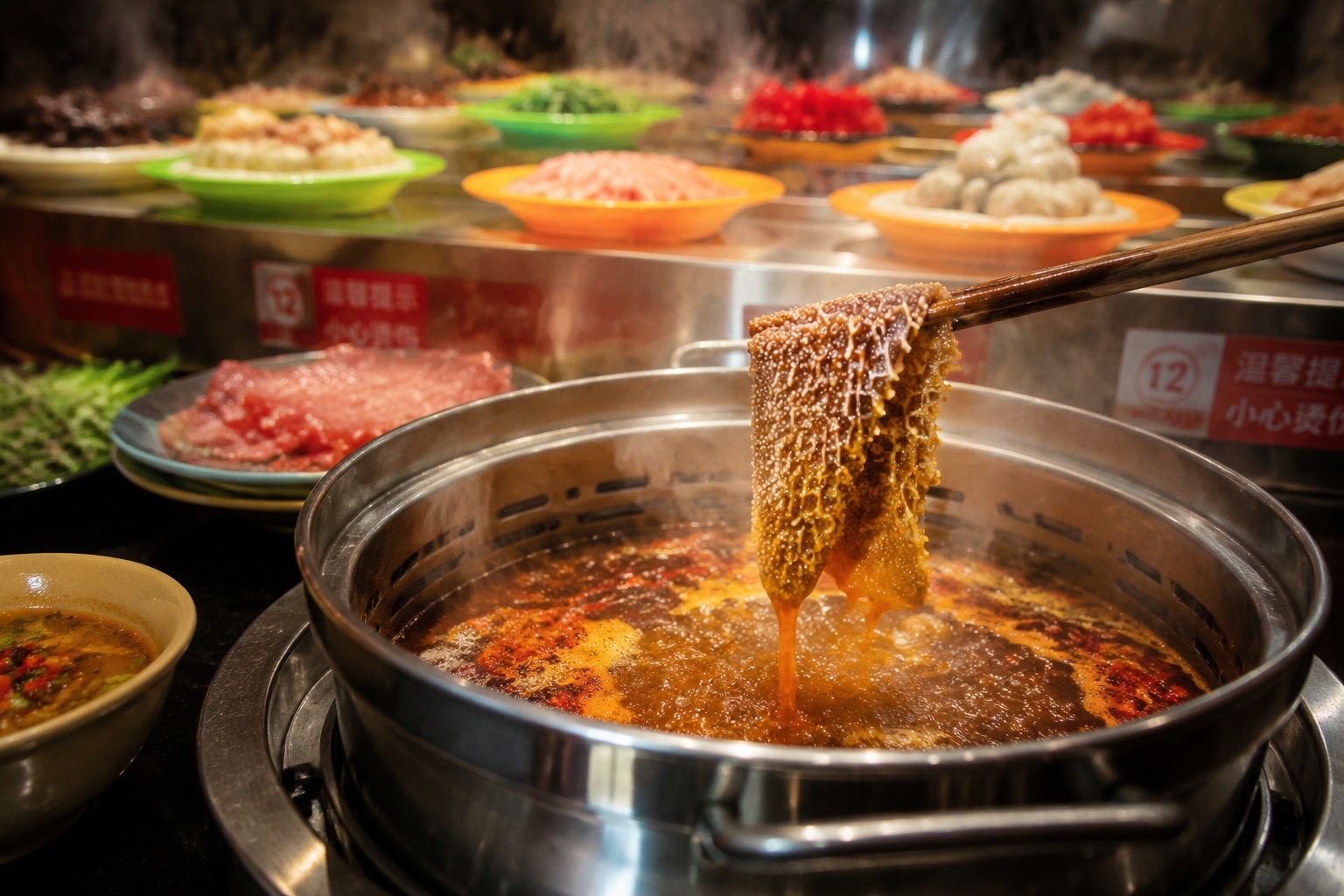
The dipping sauce table is at the back, a self-serve station with jars of sesame paste, crushed garlic, fresh cilantro, fermented bean curd, chili oil, vinegar, and crunchy fried soybeans. The trick I have learned from years of eating hot pot is to add a little of everything and then double the garlic. I mix a small bowl, return to my seat, and drop the first piece of tripe into the boiling broth. Five seconds later, I pick it up, dip it in the sesame-garlic blend, and the richness coats the crisp tripe perfectly.
Around me, the lunch crowd is a mix of people you do not always see in a single restaurant. A student in a hoodie eats alone, scrolling through his phone between bites. Two young women sit opposite each other with separate pots — one spicy, one tomato — and chat about their weekend plans. An older man in a beige jacket arrives, takes a seat near the front, and methodically works through a stack of plates, eating with the quiet patience of someone who has done this a hundred times.
Why the Format Works
The rotating hot pot is not new, but it has become a quiet fixture of China’s budget dining scene, especially in small cities and residential neighborhoods. The formula is simple: you pay for what you take, and the belt does the serving. There is no wait staff to flag down, no ordering app to navigate, no group debate about what to order. You eat at your own pace, and the bill is determined by the little stack of colored plates next to your bowl.
It fits a broader shift in how Chinese people, especially young workers, eat. A growing number of people eat alone — not because they have no friends, but because life is fast and a flexible solo meal feels liberating. A conventional hot pot restaurant is a social event; a rotating hot pot is a personal one. It is fast food with the variety of a tasting menu, and it is cheap enough to make a regular habit.
My own stack at the end of the meal: six white plates, three yellow plates, one red plate. That is ten plates in total, eight of them food (the others were sides). The cashier at the front counts them out loud — “six white, three yellow, one red” — and I pay 31 yuan, which on any given day is less than the cost of a movie ticket. A bowl of rice is free, and the water is on tap.
The Logistics Behind the Belt
What makes this price possible is a surprisingly organized supply chain. Each morning, suppliers deliver fresh vegetables, meat, and seafood to a central kitchen or a local wholesale market. Workers there wash, cut, and portion the ingredients into standardized small plates, which are then delivered by van to dozens of similar shops in the area. The plates are unlabeled but color-coded, so a part-time worker can stack the belt without knowing the menu by heart.
This is the same logic that powers conveyor-belt sushi or budget Italian chains. But in China, the rotating hot pot has evolved its own character. Some shops have added QR codes to each table so you can order extra items — a plate of shrimp, a bowl of noodles — and a robot or a staff member brings it over. Others have installed a transparent cover over the belt to reduce food exposure. The basic version, though, is still the most common: a narrow belt, a row of heads bent over steam, and the steady rotation of small plates.
For a traditional hot pot restaurant, the customer experience is different. There, the host hands you a thick menu, waiters bring trays of plates, and the table fills up like a small banquet. The bill for two people easily reaches 150 to 200 yuan. The rotating hot pot, by contrast, is a stripped-down version, but its accessibility makes it a daily option for workers who want something warm, fresh, and filling without a lot of ceremony.
The Flip Side
It is not perfect. The portions are small, so if you are genuinely hungry, you might end up with a taller stack of plates and a surprisingly high bill. The belt can also feel monotonous if you arrive late in the afternoon and the shop has stopped restocking fresh items. And because the plates travel past everyone’s table, there is a natural worry about hygiene. Better shops use covered plates or install a clear shield, but the budget ones are more casual.
There is also the question of whether the food is really “fresh.” The term is relative. At 1 p.m., the lamb slices have been out on the belt for a while, and the bok choy might be a little wilted. The shrimp are not jumping out of the water. But the prices are so low that the expectation is calibrated accordingly. You get what you pay for, and what you pay for is fine.
A Window into China’s Food Scene
As I walk to the counter with my stack of plates, the cashier — a woman in her 40s who seems to know every regular — smiles and starts counting. “Six white, three yellow, one red,” she says, tapping each plate as she moves it. I hand over 31 yuan, and she points to a small basket of wrapped candies. “Take one.”
It is a small gesture, but it makes a budget meal feel like someone put a little thought into it. I pop the candy into my mouth and step out onto the street. The afternoon sun is warm, and the shop’s glass door slides shut behind me. Inside, the belt is still turning. A new customer is already settling in, reaching for a plate of tripe.
That is the thing about China’s rotating hot pot: it does not try to be anything more than what it is. People come alone, eat quickly, talk quietly, and leave with a full stomach and a small plastic candy wrapper in their pocket. It is not a memorable feast, but it is exactly the kind of lunch that makes a city feel livable.
Start the discussion at forum.chinacomes.com