

Introduction: A Morning in Nanjing
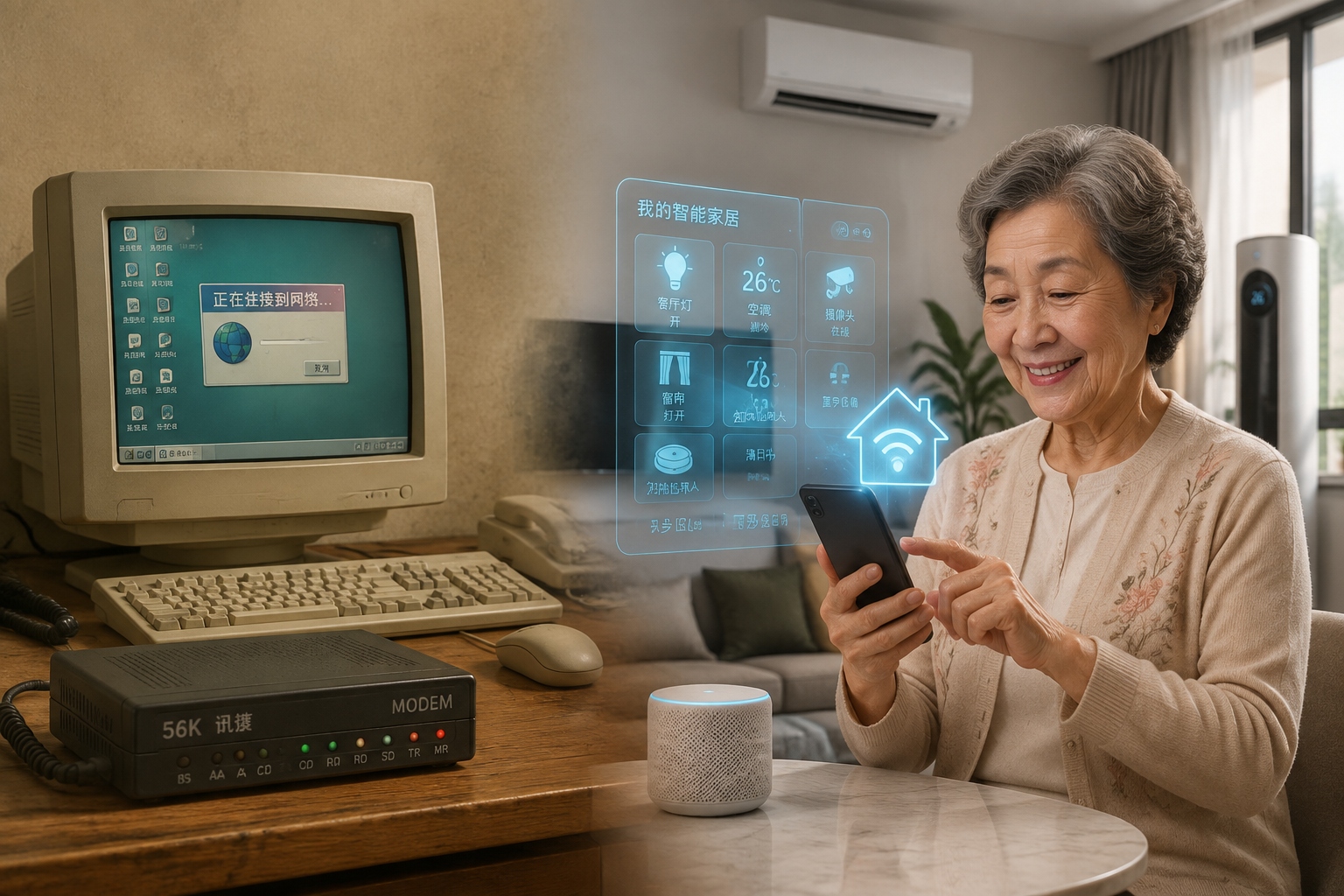
At 7:30 AM, 68-year-old retired teacher Li Fen picks up her smartphone. She uses facial recognition to unlock it, checks her WeChat messages from her daughter in Shanghai, and orders fresh vegetables via a mini-program — all before her tea is brewed. Fifteen years ago, Mrs. Li had never sent an email. Twenty years ago, she queued at a post office to make a long-distance call. This is not a story about a tech billionaire or a startup founder. It is about how digital China — from dial-up internet to smart living — has become accessible to nearly everyone, regardless of age or income.

From Dial-Up to Everywhere: The Infrastructure Leap
In the late 1990s, getting online in China meant a screeching modem, a phone line, and a bill that could make your eyes water. By 2005, only about 8% of the population had internet access — far behind the U.S. or Western Europe. But then something shifted. Massive government investment in fiber-optic networks and 4G base stations turned China into the world’s largest connected country. Today, over 99% of China’s villages have broadband access, and 5G coverage reaches every major city.
Compared to many developed countries where private companies built infrastructure unevenly, China’s state-led model pushed connectivity into remote mountain villages and desert towns. The result: a digital foundation that allowed services like mobile payments, e-commerce, and online education to scale rapidly. For a user in rural Yunnan, the smartphone in their hand is a window to the same world that a Shanghai banker sees.

Everyday Digital Life: More Than a Convenience
If you visit China today, you might be shocked by how little cash people carry. WeChat Pay and Alipay are accepted from street food stalls to high-end boutiques. In 2023, mobile payments in China reached $68 trillion in transaction value — more than the entire GDP of the U.S. This is not just convenience; it’s a different social contract. Where Western countries leaned on credit cards and bank transfers, China skipped the plastic era entirely, moving directly from cash to QR codes.
But the digital shift goes deeper than payments. Food delivery apps bring thousands of cuisines to your door; ride-hailing platforms connect you to a car in seconds; online consultations let patients see a doctor without leaving home. For the elderly, the government has rolled out “senior-friendly” versions of apps, voice assistants, and offline alternatives to ensure no one is left behind. Mrs. Li, the retired teacher, says: “I didn’t grow up with technology, but I am learning. It makes life easier, and I don’t want to be left out.”
Smart Living: AI, 5G, and the Internet of Things
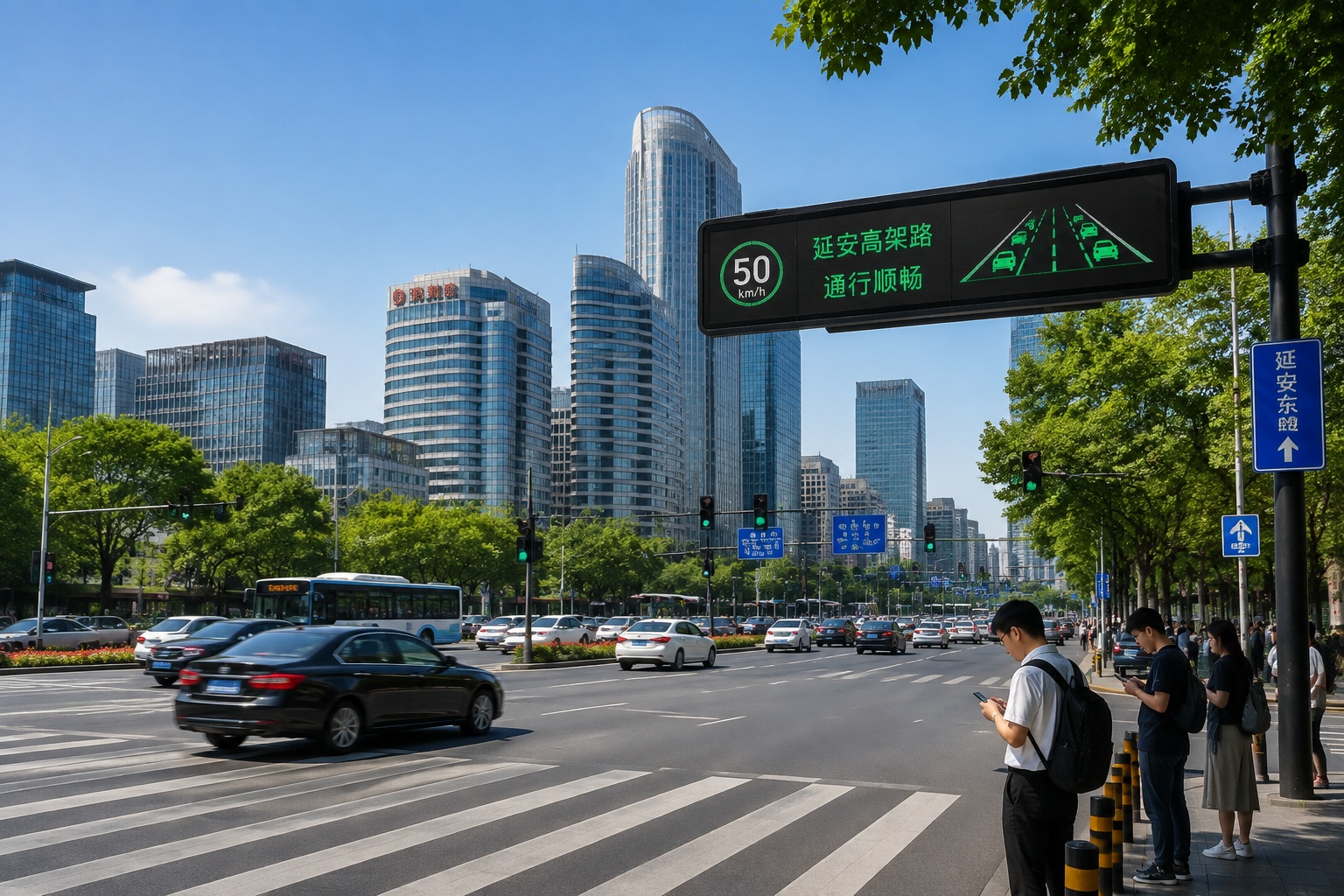
China’s digital journey is now entering its third phase: intelligent living. In smart cities like Hangzhou, traffic lights adjust in real time to reduce congestion. In Shanghai, AI-powered cameras detect potholes and broken streetlights automatically. Smart home devices — from voice-controlled curtains to robot vacuums — are becoming affordable for middle-class families. The country is also a leader in AI research, with applications in healthcare (diagnosing diseases from scans), education (personalized tutoring), and manufacturing (smart factories).
Compared to Silicon Valley’s focus on algorithms and social media, China’s smart living is more “hardware-plus-software”: integrated into physical infrastructure. For example, China’s high-speed rail network uses AI to predict maintenance needs, and taxi drivers rely on navigation apps that learn traffic patterns in real time. This blending of digital and physical is what makes the Chinese smart city a distinct model — one that many developing countries are watching closely.
Bridging the Digital Divide: Designing for Everyone
One of the biggest challenges of any digital transformation is inclusion. China’s older population — over 280 million people aged 60 and above — could easily be left behind. But the government and tech companies have made concerted efforts. Offline service counters remain mandatory in banks and hospitals. “Senior mode” on smartphones enlarges text and simplifies menus. Local community centers offer free digital literacy classes. In 2022, the State Council issued guidelines to ensure that elderly people can access essential services both online and offline.
Is it perfect? No. Rural areas still face slower internet speeds, and some elderly people feel overwhelmed by the pace of change. But the direction is clear: digital China is not just for the young and tech-savvy. It is for everyone — from the farmer scanning a QR code to sell his produce, to the grandparent video-calling a grandchild on the other side of the country.
Conclusion: What Comes Next?
As China moves toward 6G, quantum computing, and more advanced AI, the vision of “Digital China for Everyone” will be tested. Can the country keep its infrastructure inclusive while pushing the frontiers of technology? History suggests that the same model that brought broadband to the last village — a combination of state ambition, private innovation, and social adaptation — will continue to evolve. For a foreign reader watching from afar, the lesson is not about copying China’s model, but understanding why millions of ordinary Chinese people have embraced digital life so fully. It is a story of access, trust, and the relentless human desire to connect.
Start the discussion at forum.chinacomes.com