

The Path Up Is Not for the Faint of Heart
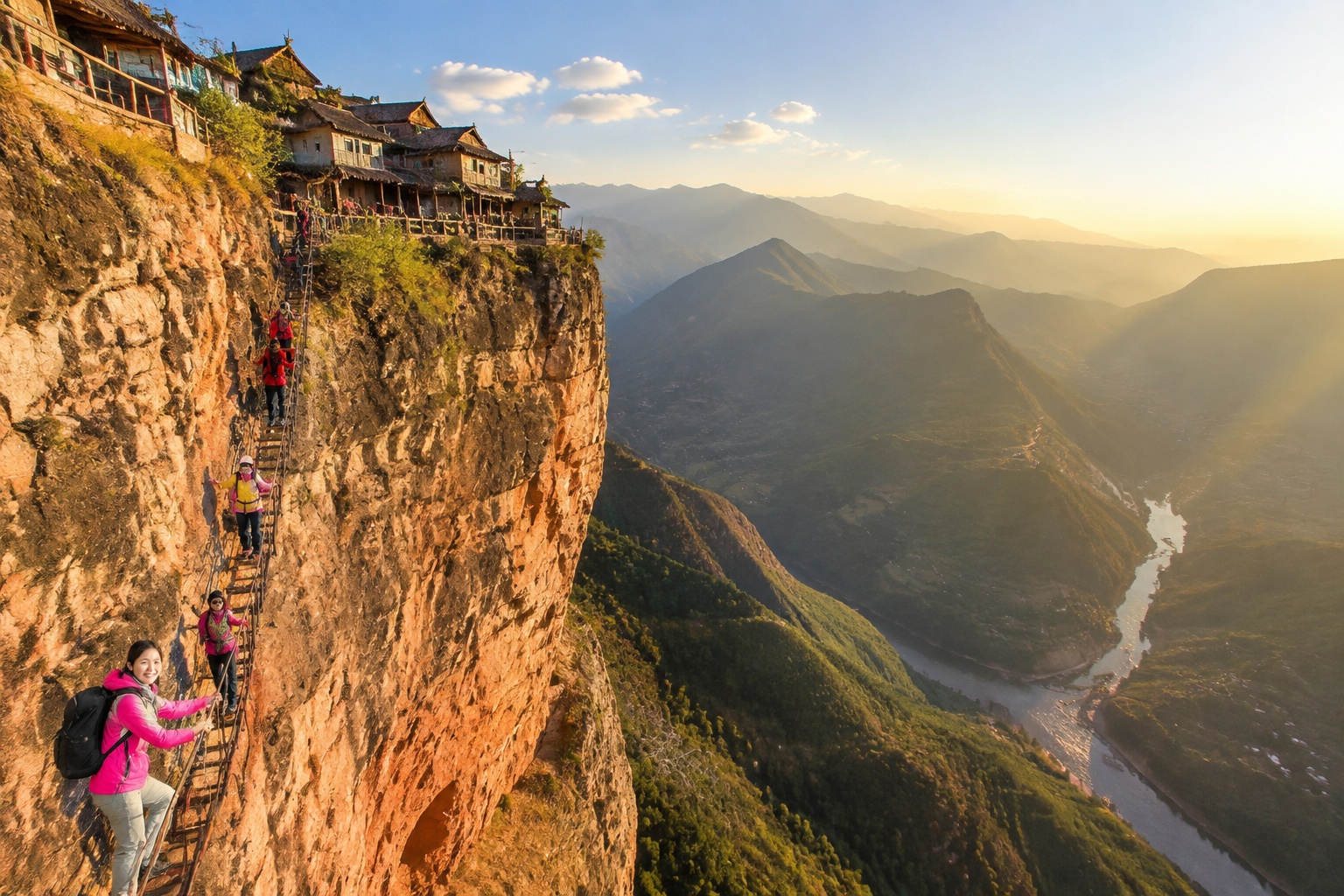
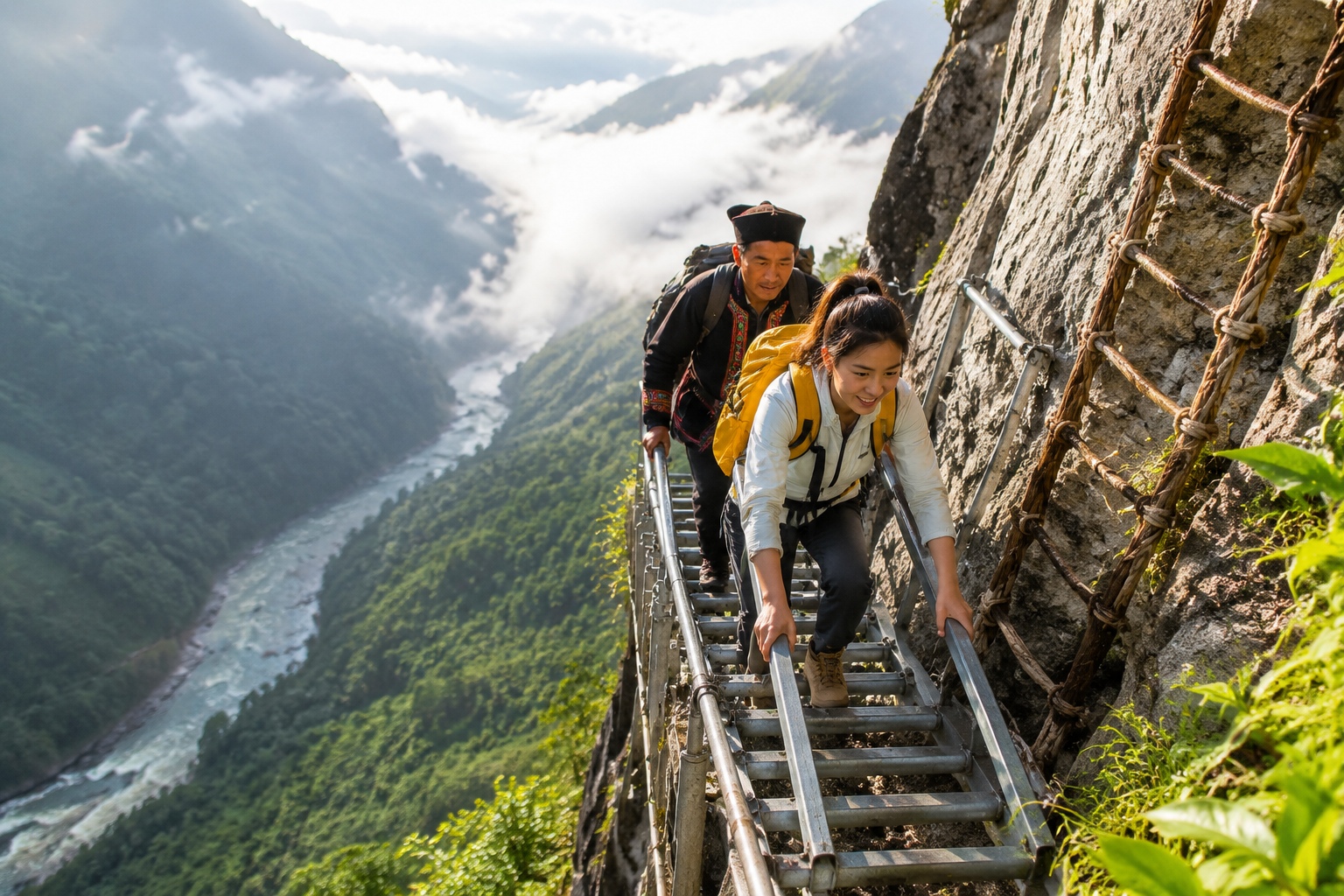
Morning light is just beginning to catch the bare rock of the mountain when I start the climb. At my side is Jike Erzi, a 34-year-old man born in the village above. He moves up the steel ladder without hesitation, his feet finding each rung as if it were a stair in his own home. For a few minutes I try to keep up, but my arms soon ache from pulling my own body weight. The steel rails, painted yellow, are cool and slightly damp. Below me, the valley drops into a pale green river, and the sounds of birds and my own breathing fill the air.
This is Atule’er, better known to the world as “Cliff Village,” a settlement that used to sit at the end of a chain of vines and wooden ladders tied to the cliffside in Liangshan, a mountainous region in China’s southwestern province of Sichuan. Down in the valley, the Min and Anning rivers run through fields and small towns. Up here, on a slope that tilts sharply toward the sky, about 100 households once lived completely cut off from roads, power lines, and school buses.
It Was Never Just the Ladders
For decades, stories about Cliff Village focused on the terrifying old path: fifteen sections of uneven rope and wooden dowel, suspended between the cliff and nowhere. Local children walked it barefoot on their way to school. People lost their lives. Villagers carried corn, pigs, and firewood up and down on their backs, trading with the outside world only a few times a month.
Then, in 2016, the local government built a new steel ladder structure with more than 2,500 steps, supported by steel beams bolted directly into the rock. That changed the basic rules of daily life. A trip that once took several hours and required both hands and full concentration could now be done – still slowly, still breathlessly – but with a hard floor under every step. The cost was significant: construction materials had to carried up the cliff by hand or by mule. But the result was a pathway that made the village accessible in a completely new way.
I stop for a moment on one of the resting platforms. Jike pulls a piece of local dry pear from his pocket and offers it to me. “When I was a child, my father used to go down to the market with baskets on his back. He carried corn, potatoes, sometimes a pig. It took four or five hours,” he says. “Now you can bring a tourist up in two hours, if you go slowly.”
Life Above the Clouds
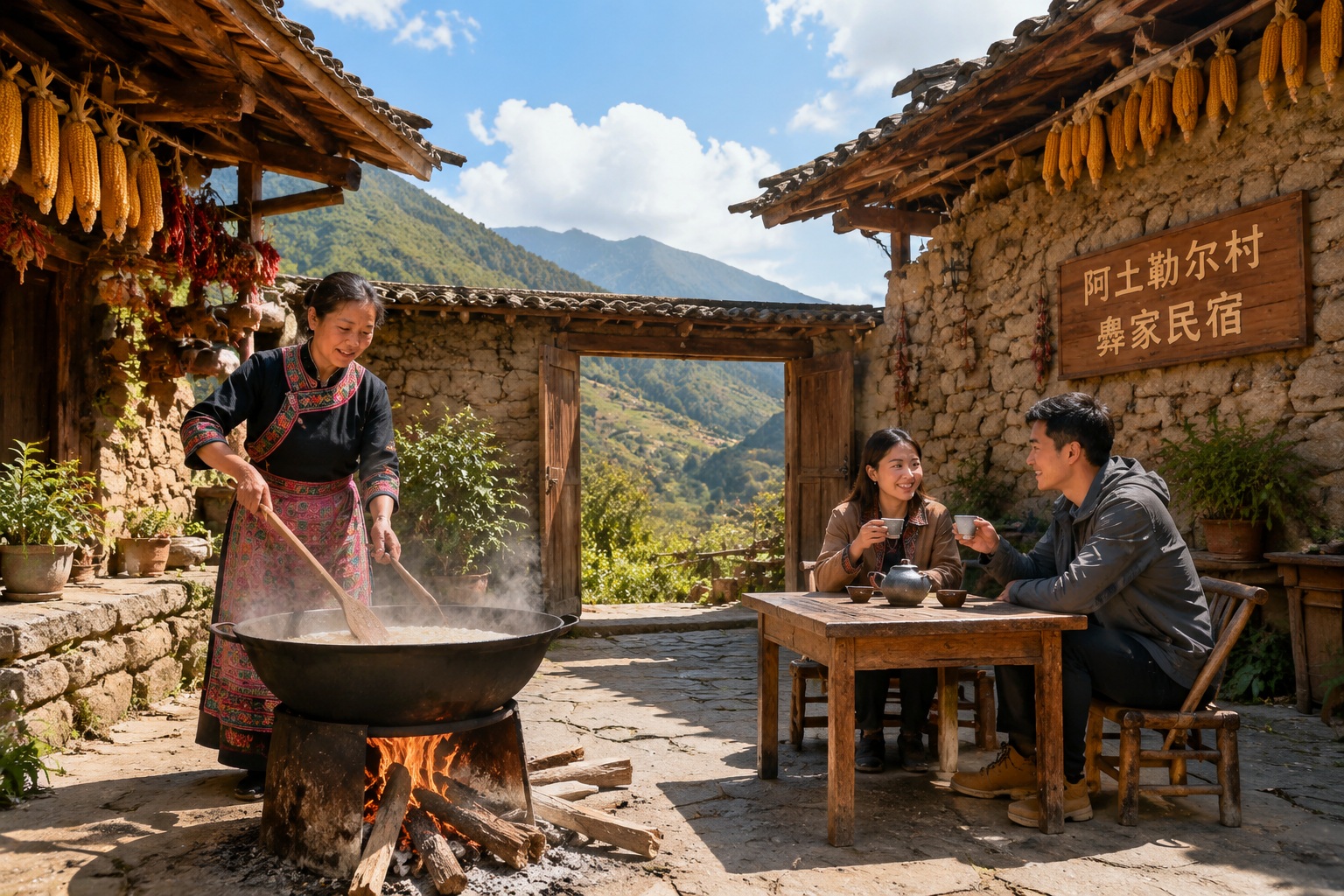
The village itself is not a single block of houses but a cluster of low stone and timber homes spread over a ridge. Some have been carefully repaired for guests. Behind a wooden gate, a courtyard has been turned into a small terrace with chairs and low tables. A woman in a dark apron is stirring a pot over a wood fire. This is the homestay run by Jike’s sister-in-law, Mo Se. She left the village years ago to work in a coastal factory, then came back when tourism began to take off. “I never thought strangers would want to stay here,” she says, laughing. “They ask about the old days. They ask if we have internet. We do, up here, now.”
The arrival of broadband in the late 2010s was one of the clearest signs that the village was being pulled into the modern world. Young people who had moved to cities for work started posting videos of the village, and soon the image of houses sitting above a sea of clouds drew hikers, photographers, and reporters from all over China. The village’s name itself became a kind of brand, and local authorities invested in trails, viewing platforms, and basic sanitation.
The Decision to Move, and the Decision to Stay
Not every villager continued to live on the cliff. In 2020, a major resettlement program built new houses in the county town, about an hour’s drive from the mountain base. Many families, especially those with children in school or elderly members needing medical care, chose to move. Others decided to stay. The two groups are not as separate as they might seem. Many families have members in both places. The village has become a kind of base for tourism, while the town offers easier access to jobs, schools, and hospitals.
Jike’s parents now live in the town, but he comes up almost every day to lead tours. “The village is not just a home. It’s work now,” he says. He earns a modest but comfortable income guiding visitors, carrying supplies on his back, and helping maintain the ladder. On a busy weekend, he might lead two groups up and down. In slow season, he repairs railings and clears drains. “The money is better than before,” he says, “but the real change is that we can stay here and earn a living. We don’t have to choose between family and work.”
The New Economy of the Cliff
Tourism has created a web of small livelihood activities. Homestay owners sell meals and simple rooms. Porters carry water, drinks, and construction tools up the ladder, earning more than they once did from selling crops. Local honey, dried mushrooms, and smoked meats now travel down the mountain in the backpacks of visitors instead of in sacks. Some guide associations have been set up by young villagers who previously worked far away. They now coordinate climbing groups, provide insurance, and enforce safety rules.
The numbers reflect the scale of the change. In 2023, the village received more than 100,000 visits, according to local reports. During the May Day holiday alone, thousands of people made the climb. For a settlement that once had no road, no school, and no clinic, the shift is drastic. But the local officials and villagers are careful to describe tourism as a beginning, not a solution. The cliff gets slipperier in rain. The number of visitors must be managed. Not every young person wants to be a guide.
Challenges Inside the New Scenery
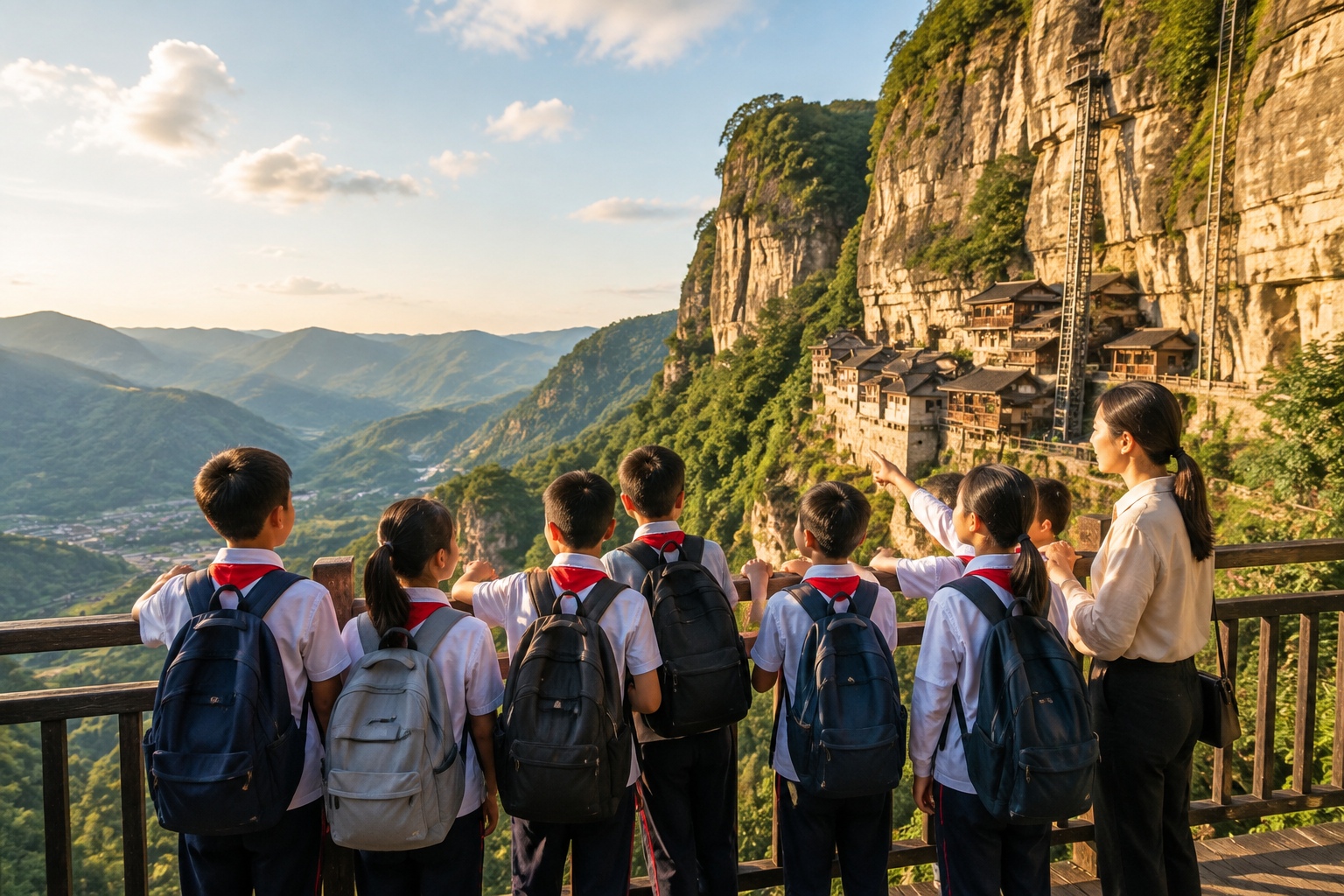
Standing on the viewing platform at the edge of the village, it is easy to admire the view: green mountains folding into one another, a river like a silver thread far below. It is also easy to forget that the village is part of a larger ecological and social system that remains fragile. Water is still partly carried up by porters during dry periods. Waste must be carried down. The villagers are trying to balance the pull of tourism with the pace of their own lives.
Some older residents have mixed feelings. They appreciate the new infrastructure but miss the quiet. One man, who asked not to be named, told me he rarely spends time in the village on weekends anymore because of the noise and the questions from tourists. “They come, take photos, go. We are no longer just a village; we are a place they’ve seen on the internet,” he said. His words are a reminder that change, even good change, is never entirely smooth.
The Meaning of the Ladder Today
On my way down, I watch a group of schoolchildren from the county town climb up with their teacher. They are laughing, a little nervous, holding railings with both hands. They will spend the night in a homestay and learn how the Yi people have lived in these mountains. Later, I sit with Jike by the terrace, drinking a sour fruit drink. He tells me that his five-year-old daughter, who lives in the town with her mother, comes up to visit almost every weekend. She asks to climb the ladder by herself. He lets her, but only if she holds his hand.
The Cliff Village is no longer a symbol of isolation. It has become a place where visitors can touch a piece of China’s rapid change and its long history at the same time. The ladder is not just a way to get up a cliff. It is a line between one era and the next, and people like Jike walk it every day, carrying their old home and their new future in the same backpack.
Start the discussion at forum.chinacomes.com