

Introduction
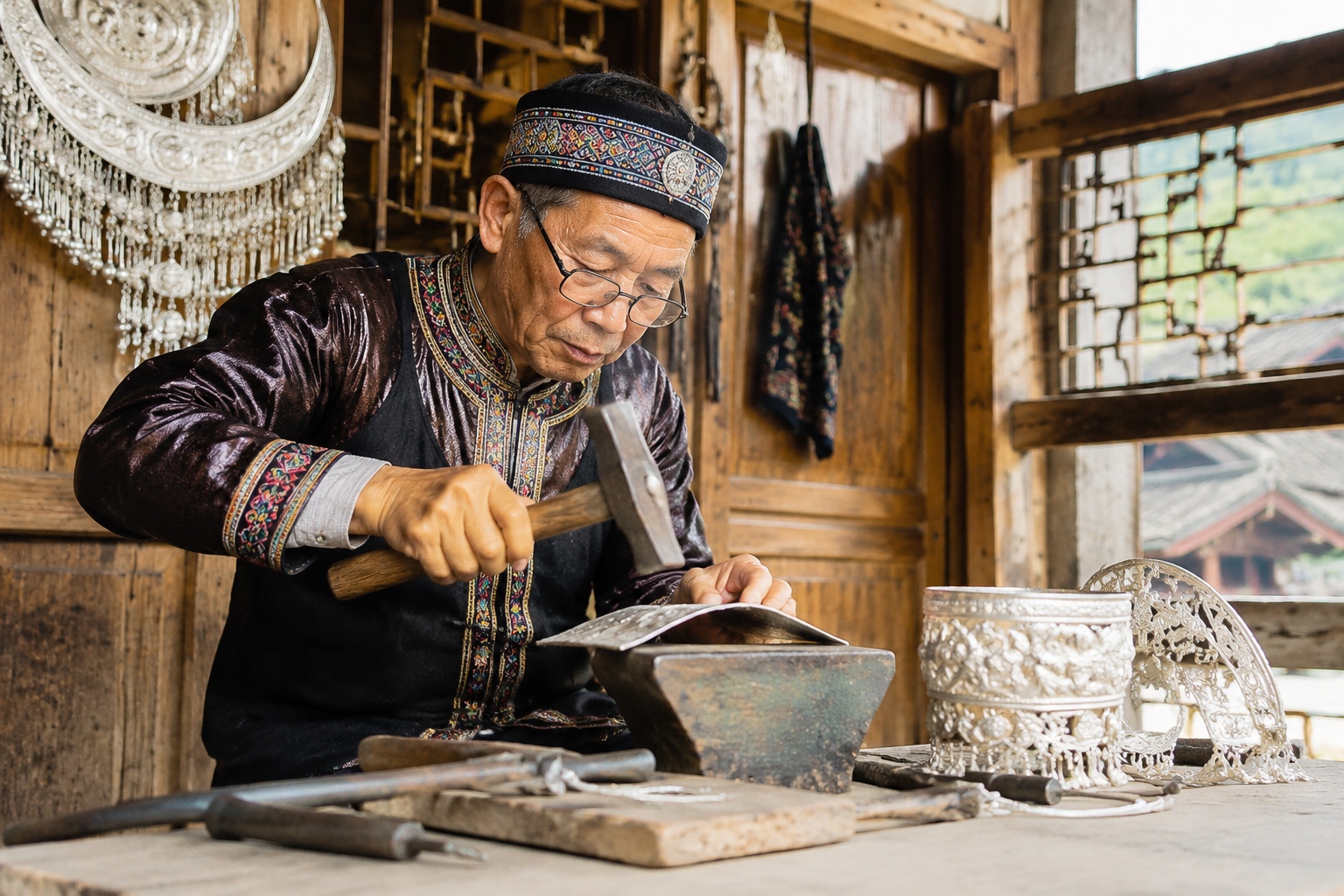
In the ancient Miao village of Xijiang, Guizhou Province, the sound of hammering echoes from a small workshop. Pan Songhua, a 50-year-old silversmith, is flattening a silver bar into a thin sheet. A traveler from Shanghai asks him the question every visitor eventually asks: “Why is Miao silver jewelry so heavy?”
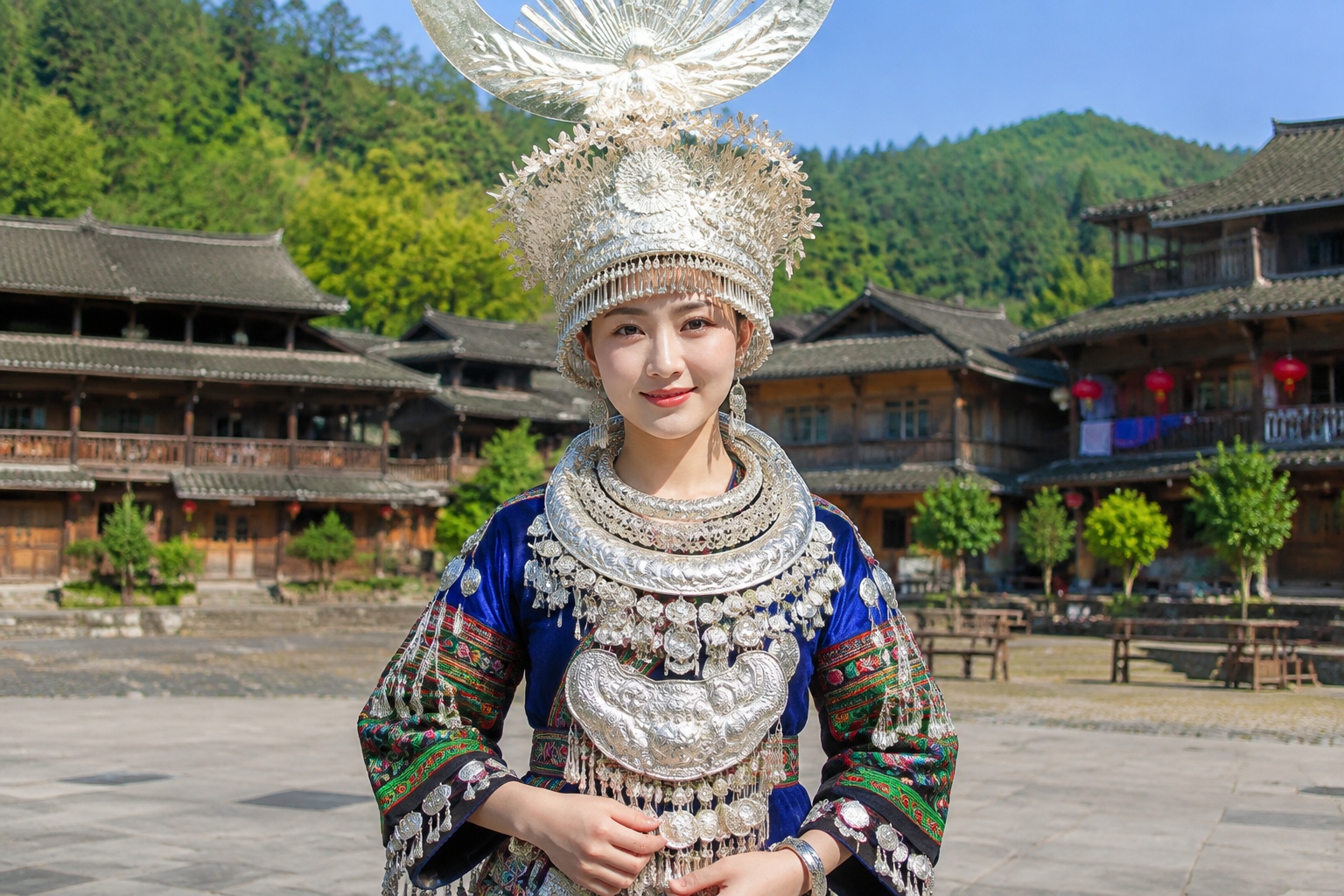
Pan smiles and points to a headdress hanging on the wall. “That one weighs nearly two kilograms. A full set, including necklaces, bracelets, and chest pieces, can be 10 to 15 kilograms. We don’t make them light. That’s the whole point.”
The Weight of Tradition
To understand why Miao silver is heavy, you have to understand how the Miao people, one of China’s largest ethnic minorities, view silver itself. For centuries, the Miao lived in mountainous areas and frequently moved. They had no written script for a long period, so they carried their history and identity in their clothes and ornaments. Silver was not just decoration; it was a portable bank account. When a family had extra money, they turned it into silver jewelry. When they needed cash, they sold or melted it down.
Wearing your family’s wealth on your body was practical and safe. In troubled times, silver ornaments could be hidden or carried easily. And on festive occasions, they announced a family’s standing. The heavier the set, the richer the family.
A Silversmith’s Workshop
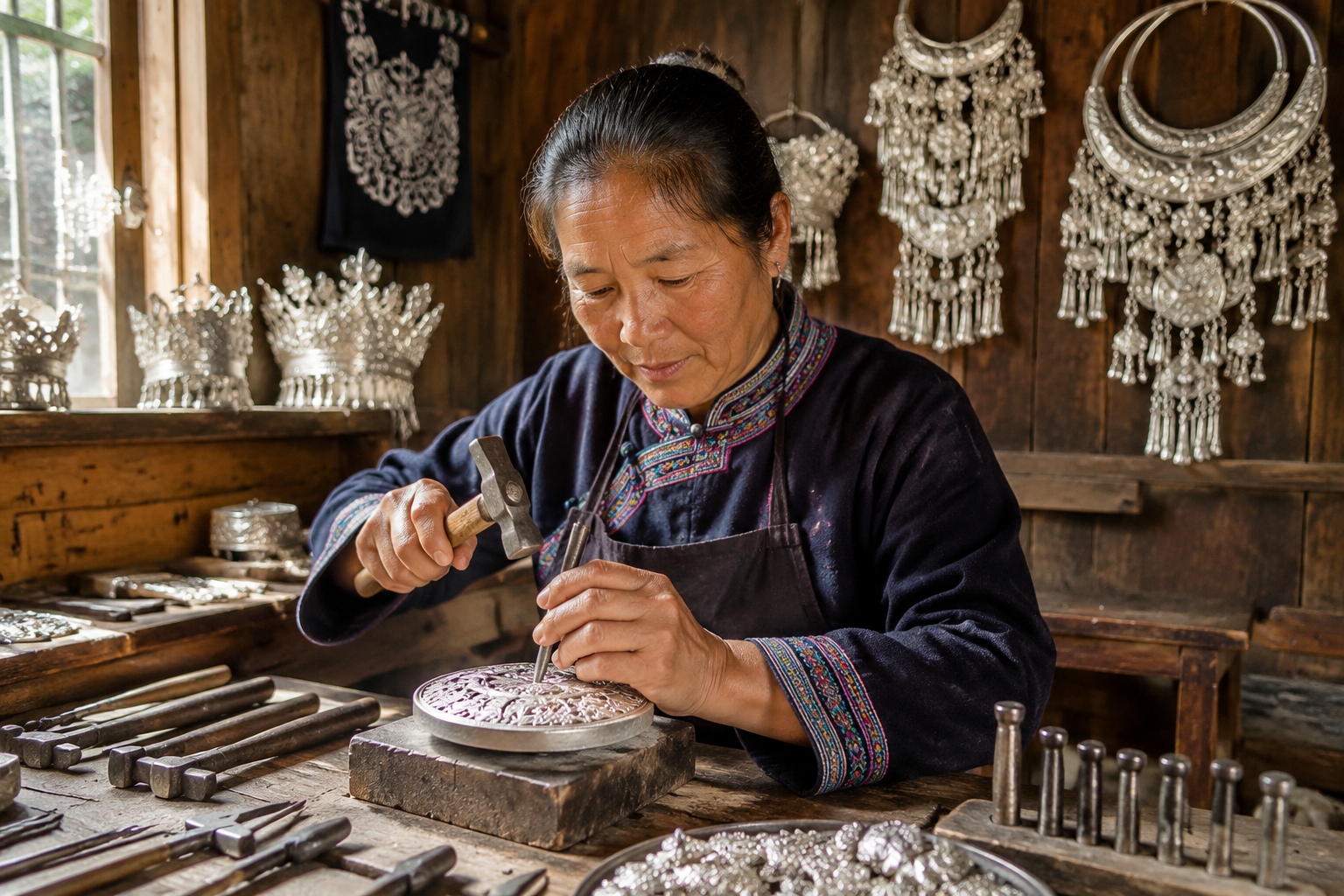
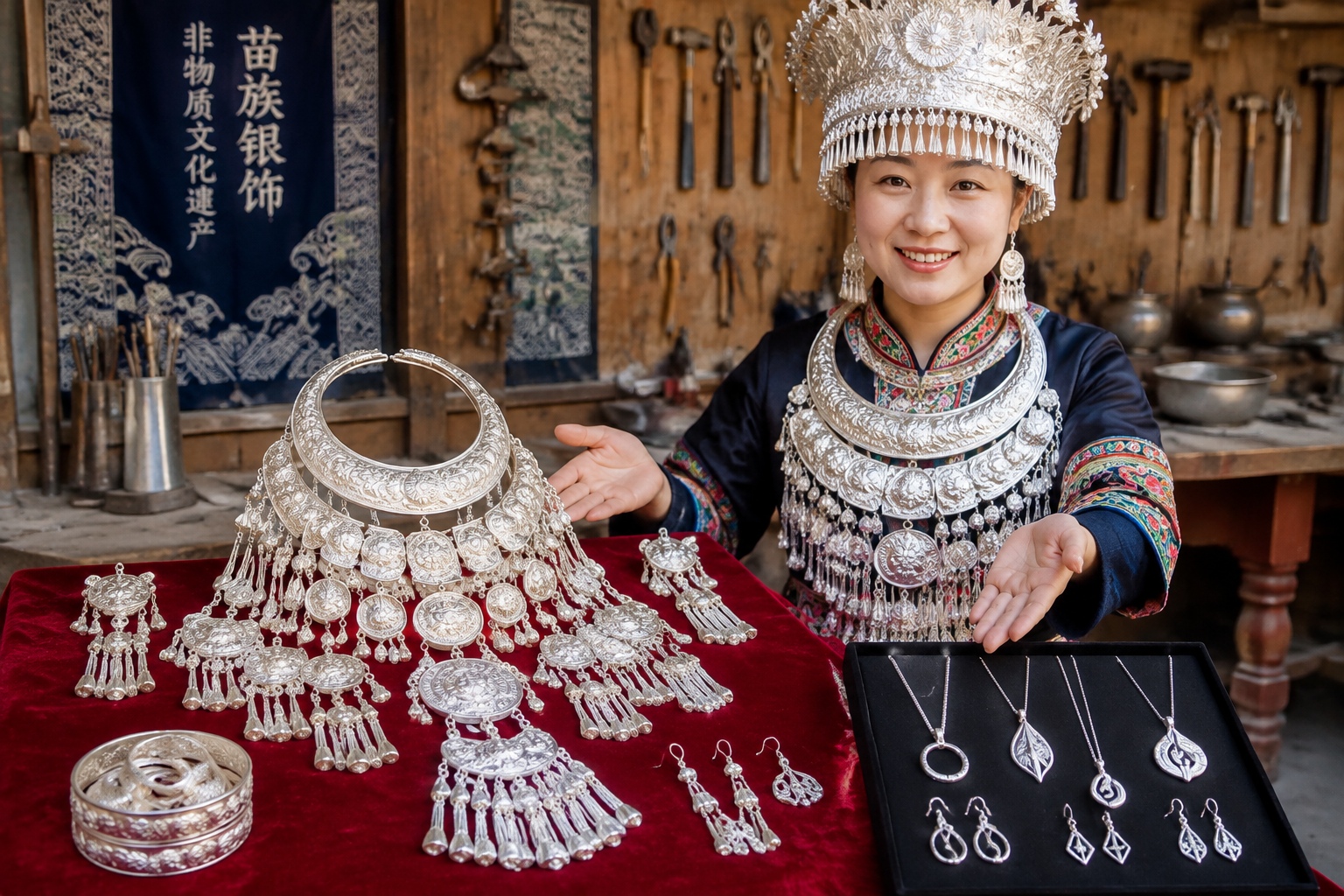
Pan’s workshop is a small room on the ground floor of his wooden house. The walls are lined with hammers, pliers, small furnaces, and coils of silver wire. A low workbench is worn smooth from years of use. His tools are simple: a brass anvil, a blowpipe, and dozens of steel stamps for pressing patterns.
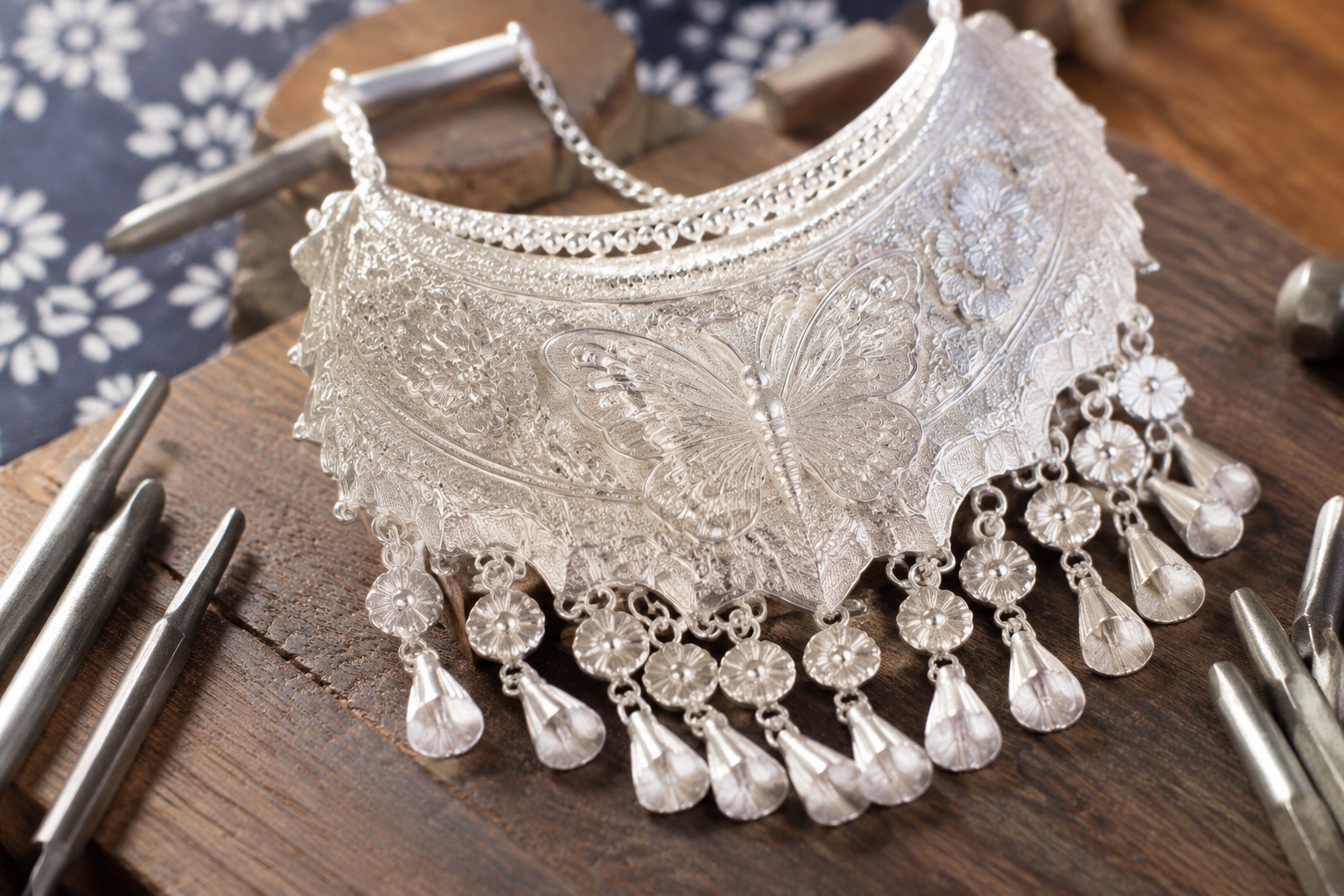
“Making a silver headdress takes about two weeks,” Pan says. He begins with scrap silver — old coins, broken jewelry, or purchased silver bars. The silver is melted in a crucible and poured into molds. Then comes the demanding part: hammering the silver into thin sheets, sometimes as thin as paper. The sheets are cut, shaped, and engraved with patterns. Small parts, like butterflies and flowers, are made separately and then soldered together.
Each step requires patience. The silver must be heated repeatedly to keep it soft. Mistakes are costly. One wrong hammer stroke can ruin a day’s work.
Why So Heavy?
The weight is deliberate. In Miao culture, a girl’s silver ornaments are her most important inheritance. They are given by her parents and godparents, often starting at birth. Every year, more silver is added until she gets married. A full set of traditional Miao silver can weigh up to 15 kilograms (33 pounds).
On a wedding day, the bride wears all of it. Walking becomes slow and deliberate. The tinkling sound of silver pieces hitting each other keeps time with her steps. It is not just beautiful; it is a public statement that she comes from a family that is willing and able to invest in her.
“People often ask why Miao women put up with such heavy things,” Pan says. “But to us, it’s like wearing your family’s love and blessings. It’s not a burden; it’s a honor.”
More Than Jewelry: A Cultural Code
Every piece of Miao silver carries meaning. The most common motif is the butterfly. In Miao mythology, the “butterfly mother” gave birth to all living things. The phoenix, dragons, and birds represent happiness and prosperity. Floral patterns symbolize good luck and growth. Even the number of circles on a necklace can signify something.
Silver also has a protective function. In the Miao worldview, silver repels evil spirits and illness. Children wear silver caps and bells to keep harm away. In some regions, silver is used in healing rituals. This is why silver ornaments are not just for special occasions; many Miao people wear silver amulets every day.
Compared to Western Jewelry
If you come from Europe or North America, the way Miao silver is worn may seem puzzling. Western jewelry tends to be small, delicate, and designed for daily wear. A diamond ring or gold necklace is often a personal choice, reflecting individual taste. It’s about self-expression, and sometimes about status, but rarely about family history in the same way.
In contrast, Miao silver is tradition and identity worn as a set. It is not meant to be subtle or practical. Its size and weight are the message. For a Miao woman, the heaviest piece — the headdress — makes the strongest statement about her family’s respect for her.
There is some overlap. In many cultures, brides wear family jewelry as “something old.” But those pieces are usually small. Miao brides carry their entire family wealth on their shoulders. The difference comes from history: a settled agricultural society could store wealth in land and houses; a semi-nomadic society used durable, wearable goods.
The Changing Craft Today
The tradition is not frozen. Pan now makes both traditional sets and smaller contemporary pieces — silver pendants, earrings, and rings with Miao motifs, which tourists like to buy. “We have to make a living,” he says. “But I teach my son the old ways. The patterns have to be done by hand, one hammer strike at a time.”
There are challenges. Machine-made imitation silver can look similar but is much cheaper. Authentic silver ornaments are expensive, and not every family can afford a full set anymore. Many young Miao women only wear the heaviest ornaments for their wedding and major holidays. On ordinary days, they might wear a small silver bracelet or necklace passed down in the family.
Still, the demand remains. Pan has a six-month waitlist for a custom traditional set. His young daughter, now studying music in the provincial capital, already has a full set being made for her future wedding. “It won’t be as heavy as mine,” Pan laughs. “But it will still be real silver, and it will still be beautiful.”
What Heavy Really Means
As the sun sets, Pan hangs the headdress back on the wall. “A tourist once said, ‘That’s too heavy for a woman to wear.’ I told her, ‘A woman who wears 10 kilograms of silver doesn’t feel heavy. She feels proud.’”
In a world that values lightness and convenience, Miao silver stands out by being heavy on purpose. It preserves memory, expresses love, and connects people to ancestors. So when you see a photograph of a Miao woman weighed down with silver, you now know: that weight is a form of wealth, a language without words, and a symbol that has not lost its power.
Start the discussion at forum.chinacomes.com