

Introduction: A Road That Defies Gravity
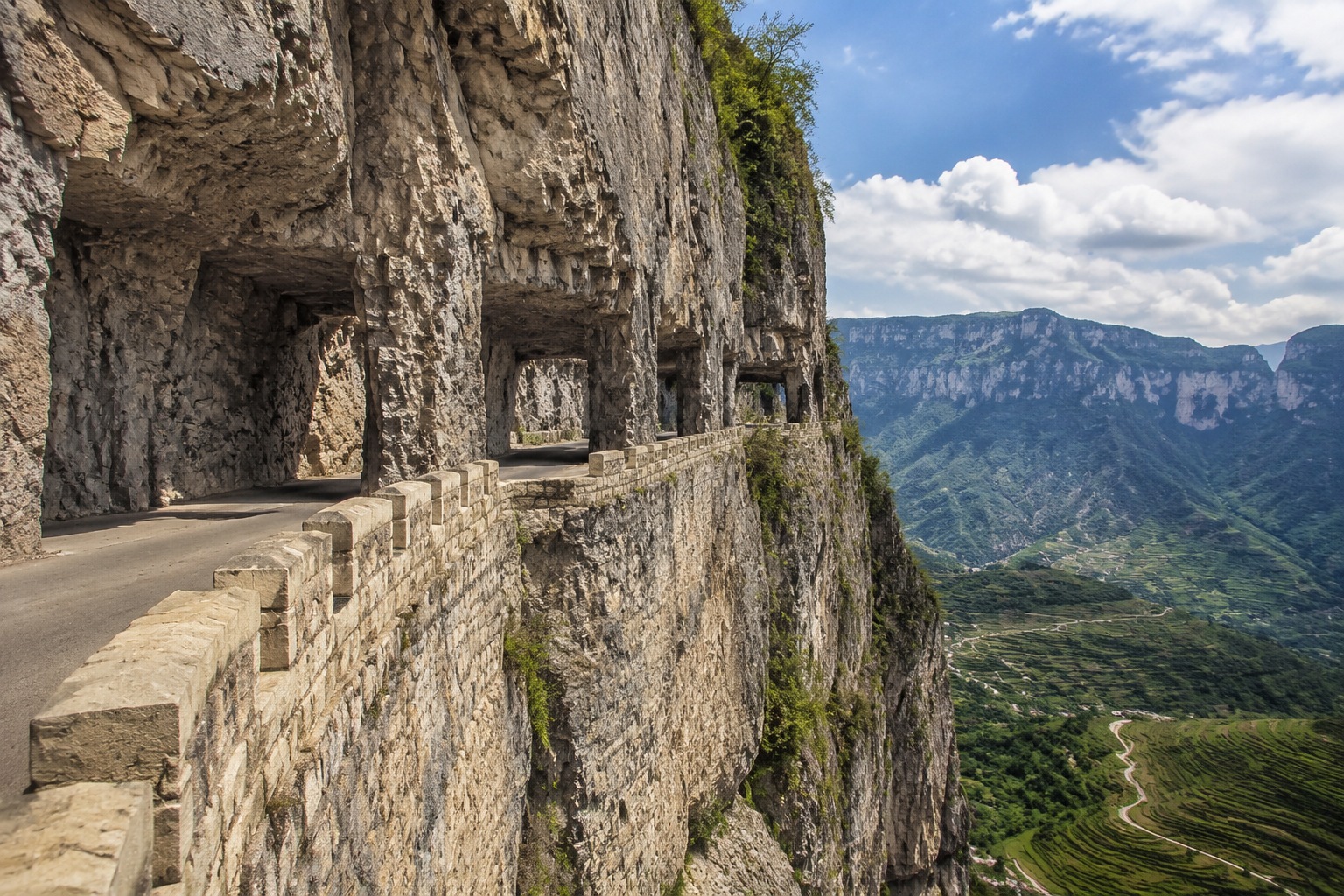
Imagine driving on a narrow road carved into the face of a vertical cliff, with only a low stone wall separating your wheels from a thousand-foot drop. This is not a scene from a fantasy film—it’s the daily reality for people living in the cliff-hanging villages of the Taihang Mountains in northern China. For outsiders, it’s a heart-pounding adventure; for locals, it’s the lifeline that connects their isolated world to modern civilization.
The Geography: Why Build a Village on a Cliff?
The Taihang Mountains stretch over 400 kilometers across northern China, with peaks rising over 2,000 meters. In many areas, the limestone cliffs are so steep that only goats can climb them. Yet, for centuries, communities settled on these seemingly impossible locations. The reasons were practical: the flat land in the valleys was scarce and prone to flooding, while the cliffside offered defense against bandits and a strategic vantage point. Villages like Guo Liang (郭亮村) and Xi Ya Gou (西崖沟) became known as “cliff-hanging villages” because their houses literally perch on the edge of precipices.
The Cliff Road: Engineering Against All Odds
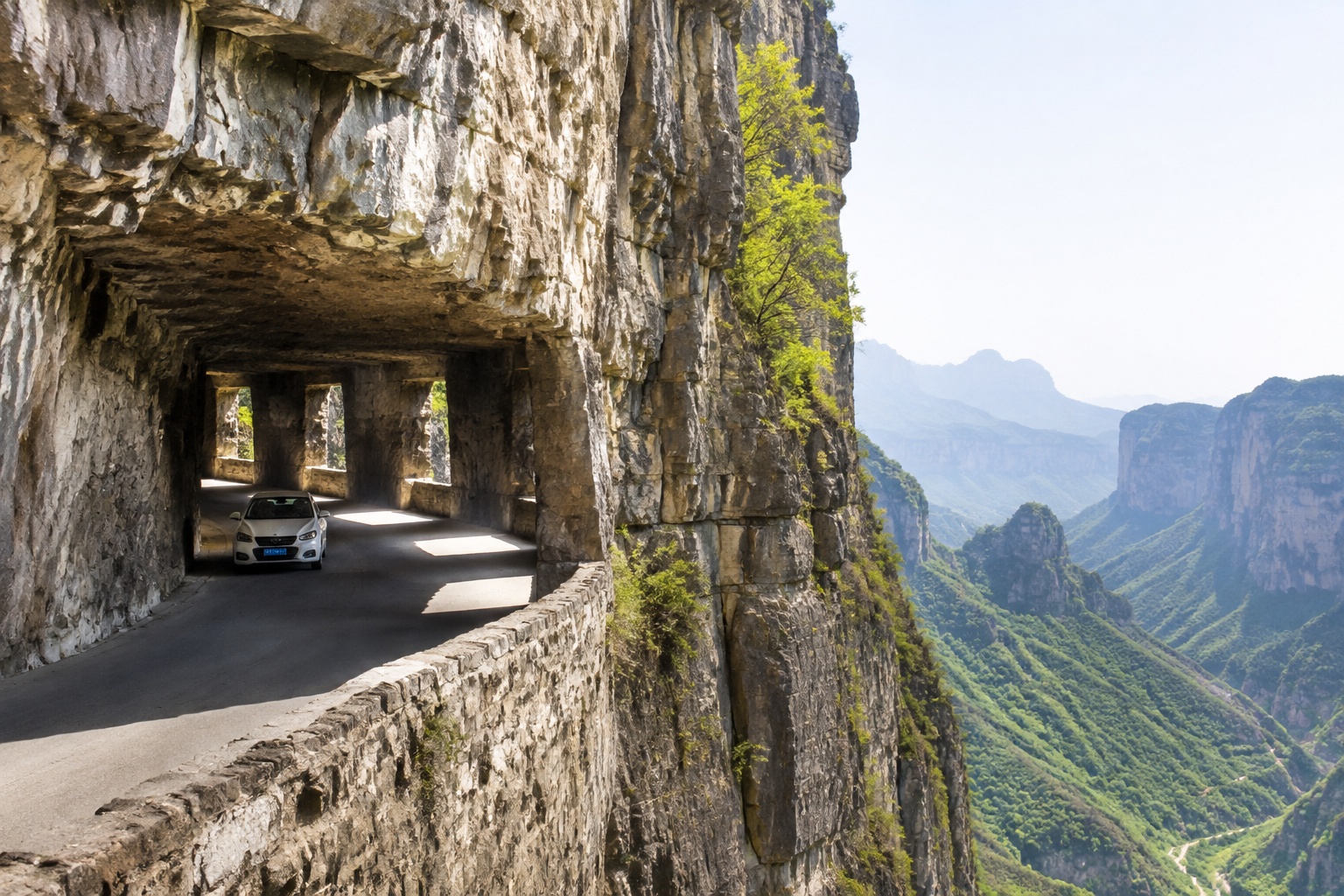
The most famous of these roads is the Guo Liang Tunnel Road, also called the “Cliff Highway.” Built between 1972 and 1977 by 13 villagers, this 1.2-kilometer tunnel was hand-dug into the rock using only hammers, chisels, and dynamite. The villagers worked without modern machinery, often dangling from ropes tied to the cliff top. The result is a tunnel with 30 “windows” that provide light and stunning views of the valley below. Today, it is a tourist attraction, but it remains a functional road for locals.
Another notable route is the Xi Ya Gou Cliff Road, which was completed in the 1990s with slightly more advanced tools but still involved immense physical labor. These roads are not just feats of engineering; they are testaments to the human spirit’s refusal to be defeated by nature.
Life on the Edge: Stories of the Locals
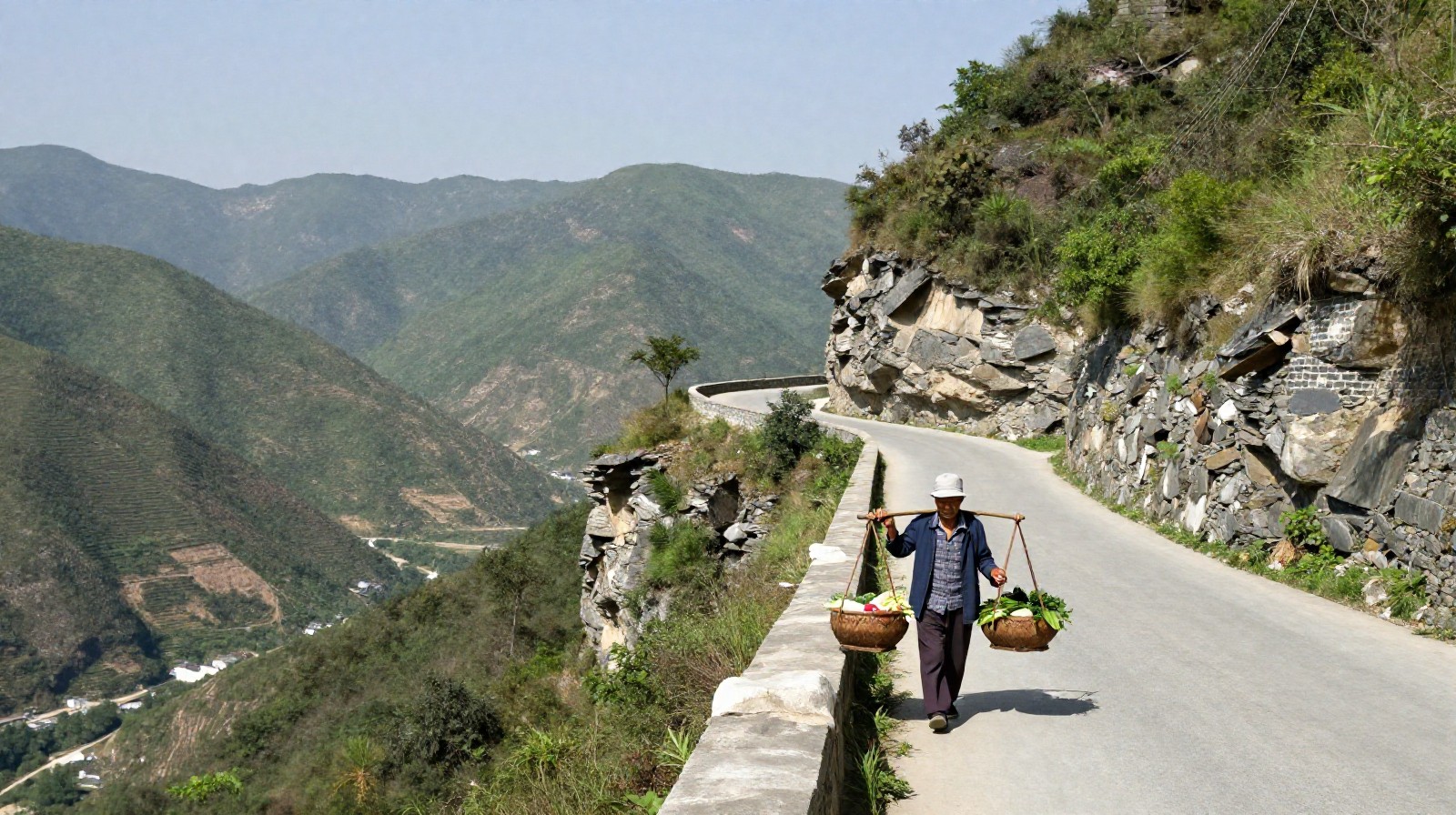
For the residents of these cliff villages, the road is everything. Before the tunnel was built, the only way down was a treacherous ladder-like path carved into the rock, which could take hours and was impossible for the elderly or sick. Children had to board at schools in the valley, seeing their parents only during holidays. Now, with the cliff road, a car trip takes just 20 minutes. Villagers can sell their produce directly in the market, and young people can commute to jobs in nearby towns. The road has also brought tourists, creating new income sources from homestays and guiding services.
One elderly farmer, Mr. Zhang, recalls the day the tunnel broke through: “We heard the explosion and then saw light at the other end. Everyone cried. It meant our children would no longer have to risk their lives on the ladder.” His family now runs a small inn that caters to adventurous travelers.
Infrastructure Improvements: Safety Meets Preservation
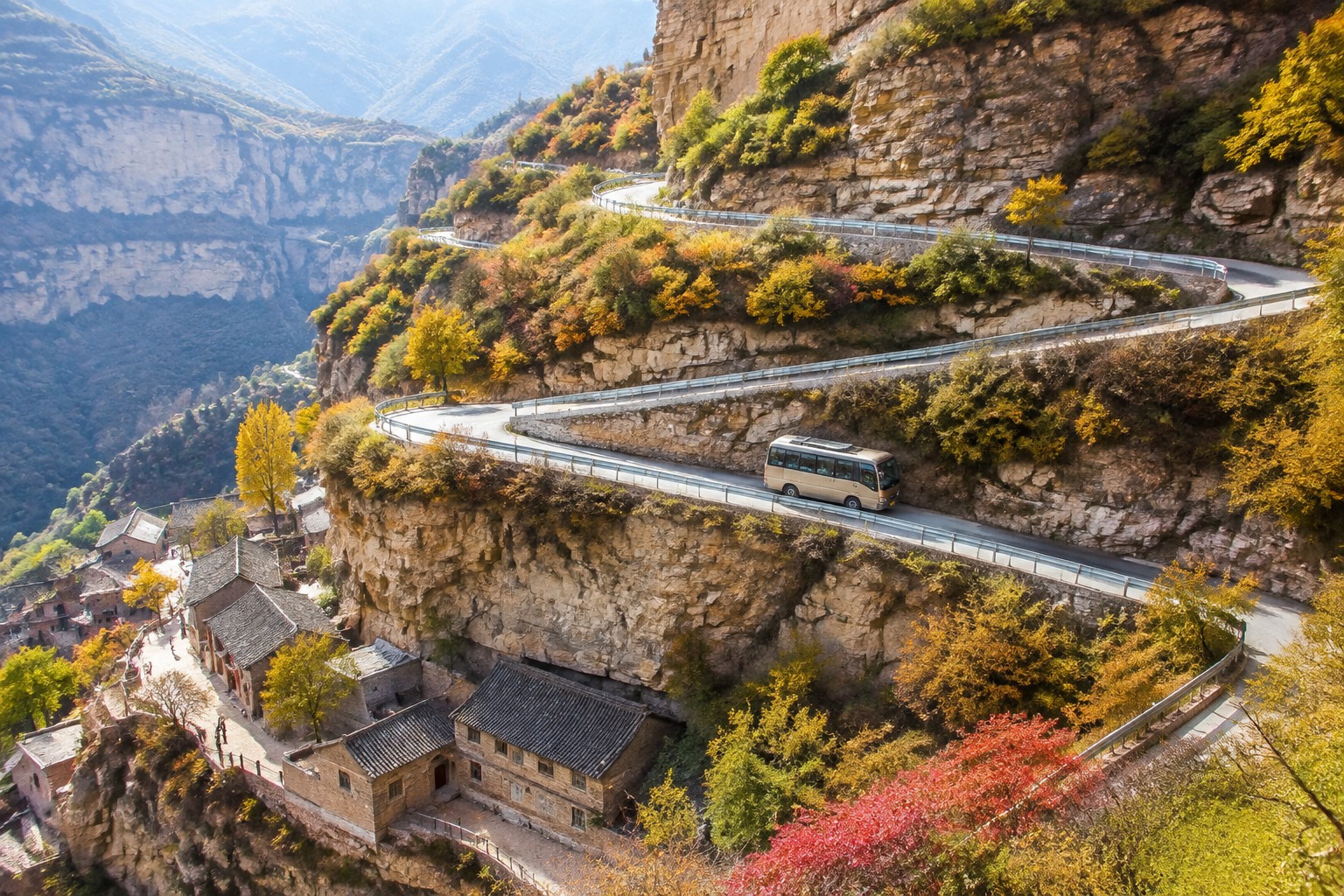
In recent years, the Chinese government has invested in upgrading these cliff roads without destroying their character. Guardrails have been reinforced, and some sections have been widened to allow two-way traffic. Warning signs and reflective markers improve night safety. However, the roads remain narrow, and drivers must honk at blind corners. The goal is to balance functionality with the raw beauty that attracts visitors. Local authorities have also built parking lots and viewing platforms to reduce congestion and allow safe photo stops.
These improvements are part of a broader poverty alleviation program that has connected thousands of remote villages to the national road network. The cliff roads are no longer just survival routes—they are bridges to opportunity.
Practical Tips for the Courage-Testing Drive
Vehicle Requirements
You don’t need a specialized off-road vehicle. A small car with good brakes and manual transmission is sufficient. However, avoid vehicles with low ground clearance or wide bodies. SUVs are popular but can be tricky on the narrowest stretches. Check your tires and brakes before the trip.
Best Seasons to Visit
Spring (April-May) and autumn (September-October) offer the mildest weather and clearest skies. Summer can be rainy, increasing the risk of rockfalls, while winter brings ice and snow that makes the road treacherous. Avoid visiting during Chinese national holidays (October 1-7 and May 1-5) when traffic jams can occur.
Safety Precautions
Drive slowly—no faster than 20 km/h on the cliff sections. Use your horn at blind corners. Never stop on the road to take photos; use designated pull-offs. If you feel nervous, consider hiring a local driver who knows every curve. Always carry water, snacks, and a first-aid kit. Lastly, respect the local community: drive courteously and don’t litter.
Conclusion: More Than a Road
The cliff-hanging roads of the Taihang Mountains are not just tourist spectacles. They are living monuments of human determination, connecting ancient villages to the modern world. Driving them is a reminder that progress doesn’t always mean erasing the old—sometimes it means carving a path through the impossible. If you’re looking for a drive that challenges your courage and rewards you with unforgettable views and stories, the Taihang cliff roads await.
Start the discussion at forum.chinacomes.com