
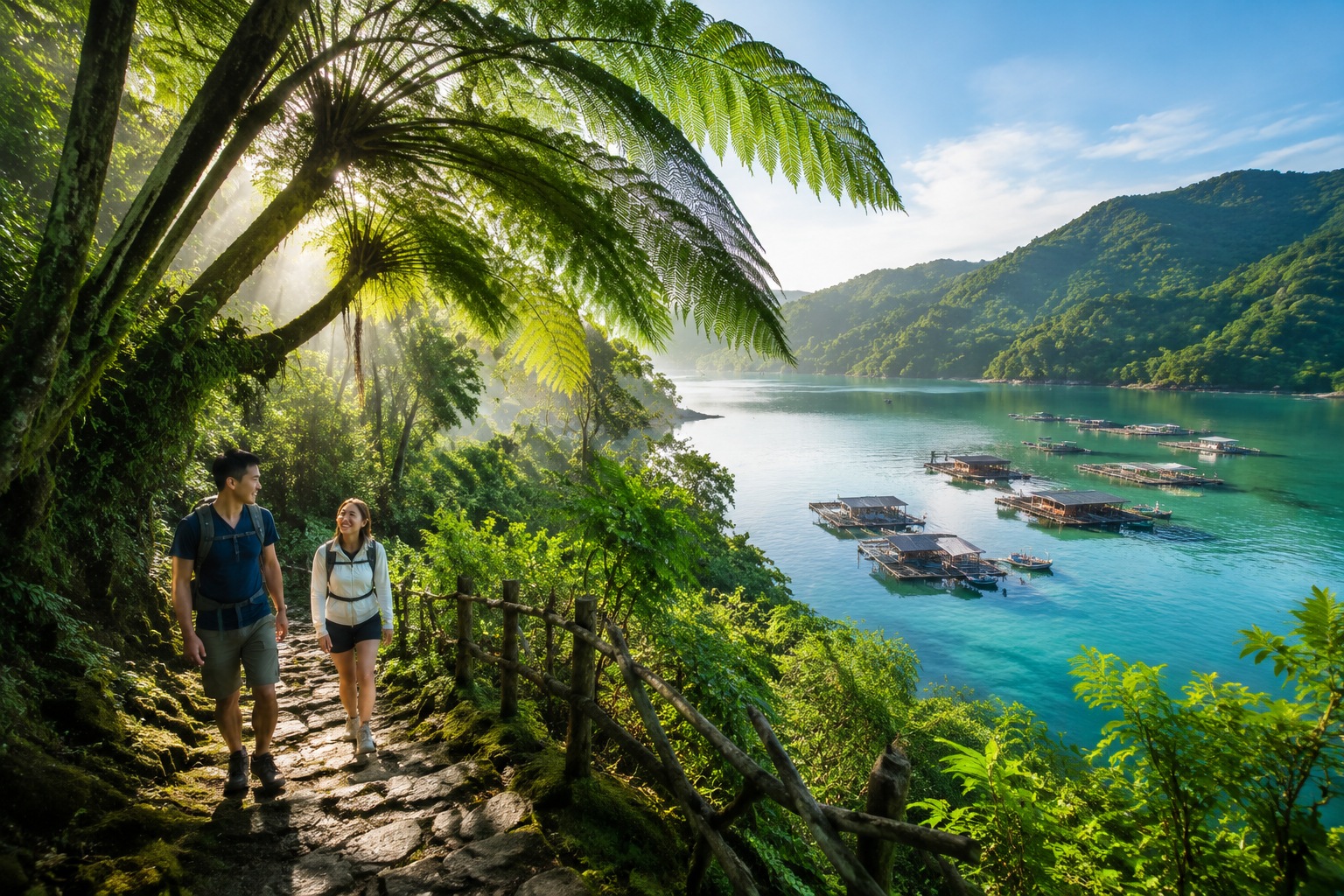

The first thing that surprised me wasn’t the rainforest. It was the silence. A few kilometers from the loud beach boulevards of Sanya, I stood on a narrow trail in Hainan’s tropical forest, and the only sound was water dripping from giant leaves. No karaoke bars, no jet skis. Just the forest breathing.
I had come to Hainan to see the other side of China’s most famous tropical island — the side that doesn’t appear in resort brochures. Two experiences stood out: trekking through ancient rainforest, and visiting the floating villages of the Tanka people, a maritime community that has called the South China Sea home for centuries.
Into the Green: Hiking Hainan’s Rainforest Trails
Hainan is often called “China’s Hawaii,” but the comparison misses the point. The island is covered by some of the best-preserved tropical rainforest in Asia, and much of it is now protected under the Hainan Tropical Rainforest National Park, established in 2021. Covering over 4,400 square kilometers, it is home to rare species like the Hainan gibbon — one of the world’s most endangered primates, with fewer than 40 individuals left.
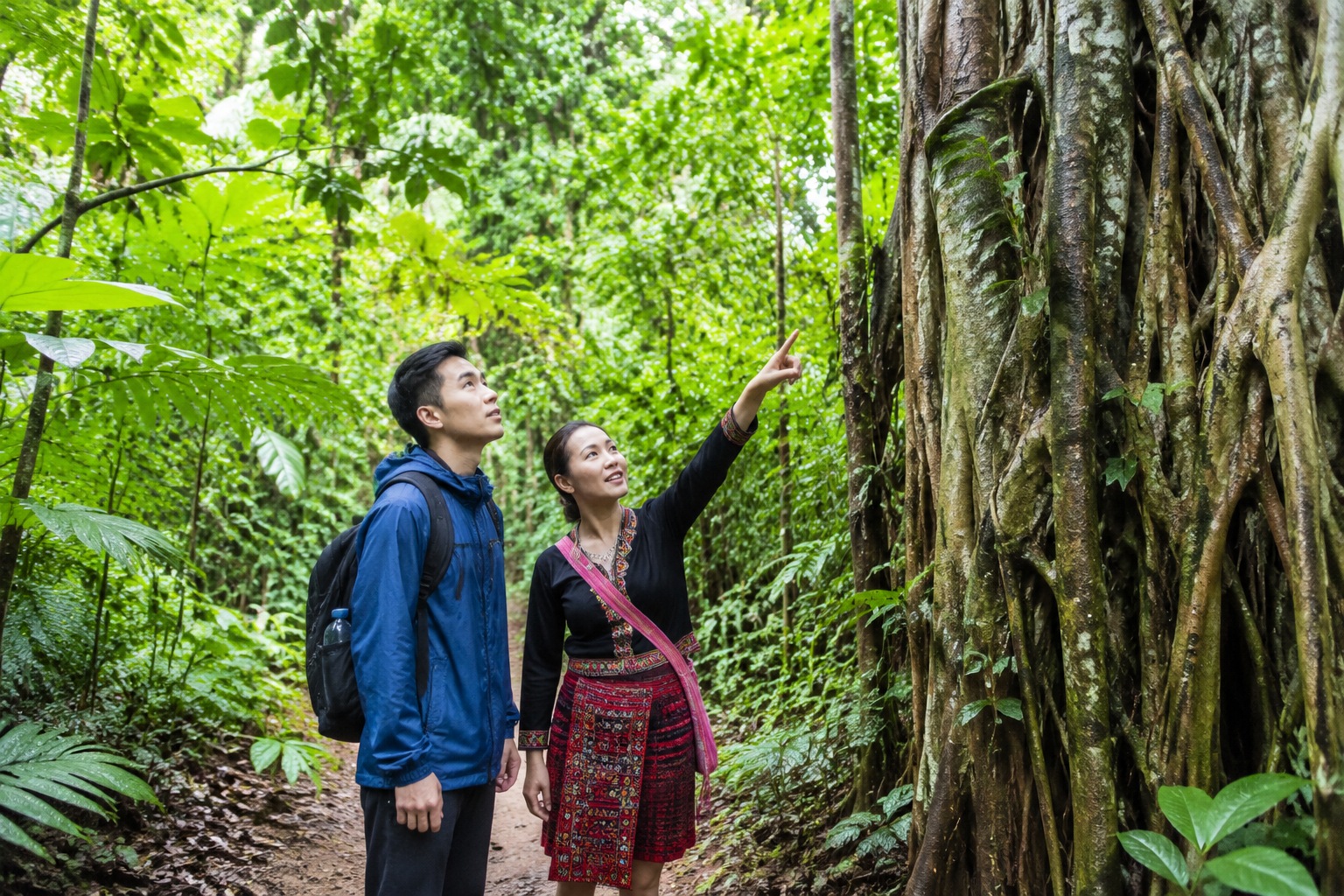
My hike started near the Diaoluo Mountain area, about an hour’s drive from the coast. The trail climbed through dense canopy, past strangler figs and tree ferns taller than a two-story building. My guide, a local Li woman named A-Fang, pointed out medicinal plants her grandmother used, and showed me the deep claw marks where a wild boar had scratched a tree trunk.
What impressed me most wasn’t just the biodiversity — it was how seriously the conservation effort is taken. At the park entrance, rangers check your permits and explain the rules: no littering, no feeding wildlife, stay on the marked paths. Local villagers have been hired as guides and patrol staff, their traditional knowledge now recognized as part of the park’s scientific toolkit.
For adventurous travelers, there are several day-hike options. The most accessible is the Yanoda Rainforest Cultural Tourism Zone, which combines a canopy walkway with Li and Miao cultural displays. But for a wilder experience, consider hiring a certified guide from the park service and exploring the Diaoluo or Jianfengling mountains. Be prepared for steep climbs, leeches in the wet season, and constant mist — but also for the rediscovery of what silence really sounds like.
The Tanka: A People of the Water
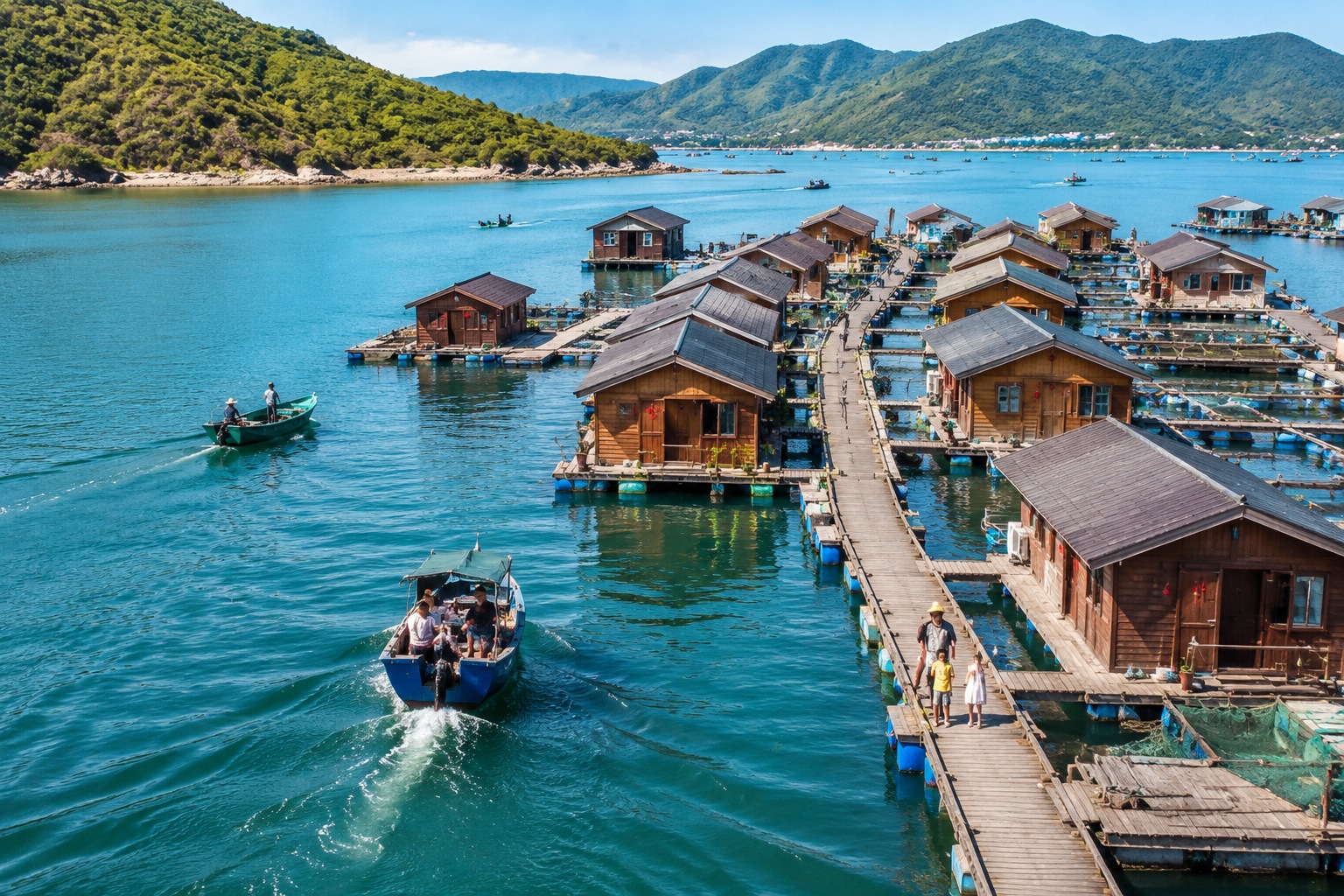
Back on the coast, I met a different kind of Hainan. In the harbor of Xincun, on the southeastern tip of the island, hundreds of floating houses rest on the water, connected by wooden walkways. This is a Tanka village — one of the few remaining in China where the traditional lifestyle is still visible.
The Tanka (疍家人, meaning “egg people” or “boat people”) are a distinct ethnic group who historically lived entirely on boats. Until the mid-20th century, they did not own land or houses onshore; they were born, married, and buried from their vessels. Today, many Tanka have moved to land, but in Xincun, a significant community still lives on fish farms — large floating rafts with wooden cabins, where they raise grouper, snapper, and lobster in submerged cages.
I visited a Tanka family — an elderly couple, their son, daughter-in-law, and two grandchildren. They welcomed me into their floating home for tea, a gesture that still feels rare in an era of packaged travel. The grandmother, Lin A-mu, told me how she used to dive for shells without any breathing equipment as a girl in the 1960s. “The sea was our supermarket,” she laughed, pointing to the murky water below, where today the cages are filled with farmed fish.
The younger generation is changing. The son, Wei, runs a small boat tour for visitors. “I know the sea like the back of my hand,” he said. “But my kids go to school on the mainland. They will probably become office workers. That’s fine — but they must never forget where their grandparents came from.”
Living on the Water: Today’s Floating Villages
The Xincun Tanka village is not a museum — it’s a working community. In the morning, you see residents repairing nets, feeding fish, and ferrying children to school in small motorized boats. There’s a floating convenience store, a floating pharmacy, even a floating police station.
Tourism has brought new income but also new strain. Some residents worry that the quiet rhythm of their daily life is becoming a spectacle. “People take photos of us like we’re part of an aquarium,” one young woman told me, half-joking. “But at the same time, we need the income. The fish farming is not as profitable as it used to be.”
The good news is that local authorities are working with community leaders to develop low-impact tourism. A new boardwalk and viewing platform allow visitors to see the village without walking through residents’ private decks. There are also homestay programs — my Tanka hosts in Xincun offer a simple room on their floating platform, with breakfast of congee and pickled vegetables. The experience is humble, but it gives visitors a rare chance to sleep on the water and wake up to the sound of oars.
Practical Tips for an Authentic Hainan
If you’re inspired to go beyond the beach resorts, here’s how to do it responsibly:
Hiring a local guide: For rainforest treks, always use certified guides. They know the terrain, weather patterns, and safety protocols. Ask your hotel or the national park’s official visitor center for recommendations.
Visiting Tanka villages: Approach with respect. Ask permission before taking photos of individuals or their homes. Consider taking a small boat tour operated by a resident — it’s a direct way to support the community.
Timing your trip: The best season for rainforest hiking is from November to April, when the weather is drier and cooler. Tanka villages can be visited year-round, but avoid the Chinese national holidays (early October and Chinese New Year) when the coast becomes packed.
Transportation: Renting a car is the most flexible option in Hainan. Driving from Sanya to the Diaoluo Mountain area takes about 1.5 hours; to Xincun, about 1 hour. Alternatively, affordable high-speed trains connect most major towns.
What to pack: For hiking: waterproof boots, leech socks, quick-dry clothing, a rain jacket, and insect repellent. For the village: modest clothing, a smile, and a willingness to eat whatever you’re offered.
Why This Matters
China is often perceived as a land of megacities and hyper-modern infrastructure, but places like Hainan’s rainforest and Tanka villages remind you that it still holds pockets of ancient culture and wild nature. The juxtaposition is jarring: one day you’re in 30-degree humidity surrounded by leeches, the next you’re lying on a beach sipping a coconut cocktail. That contrast is exactly why these experiences are worth seeking out.
The Hainan gibbon, the Tanka language, the centuries-old knowledge of the forest — these are not tourist attractions. They are living legacies. As travelers, we have the privilege of witnessing them, and the responsibility to make sure they endure.
Start the discussion at forum.chinacomes.com