
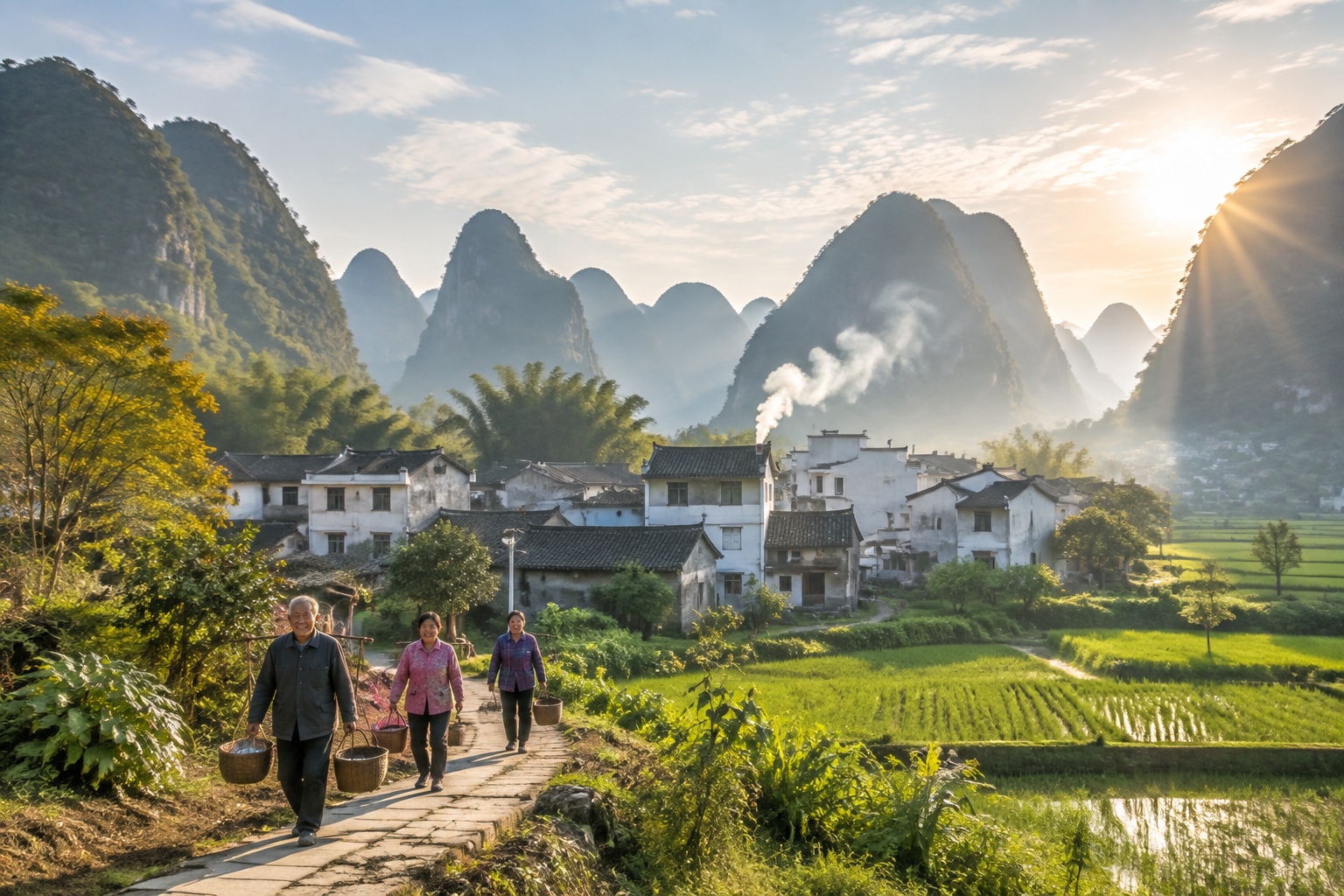

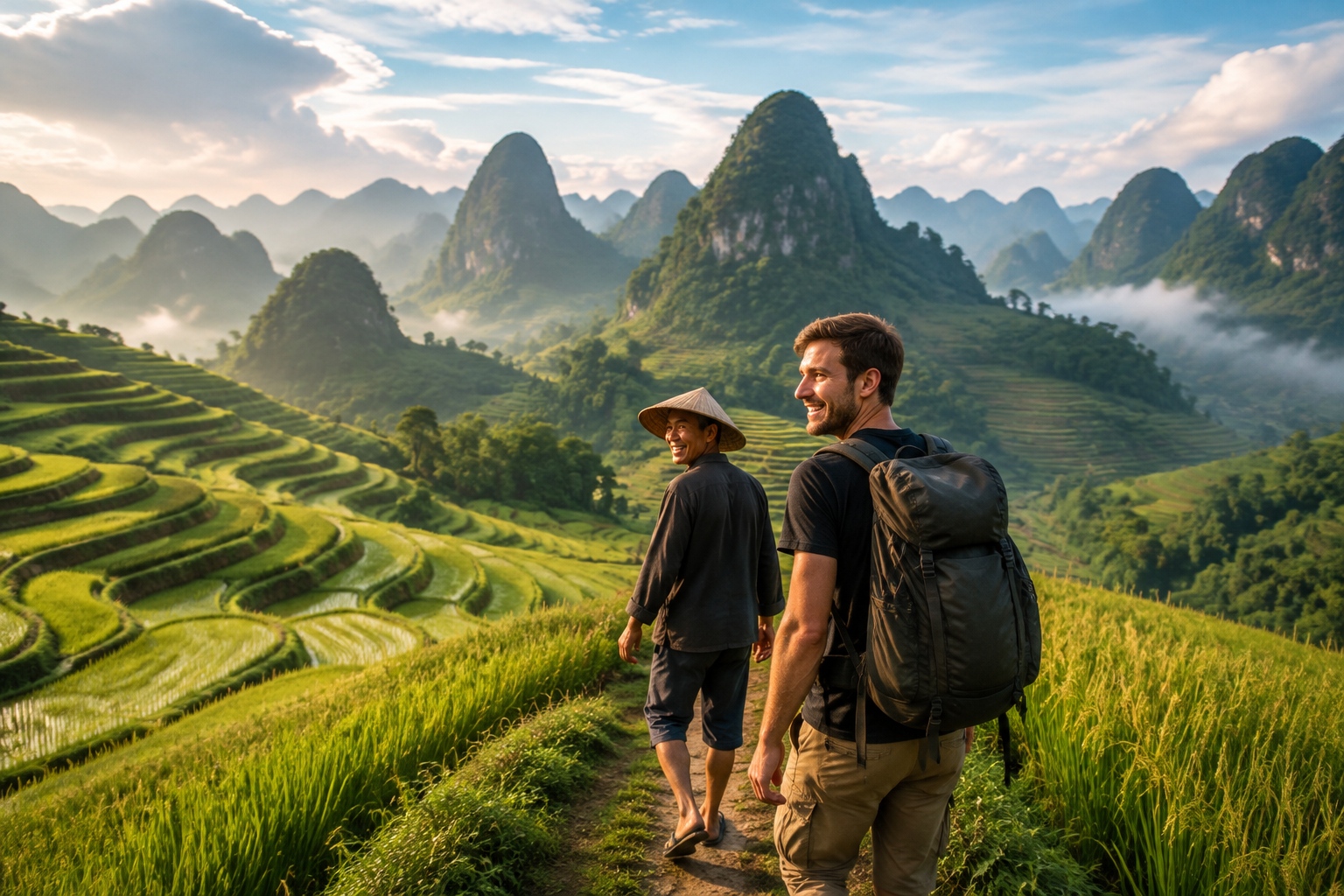
The first time you see Guangxi’s mountains, you don’t trust them. They appear overnight, like giant green mushrooms, rising straight out of the rice paddies with the same suddenness as a surprise ending. One minute you’re driving through a town of scooters and sheet-metal roofs; the next, the road curls toward cliffs that seem painted onto the sky. I spent most of my first bus ride with my face pressed against the glass, trying to understand where the hills began and the human world ended. In Guangxi, they never really separate.
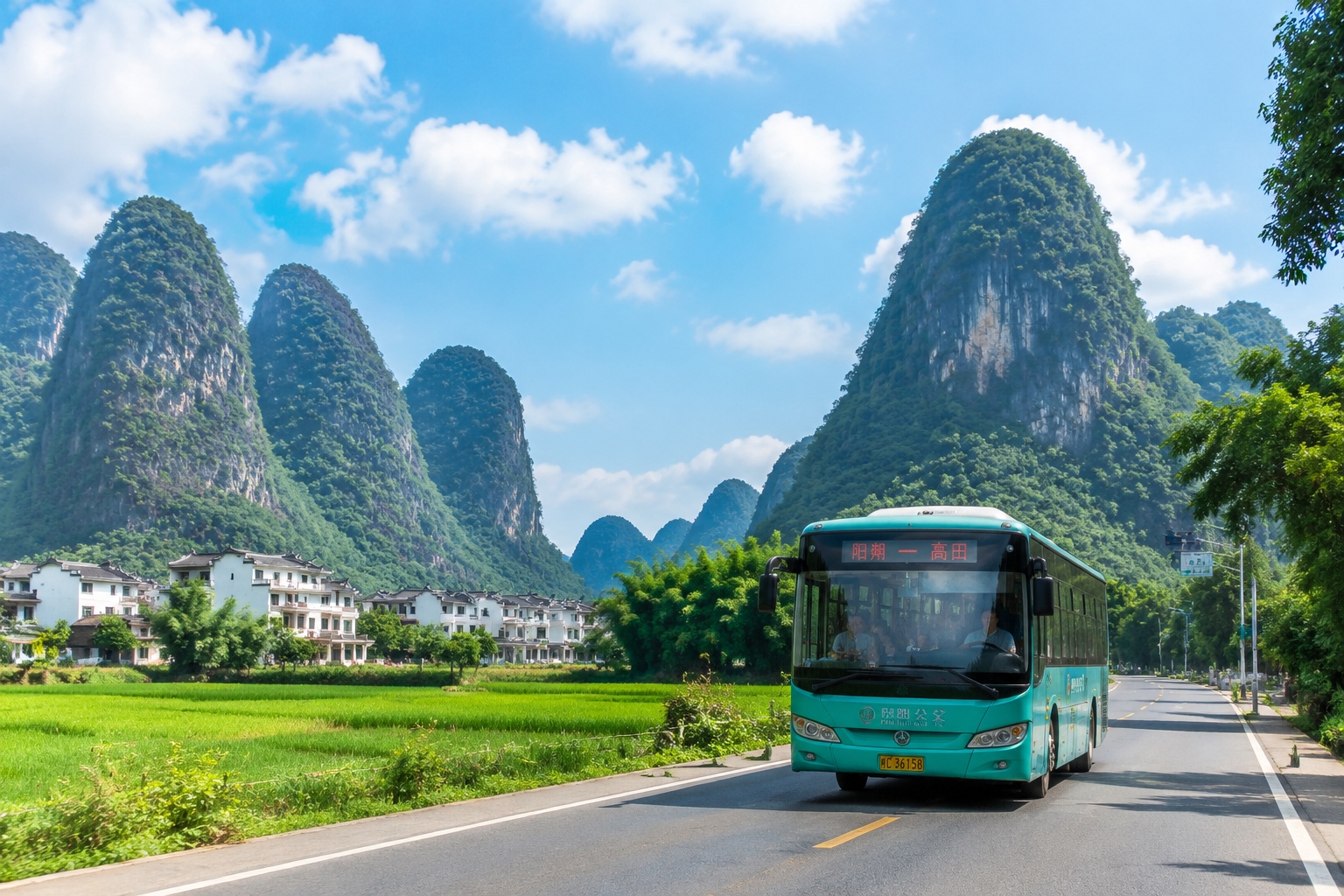
Most visitors come for Guilin and Yangshuo, the postcard slices of this province. But Guangxi is larger and far less tidy. It shares a long border with Vietnam, holds a dozen ethnic minorities, and hides quiet valleys that barely appear on a map. I didn’t come to see the famous Li River. I came for the spaces in between — for the villages that aren’t on any itinerary and the mornings that feel a thousand years old.
The Geography of Surprise
Almost three quarters of Guangxi is hills and mountains, and the most breathtaking are the Karst peaks — limestone spires shaped by rainfall and time into the kind of landscape that painters love and engineers dread. The terrain splinters into cliffs, caves, and terraces, forcing villages to cling to steep slopes and farmers to carry their harvests on their backs. In the north, the Longji rice terraces stack like giant stairways to the clouds. In the west, the borderland mixes Chinese and Vietnamese rhythms. A single province can feel like several countries.
That diversity runs deep. Speakers of different minority languages share the same province but sometimes struggle to communicate. A market near the border sells Chinese herbs next to bags of Vietnamese coffee. A farmer in a remote valley may never visit the capital, yet he can name every ridge around his home. The mountains don’t just decorate the place; they define its rhythm.
A Village That Keeps Its Own Time
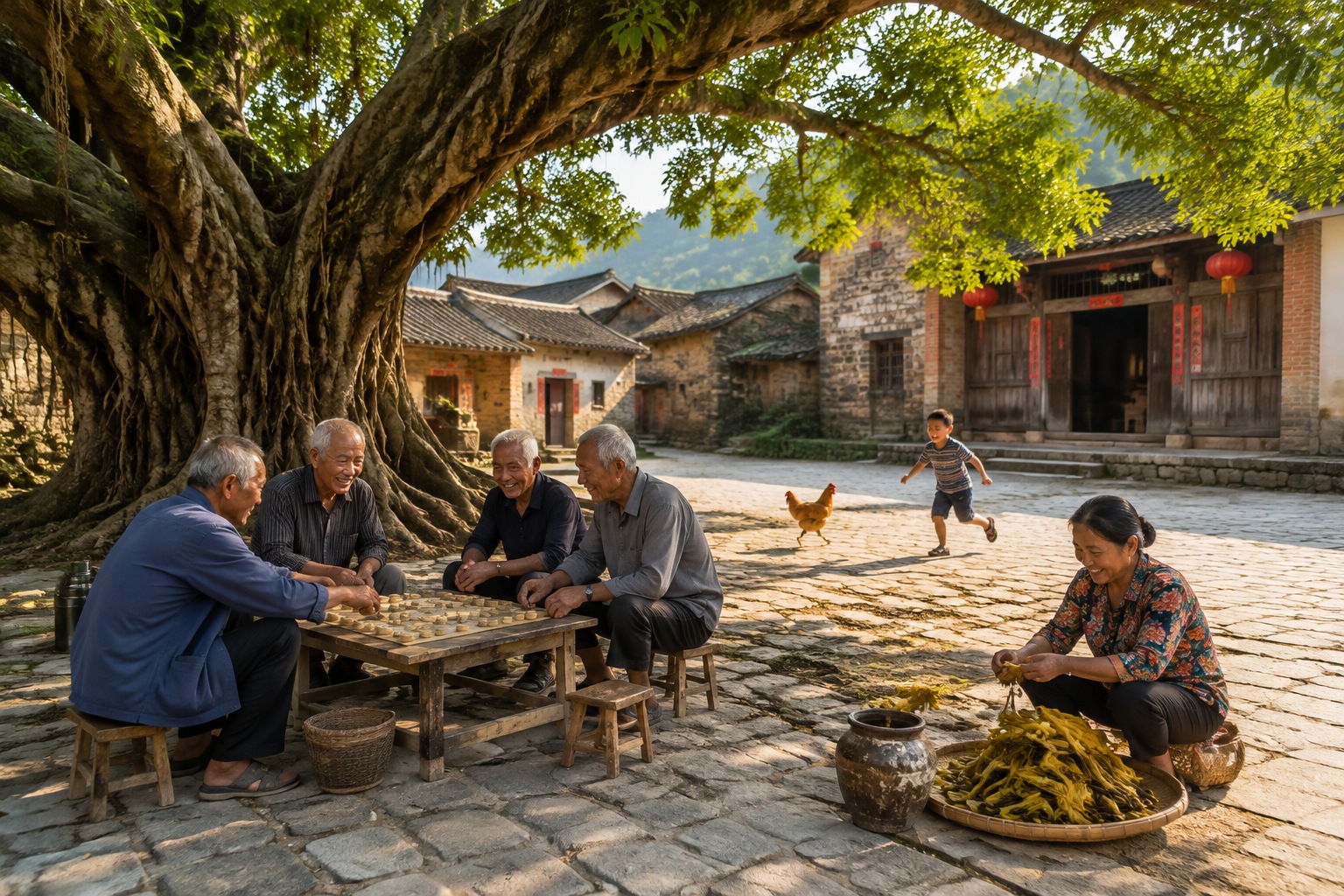
A few kilometres from the touristy old town of Huangyao, I took a short local bus and got off at a junction with no sign. I walked past vegetable plots and a quiet fish pond until I reached a shaded square. Under a massive banyan tree, four elderly men were absorbed in a game of Chinese chess. A woman in a straw hat sorted pickled greens onto a bamboo mat. A child in mud-spattered sandals chased a hen with a seriousness that suggested life-or-death stakes. No one was filming. No one was in a hurry. The only urgent sound was a wok clanging from an open kitchen.
A man named Huang saw me and invited me to sit. He had spent all his 67 years in this village, and when I said I was from New York, he laughed as if I’d said the moon. He poured tea from a thermos and asked why I’d come to “a place with nothing.” I said that was exactly the point. He insisted I stay for a family dinner — three vegetable dishes, a bowl of clear broth, and rice from a neighbour’s field. He walked me to the evening bus and waved until the van was a speck in the mountains.
The Real Flavors Are Off the Menu
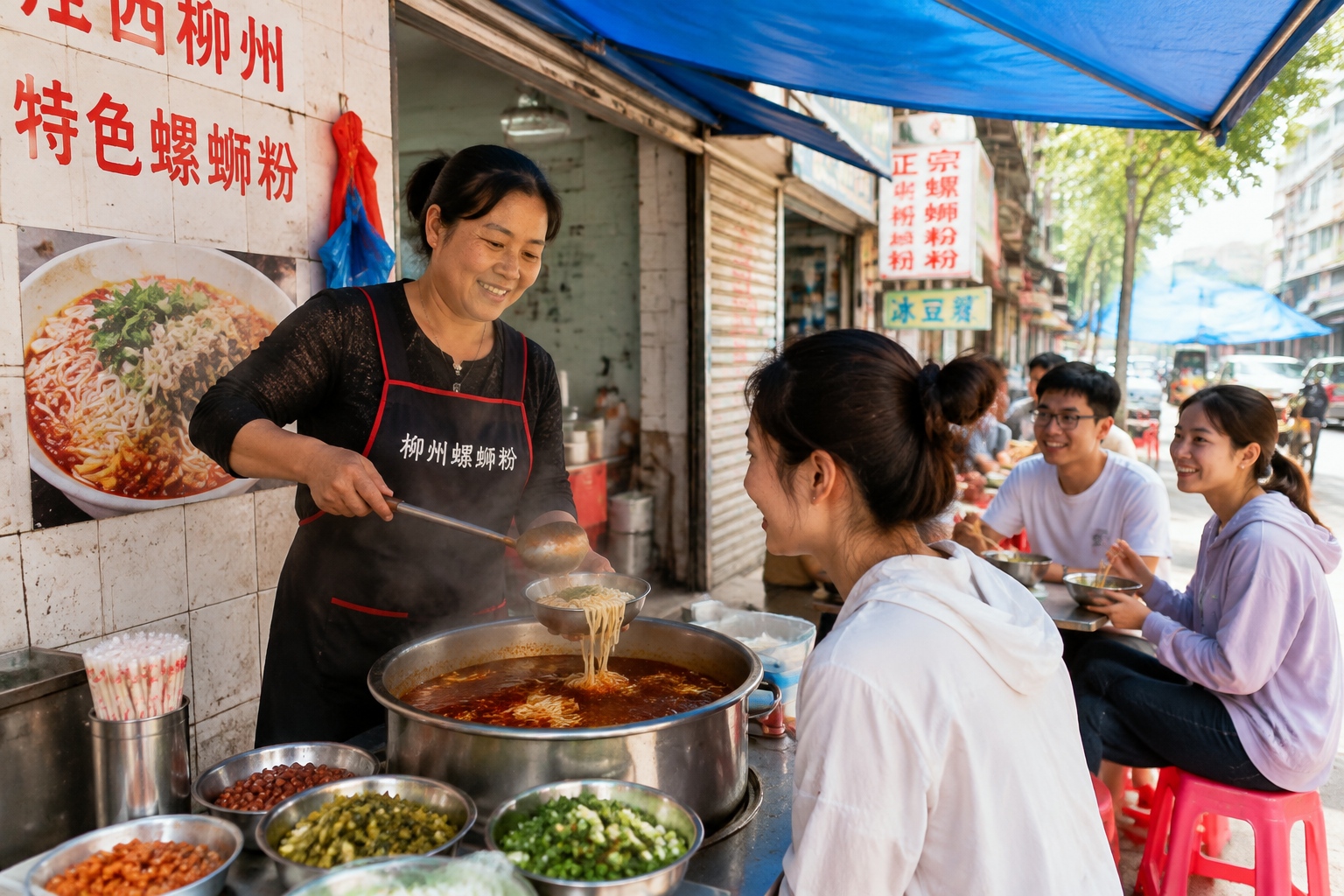
In tourist towns, restaurants display glossy photos of “local specialties.” But the dishes I remember best come from stalls without even a name. In the city of Lipu, I joined a short queue of workers at a plastic table under a blue tarp. A woman with quick hands slipped rice noodles into a soup of sour bamboo and chili oil. Someone beside me, still wearing his delivery helmet, slurped and sweat in silence. No one asked for a menu. You just said “the usual” and got exactly that. The bowl cost four yuan — under a dollar.
Guangxi’s food is best explored the same way — by accident. Look for carts selling sliced mango dipped in chili salt, or old women frying sweet potatoes in front of their houses. In the mountain villages, seasonal food rules: bamboo shoots in spring, wild berries in summer, sweet potatoes after the first frost. The flavours are sharp, earthy, and honest. They don’t need a Michelin star.
Tourism’s Double Edge
Tourism has reshaped parts of Guangxi in a single generation. In Yangshuo, riverside cafés, climbing gyms, and craft-beer bars now serve travelers from everywhere. But the benefits are uneven. Far from the business districts, villagers still weigh the cost of inviting strangers in. Ai, a guesthouse owner near the Longji Terraces, left a factory job in Guangzhou to come back home and care for her daughter. “I earned twice as much before,” she told me, “but I only saw my daughter during the New Year. Now she sleeps next door.” Her inn has only four rooms, and the village has two others. She appreciates the new income, but she worries about trash on the trails and her daughter being photographed without asking.
That mixed feeling is common. People want jobs, but they also want quiet evenings. Some have become skilled hosts; others simply wait out the tourist season. The balance between showing and protecting a place is always a work in progress.
A Local’s Route to the Hidden Guangxi
Wei, a guide from the eastern corner of the province, has spent a decade leading travelers away from the main roads. His favorite journey begins in Hezhou, where centuries-old stone bridges hide beneath giant banyan trees and villagers wash clothes in the river just as they did generations before. Then he runs north to the Longji terraces — but he skips the crowded viewing platforms. Instead, he walks two hours into the hills, where the terraces unfold in silence and the only sound is water gurgling through stone channels. Finally, he heads southwest toward the border town of Dongxing, stopping at a market that opens before dawn. There, Zhuang vendors trade dried fish and incense beside Vietnamese women selling coffee and woven bags.
Wei’s rule is simple: “If you see a tour bus, go the other way. If you see a local bus, get on it.” He doesn’t hate tourism. He just wants visitors to feel the province the way it lives each morning — early, unhurried, and full of small fascinating moments. “The mountains will stay,” he said with a laugh. “The quiet might not. So hurry.”
The Real Guangxi
In the end, Guangxi isn’t a landscape you see from a lookout point. It’s a place you enter through its daily rituals: the sting of chili oil at a roadside stall, the click of mahjong tiles after nightfall, the nod of a farmer who has no reason to know your name. The karst peaks may dominate the frame, but it’s the human life at their feet that gives the picture meaning. For travelers willing to step off the bus a stop earlier and walk toward the sound of chickens, the quieter side of Guangxi is still waiting.
Start the discussion at forum.chinacomes.com