
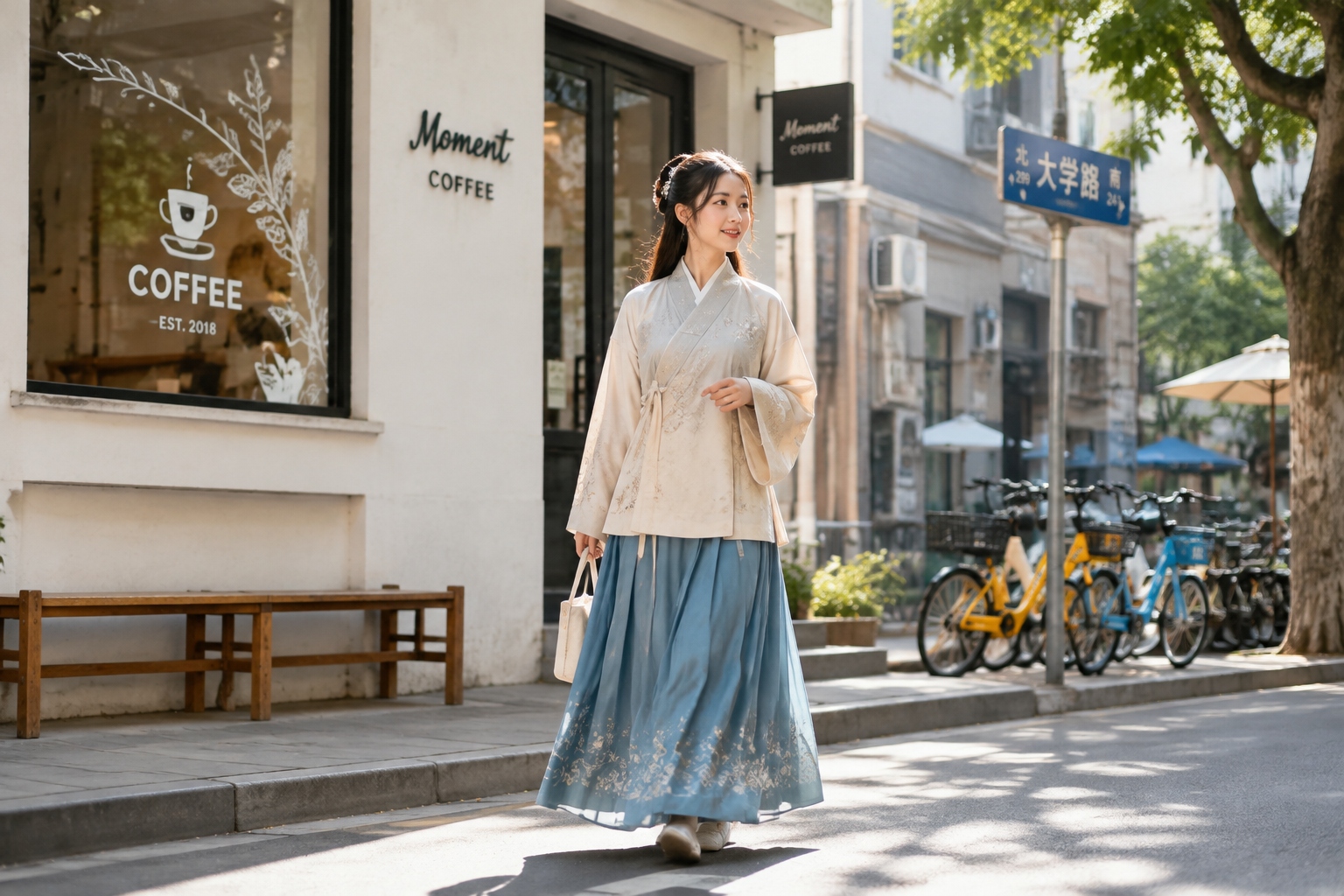

Hangzhou, a Sunday in the park
On a warm weekend afternoon, I was sitting by West Lake in Hangzhou when a group of twentysomethings walked past in long, flowing robes. Tang-dynasty sleeves, bright embroidered patterns, hairpins glinting in the sun. For a second, it felt like a time warp. A tourist from Italy asked me, “Is there a festival today?” I smiled. “No,” I said, “this is just what some young people like to wear on their day off.”
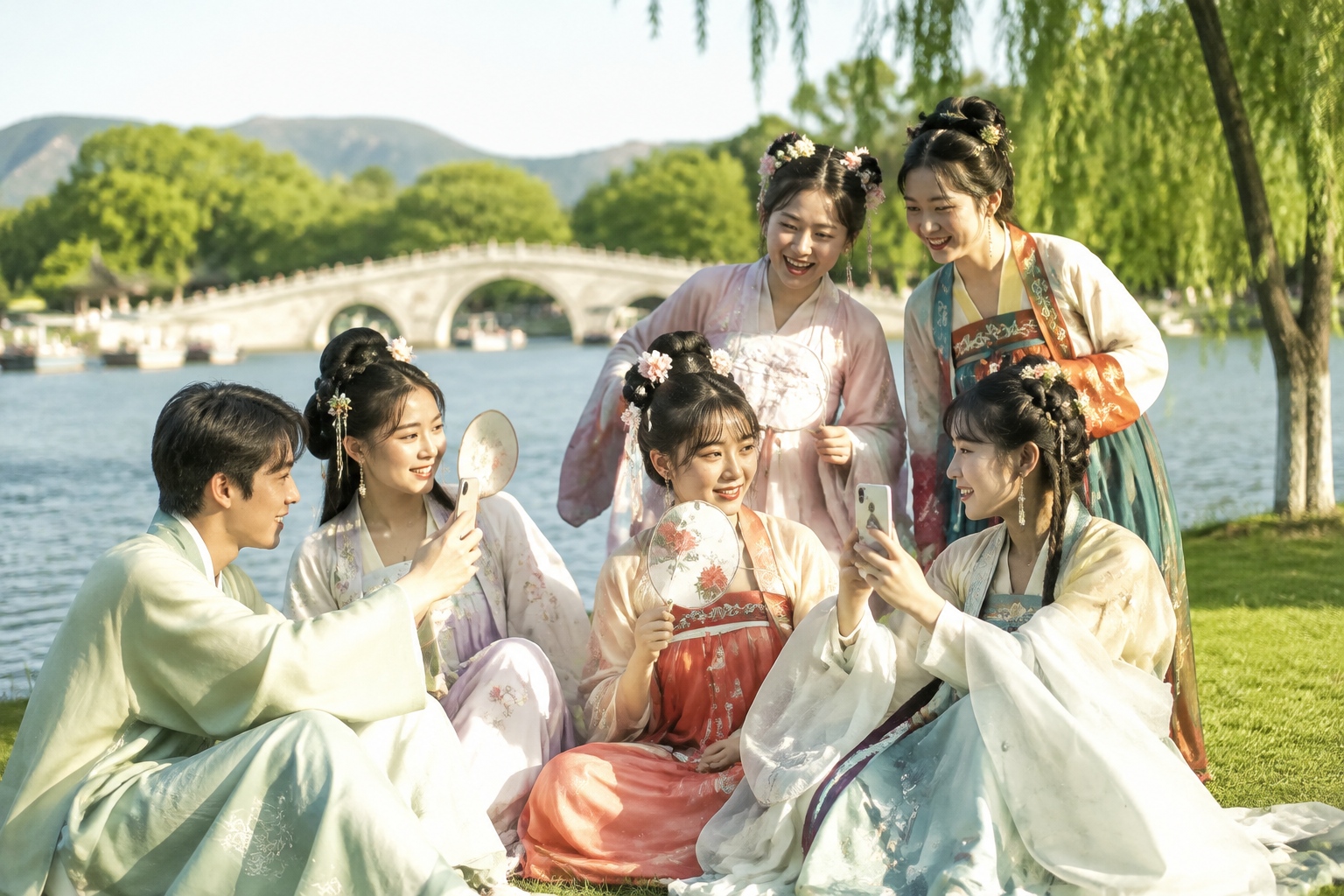
That’s the first thing to understand about today’s hanfu revival: it’s not a costume party. For many young Chinese, traditional clothing has become an everyday option — something to wear to a park, a museum, a tea house, or even a shopping mall. The term hanfu simply means “Han clothing,” the traditional dress of the Han Chinese majority. It covers many historical styles, from the wide-sleeved robes of the Tang dynasty to the smarter jackets of the Ming dynasty. If you know the Japanese kimono or the Korean hanbok, hanfu gives you a similar feeling, but with its own Chinese attitude.
What exactly is “guochao”?
Hanfu is part of a much bigger wave called guochao, which literally translates as “China-chic.” Guochao is not a single style. It’s a movement where Chinese designers, brands and young consumers mix traditional cultural symbols with modern taste. Think sportswear with Chinese characters, tea cups shaped like ancient bronze vessels, sneakers painted with peony patterns.
The movement first got noticed around 2018, when the sportswear brand Li Ning used the words “中国李宁” on a collection that went viral at New York Fashion Week. Since then, guochao has exploded. According to market research firm iiMedia, China’s hanfu market was estimated to reach about 10 billion yuan (1.4 billion USD) in 2022. That’s still small compared to the country’s overall fashion market, but the growth is striking.
Why do young people care about tradition now?
A few decades ago, many young Chinese wanted to look westward. Brands like Nike, Zara and Uniqlo were the symbols of cool. Traditional clothing was what you saw in historical drama, not on the street. So why the change?
The easiest answer is confidence. China’s economy has grown rapidly, and younger generations grew up in a world where China is a global power. They don’t need to borrow status from elsewhere. Instead, they are curious about their own roots. Hanfu gives them a visible way to say, “I am Chinese, and this is my heritage.”
Social media amplifies that. On platforms like Xiaohongshu (called Little Red Book by foreigners) and Douyin, videos of young women in tang-dynasty dresses, or young men in Ming-style robes, get millions of likes. The visual is powerful: a modern city street, and then a person in romantic ancient clothing walking through it. It’s a simple, shareable act of creative self-expression.
Schools also play a role. Chinese classrooms now include more classical poetry, calligraphy and traditional festivals. TV shows like “Chinese Poetry Competition” have made ancient culture feel accessible and even fashionable. When young people learn about the Tang dynasty in school and then see a Tang-style skirt on social media, the connection becomes very real.
From stage to street: hanfu goes daily
It wasn’t always like this. Ten years ago, wearing hanfu in public was rare. Many people assumed you were acting in a movie or working at a tourist site. Early fans were seen as strange, even eccentric. But the culture has shifted. Now you can see hanfu on the metro, in coffee shops, and in school halls. I know a university student in Shanghai who wears a modified hanfu jacket to class almost every day. “It’s just a nice piece of clothing,” she told me. “It has a long skirt, but I can bike in it.”
This “everyday hanfu” is often adjusted for convenience. Traditional robes with huge sleeves still exist for formal events and photo shoots, but many young people prefer simplified versions: a Mandarin-collar top, a high-waisted wrap skirt called a mamianqun, or a short jacket over a simple blouse. These pieces go with jeans or sneakers as easily as with embroidered shoes.
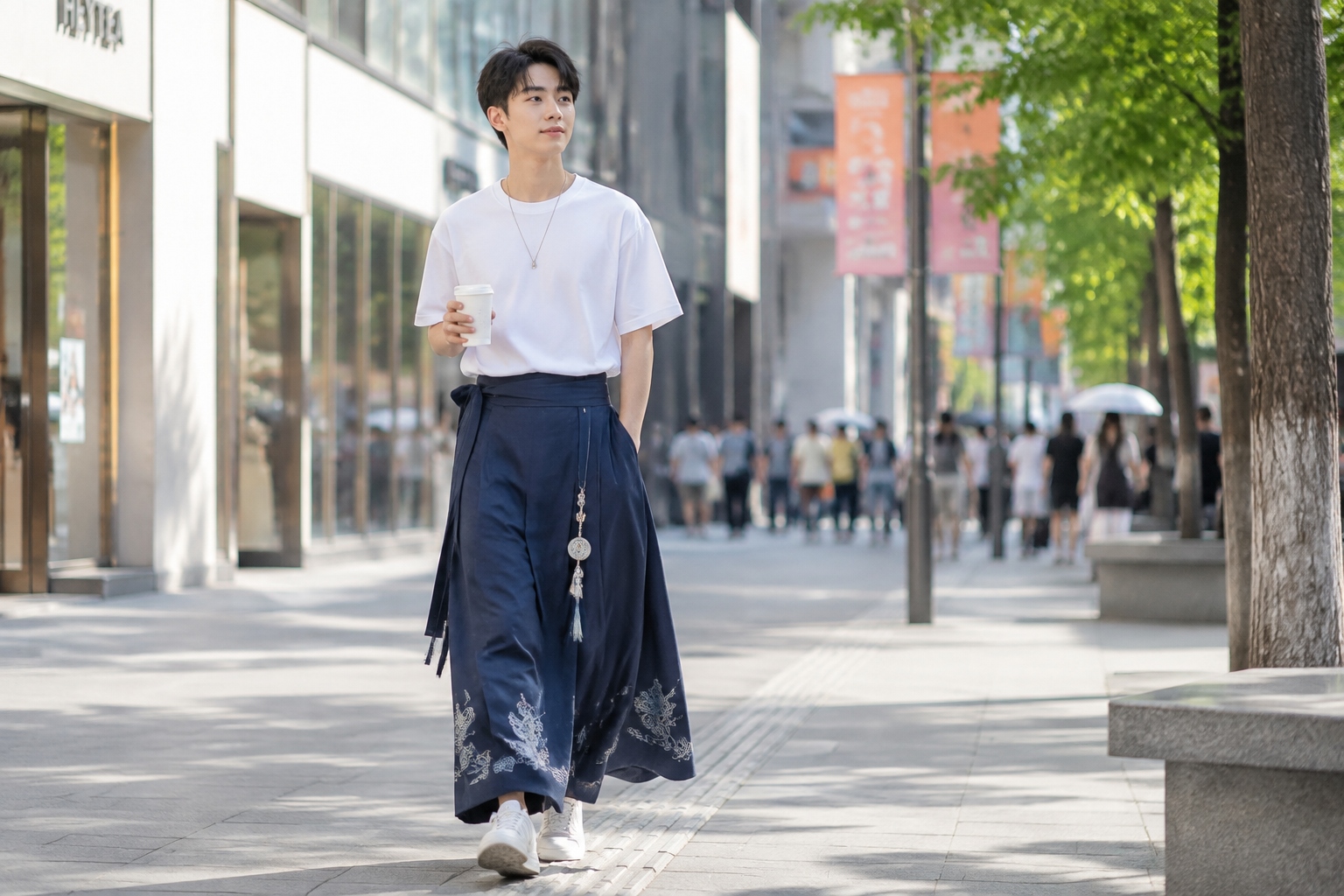
Guochao brands have noticed. Names like 十三余 (Shisan Yu) and 汉尚华莲 (Hishang Hualian) sell both strict historical styles and modern hybrids. On Taobao, a simple hanfu jacket can cost as little as 100 yuan (14 USD), while a full scholar outfit can go into several thousand yuan. There’s a product for every budget and every level of commitment.
The business behind the trend
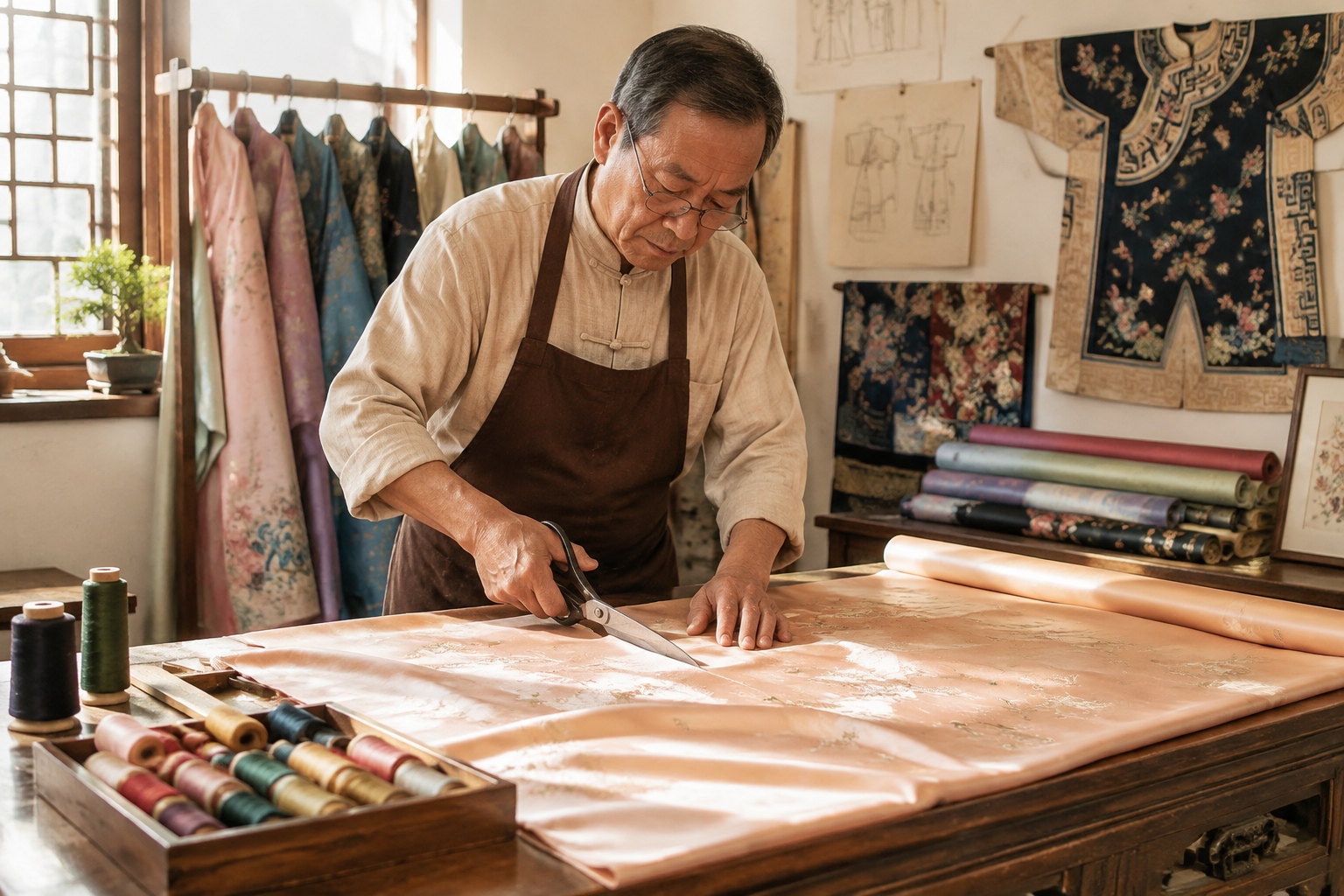
The hanfu economy is not just about e-commerce. Behind the glamorous images, there is a huge craft and supply chain. Many small studios in cities like Suzhou and Hangzhou design their own patterns, order silk or cotton from local factories, and produce limited batches. This gives the clothes a handcrafted feel, but also makes quality and sizing vary widely.
Big brands are also jumping in. Sportswear companies like Li Ning and Anta use traditional colors and patterns in their collections, combining heritage with sports performance. Palace Museum-branded products — from lipstick to notebooks — have become souvenirs that young people actually want. Even food brands use guochao packaging to tell a story about local ingredients and old recipes.
For young consumers, buying guochao is sometimes a statement, sometimes just a fashion choice. “I don’t think about ‘reviving tradition’ every time I buy something,” a 26-year-old office worker in Beijing told me. “I just think it looks good, and it makes me feel connected to something bigger.” That mixture of aesthetics, identity and commerce is what keeps the trend alive.
Not everything is simple: disagreements and doubts
What happens when a cultural revival becomes a hot market? Elbow room gets tight. Within the hanfu community, there are frequent online fights about “authenticity.” Is a certain sleeve width correct for the Song dynasty? Does the pattern on a skirt match the historical record? Some traditionalists insist that hanfu must follow strict rules, while others say it’s okay to be creative. These arguments can be surprisingly fierce, though most outsiders never notice.
There are also skeptics who see guochao mainly as a marketing trick. They worry that brands just paint a dragon on a hoodie and call it culture. There’s some truth to that, but I think the bigger story is more hopeful. Even when companies use tradition for sales, they still make ancient symbols visible and relevant. That helps younger generations feel that their culture is not stuck in a museum.
The old stuff learns to speak today’s language
What strikes me most about the hanfu and guochao wave is how calm it has become. A few years ago, every public emergence of hanfu was treated as a “circle culture” event, covered by media as a niche story. Now, it’s simply part of everyday life. You see a young man in a Ming-style jacket riding a shared bike, or a girl wearing a tang-dynasty skirt while ordering coffee. Nobody turns their head.
That’s a sign of genuine change. When something moves from unusual to unremarkable, it has become a real part of culture. Hanfu and guochao will probably change shape — some parts will fade, others will stay. But the important thing is what they’ve already done: they showed young Chinese that tradition can be personal, playful and workable in the modern world.
Next time you see a photo of someone in a hanfu under a bright blue sky, don’t think of it as a costume. Think of it as a conversation — between a young person and the long history they are just beginning to know.
Start the discussion at forum.chinacomes.com