

Saturday Morning in Xuchang
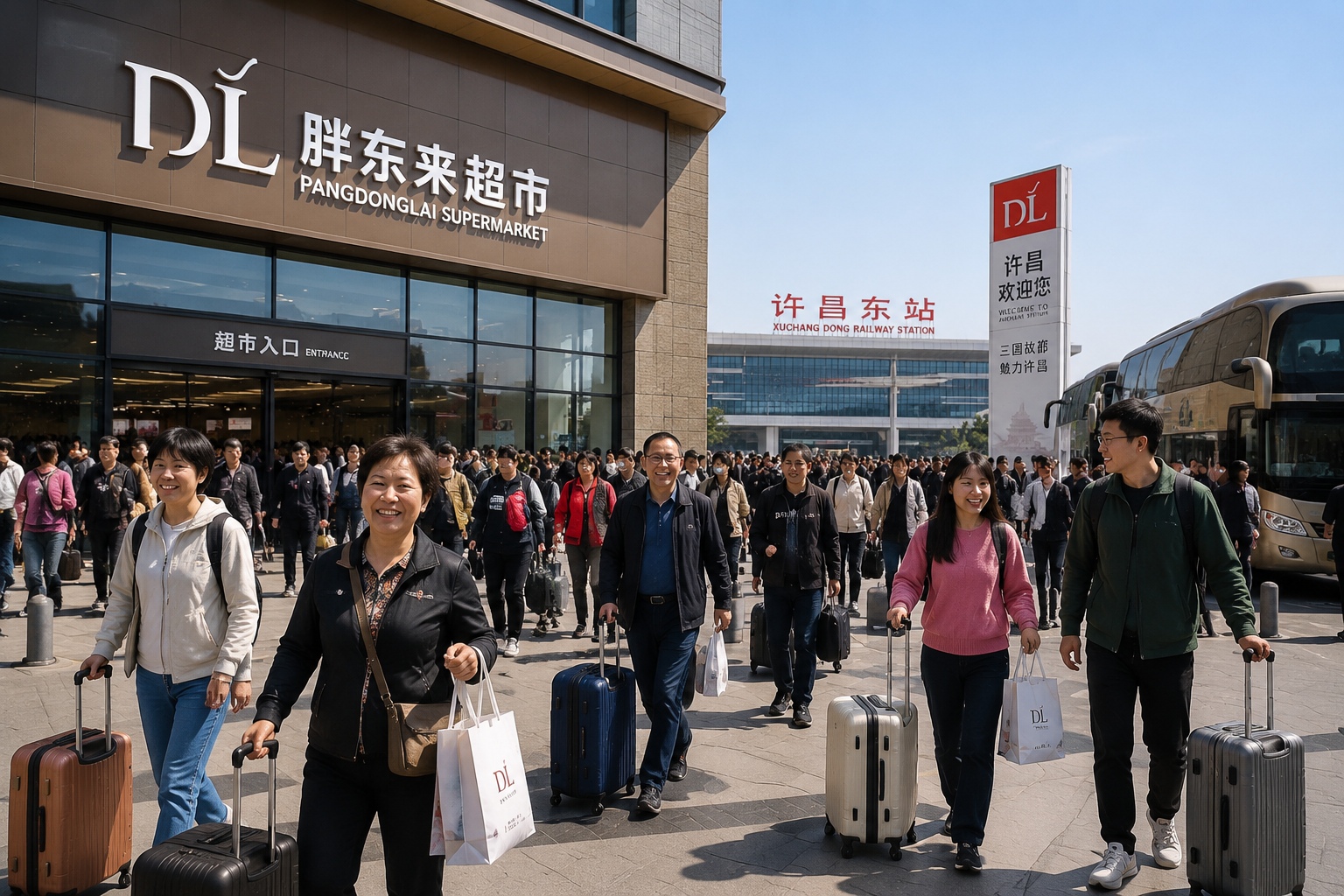
At 9 a.m. on a Saturday, the parking lot of the Pangdonglai Angel City store in Xuchang is already full. Tourists drag wheeled suitcases across the asphalt, navigating between tour buses and private cars. Some have come from Shanghai, a 700-kilometer drive away. Others from Beijing, taking the high-speed train for three hours. Their destination is not a temple or a mountain — it’s a supermarket.
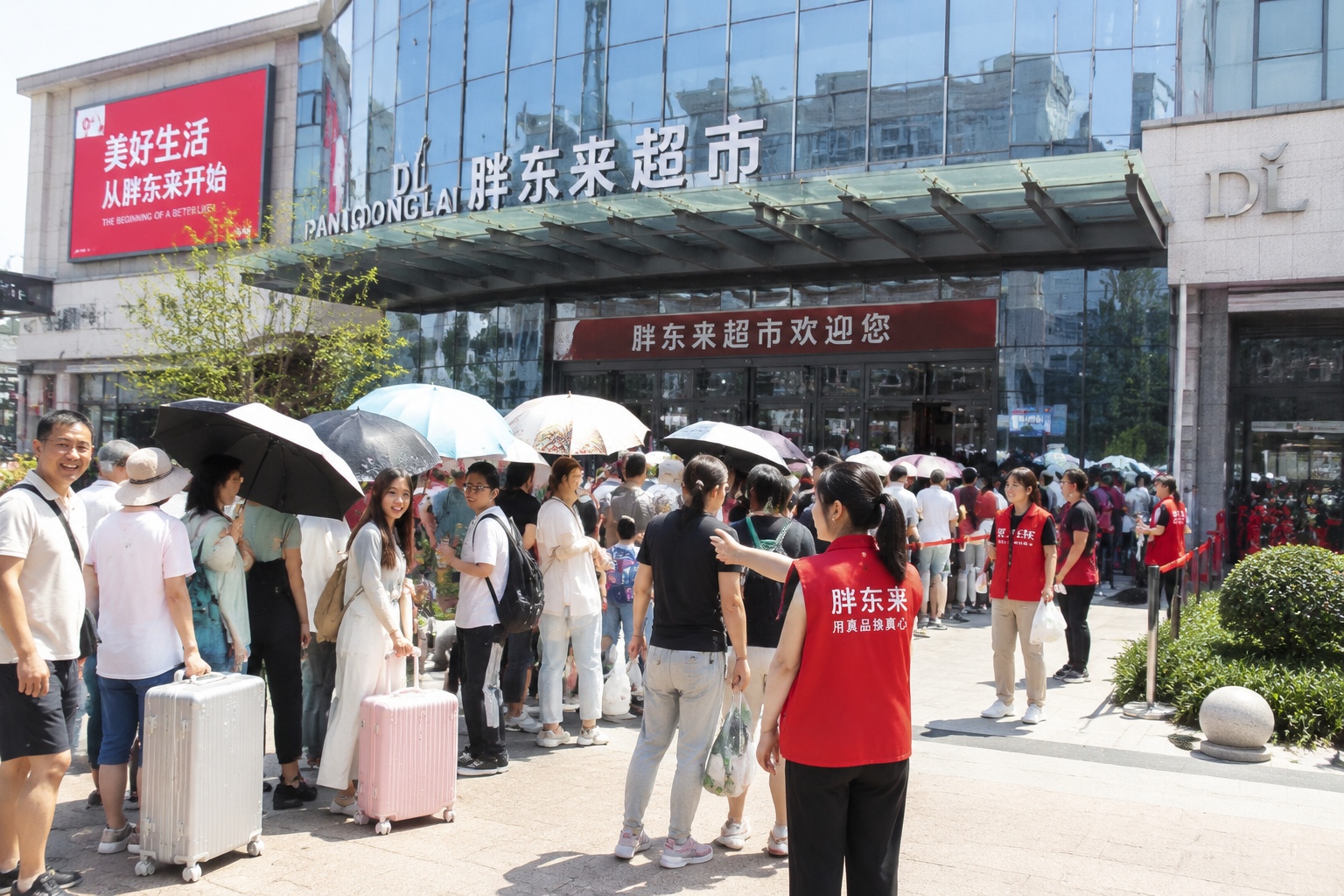
This is the Pangdonglai effect. The local supermarket chain, founded in 1995 near this city of 4.4 million people, has turned Xuchang into an unlikely tourism hotspot. On peak days, its stores receive more visitors than many of China’s famous scenic spots. The hashtag “Pangdonglai tourism” has appeared on Chinese social media, and people joke that the supermarket has become a “6A-rated scenic area” — a pun on China’s top 5A attraction rating.
What Is Pangdonglai?
Pangdonglai is a private retail company operating in Xuchang and the nearby city of Xinxiang. It now runs more than a dozen stores, mostly community supermarkets. But size alone does not explain its cult following. The secret is service that feels almost unnerving in its attention to detail.
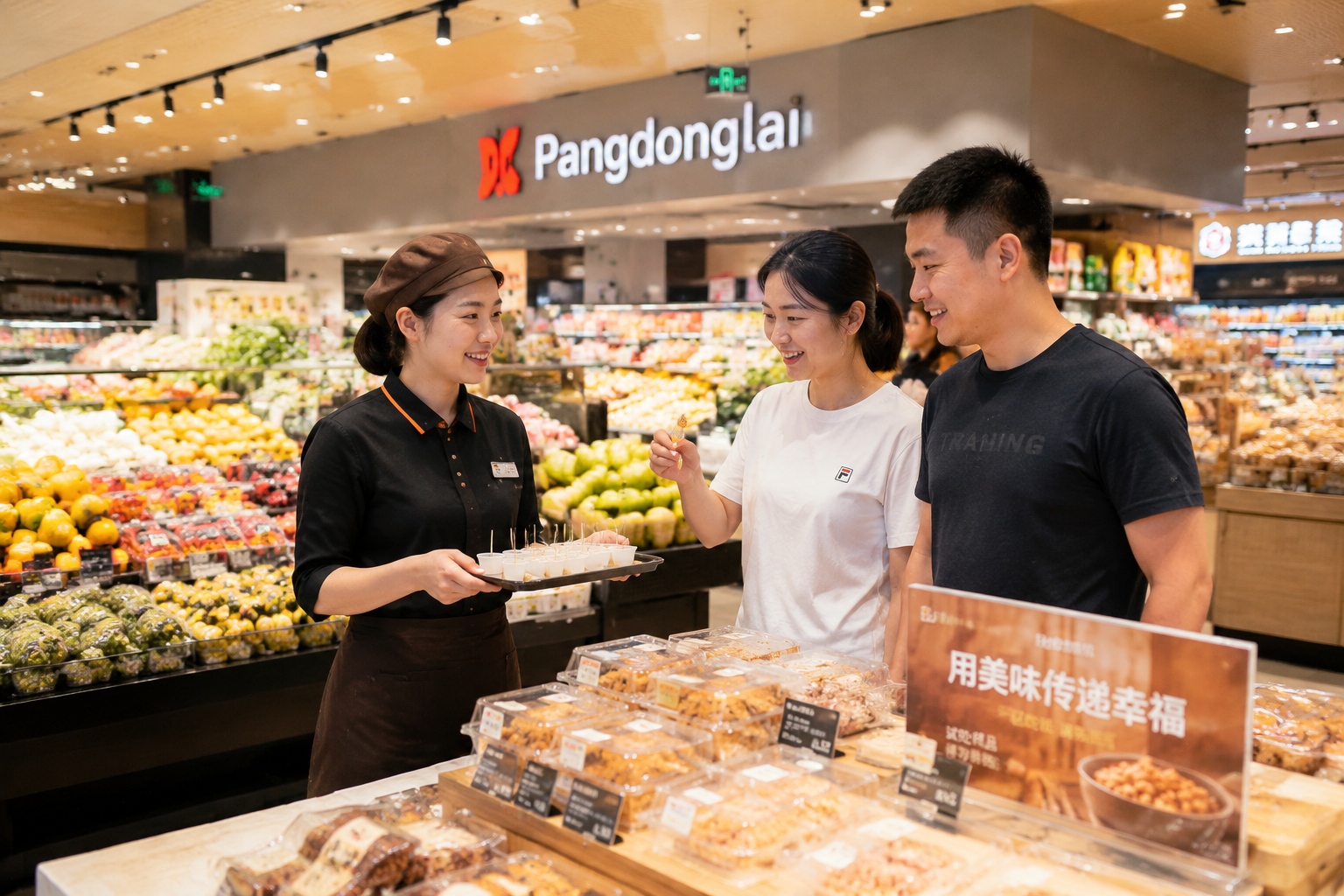
Employees greet customers with a 90-degree bow. Free-tissue boxes hang at every checkout counter. Stores have baby-changing rooms, adult changing rooms, and even a private nursing area. The meat section provides recipe cards, and the seafood counter will clean, slice, and season your fish while you wait. Unhappy with a purchase? You can return it for any reason, or no reason at all — no receipt required.
The company extends the same care to its staff. Cashiers sit on ergonomic chairs, clerks get two-hour lunch breaks and monthly days off. According to local reporting, an average employee earns at least 20% more than the regional retail norm. The founder, Yu Donglai, openly says the goal is to make employees happy, because happy workers create happy customers.
The Numbers Behind the Buzz
Statistics show how far the effect goes. During the 2024 Chinese New Year holiday, Pangdonglai’s three major stores in Xuchang welcomed more than 1.2 million visitors in seven days, according to the city’s tourism bureau. In the same period, the city received a total of about 6.2 million tourist visits. In other words, nearly one in five visitors to Xuchang went to a Pangdonglai store.
Revenue tells a similar story. Industry analysts estimate that a single Pangdonglai outlet can generate annual sales of around 1 billion yuan (about $140 million) — a figure that rivals the flagship stores of national retail giants, despite this being a lower-tier city with relatively low wages. On holidays, the supermarket turns into a sea of people, with checkouts queued for over an hour and shelves emptied by late afternoon.
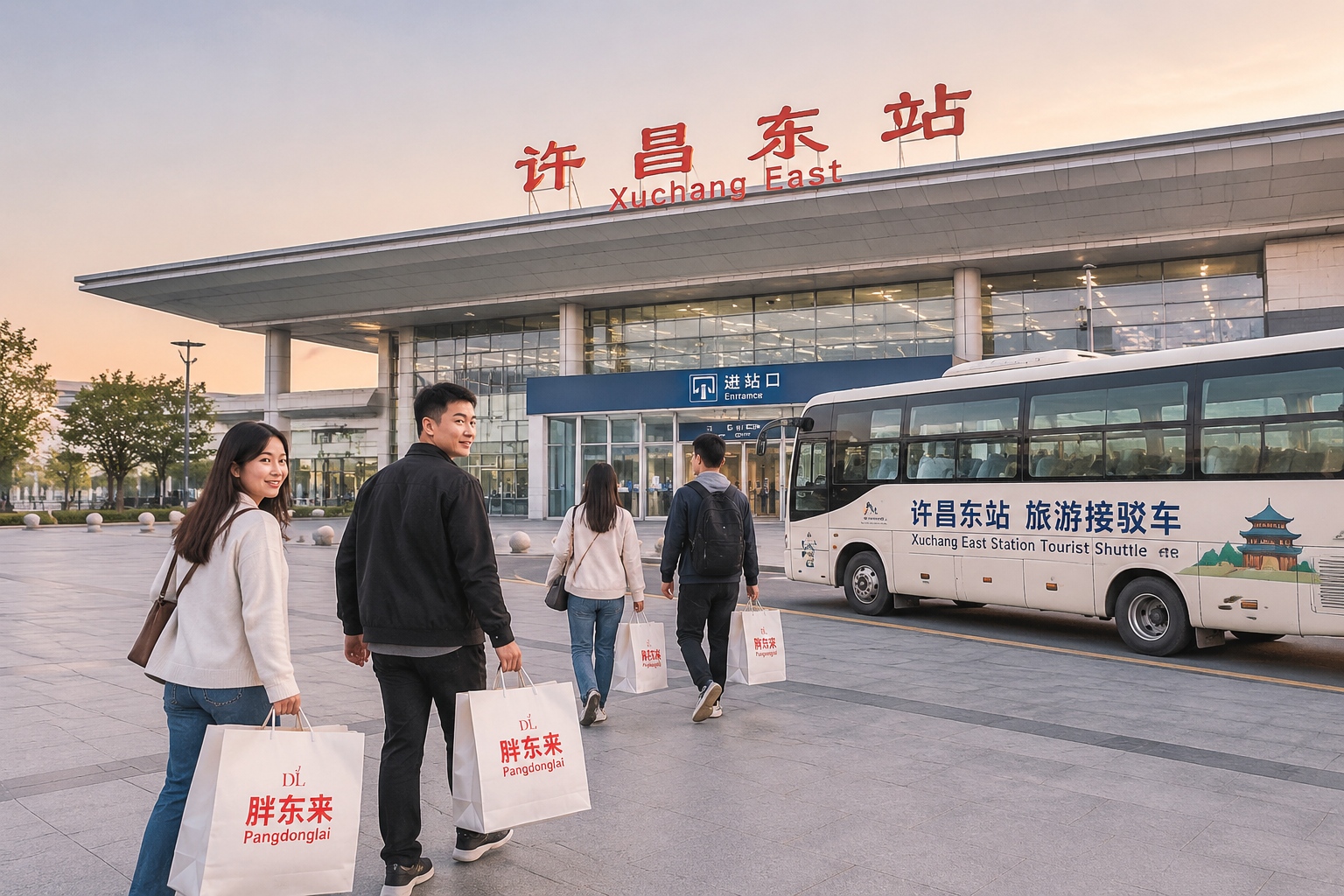
The spillover extends beyond the store doors. Local authorities reported that hotel bookings in Xuchang during the Labor Day holiday in 2024 rose 45% year-on-year. Restaurants near the Angel City store report waiting lists throughout the day. The city has also added direct shuttle bus lines from the high-speed rail station to the supermarket. In a country where online shopping and convenience stores dominate, the idea of traveling to a city just to visit a physical supermarket feels almost retro — and exactly that novelty drives its popularity.
How a Supermarket Changed a City’s Economy
The Pangdonglai effect is feelable in wages, jobs, and real estate. The company employs about 7,000 people in Xuchang, and its pay rates pull the local service sector upward. Restaurants and hotels near its stores have to offer better conditions to attract staff, because employees know they can walk over to Pangdonglai and earn more. Local small businesses — bakeries, fruit shops, even clothing stores — try to imitate Pangdonglai’s service style, such as installing hand-sanitizer stations at the entrance.
The company also reshapes how the city sees itself. In the past, Xuchang was best known as a manufacturing base for of wigs and gears. Young people often moved to bigger cities for work. Today, many return to open small businesses that cater to the supermarket’s visitors. The local government has embraced the trend, building walkways and road signs that point to the stores. Officials speak of “Pangdonglai as a public facility” — a supermarket that functions like a city landmark.
There is a psychological shift, too. Residents say they used to apologize for living in a “small” city. Now they feel a quiet pride. The supermarket gives Xuchang something that many wealthier cities lack: a reason for strangers to come and feel welcome.
The Limits and the Hard Questions
For all its success, Pangdonglai is not a cure-all. The company has deliberately chosen not to expand aggressively into other provinces, saying it does not want to sacrifice quality for growth. Xuchang’s dependence on a single retailer is also a risk; if Pangdonglai stumbles, the city loses its biggest attraction. Some urban planners worry that so-called “supermarket tourism” may be a short-lived fad, powered by novelty-hunting internet fame.
There are also structural limits. Service of this kind requires a high staff-to-shopper ratio, which eats into margins. Not every city can afford to pay employees 20% above the norm. And not every retailer can replicate the founder’s personal charisma — Yu Donglai is known for announcing policies on social media, such as punishing employees who mock customers, or giving staff a “day of rest” on Tuesdays.
Still, the experiment works on a small scale, and it offers a lesson that goes beyond retail. In a country where most shopping happens on mobile phones, Pangdonglai proves that physical stores can still pull people in — if they treat the trip as an experience, not just a transaction.
Beyond the Receipt
When the afternoon sun hits the glass facade of the Angel City store, tourists spill out with plastic bags full of baked goods and packaged snacks. Many sit on the curbside, eating a ramen snack cup that they bought inside. Some take photos for their social feeds. A family from Shanghai says they planned their entire weekend around the supermarket. “We thought it can’t be that good,” says the mother, holding a bag of free cheese samples. “But it is.”
The Pangdonglai effect shows that in today’s China, even a supermarket can be a landmark — if it dares to be better than expected. And for Xuchang, that is a win no matter how the receipts are counted.
Start the discussion at forum.chinacomes.com