
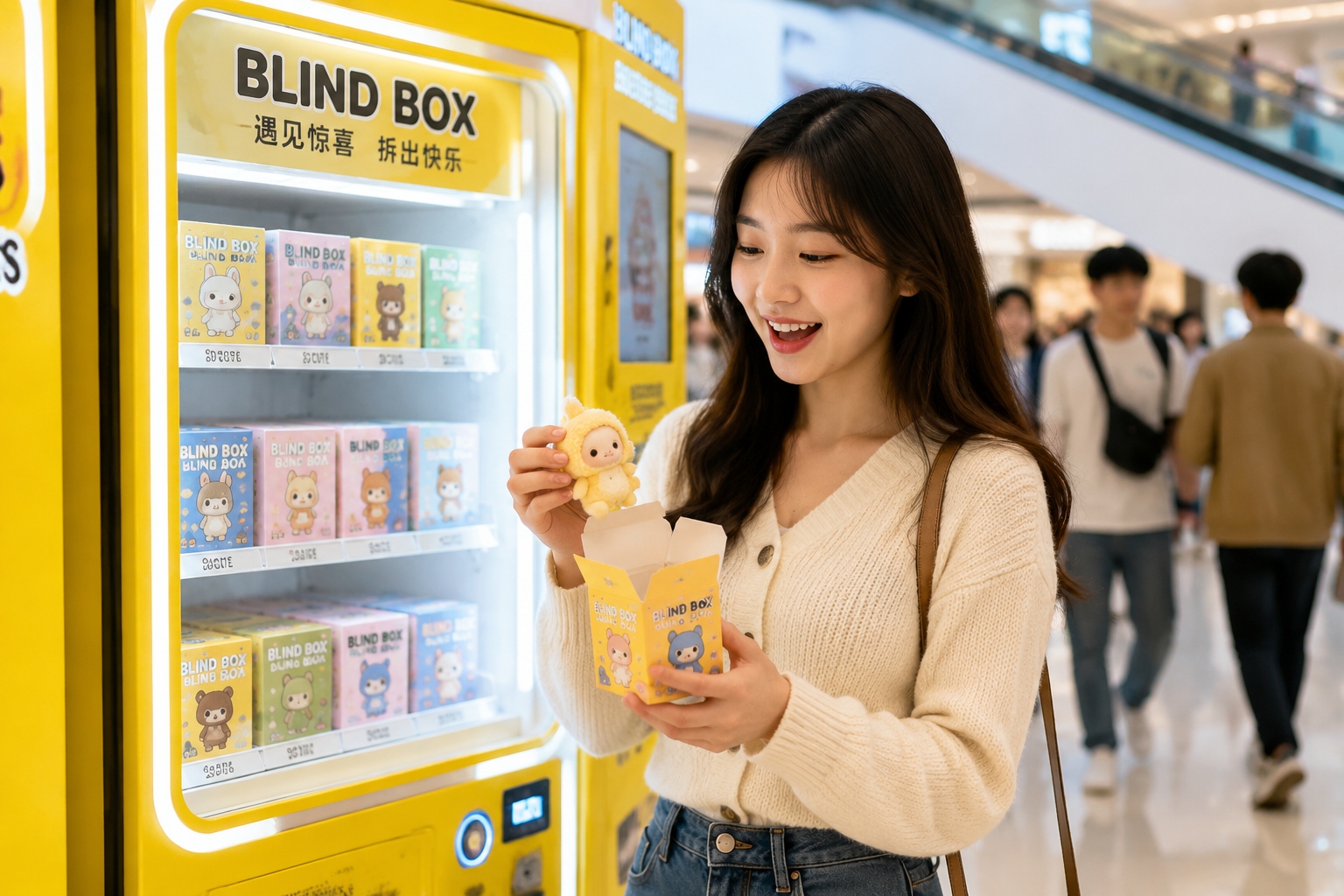

On a Friday evening in Shanghai, 24-year-old Lin Yun stands in front of a bright yellow vending machine inside a shopping mall. She scans a QR code with her phone, pays 69 yuan (about $9.50), and a small box drops into the tray. She picks it up, turns it over, and gently shakes it near her ear. Then she tears open the cardboard, pulls out a plastic packet, and unwraps it. A small figurine with a surprised expression rolls into her palm. It’s a “jungle” series figure she already owns. Lin sighs, then laughs, and immediately pulls out her phone to buy another box online.
Lin is one of millions of young Chinese consumers who have fallen hard for blind boxes (盲盒, máng hé), a phenomenon that has grown into a multi-billion-dollar business. Blind boxes are sealed, uniformly packaged containers that hold randomly chosen toys or figurines from a themed collection. You can’t see inside until you buy. The only way to know which character you’re getting is to open it — and the only way to guarantee getting your favorite is to keep buying until luck strikes.
In 2023, China’s blind box market was estimated to be worth over 10 billion yuan (about $1.4 billion), according to industry reports. The best-known company, Pop Mart, recorded annual revenue of 6.3 billion yuan in 2023, and its flagship stores in cities like Shanghai and Beijing often have lines wrapping around the block. But the real story isn’t just the money. It’s the psychology that keeps people coming back.
What Exactly Is a Blind Box?
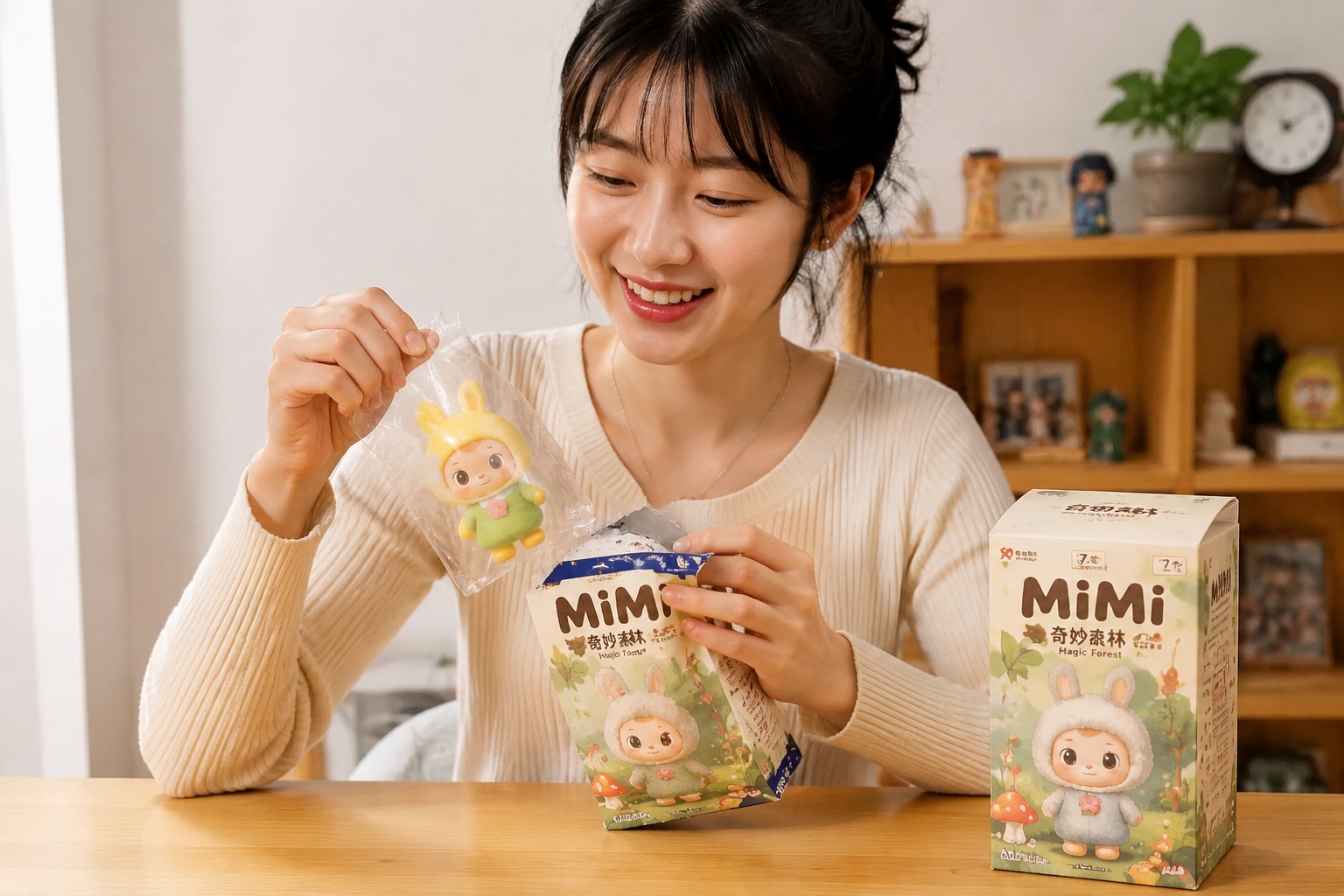
A typical series includes 12 to 18 regular designs, plus one or two “hidden” figures that are far rarer. All boxes in a series look the same on the outside, so there is no way to know what’s inside without breaking the seal. To collect a full set, you can either buy boxes one by one, hoping to fill the gaps, or buy an entire case — usually 12 or 24 boxes — which gives you a full set, but at a much higher up-front cost. This practice is so common that it has its own Chinese slang: duan he (端盒), meaning “taking the whole case.”
Buying a whole case can set you back anywhere from 800 to 2,000 yuan, depending on the series. Yet many serious collectors do it anyway, because it’s often the only reliable way to get every regular design without relying on luck. The hidden figures, though, are still not guaranteed. One popular series, for instance, lists the probability of its rarest hidden figure at 1 in 144. That means even a full case of 12 boxes gives you only a modest chance. For those who are determined to find it, the cost can spiral quickly.
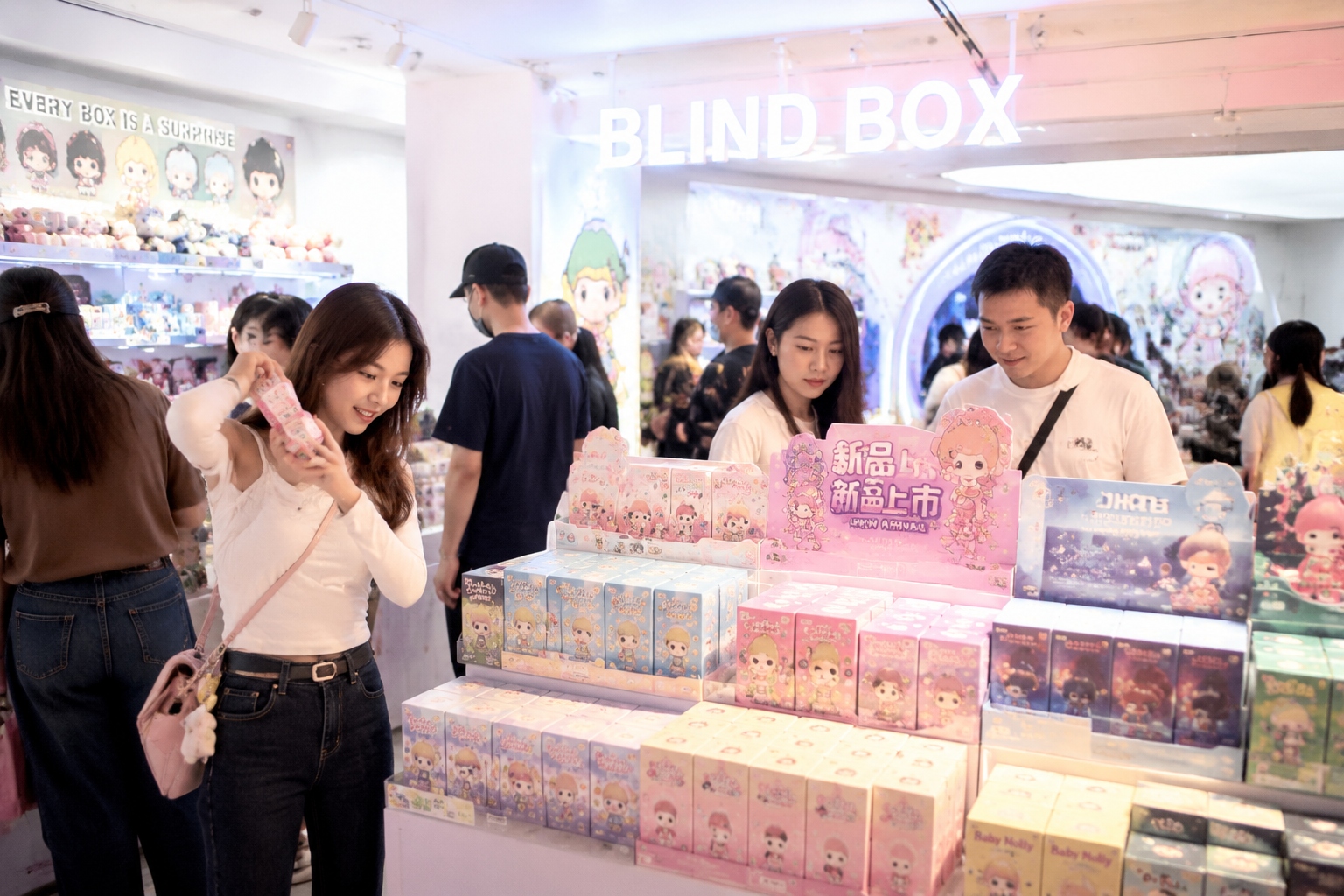
Blind boxes are sold everywhere: vending machines in malls, convenience store shelves, dedicated pop-up stores, and online shops with livestream unboxing sessions. On platforms like Taobao and Douyin, streamers open dozens of boxes in real time while viewers watch and comment. Some viewers even pay the streamer to open boxes “on their behalf” during a live broadcast, adding a shared, social layer to the experience.
The Allure of the Unknown: Psychology at Play
Why would anyone pay money for a mystery they might not like? The answer lies deep in the brain’s reward system.
Variable Rewards: Why Randomness Grips Us
Behavioral psychologists use the term variable ratio reinforcement to describe situations where a reward appears after an unpredictable number of actions. Slot machines work this way; so do lottery tickets and loot boxes in video games. The brain releases dopamine — a neurotransmitter linked to pleasure and motivation — in anticipation of the reward, not just after receiving it. The uncertainty itself creates a rush.
“The moment between tearing open the packaging and seeing the toy is the most exciting part for most people,” says Dr. Xu Lin, a consumer psychologist at Fudan University. “The brain treats that moment like a gamble: it could be great, it could be a miss. That unpredictability keeps people engaged.”
This is why blind box companies carefully control the odds. Hidden figures typically have a probability of 1 in 144 or even lower. The extreme rarity isn’t a mistake; it’s the engine of desire. If you know you’ll get the same common figure after a few tries, the game becomes boring. But if your desired figure appears only once in hundreds of boxes, the chase never ends.
The Collector’s Mindset and Social Investment
Blind boxes also tap into a deep human desire for completion. Psychologists call this the “Zeigarnik effect” — our tendency to remember unfinished tasks more strongly than completed ones. Once you own nine figures out of a 12-part series, your brain keeps reminding you that you need the other three. This muscle memory of incompleteness is what drives many people to keep buying.
At the same time, collecting is rarely a solitary activity. On Xiaohongshu, China’s lifestyle and social media app, users post photos of their blind box shelves, trade tips on how to identify rare figures by gently shaking the box, and arrange swaps with strangers. Owning a complete set, or a rare hidden figure, carries social currency. It signals that you’re dedicated, lucky, and part of the community. The result is that a small plastic doll can become a badge of belonging.
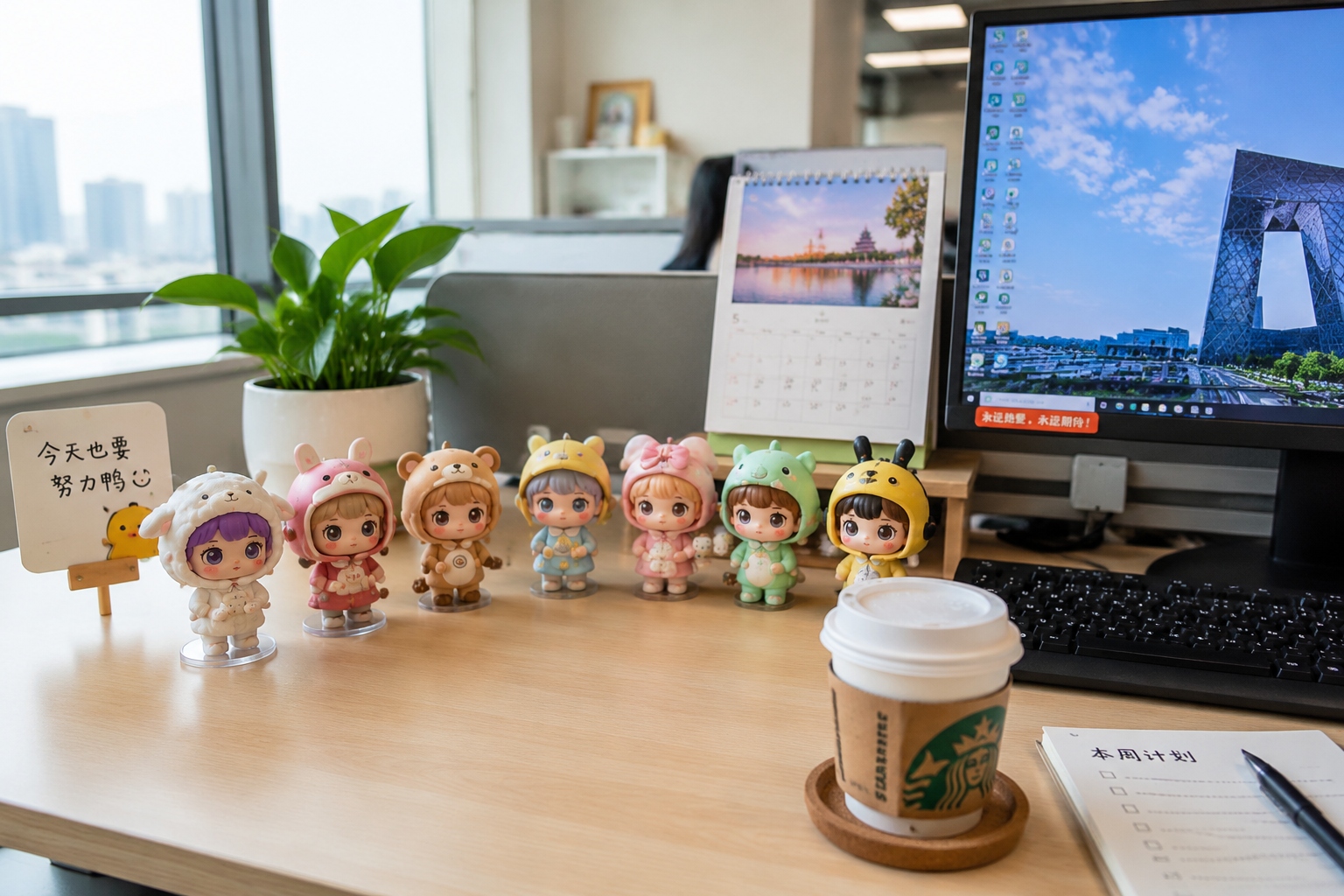
In office buildings across China, it’s not unusual to see a row of blind box figurines on a colleague’s desk. Colleagues compare collections, trade duplicates, and sometimes buy boxes for each other as small gifts. “It’s a way to connect,” says 26-year-old Yang Fan, a graphic designer in Hangzhou. “You see someone has a little figure you like, and you start a conversation. It breaks the ice.”
When Hobby Becomes Speculation: The Secondary Market
Where there’s scarcity, there’s a resale market. The trade in blind boxes is booming, and prices for certain figures are nothing short of staggering. A rare hidden version of Pop Mart’s popular Labubu character was once listed for over 20,000 yuan (about $2,800) on resale platforms. Even ordinary figures from discontinued series can sell for several times their original retail price if demand is high enough.
Online marketplaces like Xianyu (Alibaba’s second-hand app) are filled with listings that honestly describe which exact figure is being sold — a practice that defeats the original “blind” element but serves an entire sub-economy of collectors who only want specific characters. Some buyers purchase entire cases, open them, keep the rare figures, and sell the rest to recoup their costs. In extreme cases, people treat blind boxes like tiny stocks: buying, holding, and flipping them based on speculation about future scarcity.
The trend has drawn comparisons to the sneaker resale boom in the West, but with a twist: blind boxes are designed to be unpredictable, so the flip dynamic is amplified. Critics worry that this speculative layer encourages compulsive buying, especially when young consumers believe that buying just one more box might yield a valuable “win” that pays for everything.
The financialization of a children’s toy has drawn attention from regulators and academics alike. “When a product becomes an investment, its worth is no longer tied to its actual value but to the expectation of future resale,” says Zhang Wei, an economist at the Chinese Academy of Social Sciences. “This can create bubbles, and young people are often on the losing side.”
Reining In the Craze: Rules and Growing Pains
Chinese regulators have stepped in to bring some order to this fast-growing market. In 2022, the Shanghai Administration for Market Regulation introduced some of the country’s first blind box-specific rules. Among other things, they required sellers to clearly disclose the probability of obtaining each product, including hidden figures, and prohibited the sale of blind boxes to children under 8 years old.
The rules can get remarkably detailed. For example, sellers are now required to mark the exact probability of the rarest item in each blind box series. They also have to display age recommendations and warn consumers that the product is random. In 2023, the national State Administration for Market Regulation issued a broader guideline, adding further restrictions: products aimed at minors must not be sold to children under 8, and for those aged 8 to 18, blind boxes must be age-appropriate and not encourage excessive consumption. Retailers are also urged to avoid too many “gambling-like” sales tactics, such as bulk discounts that push people to buy more.
Public sentiment has become more cautious too. Stories of students skipping meals or spending their entire allowances on blind boxes have gone viral on Weibo. Some parents have filed complaints about the lack of child protection. In response, a number of schools have banned blind boxes from campus, and consumer advocates now regularly remind buyers to set a budget and think about when the hobby stops being fun.
Inside the Hearts of Gen Z: Emotional Consumption and the Lonely Economy
So why has this format taken off so strongly in China, especially among Gen Z? One key explanation is emotional consumption. In a society where young people are constantly pushed to perform — at school, at work, in social comparisons — spending 50 or 70 yuan on a tiny object that brings instant joy feels like a justifiable purchase. It’s cheap therapy, a quick hit of happiness in a demanding day.
There’s also the “lonely economy” effect. As more young Chinese move to big cities for jobs, they often live far from family and can easily end up alone. A shelf of cute characters, each one carefully chosen or won, can feel like a small community that doesn’t judge. The act of unboxing a blind box is a private ritual, but sharing it on social media turns it into a public moment of connection. This dual nature — private pleasure and public display — may be why blind boxes have become a cultural phenomenon rather than just a fad.
Zhou Lin, a 23-year-old graduate student in Beijing, says her blind box collection helps her cope with stress. “When I’m studying for exams and feeling anxious, I’ll buy a blind box as a little reward. The whole process — ordering, waiting, opening — takes my mind off things. It’s like a five-minute vacation.” She admits, though, that it can be a slippery slope. “Sometimes I buy more than I planned. I have to set a rule: only one box a week.”
Of course, not everyone who buys a blind box is addicted or seeking comfort. Many simply enjoy the aesthetic, the surprise, and the playful interaction with friends. The key is balance — and both consumers and regulators are starting to recognize that.
Conclusion: A Symbol of Our Times
The rise of blind boxes tells us more than just how toys are sold. It reveals the emotional landscape of a generation that is highly creative, deeply social, and often anxious. The little boxes are not merely containers of plastic toys; they are a lens through which we can understand how uncertainty, desire, and community shape today’s China.
Next time you see someone shaking a sealed box, remember: they’re not just looking for a toy. They’re chasing a tiny, well-designed shot of emotion — and in a world where so much is predictable, that may be a perfectly human thing to do.
Start the discussion at forum.chinacomes.com