

The Smell of Ink and the Sound of Silence
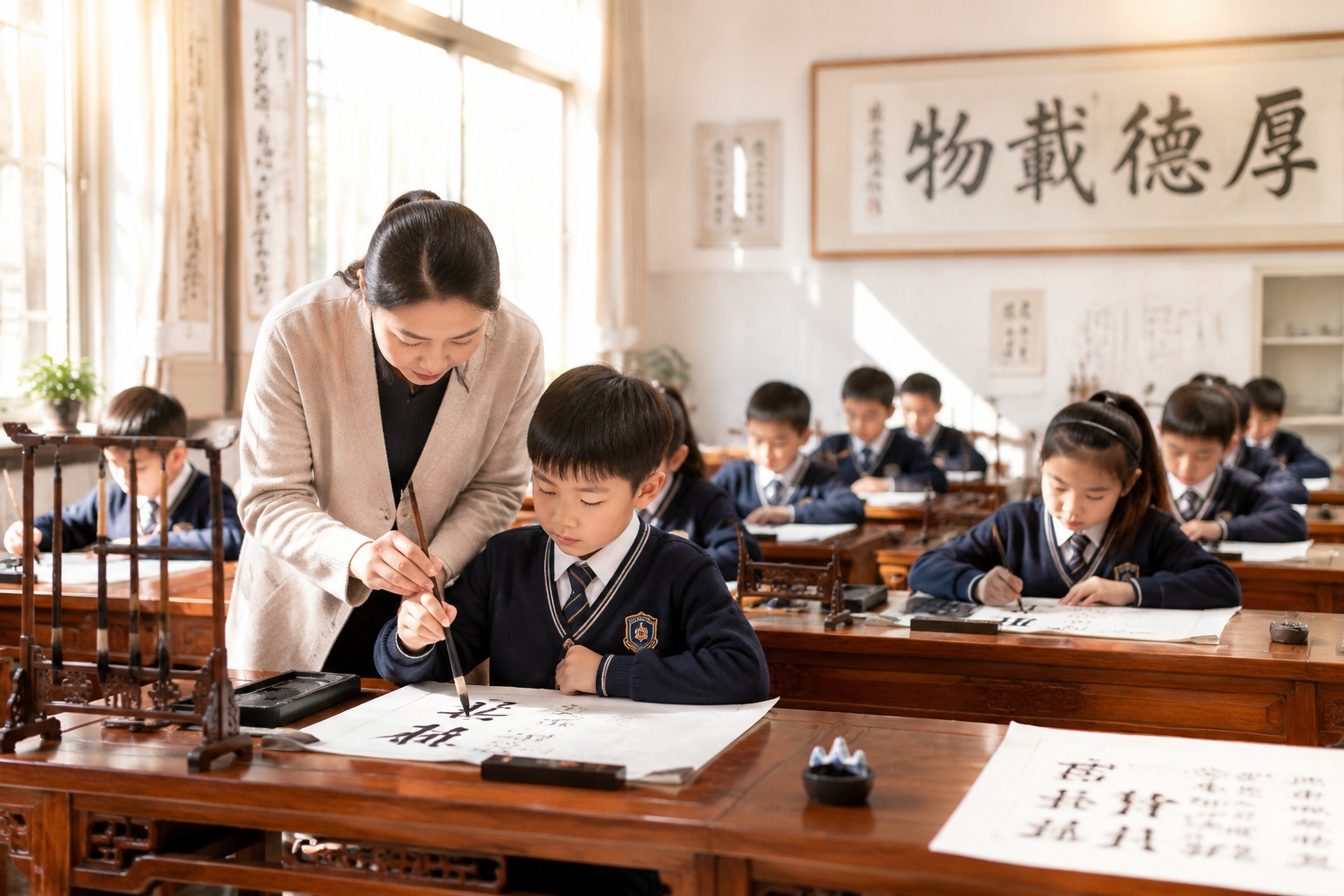
The afternoon sun slanted through the tall windows of the calligraphy classroom, falling across the desks in bands of pale gold. Inside, the air smelled of ink and paper. A dozen children, aged eight and nine, sat perfectly still, each bent over a sheet of calligraphy paper. The only sound was the soft scratch of brush on paper.
One boy, Xiao Ming, was practicing the character “静” (silence). His tongue slipped out just slightly as he concentrated, his brush moving in slow, deliberate strokes. The teacher, Ms. Zhou, walked among them, occasionally leaning down to adjust a finger or a wrist, but mostly just watching. A visitor might wonder what has happened to the usual energy of third-graders. The answer is that calligraphy has a way of pulling children into a world of quiet focus.
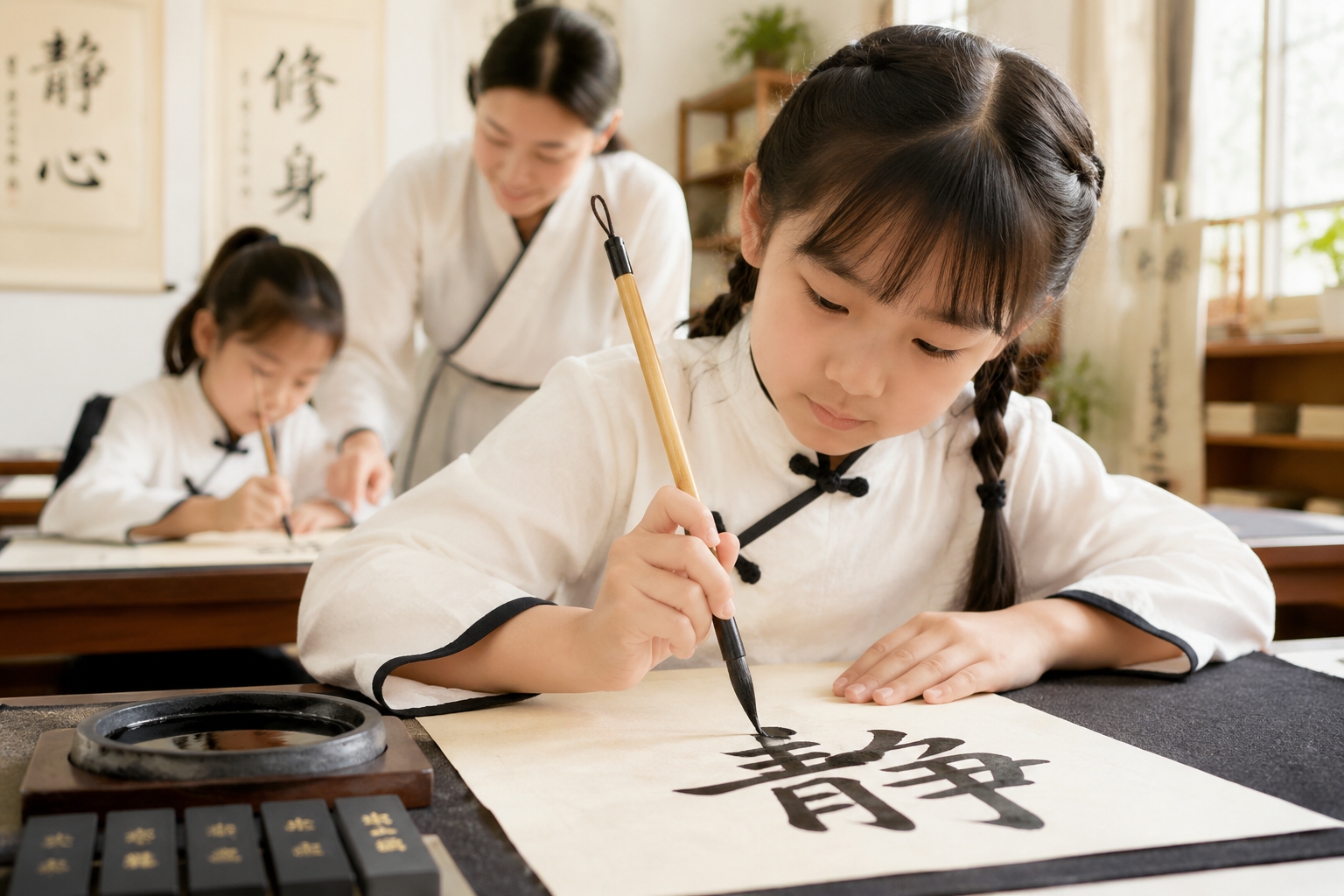
Before the class wrote a single stroke, Ms. Zhou asked them to grind their own ink. Each child held a solid ink stick against a stone, grinding it in slow circles with water. It took a minute or two, but the repetitive motion was itself a kind of preparation. “If you hurry the ink, it will be too pale or too watery,” she explained. “So you must grind slowly and calmly.” The children took the instruction seriously, their wrists moving in rhythm, the sound of stones and water filling the room.
Why Calligraphy? An Ancient Antidote to Distraction
This is a scene repeated in thousands of Chinese primary schools today. Calligraphy, an ancient art once reserved for scholars, is now a fixture in the curriculum. The question is why. Why should a digital-age child, who can swipe and tap within a second, relearn the patience of a brush?
Calligraphy has been part of Chinese education for centuries. After a decline in the 20th century, it made a strong comeback. In 2011, the Ministry of Education made calligraphy a compulsory subject in primary schools. But the real reason many teachers and parents embrace it has less to do with tradition and more with something modern: the need to calm a fragmented mind.
Children today are surrounded by screens and notifications. Many educators observe that students struggle to sustain attention on anything for longer than a few minutes. Calligraphy, by contrast, requires slow, deliberate movements, deep breathing, and total presence. It is, in a sense, mindfulness training disguised as a school subject. “In a world where everything moves fast, calligraphy is a forced pause,” says Zhang, a primary school teacher in Beijing.
This is not just a school phenomenon. In cities like Beijing, Shanghai, and Chengdu, after-school calligraphy classes have become increasingly popular among parents who worry that their kids are spending too much time on tablets and phones. Some community centers now even offer calligraphy sessions for adults, but the focus is often on children. On social media, short videos of kids writing large characters with surprising skill regularly attract millions of views. The word “静心” (quiet heart) appears in the comments again and again.
In most schools, calligraphy is taught for one or two periods a week. But some schools in regions like Zhejiang and Jiangsu have gone further, integrating short calligraphy breaks into the daily schedule. The idea is simple: before a big test or after a noisy lunch break, a ten-minute session of writing a character can reset the mood.
One Boy’s Transformation: From Wriggly to Steady
I spoke with Li Hua, a mother of a nine-year-old boy in Chengdu. Her son, whom she described as “like a monkey” in his younger days, couldn’t sit still for ten minutes. Teachers complained that he was constantly fidgeting, talking, or throwing paper balls. At her wits’ end, Li enrolled him in a weekend calligraphy class.
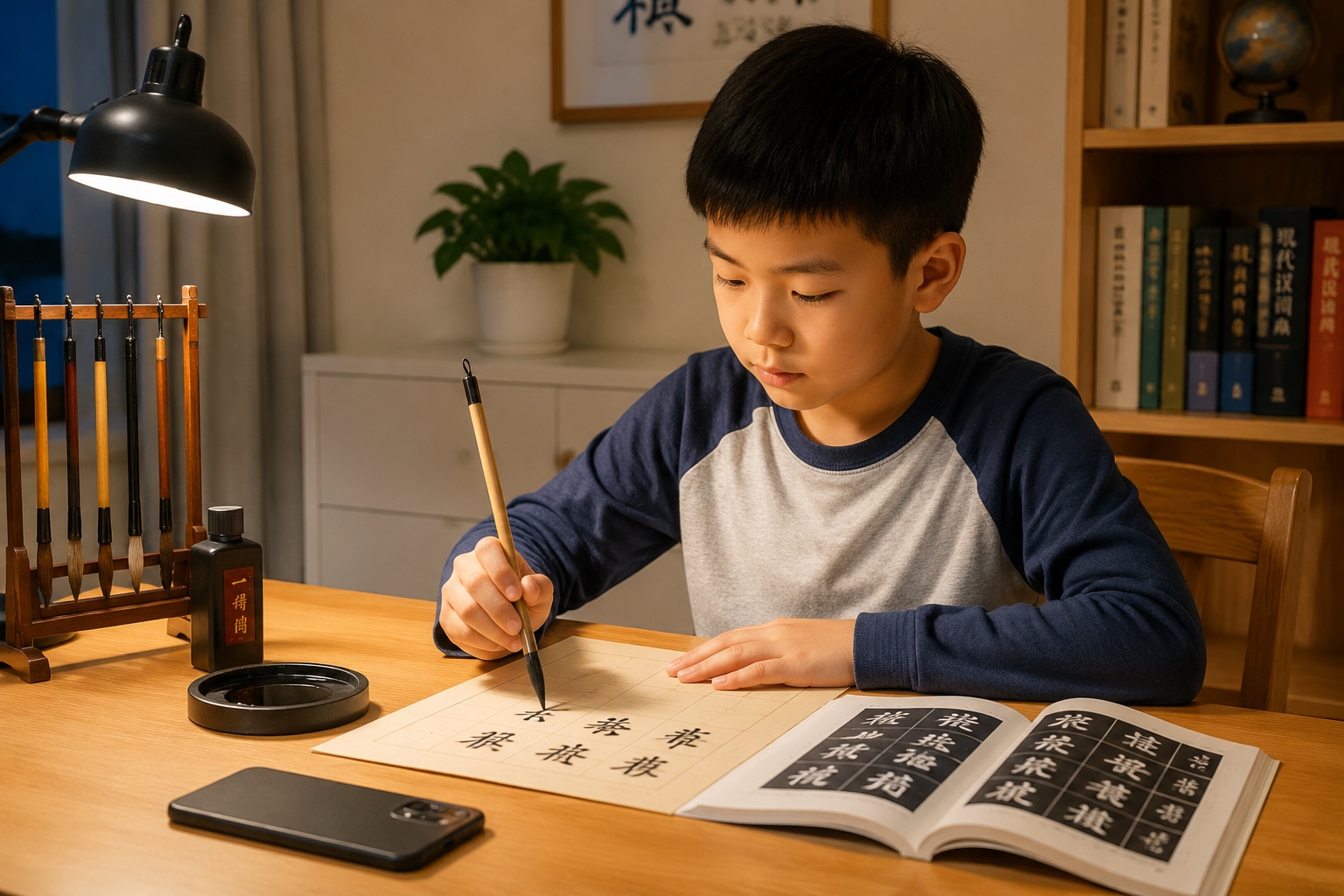
“At first it was a struggle,” she told me. “He hated the discipline. He wanted to go outside and play. But after a few months, something changed. He would sit down to practice for half an hour without looking at his phone. More importantly, he became more organized at school. His homework was neater, and even his daily planner was clearer.”
Zhang, the Beijing teacher, sees similar changes in her classroom. She recalls a boy who often disrupted lessons and was always bouncing out of his seat. “I started him on calligraphy as an experiment. After six months, he still has energy, but he also knows how to channel it. He will sit down, square his shoulders, and write. It’s like he has a switch.”
Zhang is careful not to overstate the case. “Calligraphy is not magic,” she says. “But it gives children an anchor. In a noisy life, they have a way to return to silence. That’s a skill that goes beyond the classroom.”
Art for Self-Expression vs. Art for Self-Cultivation
In the West, art education often focuses on self-expression and creativity. Children are encouraged to paint how they feel. Chinese calligraphy is different. It is deeply rooted in the Confucian tradition of self-cultivation. The brush is an extension of the body, and the character is not just a symbol but a reflection of the writer’s inner state.
The goal is not originality but mindfulness and discipline. For Chinese educators, a well-written character shows a well-cultivated mind. This is why a calligraphy class feels more like meditation than art class. A child must hold the brush firmly but gently, balance the pressure of the wrist, and pause before each stroke. Every movement is intentional. There is no room for hurry.
This philosophical approach has practical benefits, too. In a society that prizes academic performance, calligraphy trains the very skills needed to study effectively: patience, attention to detail, and the ability to sit still. Some parents even call it “active meditation for kids.” And while Western classrooms often use yoga or breathing exercises to help children relax, Chinese schools can rely on ink, brush, and paper.
Conclusion: A Quiet Ritual for a Noisy World
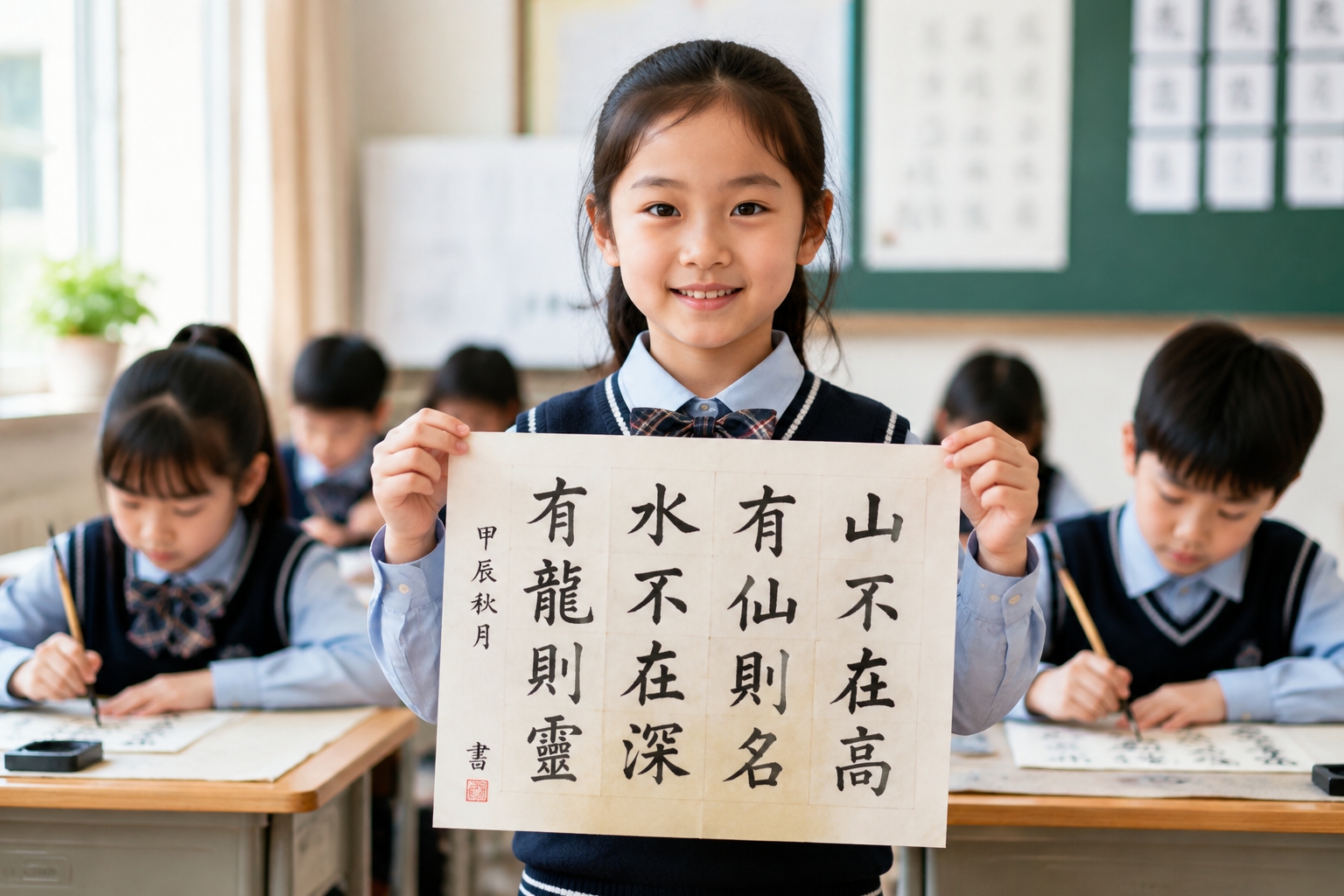
Calligraphy, then, does more than preserve a cultural heritage. It offers children a structured ritual to slow down, to breathe, and to regain focus in a noisy, accelerated world. In a society that moves as fast as China, this quiet room where children practice the art of stillness may be the most valuable lesson of all.
As the class ended, the children cleaned their brushes and pressed their ink stones into the cloth, just as their ancestors did. The noise of the schoolyard rushed back in through the windows. But for one hour each week, these children get to practice the nearly lost art of doing one thing at a time. And maybe that is why calligraphy has become the unexpected “calm-down” class of China’s elementary schools.
Start the discussion at forum.chinacomes.com