
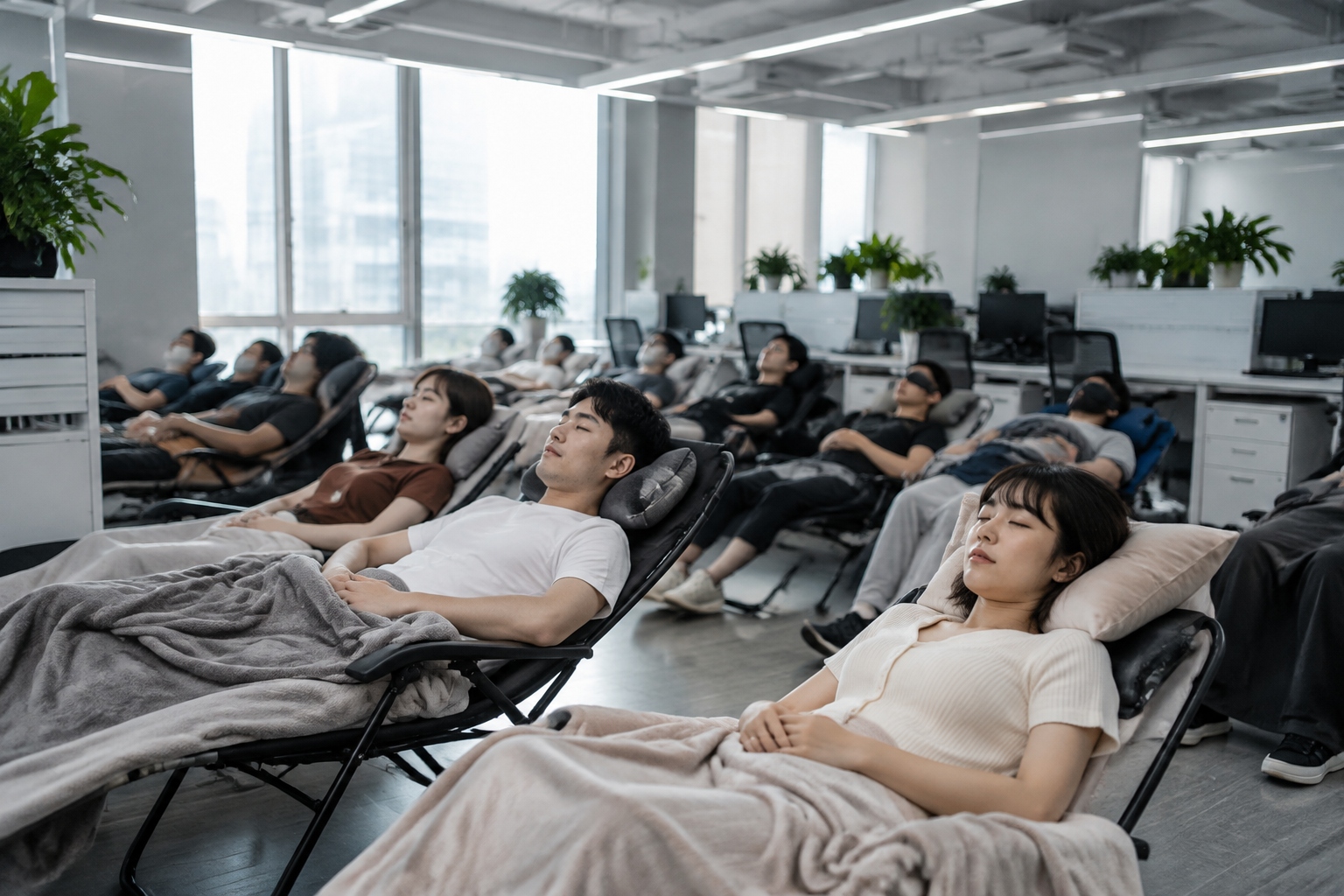

At half past noon on a Tuesday, the fluorescent lights in a Shanghai co-working space flicker off. Around 200 workers, most in their twenties and thirties, quietly transform their desks into temporary bedrooms. They pull out collapsible beds from under their desks, inflate travel pillows, and put on silk eye masks. A phone alarm is set for 47 minutes later. Welcome to China’s office nap hour.
To many Western visitors, this scene is both fascinating and puzzling. In the United States or Britain, falling asleep at your desk is usually a career mistake. In China, it’s practically a badge of honor. A widely shared post on Weibo puts it this way: “Sleeping at noon is not just allowed, it’s encouraged.” But why has this habit become so deeply embedded in Chinese working culture? The answer lies in a mix of biology, working hours, and changing office policies.
The Office Nap Is a National Ritual
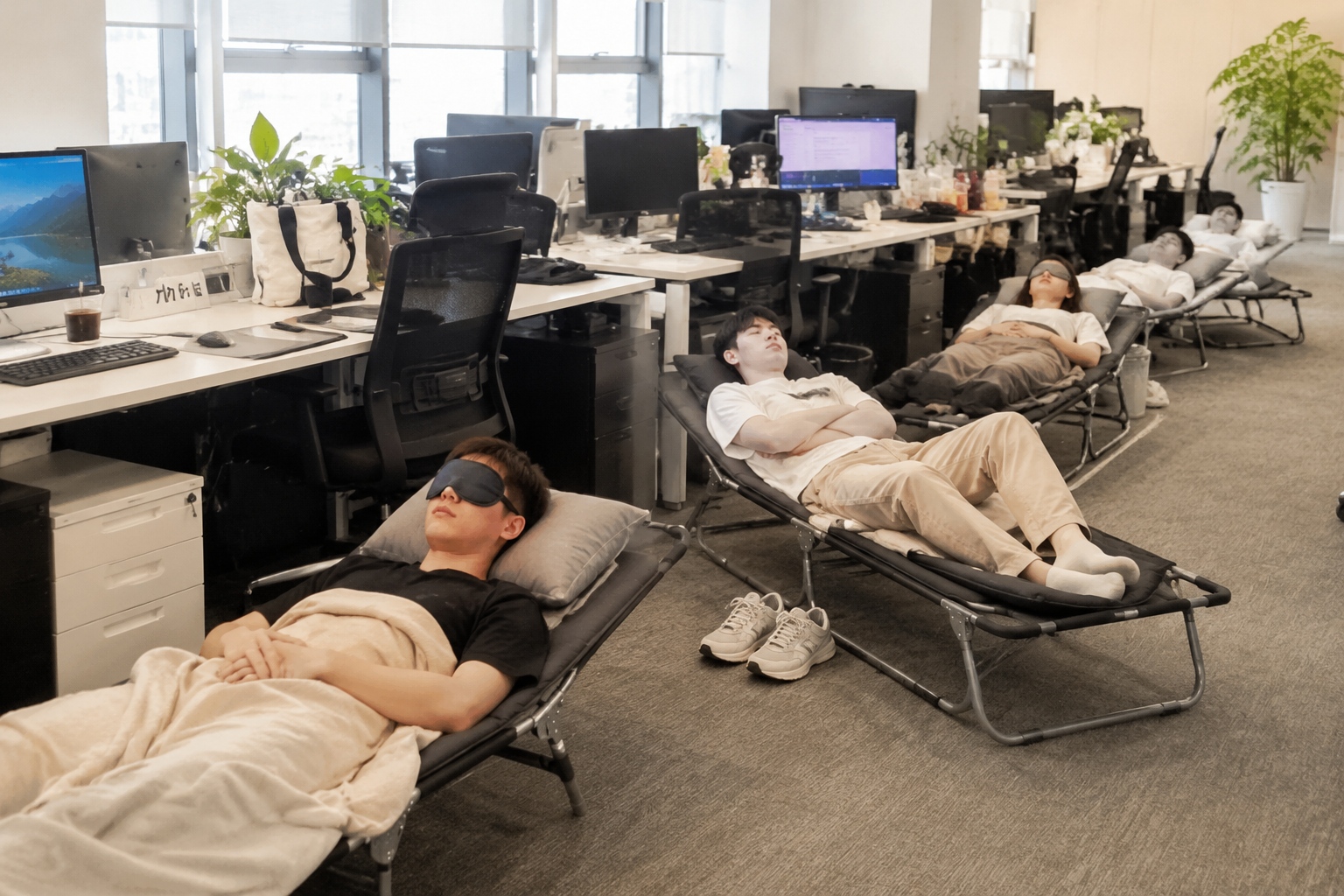
This scene is not unusual anywhere in China, from government offices in Beijing to private tech startups in Shenzhen. Surveys suggest that the majority of Chinese white-collar workers nap during the workday. A 2021 survey on Maimai, a professional networking platform similar to LinkedIn, found that 72% of respondents said they napped at work at least three days a week. In many workplaces, the noon break is treated as sacred: from 12:00 to 1:00 or 1:30, phones are muted, blinds are drawn, and even managers avoid scheduling meetings.
For Chinese workers, the break is a right, not a perk. Labor laws guarantee workers at least one rest day per week and a lunch break, though the length varies. Many companies interpret the lunch break as a true rest period, and some even provide designated napping areas with foldable beds, pillows, and blankets. In small retail stores and factories, a worker can often be seen dozing off on a cardboard mat or a bench. A simple inflatable pillow costs less than 30 yuan (about $4) and is sold everywhere, from street vendors to e-commerce sites.
Why Are They So Sleepy? It’s Biology
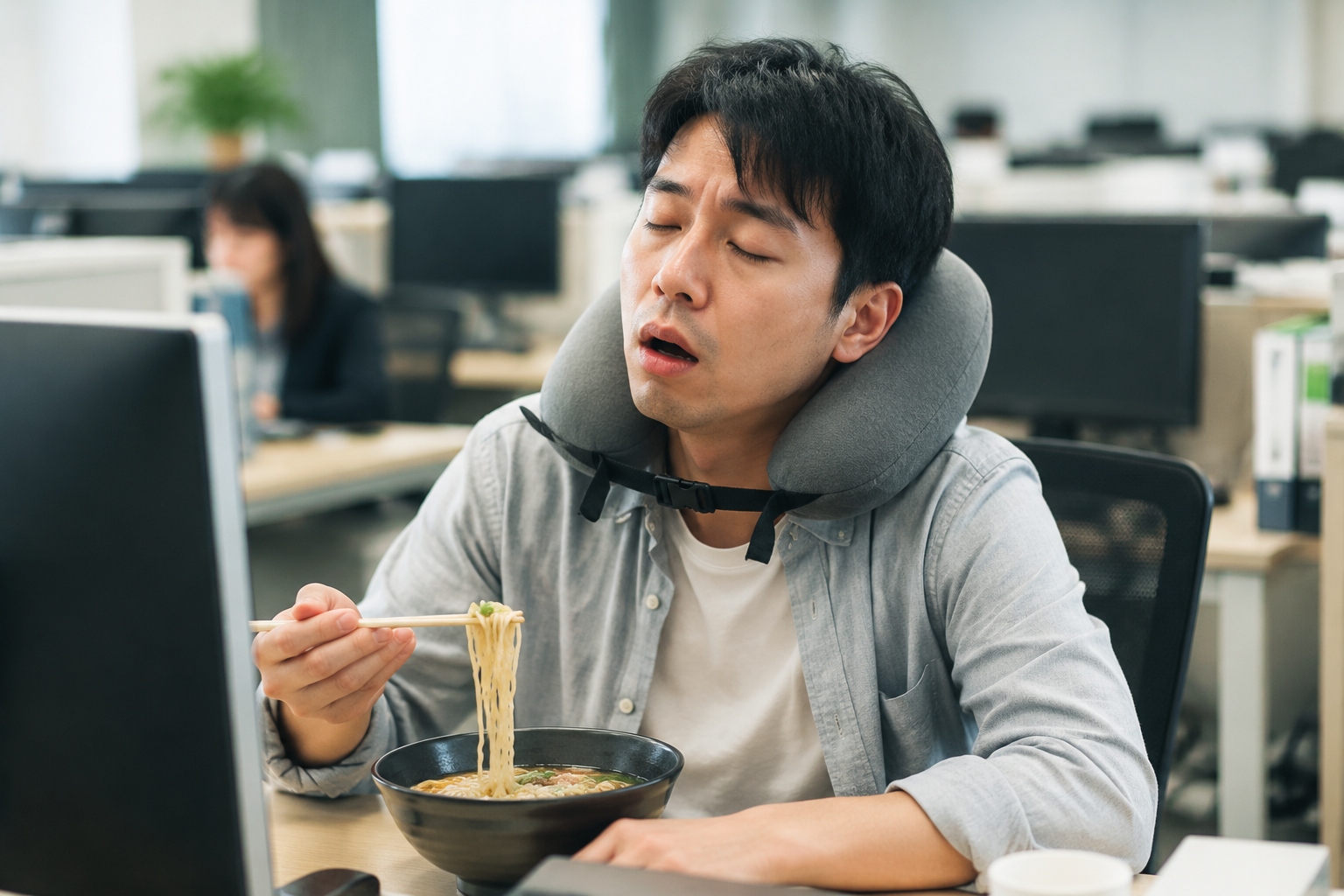
The most immediate reason is lunch. Chinese cuisine is centered on white rice, noodles, and other refined carbohydrates. A meal like a bowl of beef noodles or a fried rice plate delivers a high glycemic load, which quickly raises blood sugar and then causes a crash. The resulting drowsiness is well documented. A 2018 study in the journal Nutrients found that high-glycemic index meals significantly increased subjective sleepiness in healthy adults.
But geography and genetics also come into play. Some scientists suggest that East Asian populations historically evolve higher rates of postprandial somnolence due to a genetic variant in the CLOCK gene. This variant, which is more common in Chinese populations, may make individuals more sensitive to changes in blood sugar and temperature after eating. In other words, feeling sleepy after a bowl of rice is not a character flaw; it might be coded in the DNA.
Work Hours and Sleep Debt
It’s also a way to compensate for poor sleep at night. A 2022 report by the Chinese Sleep Research Society found that Chinese adults sleep on average 7 hours and 20 minutes per night, which is actually less than the recommended 7-9 hours for most adults. More than 300 million people suffer from insomnia or other sleep disorders. Early mornings are common because many workers commute long distances: in Shanghai, the average one-way commute is about 42 minutes, according to a 2020 study by the Chinese Academy of Social Sciences. Add a late dinner and evening screen time, and you get a population that desperately needs a midday recharge.
The nap culture is also a product of intense work schedules. While the infamous 996 system (9 a.m. to 9 p.m., six days a week) is officially disallowed since 2021, long hours remain common. A 2021 report by the National Bureau of Statistics showed that Chinese employees work an average of 9.1 hours per day—more than workers in the US (8.5) and only slightly less than those in Mexico and Costa Rica. By lunchtime, they have already clocked four hours of intense work, often starting their day before 7 a.m. to avoid peak traffic.
For these workers, a nap is not an indulgence; it’s a strategy for sustainable performance. “I can’t survive without my 20-minute nap,” says Zhang Xin, a 29-year-old recruiter in Beijing. “If I skip it, my eyes start to burn, and I make silly mistakes on spreadsheets.” Zhang is one of the millions who have turned their napping into a ritual, complete with a white-noise app and a lavender sleep spray. She believes her nap makes her a better employee, not a worse one.
Is It Efficient? The Science of Napping
Western managers have traditionally frowned upon napping, viewing it as a sign of poor discipline or laziness. But the tide is turning. The scientific evidence is solid: a 1995 NASA study demonstrated that a 26-minute nap improved pilots’ alertness by 54% and performance by 34%. More recent research, such as a 2019 study published in the journal Sleep, found that regular napping was associated with lower blood pressure and reduced risk of heart disease. In 2023, researchers at University College London found that daytime naps could help protect against brain shrinkage as we age.
Of course, there is a caveat: the ideal nap is short. Sleeping for more than 60 minutes can lead to sleep inertia—that groggy feeling that ruins productivity for hours. Chinese workers are well aware of this, often setting alarms for 20 to 40 minutes. In offices, you’ll see people timing their naps with phone timers or smartwatches.
Companies Are Cashing In
This understanding has given rise to a booming office sleep industry. The market for foldable beds used in Chinese offices is projected to reach 1.2 billion yuan (about $170 million) by 2025, according to a report from the Dongguan Research Institute. Online retailers sell thousands of styles, from minimalist metal frames to ultra-light carbon-fiber models that weigh just 2 kg. An entire category of desk accessories includes eye masks with Bluetooth speakers, heated neck pillows, and even smart hand warmers.
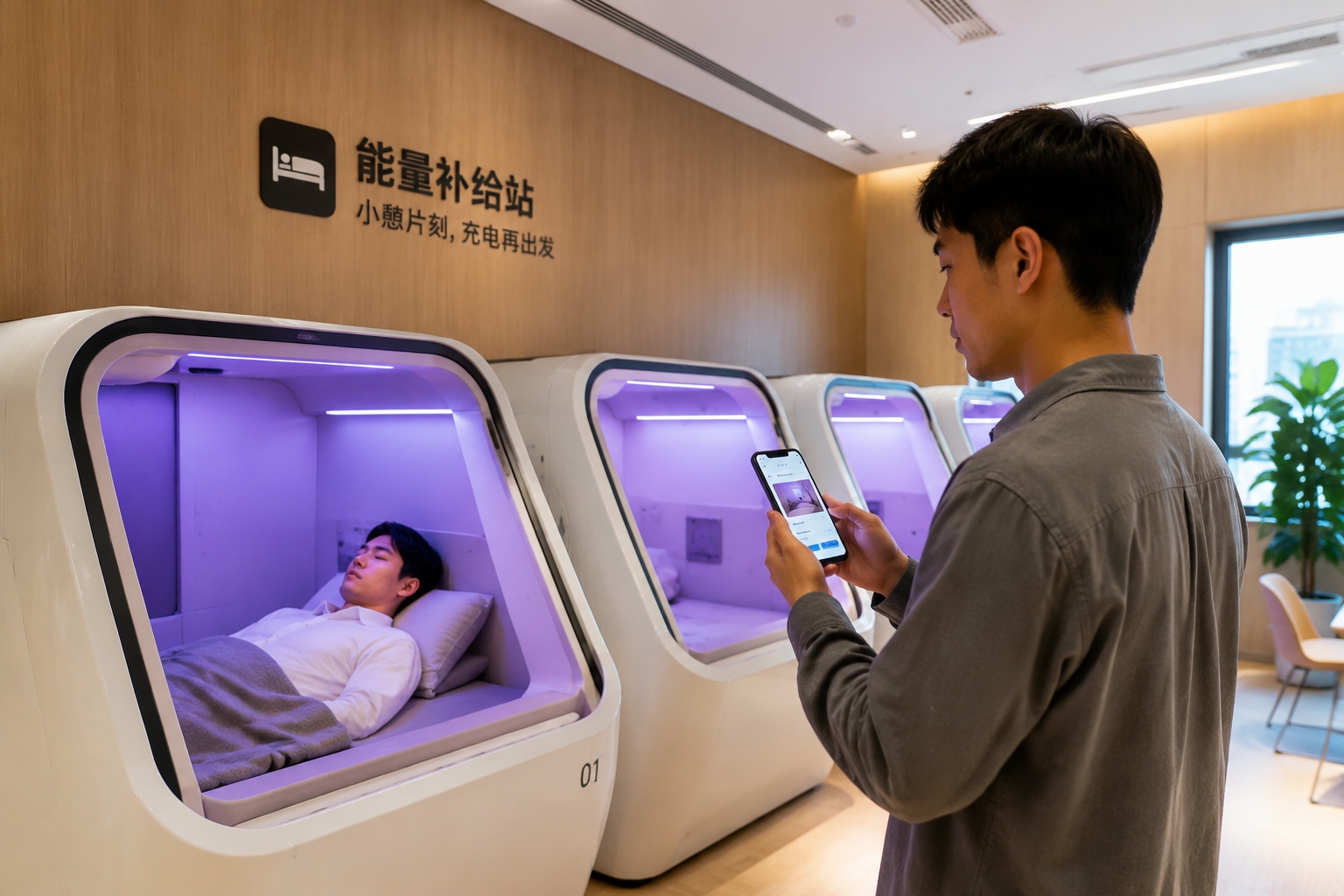
Progressive employers are going further. Tech companies like Tencent and Alibaba have installed dedicated nap rooms with soundproof walls and dimmable lighting. Some new offices are designed with sleep pods similar to those in airports, which can be booked via a mobile app for 30-minute slots. In Shenzhen, a number of startups are experimenting with sleep clocks—pods that monitor your heartbeat and adjust a gentle vibration to wake you at the optimal moment.
These investments are more than just employee perks. In a labor market where talented young workers have high expectations, a comfortable rest area can be a deciding factor in job offers. A 2022 survey by the recruitment platform BOSS Zhipin found that 58% of job seekers would accept a job with slightly lower pay if the company offered a quiet place to relax during breaks. The message is clear: to win the best talent, you need to let them sleep.
Napping Around the World: Siesta and Inemuri
China is not alone in valuing a daytime rest. Spain has its famous siesta, though in reality many Spaniards no longer go home for a nap. Japan has a culturally accepted practice called inemuri, which translates to sleeping while present—napping in public or at work is considered a sign of hard work and exhaustion. China’s office nap is perhaps the most structured version, with regular hours and dedicated equipment. It stands out because it is so visible and communal: entire offices synchronize their sleep.
The global interest in workplace rest is growing, too. Companies like Google and Nike have introduced sleep pods and rest areas. But China has made it a nationwide norm, largely because the conditions—diet, commute, work intensity—make it necessary. It’s a form of collective common sense that other countries might soon adopt.
Not a Sign of Laziness, but a Smart Investment
So why do Chinese workers nap at their desks? Because their bodies, their schedules, and increasingly their companies tell them it is a good idea. The office nap is a deeply rational response to the combination of a high-carb diet, long commutes, and demanding workloads. It is not a sign of laziness or lack of ambition. If anything, it shows a pragmatic recognition that human beings are not machines—and that a 30-minute investment in rest can pay back for the rest of the afternoon.
As global companies look for ways to improve employee well-being and productivity, the Chinese office nap offers a simple, low-cost solution. The next time you see a photo of a Chinese worker dozing under their desk, don’t be scandalized. Be envious. Maybe your workplace could use a little more of that midday slumber.
Start the discussion at forum.chinacomes.com