
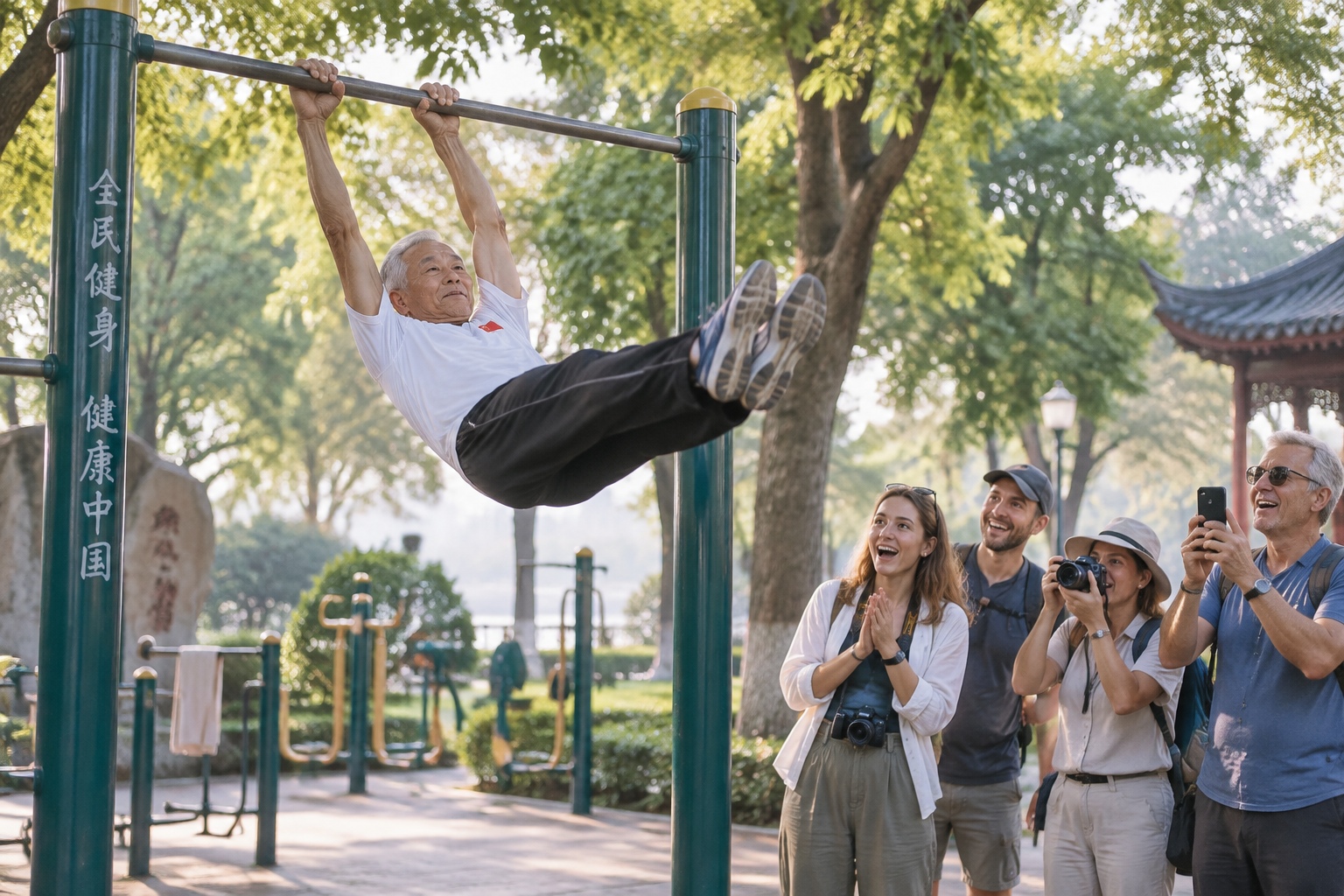

The Scene That Stops Tourists in Their Tracks
It’s 7 a.m. in Beijing’s Temple of Heaven Park, a World Heritage site famous for its ancient architecture. But the most captivating attraction this morning isn’t a Ming-dynasty hall. It’s a group of elderly men gathered around a set of pull-up bars. One of them, a wiry 73-year-old named Zhang, spits on his hands, grips the bar, and with a powerful leg kick, swings his body into a full rotation. For the next minute, he completes ten more circles, his body as rigid as a steel beam. A crowd has formed, including a group of German tourists. One woman films with her phone, muttering, “Unbelievable. He’s older than my grandfather.” When Zhang drops to the ground, he’s barely out of breath. He smiles and gestures for the tourists to try. They laugh and shake their heads.
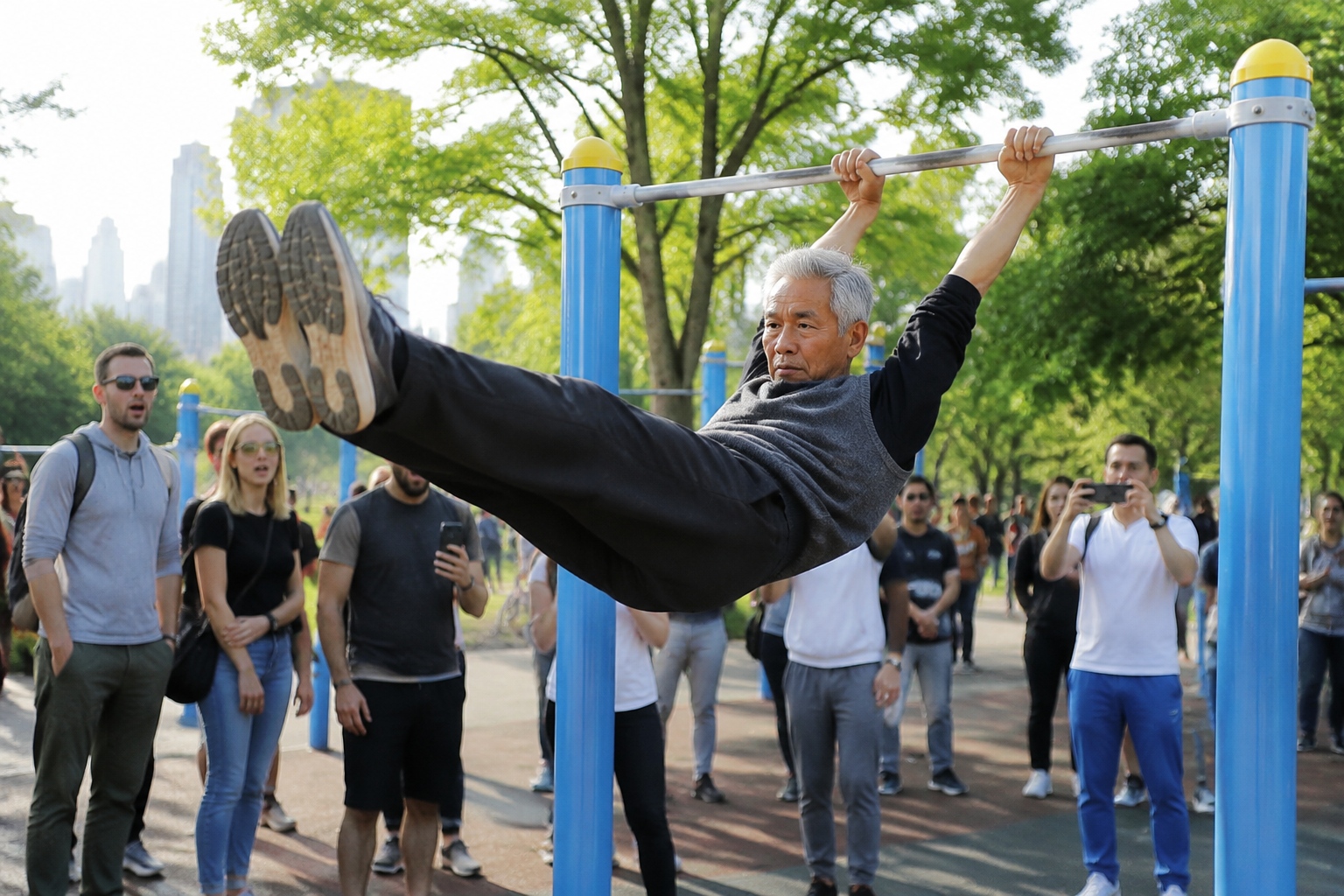
What Is the “Single-Bar Full Circle”?
The move that draws these gasps is known colloquially as “dan gang da hui huan” (单杠大回环). In gymnastics, it’s called a giant swing, a fundamental exercise performed on the horizontal bar. It requires the athlete to rotate completely around the bar while keeping the body fully extended, generating momentum through controlled shoulder and core movement. For professional gymnasts, it’s learned after years of training. For park grandpas, it’s a morning ritual.
What makes their performance remarkable isn’t just the move itself—it’s the repetition and ease. Many can do dozens of rotations in a row, some with their legs straight, others with added twists. The strength and control needed are immense. A typical middle-aged adult would struggle to hang from a bar for 30 seconds, let alone spin around it.
Inside China’s Park Fitness Boom
China’s love affair with outdoor exercise is nothing new. Walk through almost any city park in the early morning, and you’ll see people doing tai chi, practicing calligraphy on the pavement, dancing to pop music, or playing badminton. But the pull-up bars attract a special breed: the bar veterans. These are often men over 50, sometimes in their 80s, with astonishing upper-body strength.
The phenomenon is so widespread that certain parks have become famous for it. In Beijing, Temple of Heaven Park and Chaoyang Park are known as “Iron Paradise.” In Shanghai, Fuxing Park has its own lineup of bar masters. Videos of these grandpas frequently go viral on Chinese social media, amassing millions of views. One particularly famous video features a sprightly 80-year-old doing 30 consecutive giant swings, prompting viewers to call him “Chinese Spiderman.”
The spectacle has also captured international attention. A video titled “Chinese Grandpas Athletes” filmed in a Chengdu park has over 50 million views on YouTube. The comments are filled with bewilderment and admiration: “Are these CIA agents in disguise?” “I can’t even do one pull-up.” Such videos have turned these seniors into unassuming internet celebrities.
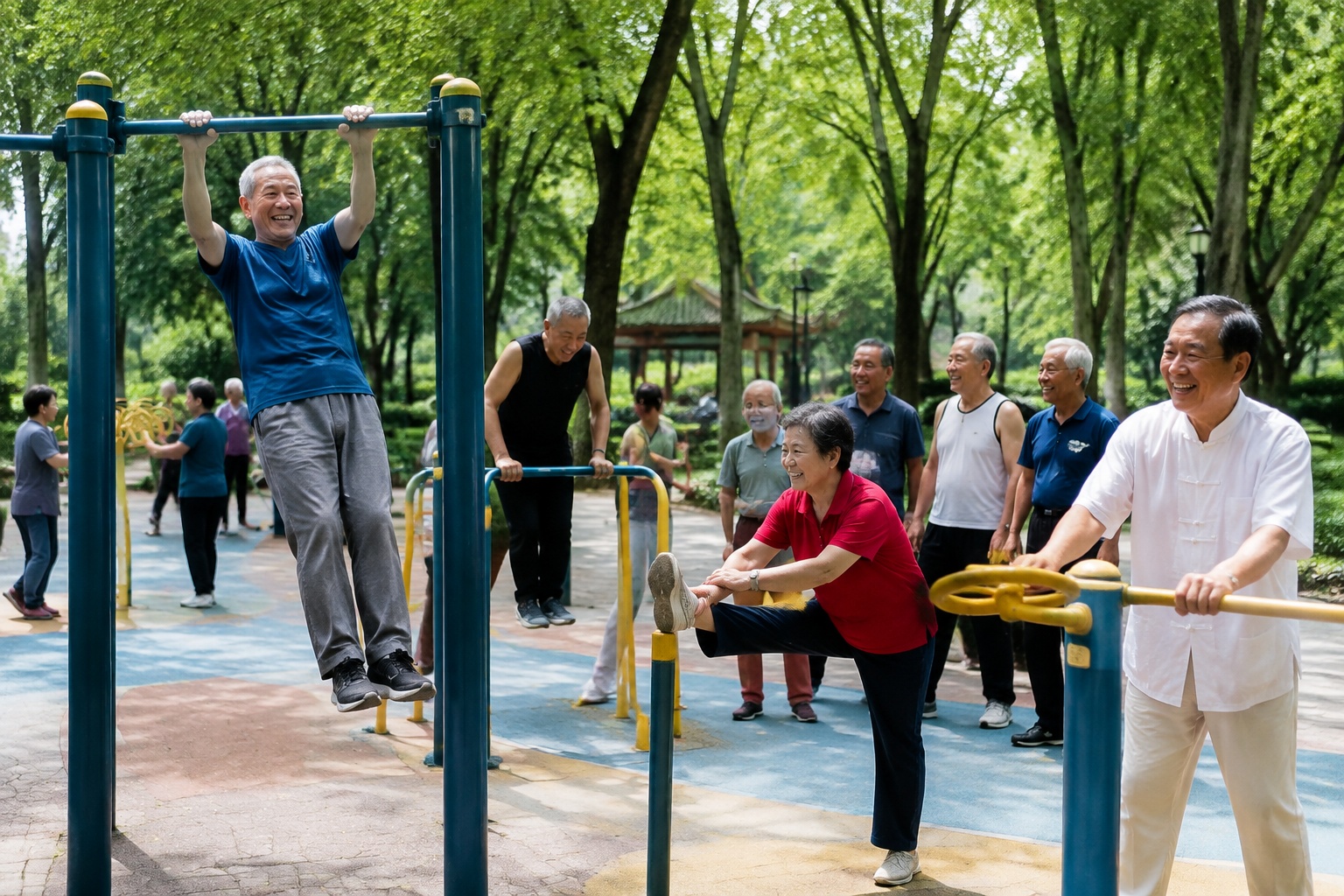
Where Does This Superhuman Strength Come From?
What drives these retirees to achieve such feats? For many, it’s a combination of habit, community, and a competitive spirit that doesn’t fade with age.
Retirement in China often begins in one’s 50s, and with a relatively long life expectancy (around 78 years), this leaves decades of active time. Public parks are free, accessible, and filled with calisthenics equipment installed by the government as part of a national push to make fitness more available. Over the past two decades, the government has invested heavily in outdoor gyms in neighborhoods and parks, often called “fitness paths” or “national fitness sites.” According to a 2021 report, China has over 4 million outdoor fitness facilities.
But the equipment alone doesn’t create athletes. It’s the social enforcement. These informal groups function like clubs, with unwritten rules and hierarchies. Newcomers are encouraged and mentored. Veterans boast about their records. A 70-year-old who can do 20 pull-ups earns respect; one who can do a giant swing becomes a local celebrity. The drive to one-up a fellow grandpa is a powerful motivator.
Many of these men have been practicing for decades. Take “Uncle Wang,” a retired factory worker from Liaoning who at 67 can do 100 consecutive dips. He told a reporter, “I started when I was 30 because I had a weak back. Now I’m stronger than I’ve ever been.” Stories like his are common in the park fitness community.
Tourists vs. Grandpas: A Cross-Cultural Workout
For international visitors, encountering these performances is often a highlight. It’s a side of China that doesn’t appear in guidebooks. The reaction is almost always the same: awe, then a desire to try. And try they do, with varying results.
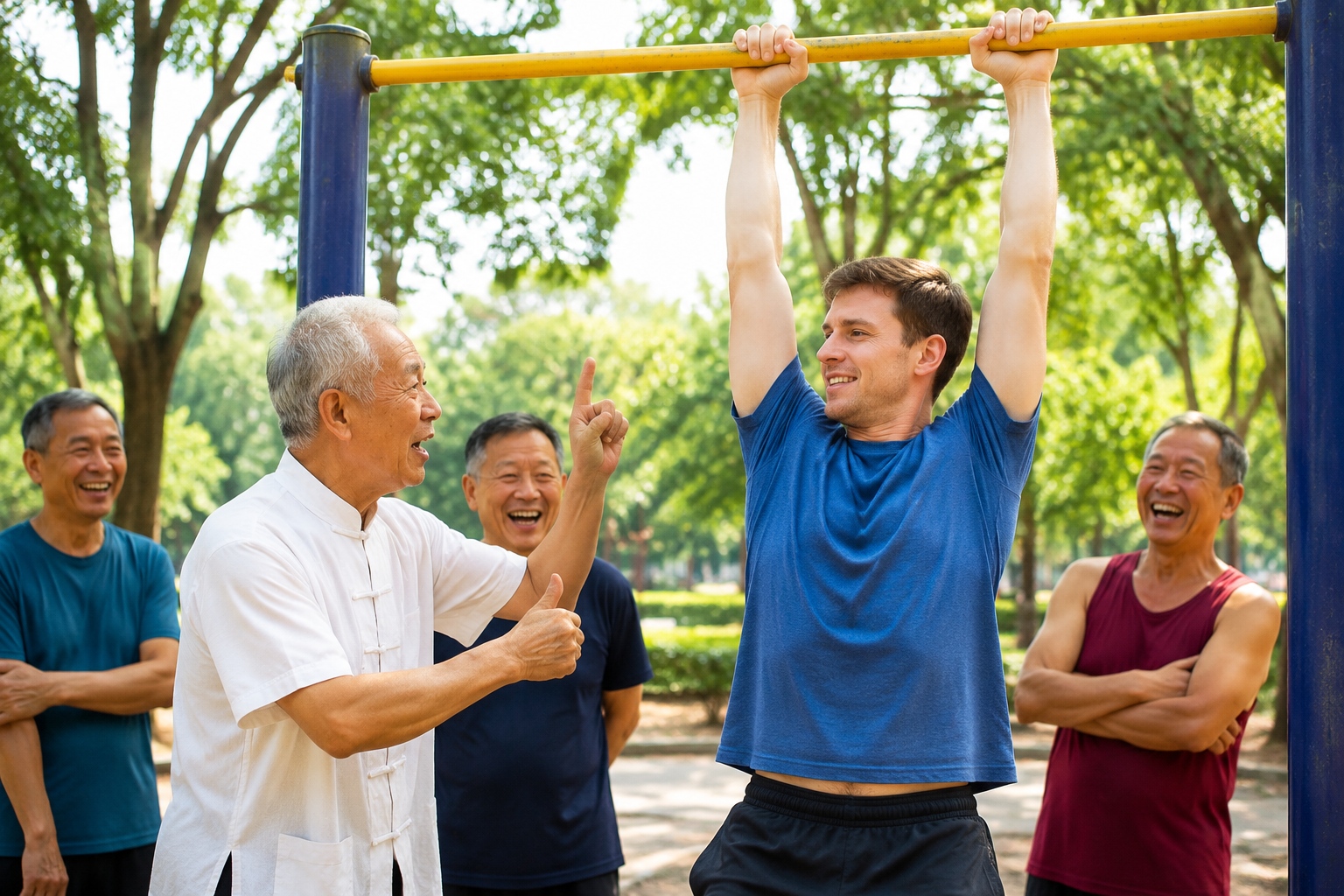
On any given morning in a popular park, you might see a young European backpacker attempting a chin-up, surrounded by grinning seniors. “I thought I was fit, but I couldn’t do one proper pull-up,” says a tourist from London. The grandpas, amused but friendly, often offer tips: “Grip tight, engage your core, swing with your legs.” Some even give impromptu coaching sessions.
One viral moment captured a young American trying to match a 68-year-old’s spinning routine. After a failed attempt, the American bursts into laughter, and the grandpa pats him on the back, saying, “Come back in ten years.” The clip has been shared thousands of times, symbolizing the playful spirit of these encounters.
These encounters are genuinely cross-cultural. They break stereotypes about aging, fitness, and Chinese society. For a moment, a park becomes a stage where East meets West through shared laughter and a mutual challenge.
Rethinking Aging and Fitness
What’s the takeaway from these bar heroes? First, age is a mindset. These men prove that physical capability isn’t automatically lost with age; it can be maintained and even improved. They are a living counterpoint to the stereotype of the frail senior.
Second, public spaces matter. The widespread availability of free outdoor fitness infrastructure has created a culture of health that costs nothing. This is part of China’s larger “Healthy China” initiative, which aims to increase the physical activity of its citizens. The results are visible in parks every sunrise.
Third, community is powerful. For many retirees, the park is a social lifeline. The camaraderie and competition keep them coming back every day, rain or shine. It’s a reminder that health isn’t just about individual effort—it’s also about the environment and relationships.
How to See It for Yourself
If you’re planning a trip to China, add a park visit to your itinerary. Go early in the morning, around 6 to 8 a.m., and head to any neighborhood park. Look for the bars and the crowd. Stand quietly, watch, and perhaps offer a clap. If you’re brave, try a simple hang. The grandpas will likely cheer you on.
No trip to China is complete without witnessing this spectacle. It’s authentic, surprising, and utterly human. The next time you hear about Chinese grandpas, remember: they’re not just playing chess in the park—they’re spinning around steel bars and redefining what it means to age.
Start the discussion at forum.chinacomes.com