

Scene: A Saturday Morning at Longhua Temple
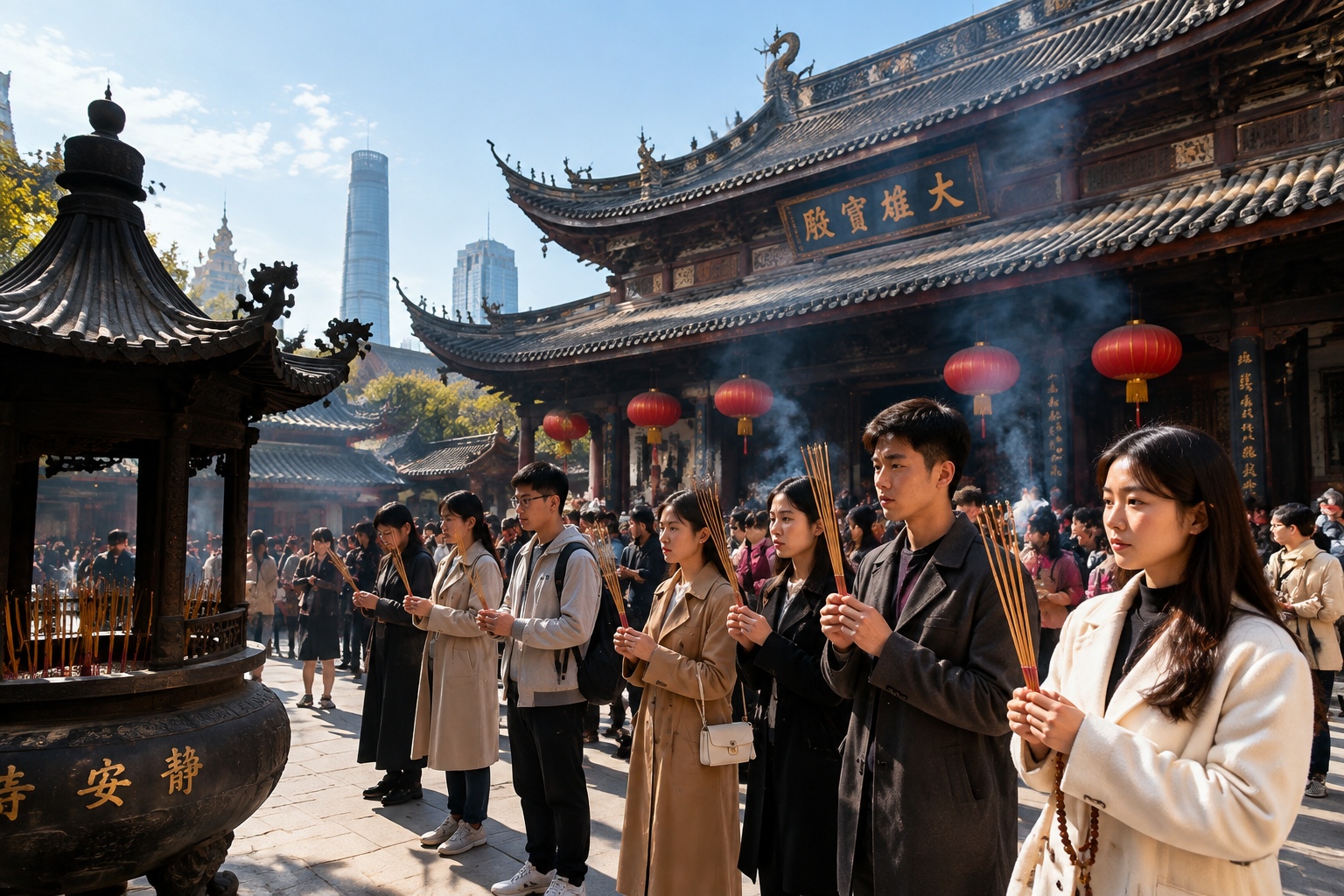
At 9 a.m. on a brisk Saturday, the ticket line at Shanghai’s Longhua Temple stretches past the entrance. But it’s not elderly devotees in gray robes who are waiting. It’s a crowd of twenty-somethings in oversized hoodies, branded sneakers, and crossbody bags. Some clutch smartphone tripods; others thumb through Instagram-style prayer card collections. The air smells of sandalwood and fresh coffee—a temple cafe just inside the gate is doing brisk business selling “karma lattes.”
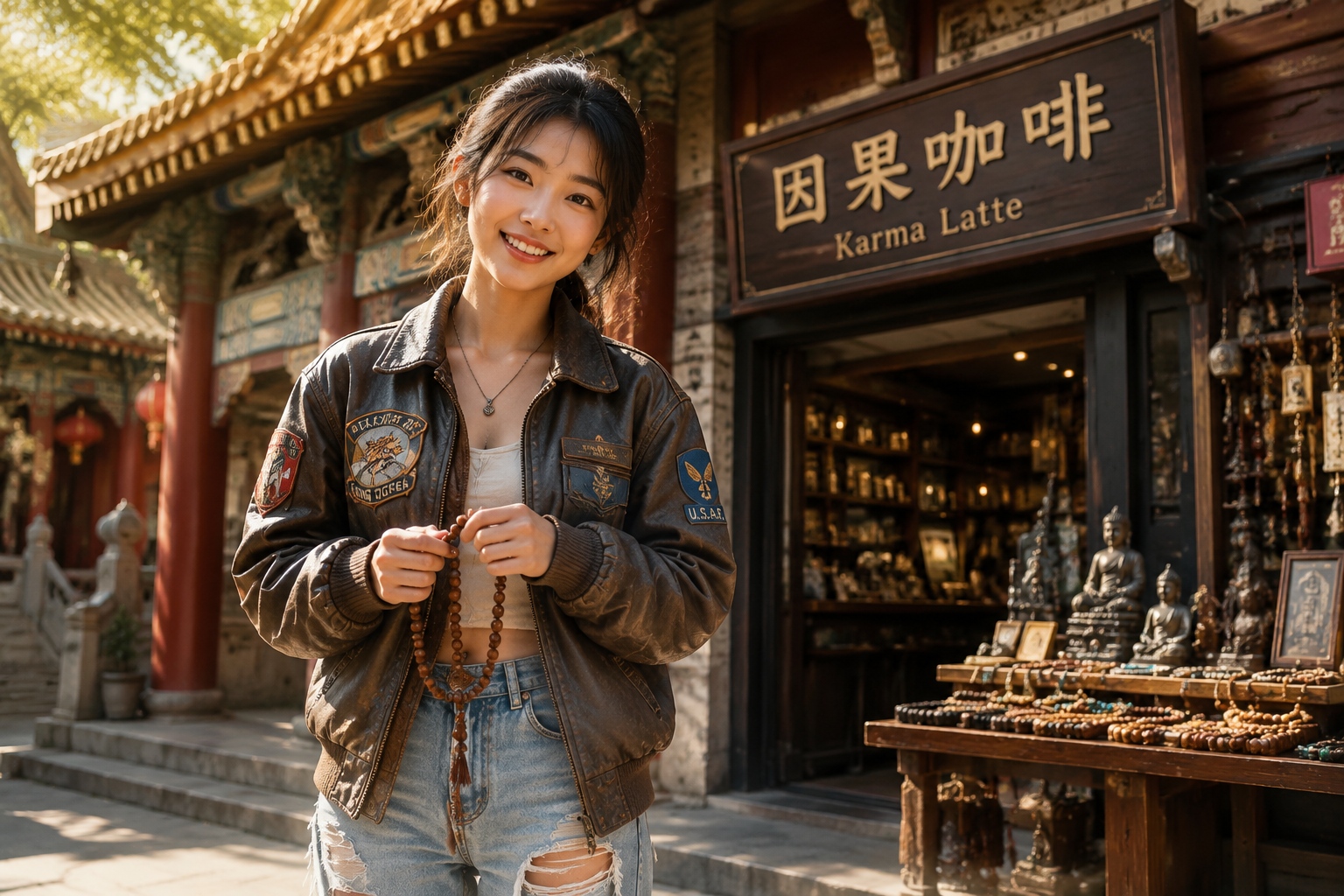
Among them is 26-year-old Chen Jiaqi, a graphic designer dressed in a vintage bomber jacket and ripped jeans. She holds a string of bodhi seed prayer beads she just bought from the temple shop. “It’s not really about religion,” she tells me. “It’s more like… a vibe. When work is chaotic and the future feels blurry, coming here gives me a moment to breathe.”
Why Temples? The Search for Certainty in Uncertain Times
Chen’s sentiment echoes across China’s urban youth. For a generation raised on rapid economic growth and now facing stagnant job markets, rising housing costs, and intense social pressure, traditional success paths no longer guarantee stability. A 2023 survey by a Chinese think tank found that nearly 70% of urban youth aged 18-30 reported feeling anxious about the future. Temples, with their ancient rituals and promise of divine order, offer a psychological anchor.
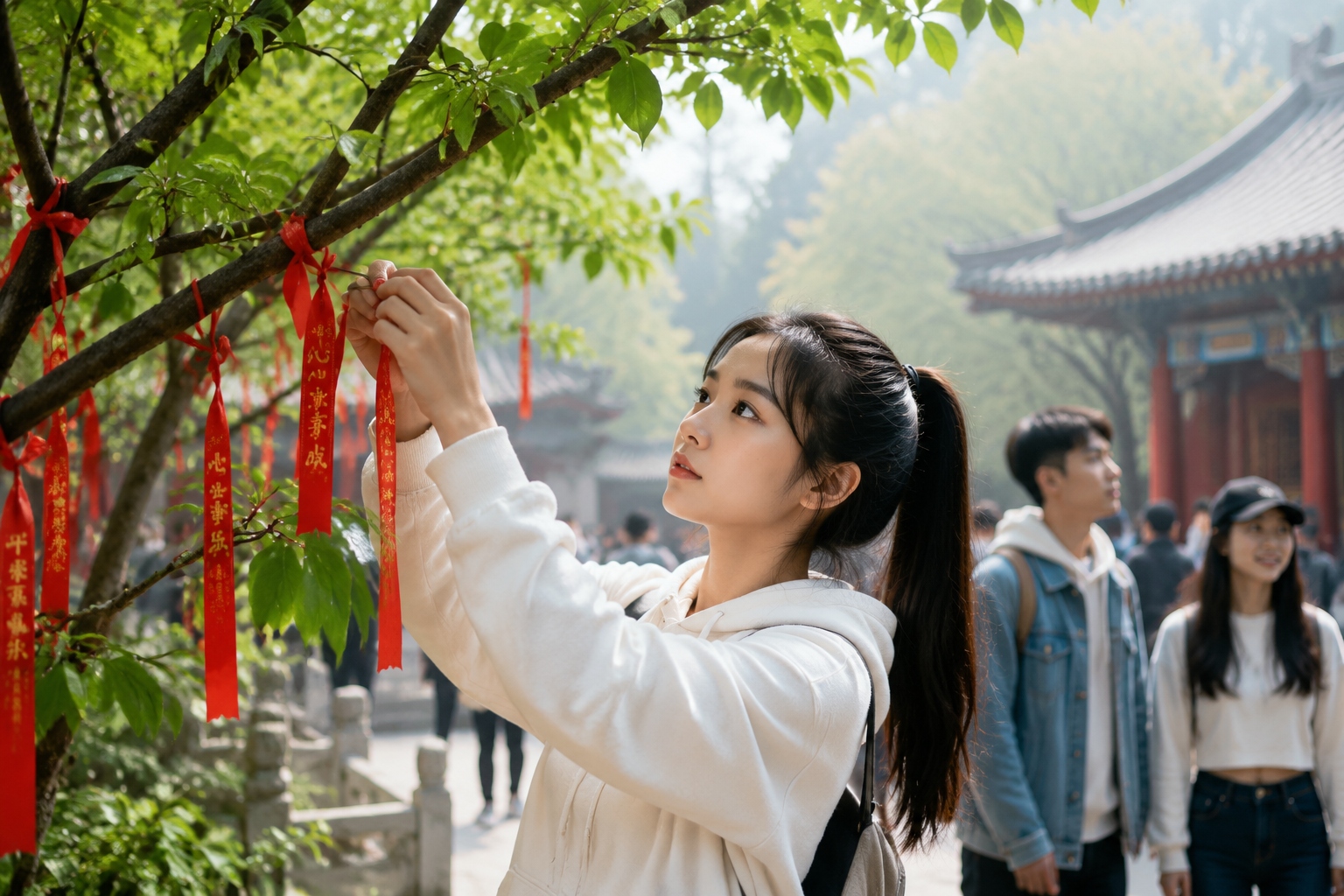
“It’s a form of micro-therapy,” says Dr. Li Wei, a sociologist at Fudan University studying youth subcultures. “Burning incense, tying a prayer ribbon, or drawing a fortune stick—these actions give the illusion of control. In a world where algorithms decide what we see and the economy decides our fate, a temple visit is a small, tangible step to influence something beyond yourself.”
The trend is visible in data. Major temples like Yonghe Temple in Beijing and Lingyin Temple in Hangzhou reported a 300% increase in youth visitors since 2019. On social media platform Xiaohongshu (Little Red Book), posts tagged “temple incense” and “prayer bracelet haul” have surpassed 1 billion views.
The Temple Makeover: Coffee, Blind Boxes, and Digital Sutras
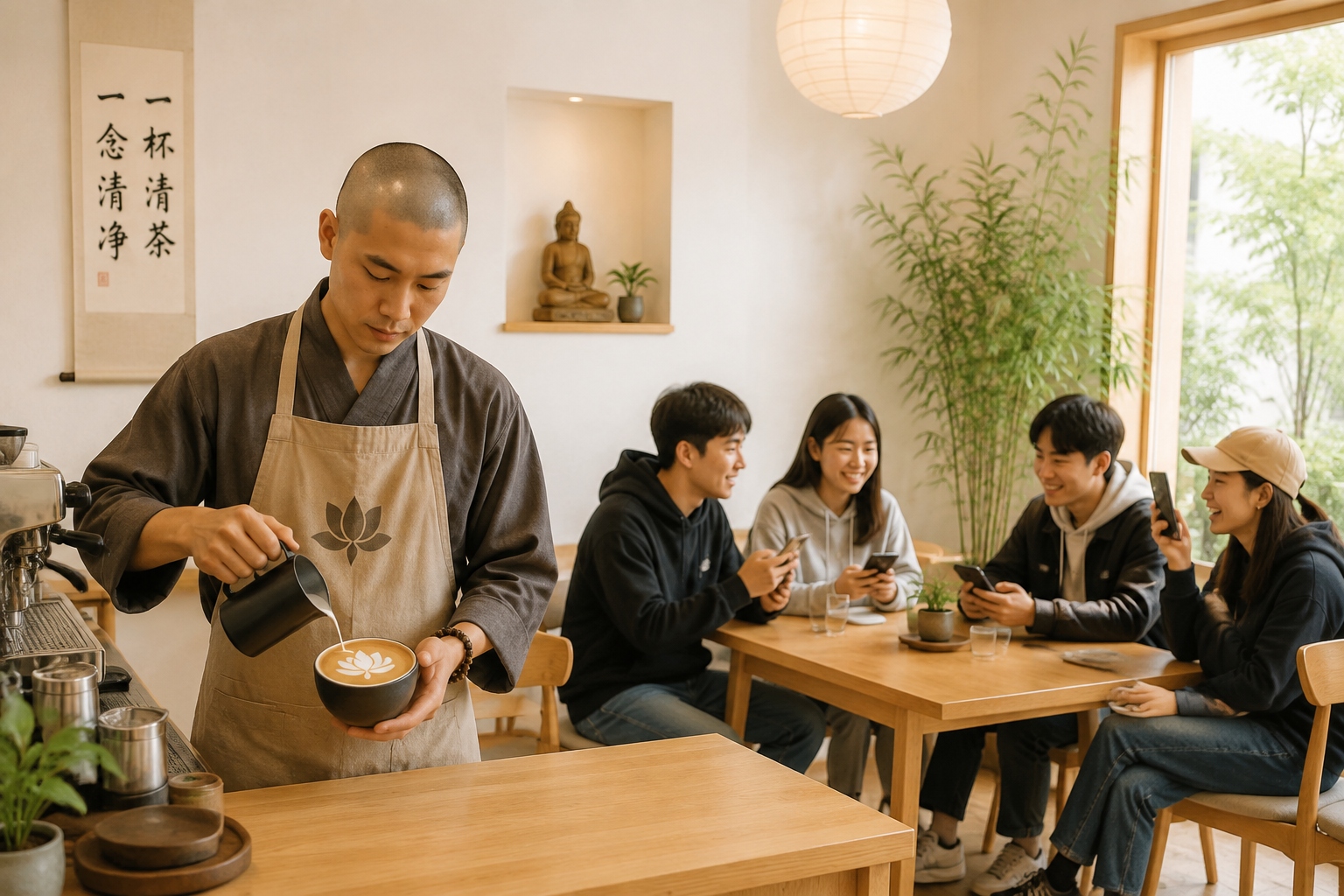
But it’s not just about faith. Chinese temples have undergone a quiet revolution in how they present themselves to the public. Many now feature minimalist cafes serving matcha and espresso, selling branded prayer beads in blind boxes—a packaging style borrowed from collectible toys. At the Temple of Heaven in Beijing, visitors can scan QR codes on ancient steles to hear a recorded chant; at Daci’en Temple in Chengdu, a mobile app lets you “light” a virtual incense stick and track your prayer count for the week.
“We realized young people don’t want to just bow and leave,” explains Zhang Ming, marketing director at a temple cultural development company. “They want an experience—something to photograph, something to share, something that feels personal.” The result is a hybrid space where spirituality meets consumer culture without overt commercialism. A prayer bead bracelet might cost 300 yuan (about $42), but the proceeds fund temple restoration and charity programs.
The aesthetic matters. Many temple shops now hire young designers—some from the same studios behind fashion brands—to create minimalist packaging for incense sets and prayer beads. The visual language blends Buddhist motifs like lotus flowers and cloud patterns with clean typography and earthy tones. It’s a look that fits seamlessly into a Gen Z Instagram feed.
Not Superstition, but Self-Care: A New Cultural Logic
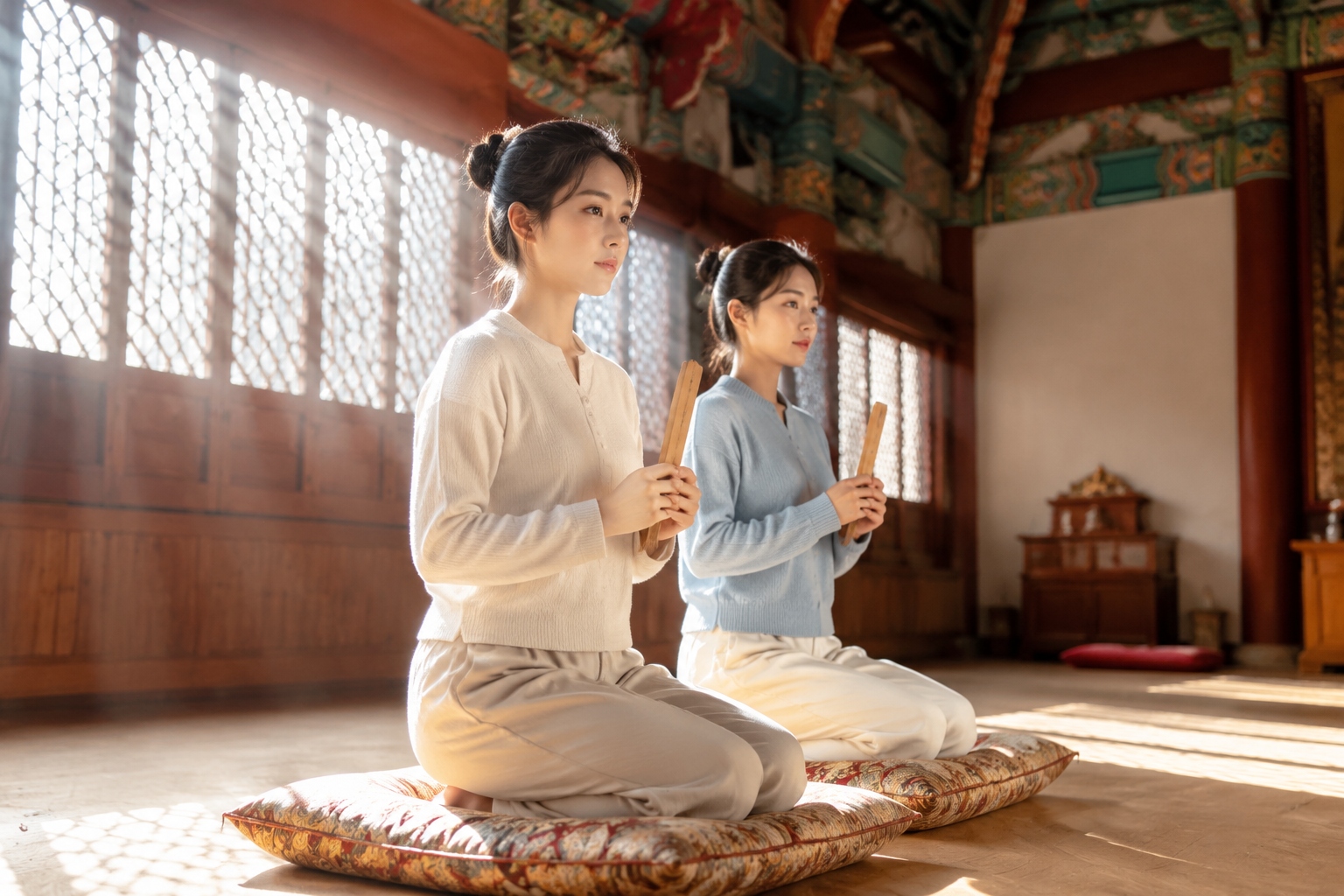
Critics sometimes dismiss the phenomenon as “superstitious materialism”—buying your way to spiritual comfort. But young participants push back. “I don’t believe a god will magically fix my life,” says 24-year-old university student Wang Hao, who visits a temple once a month. “But the act of kneeling and asking—it’s like journaling. It forces me to articulate what I actually want. And that clarity itself is powerful.”
Sociologists see this as a new form of “cultural bricolage”: young people selectively pick elements from traditional culture—meditation, incense, temple architecture—and recontextualize them within a framework of self-care and mental wellness. It’s similar to how yoga was adopted in the West: stripped of its original religious context and practiced as a secular health activity.
There’s also a strong social component. Temple visits have become group outings for friends, complete with photo sessions and sharing “fortune sticks” on social media. The practice blurs the line between spirituality and leisure, creating a shared vocabulary of hope and anxiety. When a friend posts a prayer bracelet, it’s not just a fashion accessory—it’s a coded message: “I’m going through something, but I’m handling it.”
Conclusion: A Bridge Between Generations
As China’s economy slows and job markets tighten, the temple trend reveals something profound: the human need for meaning doesn’t go away with modernization. It just finds new vessels. For the most fashionable young Chinese, the ancient temple is no longer a relic of the past but a mirror of their present—a place where tradition and innovation, anxiety and hope, sacred and secular can coexist, one incense stick at a time.
The line outside Longhua Temple continues to grow. Chen Jiaqi finishes her latte, takes a selfie with her new prayer beads, and heads to the main hall. She lights three incense sticks, bows three times, and stands still for a full minute—eyes closed, phone in pocket. For that moment, the algorithm can wait.
Start the discussion at forum.chinacomes.com