

Introduction
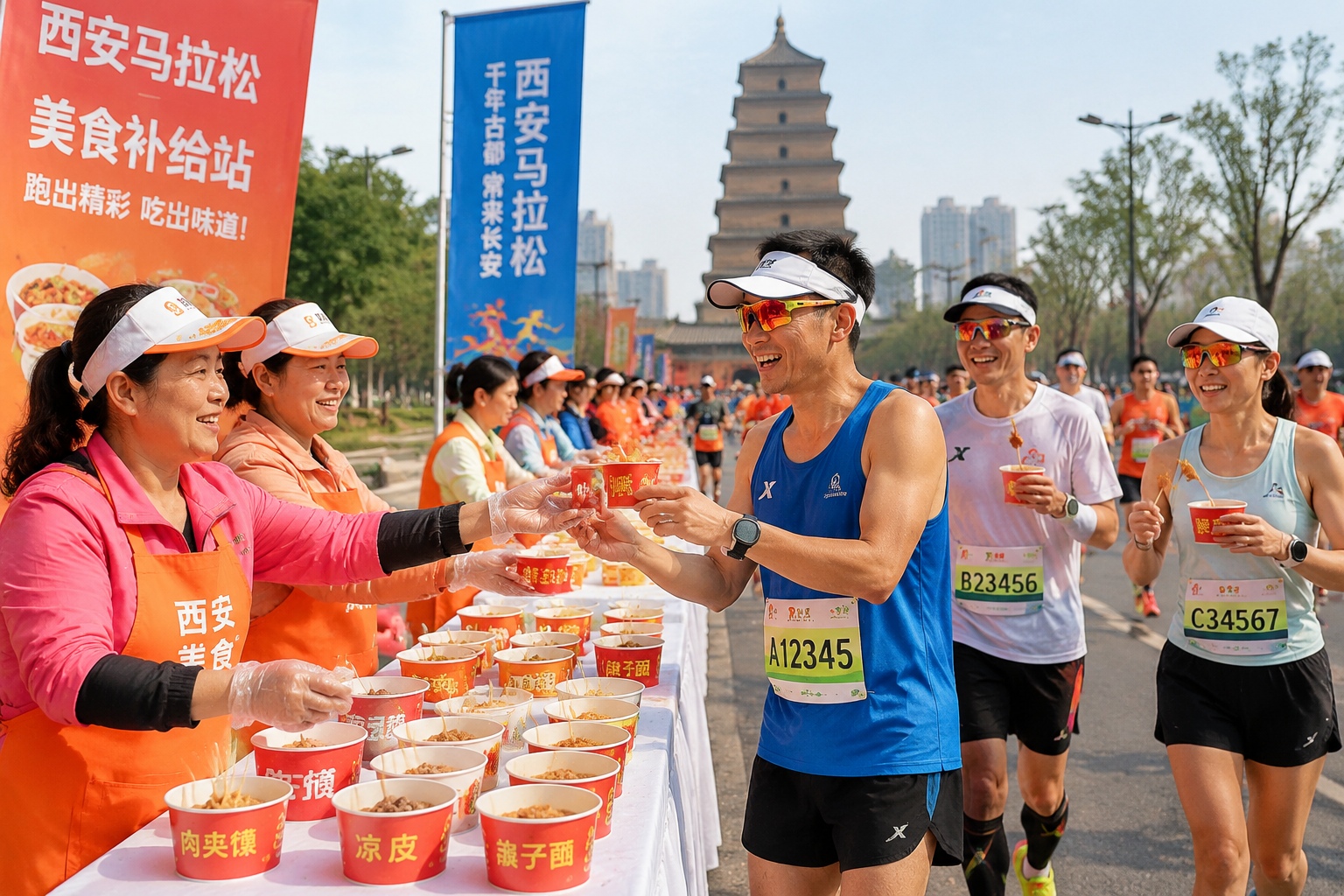
If you’ve ever run a marathon in China, you’re probably prepared for the wall, the cramps, and the last 10 kilometers where your legs turn into cement. But what you may not be prepared for is the smell of cumin-spiced lamb skewers wafting from the 30K mark. Or a volunteer handing you a warm, mini roujiamo (Chinese burger) at mile 20. In recent years, China’s marathon aid stations have quietly become something else: a stage for local cuisine.
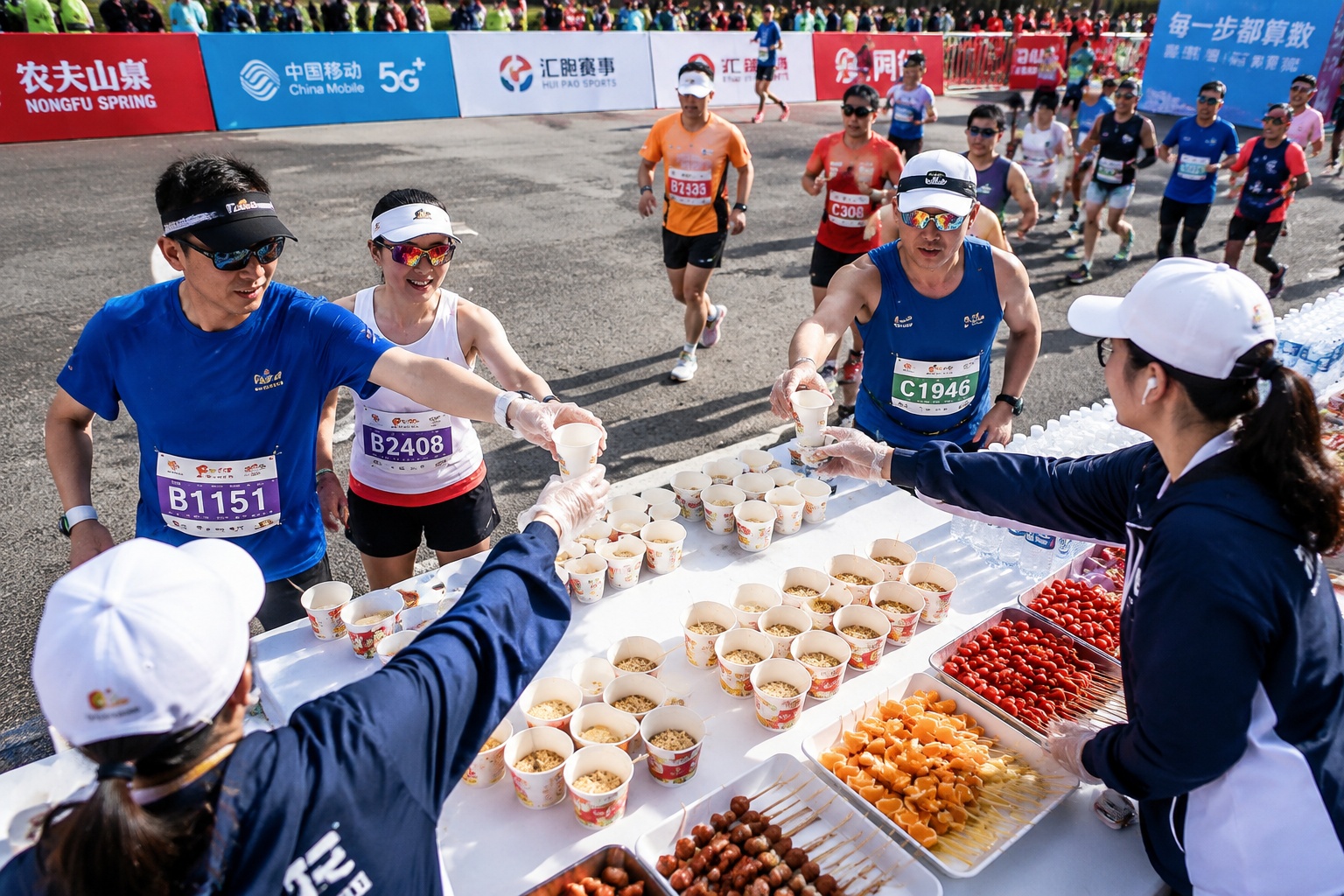
This isn’t your average banana-and-energy-gel station. In cities like Chengdu, Chongqing, and Xi’an, race organizers have embraced the idea that if runners are going to suffer, they might as well suffer deliciously. The result? A growing trend where marathons double as food festivals, and where the real competition might be who grabs the last portion of bobo chicken before it’s gone.
The Running Boom Meets a Food Culture
China’s marathon boom is no secret. In 2019, there were over 1,800 road races registered with the Chinese Athletics Association, and while the numbers dipped during the pandemic, the enthusiasm hasn’t faded. With hundreds of races competing for runners’ attention, cities need an edge. For many, that edge is a plate of something uniquely local. “The energy gel is the same everywhere, but our roujiamo is in our blood,” a Xi’an race organizer once joked. By placing local dishes at aid stations, races create a memorable, mouth-watering identity that runners eagerly share on social media.
For runners, this is also a psychological boost. Running 42.195 kilometers is tough; knowing that a bowl of spicy noodles is waiting at mile 22 gives many people an extra reason to push through. Some runners even admit to slowing down at food stations, snacking strategically, and then picking up the pace again — a tactic known in the community as “eating break.”
A (Delicious) Tour of Marathon Flavors Around China
Let’s take a closer look at some of the most talked-about food stops in the Chinese marathon scene. Remember, these are not for the faint of heart — or stomach.
Chengdu: Bobo Chicken and Chili-oil Skewers
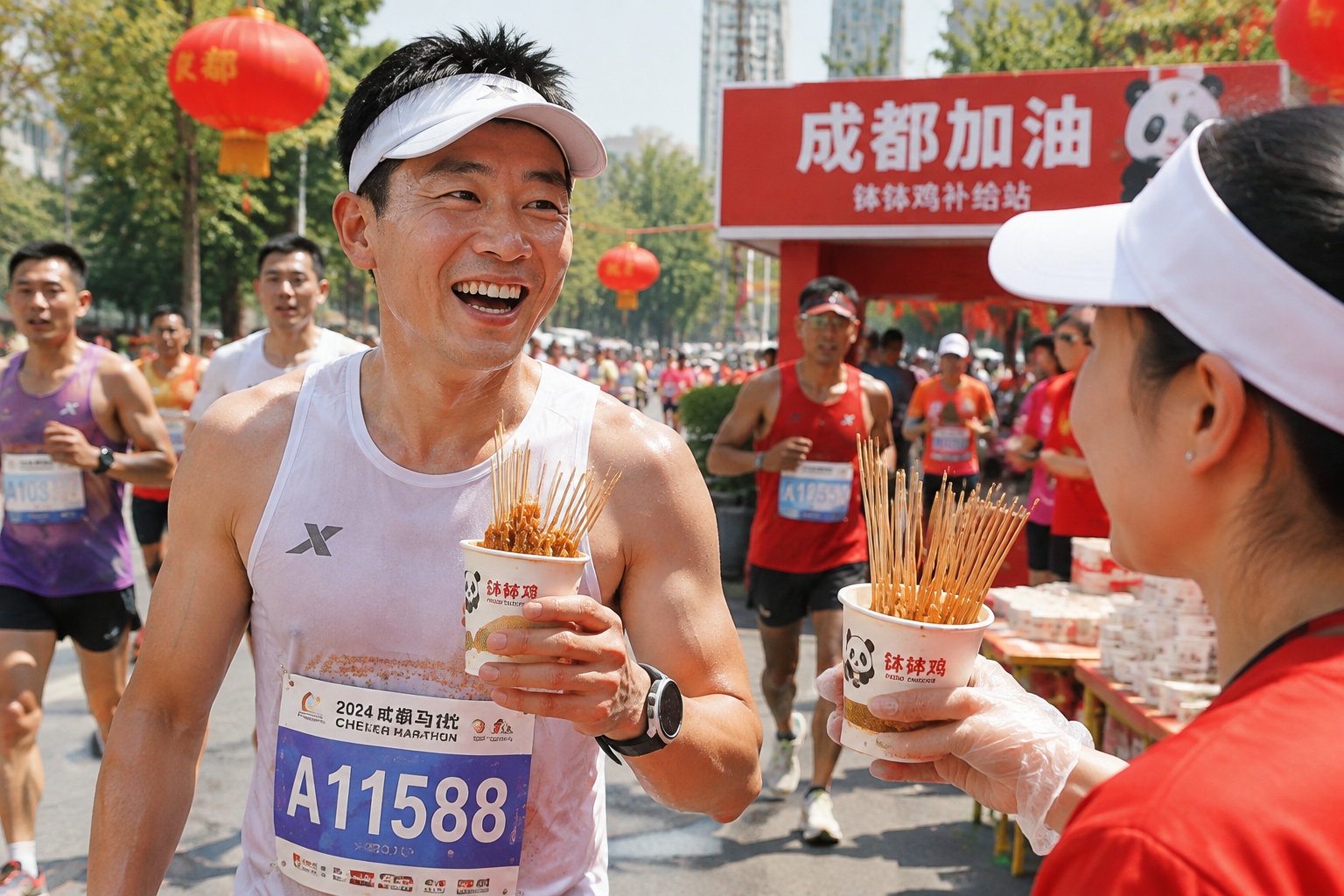
At the Chengdu Marathon, aid stations serve bobo chicken (钵钵鸡), cold skewers of chicken, tripe, and vegetables soaked in a numbing, spicy chili oil. The organizers pack individual skewers in small paper cups, so runners can grab one and keep going. The look on a runner’s face when they bite into a chili-soaked piece of tripe at mile 20 — a combination of shock, pleasure, and regret — is priceless. For those who need a break from spice, there’s also lianggao (凉糕) with brown sugar syrup, a local summer favorite.
Xi’an: Burgers and Billowing Noodles
Xi’an, the ancient capital known for its street food, takes its marathon seriously. At water stations, you might find mini roujiamo, a crispy flatbread stuffed with slow-braised pork. It’s dense, but there’s something magical about biting into warm, juicy pork while your body screams for energy. One runner I know calls it “the best burger I’ve ever had at mile 18.” Another classic is liangpi, cold noodles with vinegar and chili oil, served in biodegradable bowls. It’s refreshing, tangy, and surprisingly easy to eat on the move.
Chongqing: The City of Spicy Noodles
Chongqing’s marathon is not for the delicate palate. The city’s famous xiaomian (小面), spicy wheat noodles with a rich, oily sauce, appear at aid stations — sometimes with a dash of peppercorn for that signature mouth-numbing effect. Some runners compare the experience to eating at a “hotpot restaurant on wheels.” If you see a runner in tears around mile 25, it’s probably not emotional; it’s the hua jiao (Sichuan peppercorn).
Wuhan: Hot Dry Noodles with Sesame Sauce
Wuhan’s breakfast staple, re gan mian (热干面), has made its way to the marathon course. These are thin noodles tossed with sesame paste, pickled vegetables, and a hint of chili. Served in tiny paper bowls, they offer a carbohydrate-heavy boost that tastes like home to many Wuhan natives. The city’s marathon even won an award for “most creative food aid station” a few years back.
And Beyond: A Random Food Lottery
Depending on where you run, you might encounter suancaiyu (pickled fish) soup in small cups, ganba (dry-fried green beans), or even local desserts like tangyou baba (sticky rice balls in syrup) in Hunan. The key is portion control and practicality: no soup bones, no slippery noodles in broth if it’s too messy, and everything can be eaten with a toothpick or chopsticks in under a minute. Volunteers are often local residents, many in traditional or themed outfits, adding a festive layer to the race.
How Aid Stations Pull It Off
Organizing a food-filled aid station is no small feat. Race directors work with local food vendors and health authorities to ensure everything is safe and quick. Most items are pre-packaged in single servings, often in compostable or biodegradable containers. Volunteers are trained to hand out food while keeping runners moving. For example, at the Chengdu Marathon, the bobo chicken is prepared hours before the race, then kept at the right temperature until runners arrive. Some events even have “food runners” who bring fresh supplies from nearby restaurants mid-race to keep things stocked.
The effort pays off: many runners return year after year, and the food stations often become the most talked-about parts of the race on WeChat, Douyin (China’s TikTok), and Xiaohongshu (a lifestyle app).
Nutritionists Shudder, Runners Smile
You might wonder: is this wise? Sports nutritionists often advise sticking to simple, easily digestible carbs during a marathon. But Chinese runners have their own logic. “I’ve eaten this my whole life, so my stomach knows how to handle it,” a Chengdu local told me while grabbing a skewer. Others practice “speed eating” at aid stations: they grab two or three items, munch quickly, and hit their target pace shortly after. It helps that most races place the more exotic food items at the earlier or middle stages, saving the bananas and energy gels for the final, more serious kilometers. The unspoken rule is spicy first, serious fuel later.
There’s also the social dimension. Many aid stations are set up near cheering crowds, complete with local music and dancing. Eating becomes a shared experience, and runners bond over the joy of finding their favorite hometown dish at mile 15. It’s a moment of levity in an otherwise grueling event.
Why This Matters Beyond the Race
The aid station trend is more than a gimmick; it’s a reflection of Chinese city pride and hospitality. In a country where “have you eaten?” is a common greeting, offering a hometown specialty to thousands of visitors is a no-brainer. It turns a marathon into a cultural exchange, where runners get a literal taste of the city’s personality. For the host city, it’s a clever way to boost tourism and show off local traditions, especially as marathons are broadcast live on streaming platforms.
For international runners, this adds another dimension to choosing which Chinese marathon to run. Some even plan their race calendar based on food preferences. “I run the Chongqing Marathon because I want to eat spicy noodles,” said a Japanese runner I met last year. “But I skip the extra spicy stations — I have a weak stomach.” Wise approach.
Conclusion: The Fastest Way to a Runner’s Heart
So, what do Chinese runners want to eat after a marathon? The honest answer: whatever they didn’t get enough of at the aid stations. But ask them what they remember most about the race, and it’s often that crazy, delicious detour at mile 20. Whether it’s a mini roujiamo in Xi’an or a spicy skewer in Chengdu, these edible pit stops have turned Chinese marathons into unforgettable feasts.
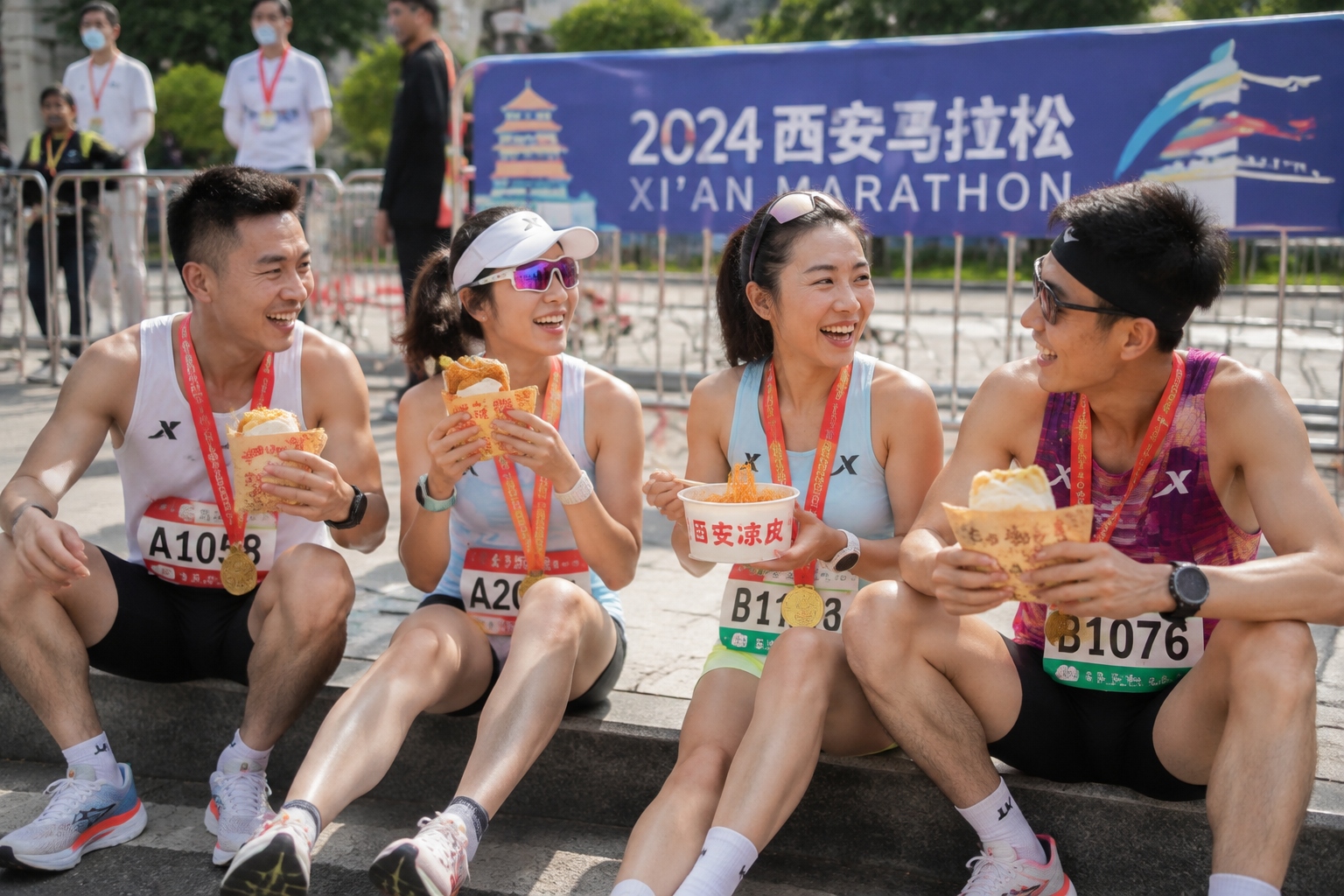
Next time you see someone cross the finish line in China, look at their medal, then ask about the food. You’ll probably get an earful about an incredible cold noodle dish or a tiny burger that kept them going. And maybe, just maybe, you’ll be tempted to sign up for the next race — for the food, obviously.
Start the discussion at forum.chinacomes.com