


Over Coffee With a Man Who Left the Bay Area for Shenzhen
It’s a humid Tuesday afternoon in Nanshan, the startup heart of Shenzhen. Liu Yang (he goes by Alex) is nursing a cold-brew coffee and watching a livestream of his company’s newest AI demo on his phone. He’s wearing a plain black T-shirt and sneakers – the same uniform he wore during seven years in Silicon Valley. But now he’s in his own office park, building a software company from scratch.

Alex came back to China in 2017. He works in AI-powered customer service, a field that didn’t really exist when he left Beijing for the U.S. in 2009. “Silicon Valley taught me how to write code,” he says, half-laughing. “But China taught me how to ship.”
I ask him what changed. “Everything,” he says. “Everything is different from what I imagined – and also different from what my friends in the Valley imagine.”
Why Leave the Valley?
Alex’s story is part of a broader wave. In the past decade, hundreds of thousands of Chinese students and professionals have returned home, and while the exact numbers fluctuate, the trend has reshaped China’s tech economy. But that’s a macro story. I want to know what made one person choose the harder road.
“The first reason is family,” Alex says. His parents live in Chengdu, and they weren’t getting younger. “I missed ten years of festival dinners. I didn’t want to miss ten more.”
But there was also professional curiosity. By 2016, China’s tech scene was no longer just imitating the West. “WeChat was everything. Every Chinese company needed to figure out how to work inside it. Meanwhile, in the U.S., everyone was still building for the browser or the app store,” Alex explains. “I kept thinking: someone needs to build the next generation of enterprise software for this environment. And I wanted to be that person.”
He also saw a market gap. While American companies raced to integrate AI into even the smallest tools, Chinese software was still, in his words, “paperwork in digital form.” There was room to build something smarter.
What Surprised Him Most Back Home
I ask about culture shock in reverse. Alex pauses. “It wasn’t culture shock. It was rhythm shock.”
In Silicon Valley, he says, he was used to a long-view culture: build a prototype, write a meticulous pitch deck, then search for a Series A for six months. In Shenzhen, the clock ran faster. “Our first client asked us to install the system in ten days. No demo, no pilot. Just do it. I laughed. Then I assembled a team and we did it in nine days.”
He also noticed that Chinese companies run on messaging platforms, not email threads. “In the U.S., you’d send a long email to a client and wait a day. Here, you join a WeChat group, and the client’s CEO may react to your prototype in minutes. It’s intense. It also makes development loops incredibly short.”
Mobile-first was something he’d studied from afar, but living it was different. “Almost every SME in China manages money, inventory and customer relationships from their phones. When I started, I kept trying to make our software ‘work well on a laptop.’ My strongest engineer pulled me aside and asked, ‘Who uses laptops in China?’ He had a point.”
What It Actually Takes to Build a Startup Here Now
I ask Alex to walk me through the practical details. How do you hire, raise money, and deal with the market?
“Hiring is the biggest thing,” he says. “There’s a lot of talent now, but competition is brutal – especially in Shenzhen, where hardware and software engineers are being pulled into everything from EVs to drone delivery. You end up selling the dream as much as the salary.”
His company, which now has about 40 employees, didn’t go the typical venture-capital path. “I was raised on the Silicon Valley model: raise a big round, burn cash, win later. In China, especially after 2019, a lot of investors became more cautious. We bootstrapped for two years before taking an angel check. That pressure made us build something that makes money quickly.”

He also notes that Chinese government policies, including subsidies for software parks and R&D tax credits, helped cut early costs. “People outside China assume the government is either everywhere or invisible. The truth is more ordinary: there are programs if you know how to apply. We got a small grant for hiring graduates. It wasn’t huge, but it paid for our first three servers.”
However, the biggest adjustment was the sales environment. In the U.S., he was used to software selling on its technical merits. In China, he learned that relationships and local service matter just as much. “You don’t just email a CIO. You visit them. You help them argue with their boss. You build a solution that makes them look good. That’s not unique to China, but the intensity of guanxi is something every returnee has to re-learn.”
What Still Feels Complicated
I want to hear the honest struggles. Alex doesn’t hold back.
“First, the pressure is relentless. Everyone is racing against everyone. I have a friend who launched a food-delivery bot; he had to cut prices to zero for six months. I don’t want that kind of attention.”
“Second, data protection is a genuine challenge. Chinese customers care more than they used to. Regulations like the PIPL have changed what we can collect and process. It’s good that the law exists, but it means our software has to be built differently. In the Valley, I’d joke that ‘your user’s data is your product.’ You can’t joke like that here.”
“Third, there’s a mental gap between my old life and this one. My friends in San Francisco still think I’m either crazy lucky or crazy. They can’t quite understand why I’d leave a comfortable tech job to deal with Chinese-style competition. It’s hard to explain until you’ve lived it.”
Still, he says, the complexity is what makes it interesting. “The Chinese market is not for everyone. But if you can handle it, it forces you to be a better product manager, a better negotiator, and a better human.”
What Does the Future Look Like?
Alex’s near-term plan is to expand into Southeast Asia. “The software I built for Chinese SMEs is surprisingly portable to Vietnam or Indonesia. Those markets are moving through the same shifts China saw a decade ago. And I have a team in Shenzhen that already knows how to ship fast.”
He also wants to promote a more balanced view of China’s tech scene when he talks to friends abroad. “Overseas media sees short videos and smart drones. They miss the boring parts – the logistics networks, the digital payment rails, the small-city e-commerce platforms. Those are not glamorous, but they’re the real foundation.”
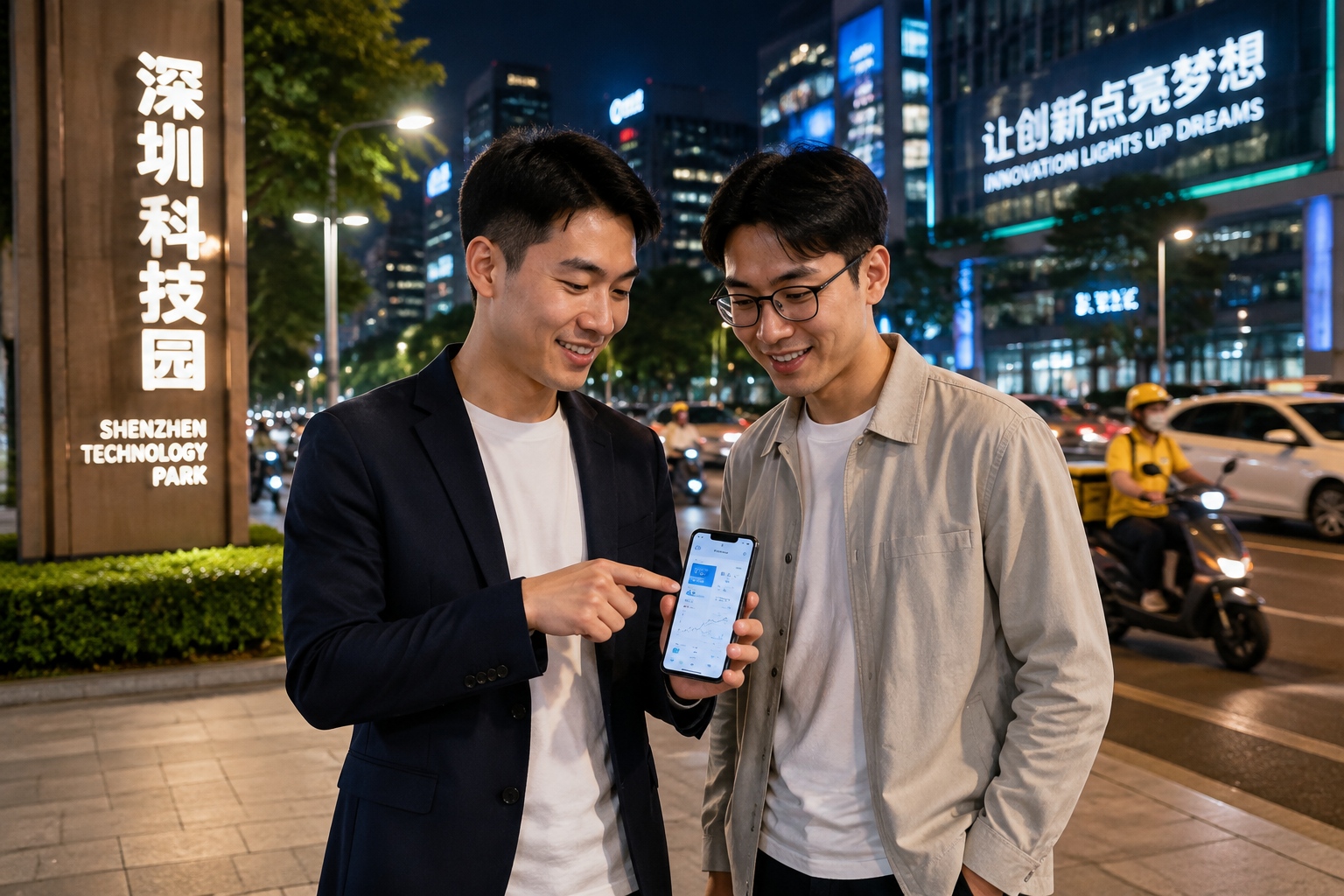
I ask if he has any advice for other returnees thinking about making the jump. He laughs. “Yes. Come for six months first. Don’t just visit Beijing or Shanghai – go to a second-tier city like Chengdu, Hangzhou or Wuhan. See how things actually run. Talk to your cousin’s factory manager. Once you see how deep this country is, you’ll either be hooked or know it isn’t for you. Either way, you’ll stop guessing.”
As we finish our coffee, Alex sums it up in a way that’s hard to disagree with. “I didn’t come back to bring Silicon Valley to China. I came back to test what Silicon Valley taught me against a market that moves differently. I ended up learning things I could never have invented in Mountain View. That’s the real story.”
Start the discussion at forum.chinacomes.com