
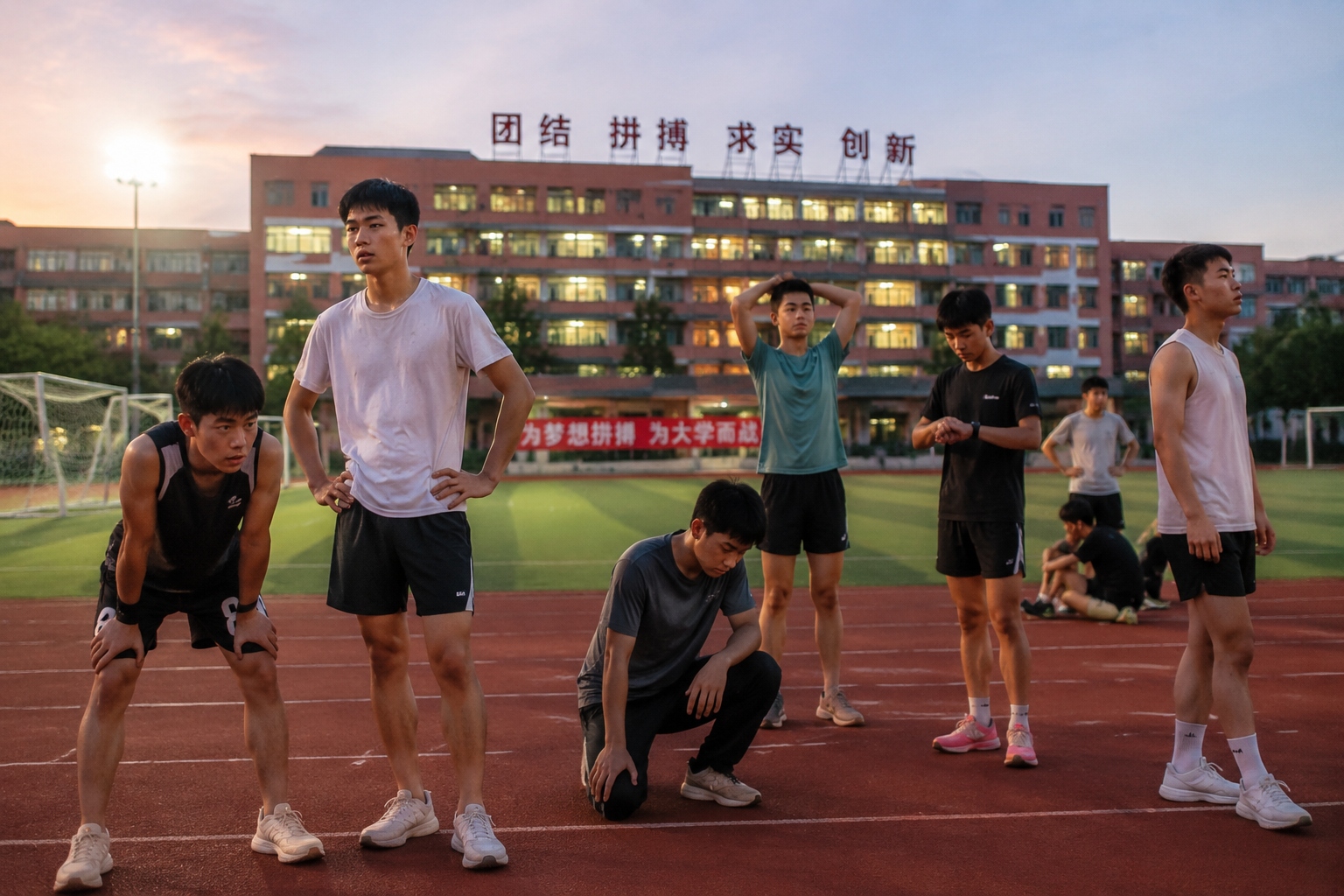

At a public high school on the outskirts of Tianjin, 17-year-old Zhang Hao finishes his final 500-meter rowing practice as dusk falls. His teammates trudge off the track, but Zhang stays behind to stretch. In six months, he will sit for the gaokao—the national college entrance exam—not as a typical candidate, but as a sports applicant. His classmates are memorizing history dates; he is counting his maximum oxygen intake. Zhang is one of hundreds of thousands of Chinese teenagers trying to enter university through sports, a path that feels like both a golden ticket and a high-stakes gamble.
Some families see sports as a clever side door into China’s competitive university system; others worry it is a one-way bridge over a canyon. The truth is more complicated, and the risks are rising.
Three roads, one high-stakes goal
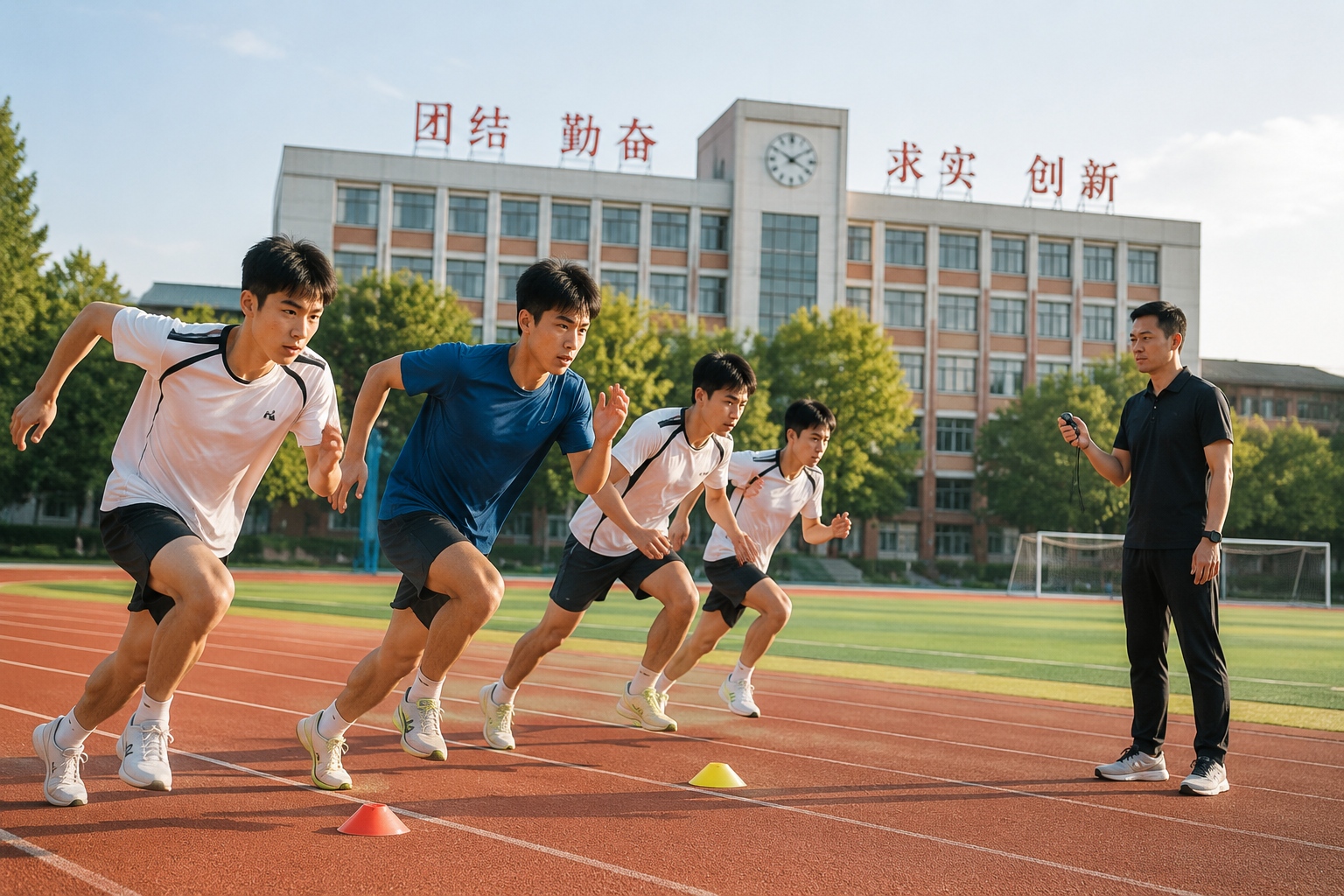
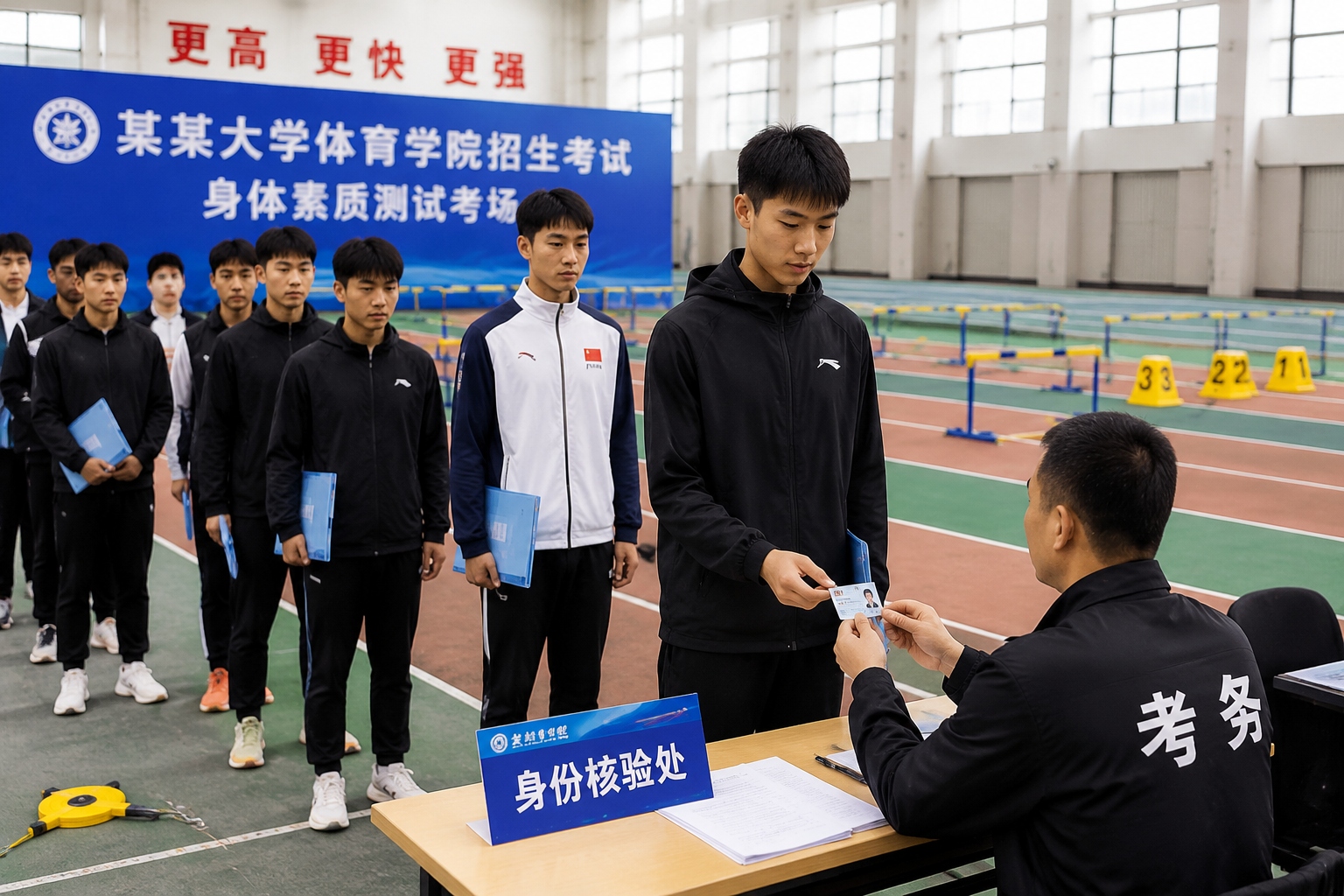
When Chinese families talk about a “sports student” (tǐyù shēng), they are usually referring to one of three possible routes. The first is the high-level sports team route, run by ordinary universities. It offers entrance to prestigious schools for top athletes who want to study business, engineering or law while competing for the university team. The second is the independent sports recruitment used by dedicated physical-education schools and sports colleges. It leads mainly to PE teacher, coaching, and sports training majors. The third is the sports specialization track: candidates take a standard PE test (springs, throws, endurance etc.) and add its score to their gaokao marks to compete for sports-related departments across the country.
Each of these tracks uses a different mix of physical and academic criteria, but all of them require students to sacrifice classroom time for the training ground. On paper, they exist to give athletes a fair chance. In reality, the logistics of juggling both worlds push many students to the edge.
Why the most coveted route is now a narrow slit
For decades, the high-level sports team route was widely seen as the most glamorous door. A student with a provincial medal could enter a top university with a gaokao score far lower than the standard cutoff. That changed with the 2024 reform. The Ministry of Education plus the General Administration of Sport issued new rules that require high-level team applicants to hold at least a national second-level athlete certificate and to score no less than 80 percent of the local undergraduate admission line on the gaokao. Some schools now ask for the first-level certificate, which is even rarer. As a result, many students who spent their teenage years practicing for this exact door can no longer open it.
“This is actually a correction,” explains a physical education professor in Beijing. “In the past, a few rich families trained their children in expensive sports such as golf or sailing only to buy a college seat. The new rules force the athletic card to prove real national-level ability.” Still, the tightened system also blocks poorer but talented athletes without official certificates.
What does one training day cost?
A typical day for a sports candidate looks nothing like that of an ordinary senior year student. They might run 800 meters, lift weights, and practice a technical move until muscle memory takes over. In the best-funded high schools, coaches design individual daily training plans, and students are allowed to skip afternoon classes. In other schools, the whole sports class is housed separately, often in a dorm far from the academic building.
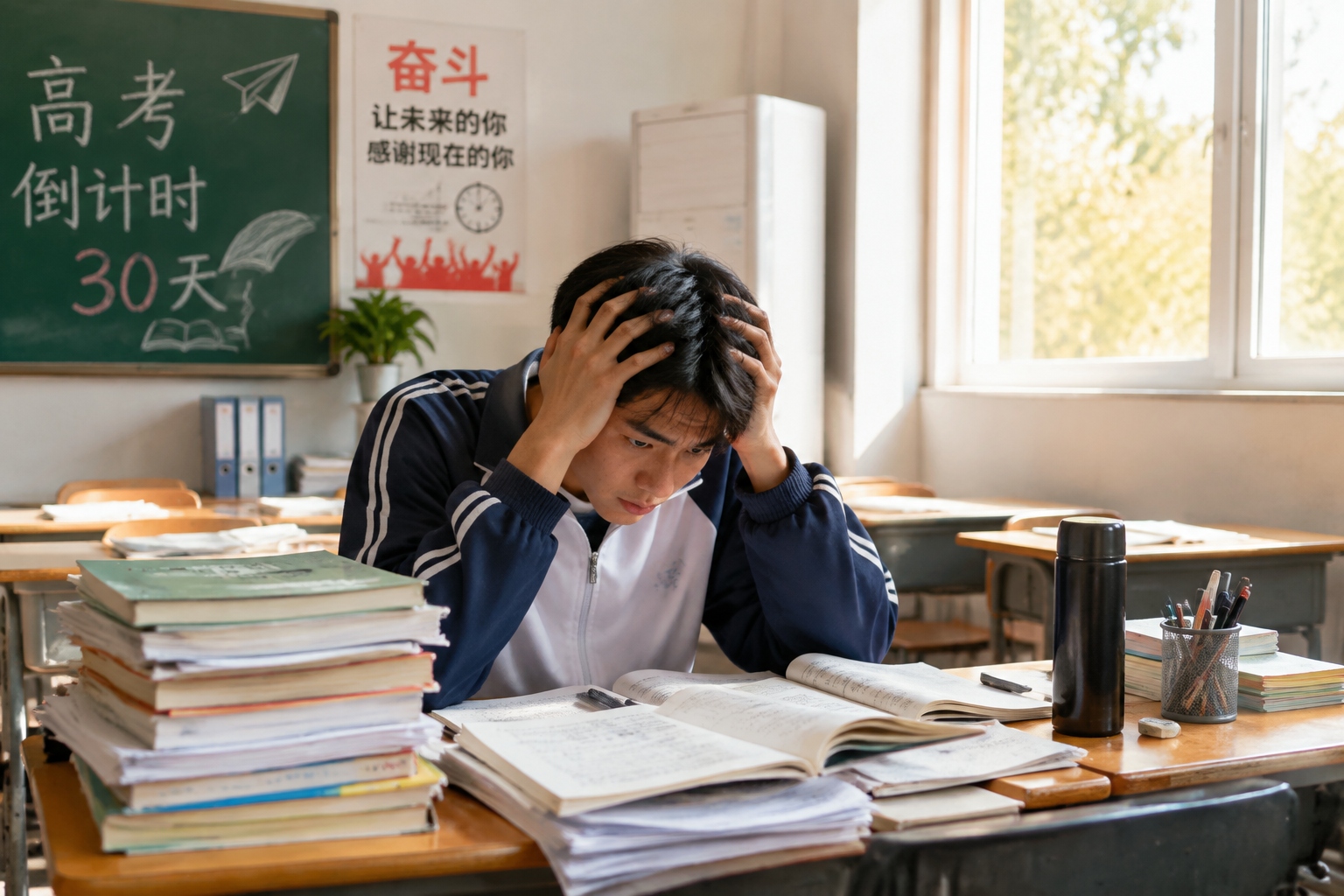
The trade-off is brutal. One in Chengdu told me she missed thirty days of final-semester instruction in her senior year. She passed the physical test but failed math by almost twenty points. “I left the classroom at 3 p.m. every day. By the time I got back, the lesson was over, and I was too exhausted to read,” she said. That is why some sports candidates fail even the low cultural cutoff and end up in vocational colleges.
The numbers: 28%, 5,000, and 80%
Data from public admissions platforms show that in 2023, the independent sports recruitment route drew about 58,000 applicants; only around 16,400 were admitted, giving an acceptance rate of roughly 28 percent. Compare this to the >80% overall college access rate for all Chinese high-school graduates. The high-level sports team route is even more selective: across the country, universities recruit no more than 5,000 student-athletes each year. That means a student may be the fastest runner in their city and still not qualify for an interview.
And the numbers hide another layer of risk. Sports test scores are more subjective than a written exam. A hidden camera at one provincial test in 2023 sparked controversy when a sprinter who finished ahead was marked lower than a rival from the host city. Officials later investigated, but such allegations tarnish the sense of fairness that sports routes promised.
A story of two athletes
Consider two sprinters from the same sports school in Wuhan. Chen Jie, 19, earned a spot at a local university through the high-level team route and now studies business while training. Liu Yang, Chen’s teammate, finished second at the provincial meet but failed the gaokao threshold by six points. He could not reapply because he had already used a gap year, so he now works as a coach in a private fitness club. The difference between them, according to Chen, was not talent—Liu was actually faster in practice—but the willingness to squeeze in late-night study sessions after practice. “Liu simply didn’t have the energy left,” Chen recalls. “This is not a fair contest between sports and schoolwork; it is a contest between exhaustion and your future.”
Parental anxiety and the rural paradox
The tightening rules have changed how families view the path. Among urban middle-class parents, the phrase “sports student” now often brings a frown. “You put your kid through years of brutal training, and still they need a high gaokao score. It is no longer a shortcut,” a Shanghai mother said. Many have shifted toward letting children play sports as a “hobby,” not a career ladder.
In rural and low-income households, however, the calculus is different. High-level recruitment and sports scholarships can be the only affordable way to pay for university. Sports coaches in poor counties have long been talent scouts, offering free training to children who look physically promising. For these families, the sports track still feels like a lifeline, even if only a few will end up with a college diploma.
Integration talk, but no easy answers
The Chinese government often speaks of “integration of sports and education” to reduce the sacrifice that training imposes on academic learning. Some leading universities have launched “bridge courses” and online tutoring for recruited athletes. The goal is to produce what educators call “student-athletes” rather than “student” or “athlete” only.
Yet true integration remains a long way off. High school coaches are still assessed by medals and championships, and parents’ top concern is almost always the gaokao. A researcher who studies sports policy says, “The system needs to make sport a natural part of childhood, not a separate machine that starts at 10 and ends in injury. Until that changes, this path will remain a gamble.”
Conclusion
For Zhang Hao, the young rower from Tianjin, the gamble ultimately paid off. He didn’t get high-level recruitment, but his combined score on the PE test and gaokao secured him a place in a provincial sports university. As he packs his bags, he feels both gratitude and anxiety: “I have no regrets, but the road almost killed me. I would not recommend it to anyone who isn’t truly in love with a sport.”
That may be the most honest summary. For a tiny minority, sports remains a golden booster; for most, it’s a high-risk bridge that too many cross blindfolded. The latest reforms have pulled aside part of the blindfold, yet the fundamental question still stands: can a society like China’s create a path where young people can grow as athletes and as learners, without being forced to choose between the two?
Start the discussion at forum.chinacomes.com