

Where an Ancient Art Meets a Modern Lens
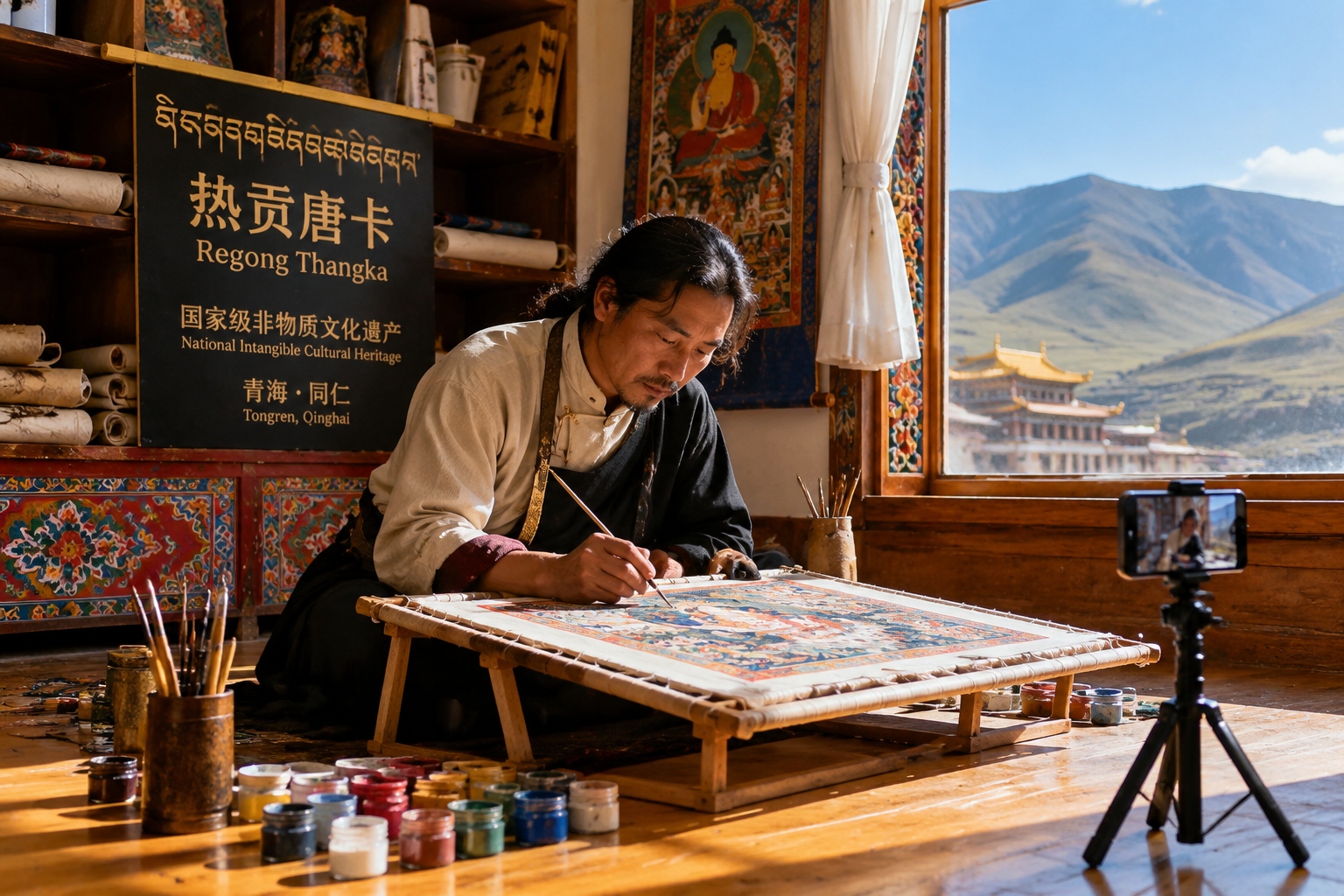
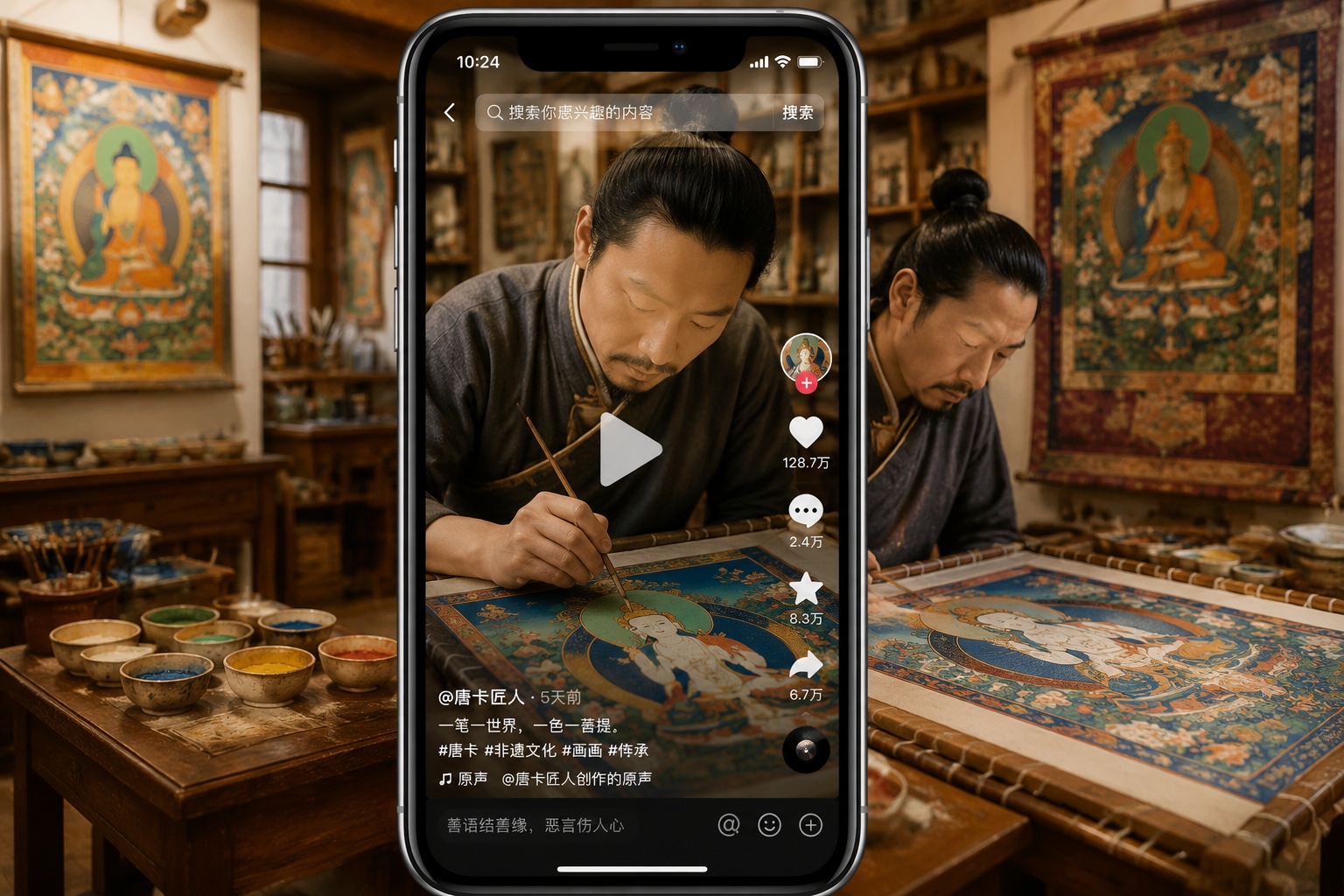
Morning light floods through the skylight of Awo’s studio in Regong, Qinghai. On a low wooden table, he smooths a cotton canvas with a bone burnisher. Around him: jars of crushed lapis lazuli and cinnabar, brushes made from animal hair, and a tripod holding a smartphone.
That phone is the bridge between a centuries-old painting tradition and the fast-scrolling world of Douyin, China’s short-video app. Awo starts recording, then dips a brush into warm glue and begins to sketch a lotus outline. Within hours, millions of people might see this moment.
What Is Thangka, and Why Does Regong Matter?
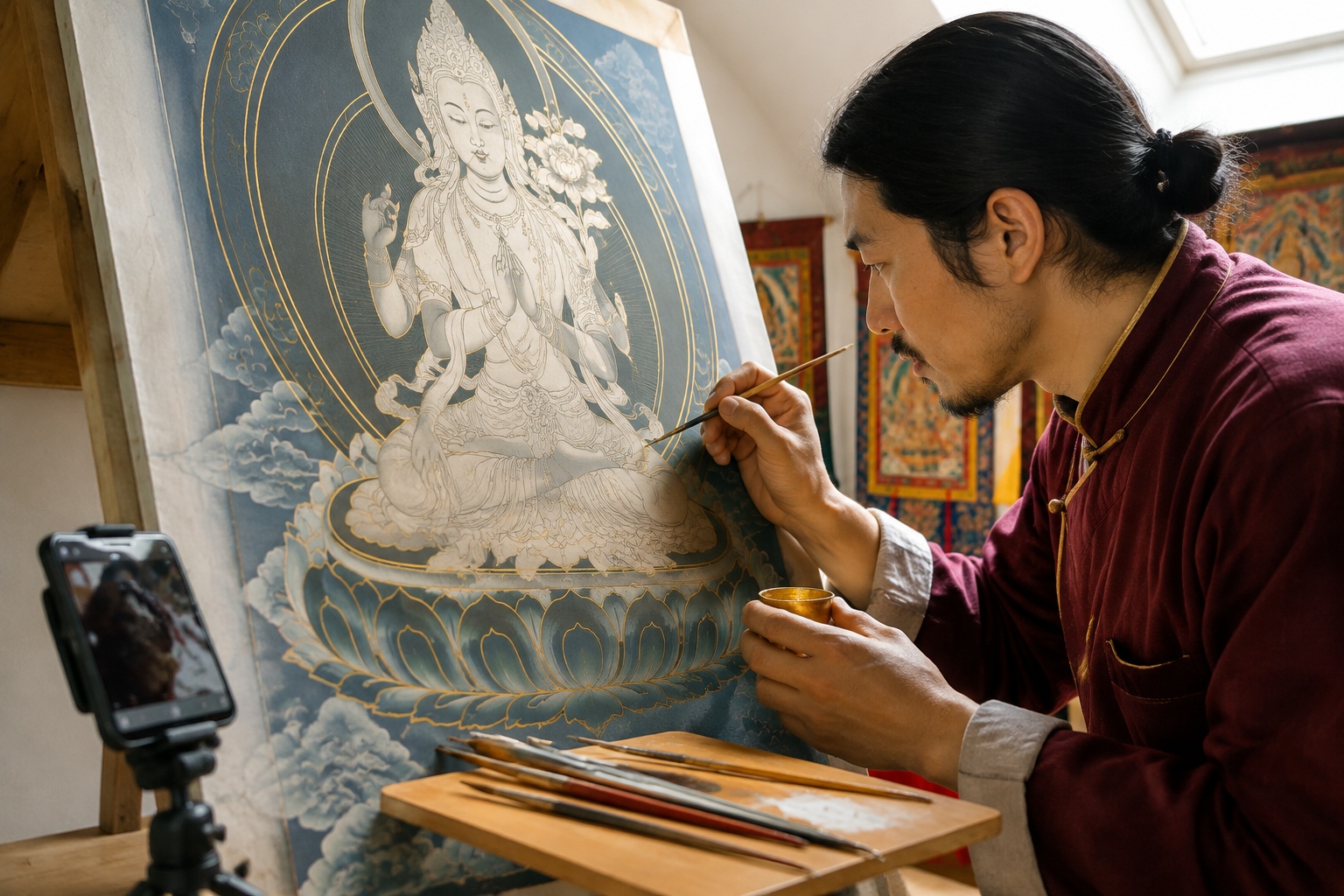
Thangka is a form of Tibetan Buddhist painting on fabric, often depicting deities, mandalas, or scenes from the life of Buddha. It is not just art — it is a meditative practice and a spiritual offering. The artist follows strict iconometric rules and uses mineral pigments that stay vivid for centuries.
Regong, in Huangnan Tibetan Autonomous Prefecture, has been a hub for Thangka and other Buddhist arts for at least 500 years. Its workshops are tucked into valleys where monks and lay painters keep the tradition alive. In 2009, UNESCO added Regong arts to its Intangible Cultural Heritage list.
A Village Painter Becomes a Video Star
Awo, now in his late thirties, learned Thangka from his father and later studied at a monastery school. For years, he sold pieces to pilgrims and tourists who visited local temples. Then, in 2020, a friend suggested he post a short clip of his daily work.
The response was surprising. The first video, a 15-second time-lapse of mixing mineral pigments, got over 200,000 likes. Awo kept recording: the stretching of the canvas, the meticulous brushwork, the grinding of gold leaf. Each video was simple — no special effects, just natural sounds and his quiet narration in Tibetan-accented Mandarin.
Today, his Douyin account has over 1.2 million followers and more than 8 million likes. Some videos, like the one where he reveals a newly finished Tara painting, have crossed one million likes alone.
The Algorithm That Painted a New Audience
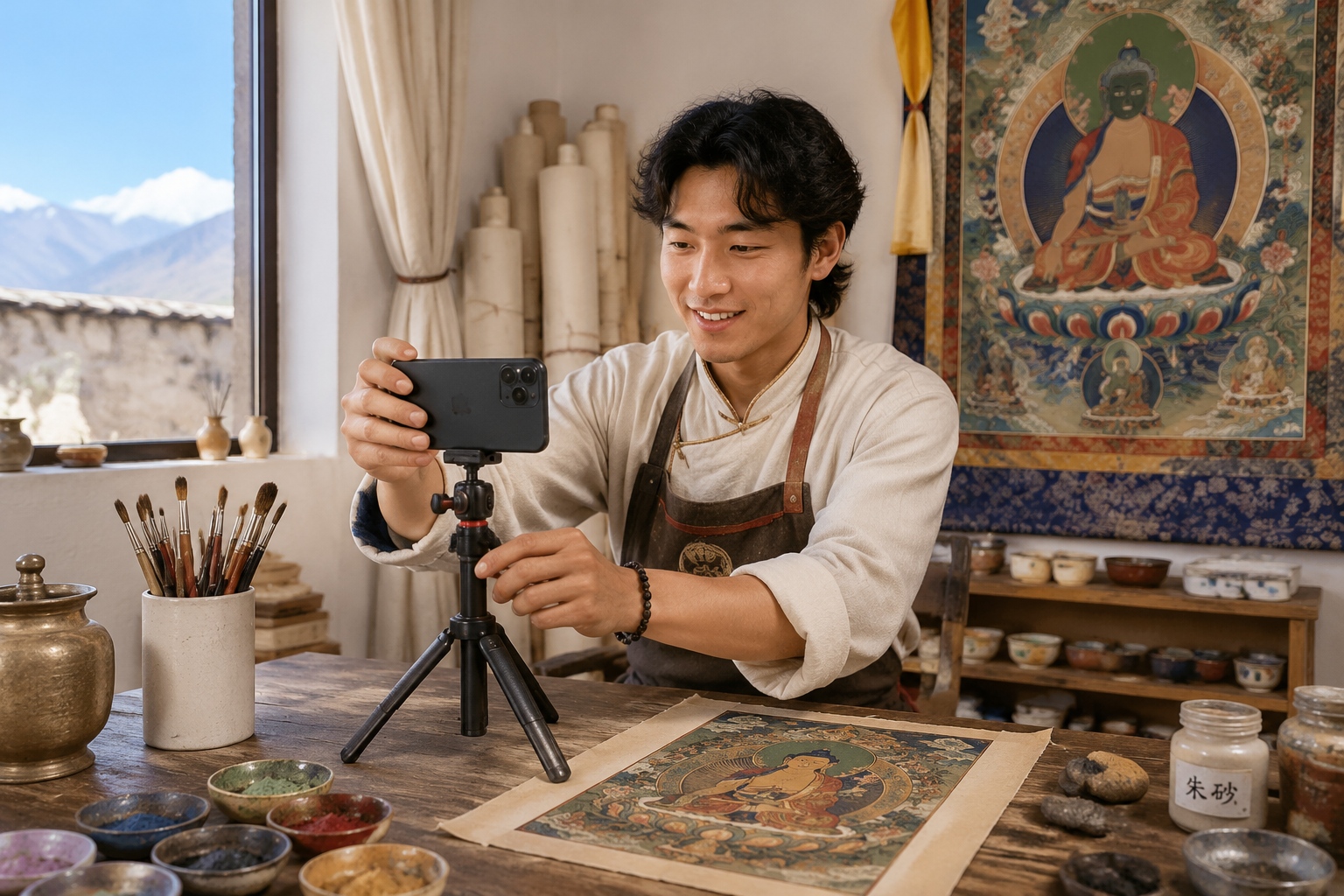
Douyin is engineered for discovery. Instead of following only accounts you know, the app pushes content to users based on their interests. Awo’s videos found their way to people who had never heard of Thangka: students in Shanghai, designers in Shenzhen, middle-aged office workers who stumbled upon a brushstroke and felt a quiet awe.
“It’s like a live documentary of patience,” one commenter wrote. Others ask about the symbolism, the years of training, the cost of the pigments. For many overseas viewers, these videos offer a window into a craft that was previously only seen in museum glass.
From Likes to Livelihood: Exchanges and New Students
The online fame translated into real economic change. Orders now come from all over China — and occasionally from abroad. Awo sells completed Thangkas through Douyin’s e-commerce feature, often during live-stream sessions where he narrates the story of each piece. A large work can take several months to complete and sells for the equivalent of several thousand US dollars.
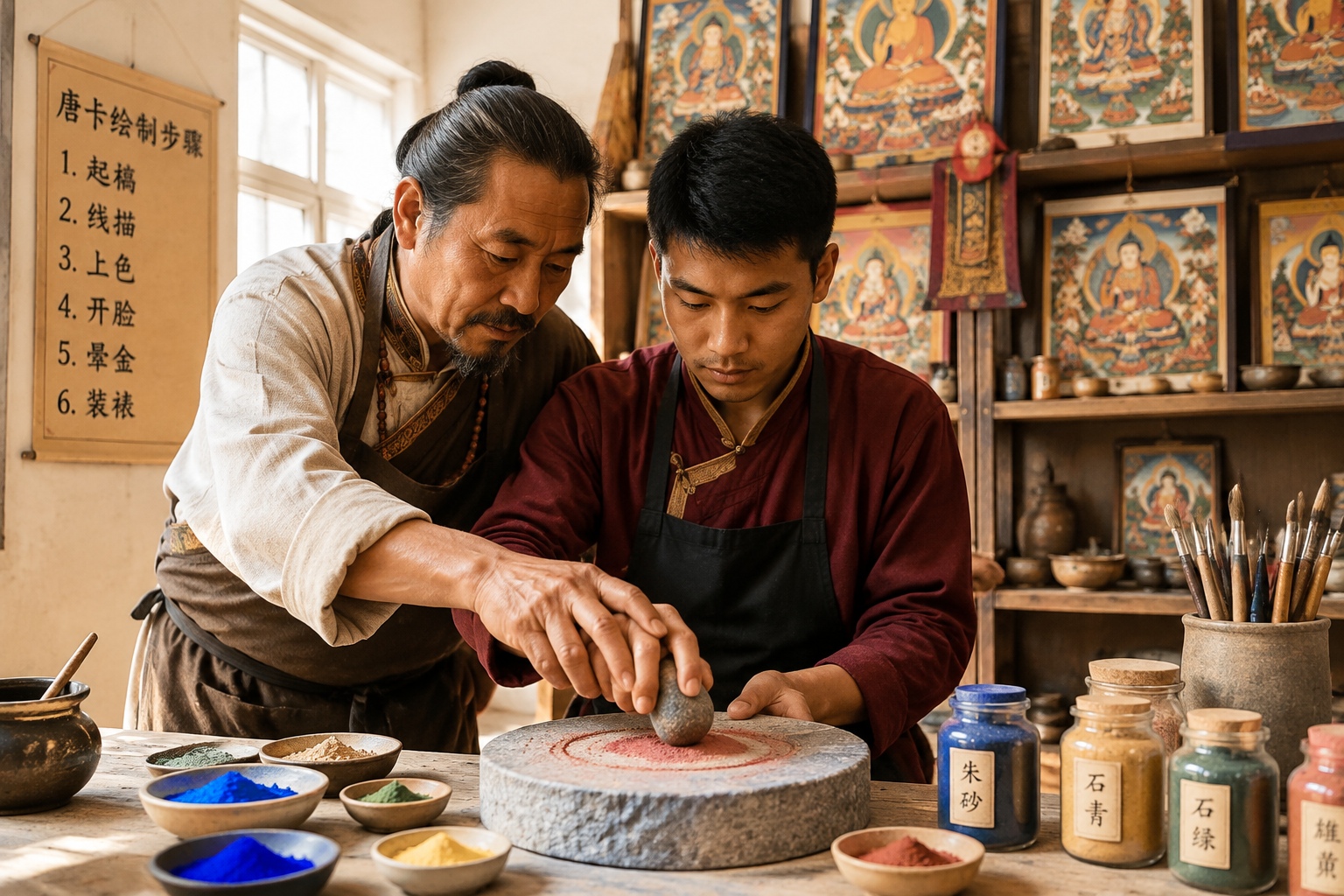
He also started a small apprenticeship program. Some young people discovered Thangka through his videos and moved to Regong to study. “Before, our students came from nearby monasteries,” Awo explains. “Now, some come from cities because they saw the work on their phone.”
He is careful to teach them the traditional way: years of drawing fundamentals, learning the proportions, understanding the spiritual dimension. “A video can spark interest, but the real skill needs a teacher and a studio.”
Can Short Video and Tradition Really Coexist?
Not every artist is comfortable with the spotlight. Some worry that social media reduces an ancient art to entertainment. Awo understands this tension. He tries to keep his content educational — explaining the iconography, showing the failures, never rushing the process. “The phone has one purpose: to let more people see how we work. If they feel respect, then it’s not cheap entertainment.”
This balance reflects a larger shift across China. Intangible cultural heritage projects are increasingly using digital tools to reach younger generations. Museums livestream their relics; embroiderers, paper-cut artists, and opera performers share tutorials. According to a 2023 report by the Chinese Academy of Social Sciences, videos tagged with “intangible cultural heritage” have been viewed over 240 billion times on Douyin alone.
What Awo’s Story Tells Us About Today’s China
For outsiders, the image of a Tibetan artist in a small village skillfully using a smartphone might seem like a cultural paradox. But it is exactly this kind of adaptability that defines contemporary China. High-speed internet reaches even remote plateau towns. Rural e-commerce infrastructure lets artisans sell to a national market. And short video apps have become a democratic space where talent can be discovered without a gallery or a curator.
Awo is not trying to be a star. He says his goal is to make Thangka understood, not just liked. Still, the likes matter — they pay the rent, feed the apprentices, and keep the pigments grinding.
The next time you scroll past a painting on screen, remember: somewhere in a valley in Qinghai, a man is preparing a canvas, and his phone is quietly rolling. The old art and the new lens are not so far apart after all.
Start the discussion at forum.chinacomes.com