

A Hot Pot for One, at Fast-Food Speed
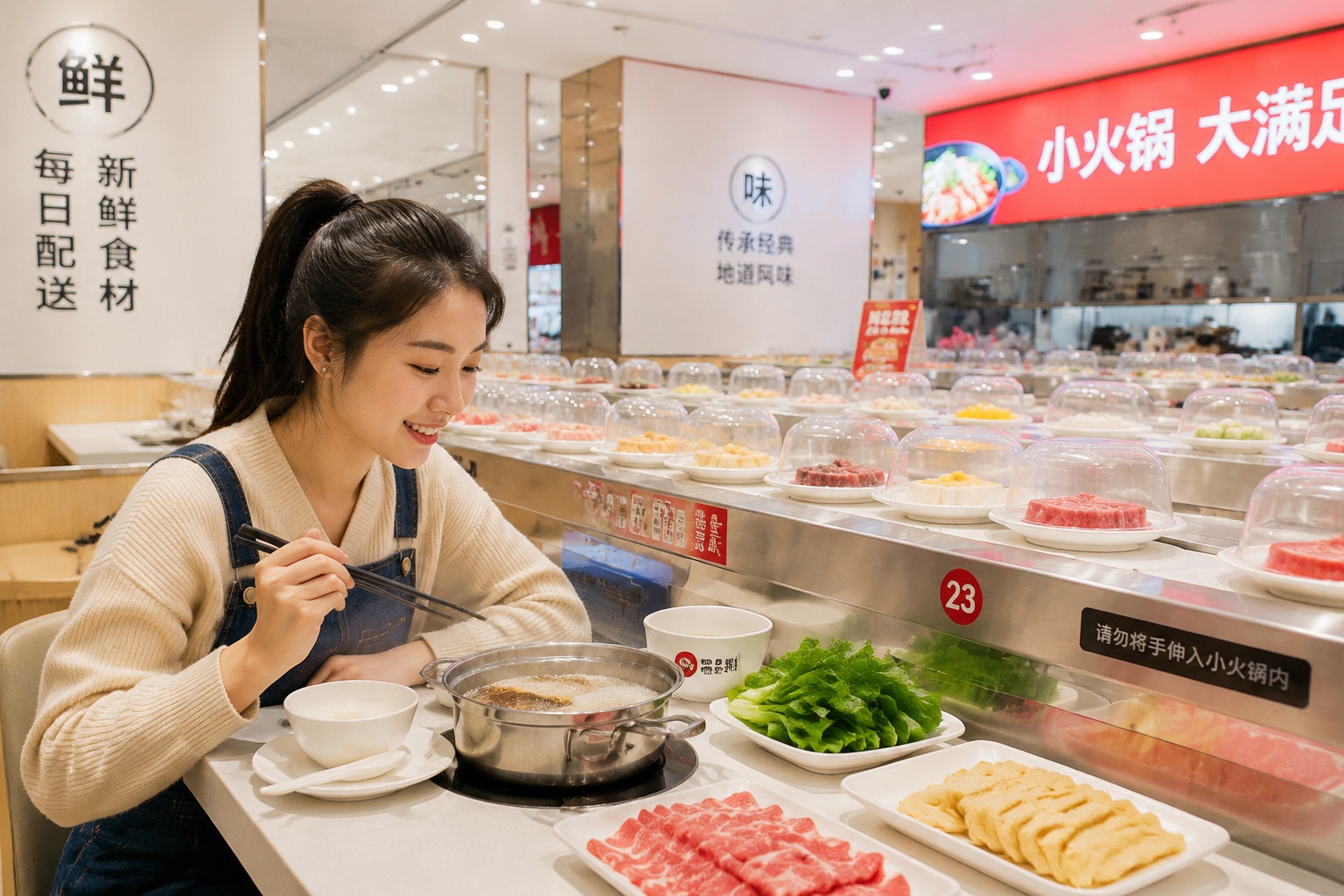
Friday night, 7 p.m., a shopping street in Shanghai. Inside a small eatery, 27-year-old Chen Lu has her phone propped on a stand, half-watching a drama while reaching for a plate of shrimp paste that slides past on a conveyor belt. Her own little pot of tomato broth bubbles in front of her, empty plates piling up. This is not a weekend gathering with friends. It’s just an ordinary dinner after work.
Chen is one of a growing number of young Chinese who have embraced what locals now call “rotating hot pot” (旋转小火锅). The concept is simple: a counter wraps around a moving belt carrying small plates of raw meat, vegetables, tofu, and noodles. Diners sit at individual seats, each with their own simmering pot, picking off whatever catches their eye. The bill is calculated by counting the plates or by the number of colored dishes you’ve taken. In most cities, a full meal costs between 30 and 60 yuan (about 4 to 8 US dollars).
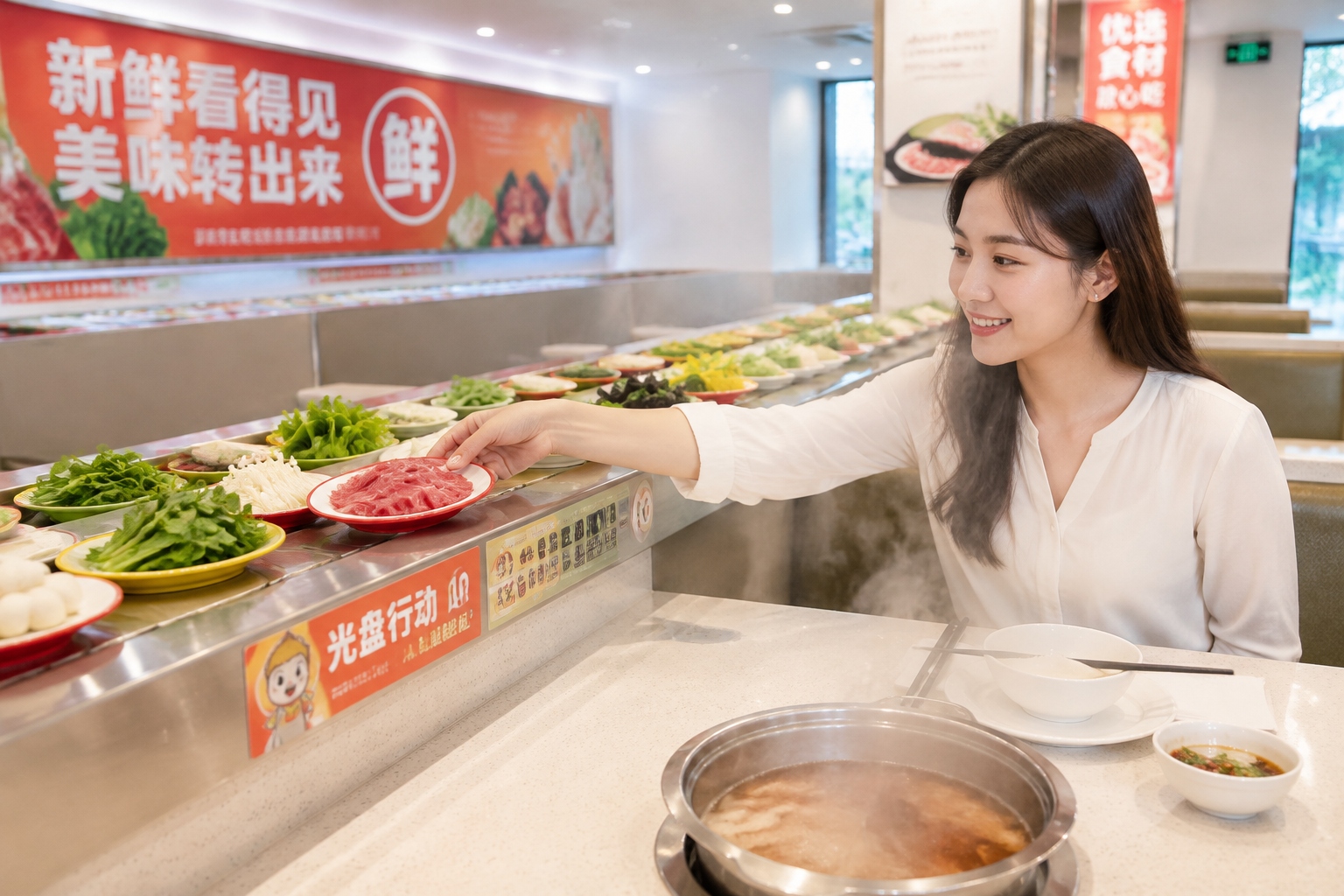
For Chen, it’s the speed and price that matter most. “I don’t have to wait for anyone. I grab what I want and cook it in seconds. In twenty minutes I’m done, and it’s fresher than ordering delivery,” she says. That convenience is exactly why rotating hot pot has become one of the most talked-about dining trends in China today.
Why China’s Youth Are Choosing Solo Hot Pot
The rise of one-person hot pot is closely tied to a bigger shift in Chinese consumer culture: the “single economy.” More young adults in cities are staying single longer, working demanding jobs, and spending time alone. Traditional hot pot restaurants often require groups of four or more to be cost-effective. But rotating hot pot solves that problem by making the experience personal. You don’t need to share a table, negotiate with friends about what to order, or feel awkward eating alone.
The pricing model is also remarkably transparent. Each plate has a fixed price, usually displayed by color. Blue might be 3 yuan, red 5 yuan, yellow 8 yuan. At the end of the meal, a server counts the plates. No hidden fees, no complicated math. It appeals to young people who have grown up with clear, upfront pricing from online services like mobile payments and shared apps. For many, eating here feels as natural as ordering a meal from a kiosk.
Another draw is variety. A well-stocked rotating hot pot restaurant can offer 50 to 80 different items on the belt, from classic beef slices to more unusual options like quail eggs, duck intestines, or even fruit. You can taste a little bit of everything without committing to a large portion. That kind of exploration fits a generation that values trying new things and documenting them on social media.
The Business Machine Behind the Belt
What makes this format profitable? It’s not just about charging low prices. The secret lies in central kitchens and standardized supply chains. Many rotating hot pot chains use the same precooked or semi-prepared ingredients you find in modern convenience stores. The food is delivered to the store in sealed packages, placed on the belt, and cooked by diners themselves. This reduces the need for chefs and large kitchens, which are among the highest costs for a traditional restaurant.
Each store is also small — often just 20 to 40 seats — and the turnover is fast. Customers typically finish in 30 to 45 minutes, compared to two hours or more in a traditional hot pot place. Higher turnover means more groups served per evening. Combined with central purchasing, the unit economics work well enough to keep prices low while still turning a profit.
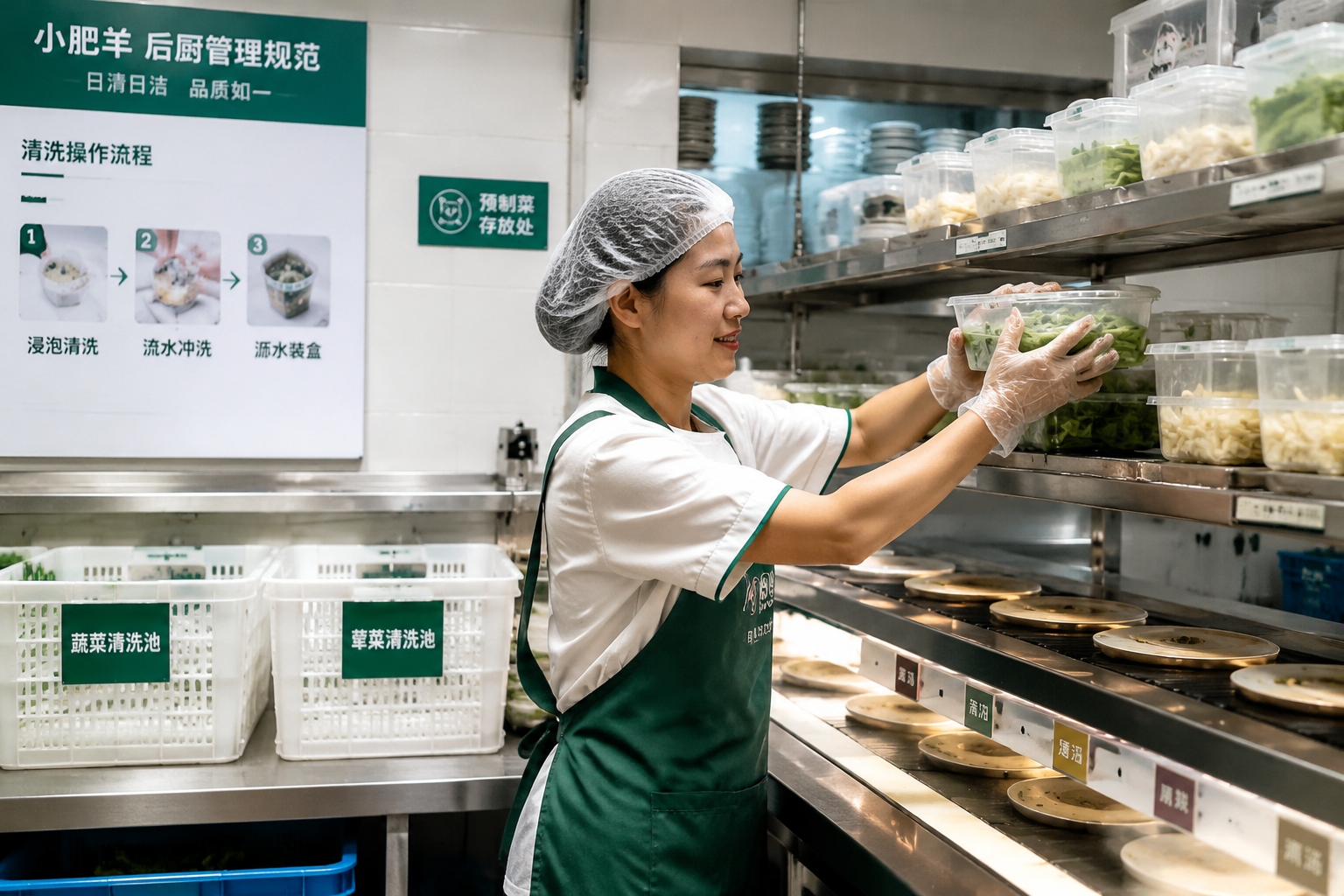
Franchise chains have been quick to expand. In 2023, reports from Chinese business media noted that several low-cost hot pot brands had opened thousands of stores across small cities and suburbs, capitalizing on rising demand for affordable dining. Some industry analysts point out that rotating hot pot fills a gap between street snacks and full-service restaurants — it’s quicker than a sit-down meal but warmer and healthier than fried fast food.
More Than a Meal: A Mirror of Changing Urban Life
The surge of conveyor-belt hot pot also reflects changes in how Chinese people live and socialize. In the past, going out to eat was almost always a group affair, often tied to business or family gatherings. But today, particularly in big cities like Beijing, Shanghai, or Chengdu, eating alone has become normal. Restaurants that cater to solo diners, from ramen shops to barbecue counters, are thriving. Rotating hot pot is a perfect fit for this trend because it lets you share a public space while maintaining personal distance.
It’s also part of a broader shift toward “affordable indulgence.” Young workers are more careful about spending than the previous generation was at their age. They’ll happily spend 40 yuan on a hot pot dinner because it feels like a small treat, rather than spending 150 yuan on a traditional meal that requires a reservation and a group. Social media has amplified the trend, with short videos showing neatly arranged plates gliding along the belt, satisfying to watch and easy to share.
Challenges on the Horizon
Still, rotating hot pot is not without problems. As more players enter the market, differentiation becomes hard. Many stores fight for the same customers by cutting prices, which can hurt food quality. Food safety is another concern; the open conveyor belt means ingredients are exposed to the air and to customers’ hand movements. Some consumers have posted videos calling out hygiene issues. Regulators have occasionally shut down outlets for using expired ingredients.
But so far, the format has proven resilient. Chains are improving systems, adding partitions, and introducing app-based ordering to show supply chain traceability. The experience itself is also being upgraded — some restaurants now offer robot servers or smart payment departing from the plate-counting method.
What This Tells Us About Chinese Consumption
Rotating hot pot is more than a viral food trend. It’s a small example of how China’s economy is adapting to the preferences of a new generation. Young consumers are demanding flexibility, value, and a degree of autonomy in their daily choices. The success of this restaurant format shows that when businesses align with these values, they can grow fast even in a cautious spending climate.
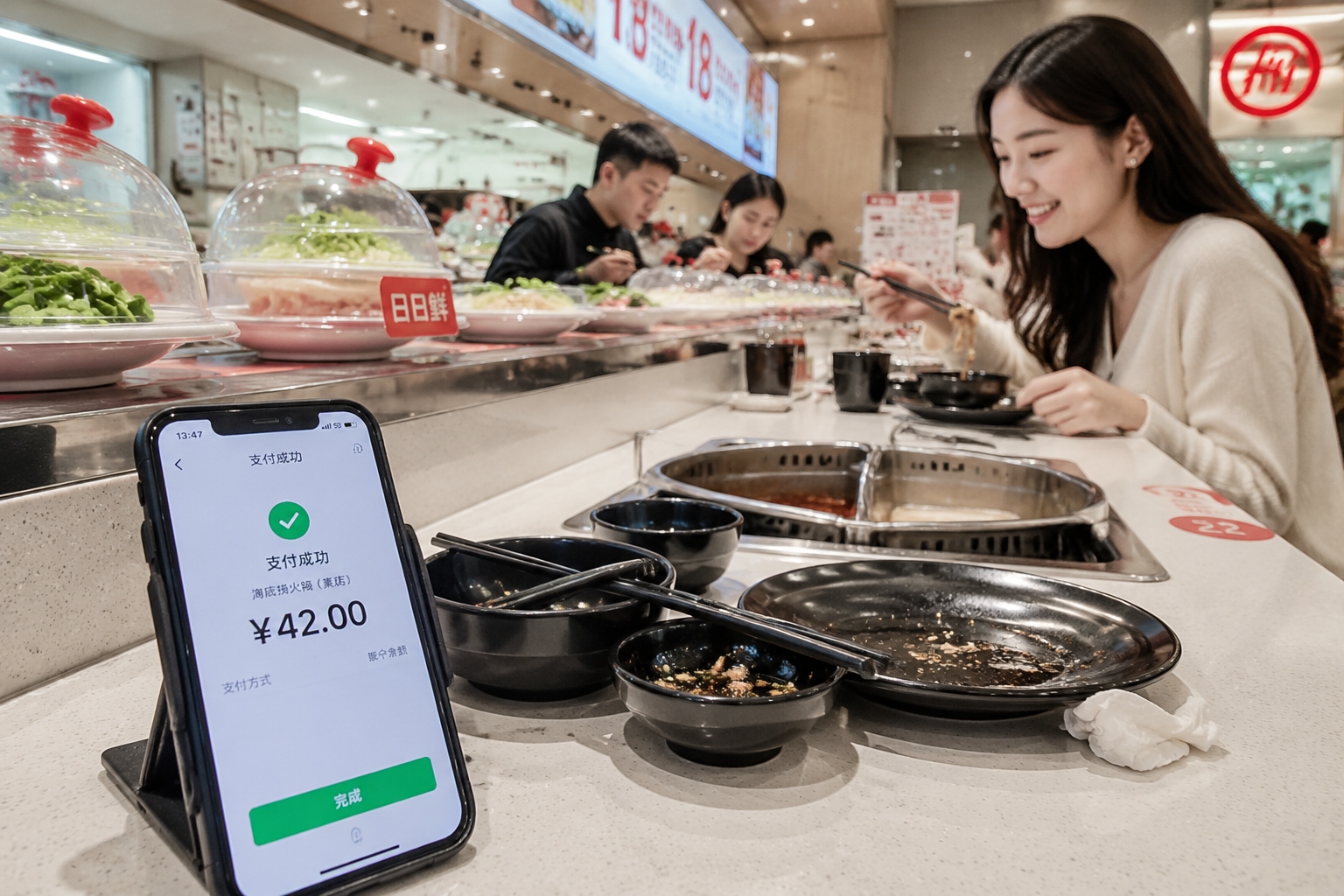
As Chen Lu finishes her meal and pays 42 yuan, she shrugs: “I could have ordered takeout, but this feels like I actually had a proper dinner, on my own terms.” For millions of young Chinese, that sentence explains everything.
Start the discussion at forum.chinacomes.com