


The first screen of the day
Before she opens WeChat, Lin Yuan taps the small silver ring on her right hand against the back of her phone. She is 27, works in marketing for a home-appliance company in Hangzhou, and has worn the ring since March. The app takes a few seconds to sync. Sleep: 6 hours 12 minutes. Readiness: 68. Stress: elevated twice yesterday, at 3:40 p.m. and again at 11:20 p.m.
“I don’t really believe it can read my feelings,” she says. “But it does know when I’ve slept badly. That part is accurate.”
She paid 1,999 yuan, roughly $280, mostly out of curiosity. A year ago this category barely existed at that price. Now her friends argue about brands the way they once argued about running shoes.
Her ring belongs to a fast-growing shelf of gadgets — Oura from Finland, Samsung’s Galaxy Ring, Ultrahuman, and Chinese-made rings such as RingConn — that promise something more intimate than step counts. They track stress, recovery, readiness, sometimes “emotional wellbeing.” Which raises a question the marketing tends to slide past: can a few grams of titanium actually read your mood?
Short answer: no. Longer answer: it can do something narrower, and that narrower thing is genuinely interesting.
What the ring is actually measuring
Strip away the packaging and a smart ring holds four or five sensors. Green and red LEDs shine into the skin, and a photodiode measures how the light comes back. That produces a pulse waveform — the same optical trick used in hospital pulse oximeters. Add a temperature sensor, an accelerometer, and on some models two tiny electrodes that measure how easily a weak current crosses your skin. The ring is a lab instrument the size of a coin, worn on a finger.
Three signals matter most for the mood claims.
Heart rate variability. Your heart is not a metronome. The gap between beats stretches and shrinks by tens of milliseconds, and that variation is steered by the autonomic nervous system: the sympathetic branch (“something is happening, get ready”) tightens the rhythm, the parasympathetic branch (“we are safe, rest”) loosens it. Falling HRV is a rough proxy for physiological load.
Electrodermal activity. Sweat glands in fingers and palms respond to sympathetic arousal. Even sweat you cannot feel changes how skin conducts electricity. It is the same signal used in lie detectors — a good reason for caution.
Sleep and movement. When you slept, how often you woke, how much you moved. Not a mood signal on its own, but the heaviest input into the daily scores.
None of these is a mood. They are the body’s shadow. Inferring emotion from them is like guessing the weather from how people are dressed: usually right, occasionally and confidently wrong.
Why “aroused” is not the same as “upset”
The technical problem has a name: valence. Sensors are decent at arousal — how activated your body is. They are weak at valence — whether that activation feels good or bad.
Your heart rate and skin conductance during a job interview, a first date, and a near-miss with an electric scooter can look almost identical. The device has no idea which one you are in. So it leans on context: it is a weekday afternoon, you are not moving, so this is probably a tense meeting. Spread that guess across millions of users and you get a stress score that is right often enough to feel uncanny, and wrong often enough to fail exactly when it matters.
How AI turns a pulse into a “mood”
The pipeline has three stages. Sensors collect raw signals. Algorithms cut them into features: HRV over a five-minute window, skin conductance peaks, sleep stages, still periods versus walking. Then a model compares those features to two references — what a large group of people reported feeling under similar conditions, and your own baseline from the past few weeks.
Both references are shaky. Training labels come from self-report, and people are notoriously bad at naming their own states; ask anyone who insisted they were fine during a genuinely terrible week. Most training sets also lean young and healthy, which means the model has less idea what to do with a 58-year-old with an irregular heartbeat.
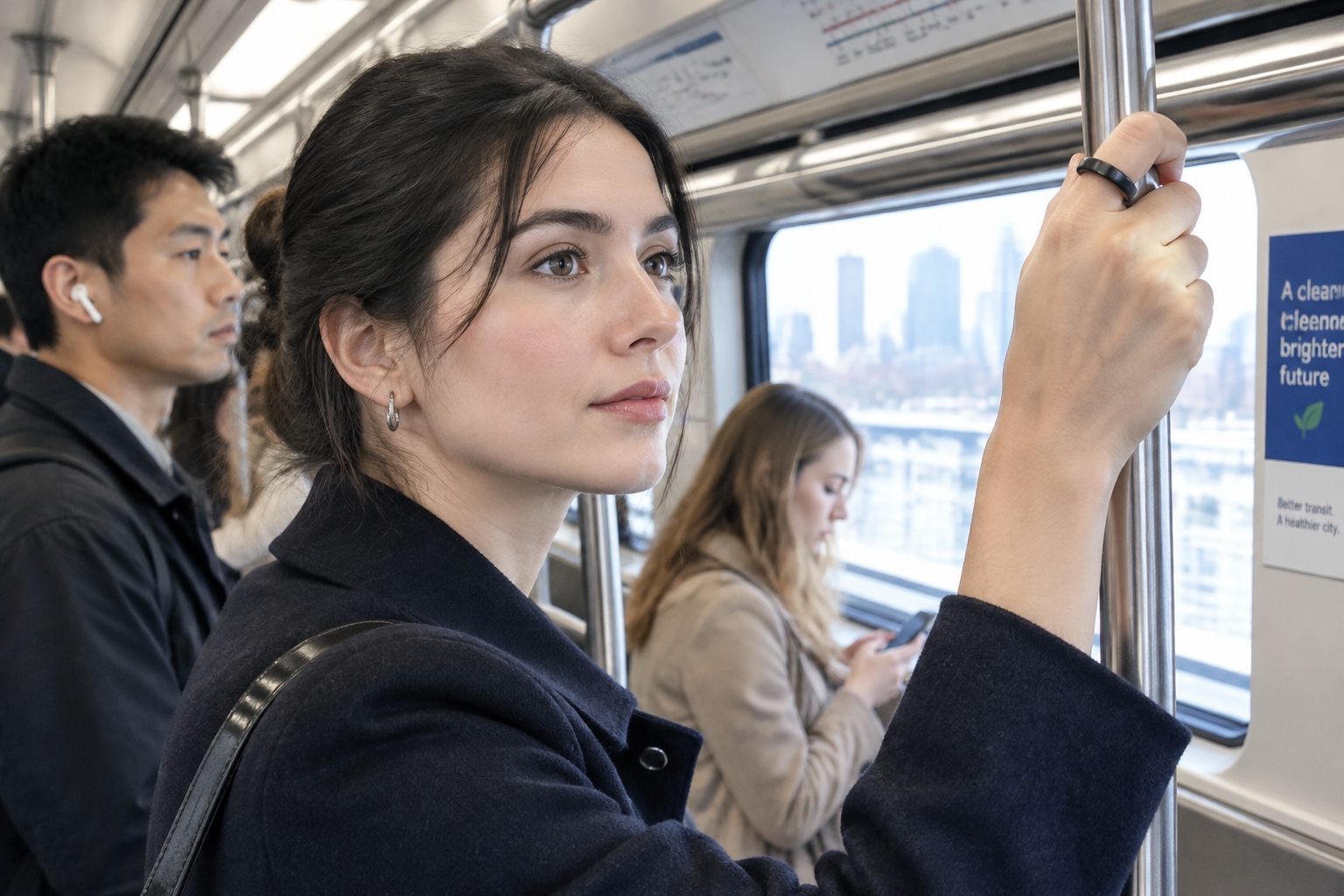
Your baseline is noisier still. Coffee raises heart rate for hours. So does alcohol, a fever, a hot shower, spicy food, a crowded metro car, or the week before your period. Lin Yuan noticed her ring flagged stress on the mornings she ran to catch the bus — technically correct, practically useless.
Companies handle this differently, and the difference tells you what they think the product is. Apple, notably, has not shipped an automatic stress score. Its Health app asks you to log your own state of mind and then charts the trend. That is less magical and more honest: the data is yours, the interpretation is yours.
What it is good at, and what it is not
After a few weeks, the pattern of usefulness becomes clear.
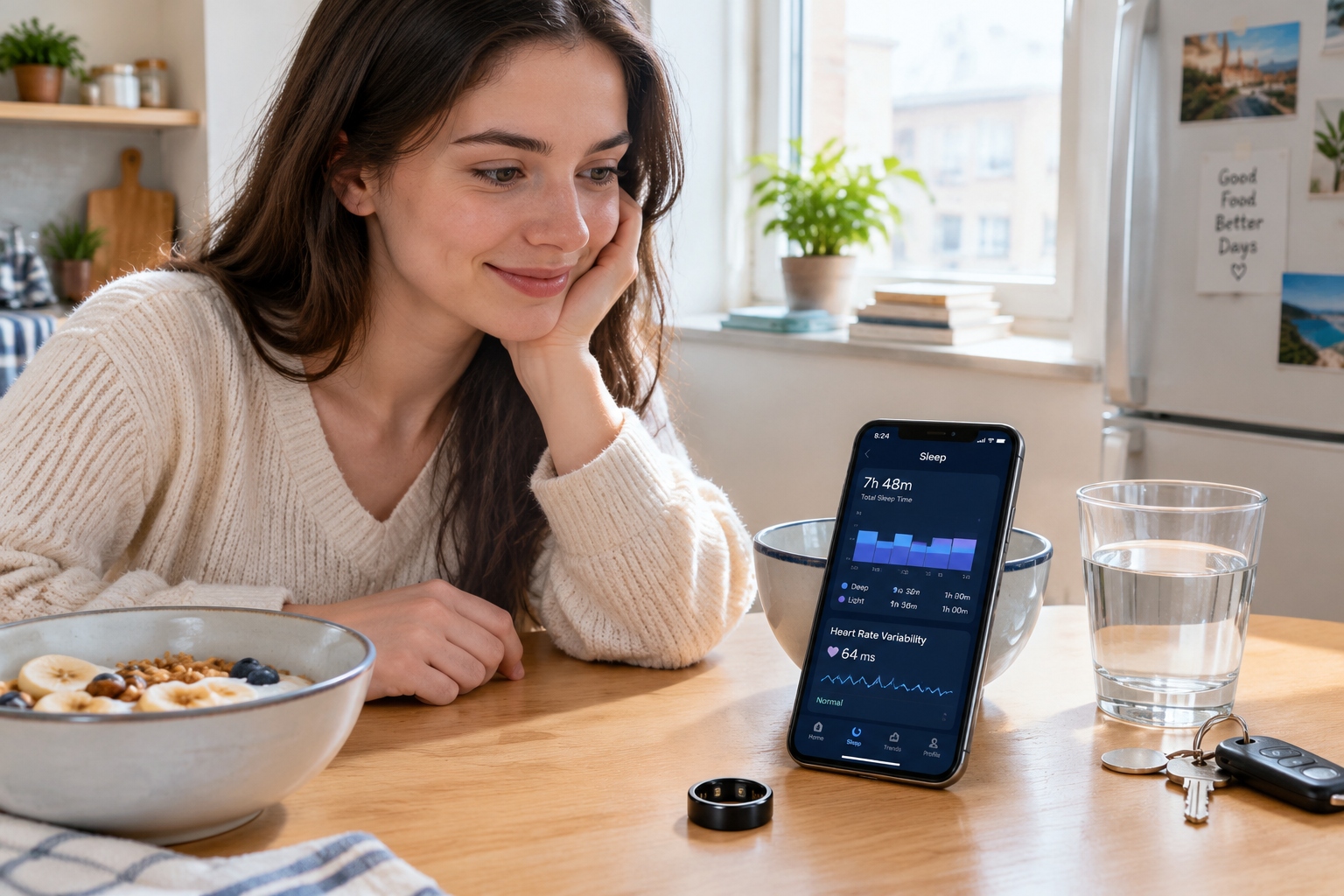
Sleep duration tracking is solid. Sleep staging — deep, light, REM — is mediocre. Independent studies that compare consumer wearables against polysomnography, the lab standard, usually find broad agreement on total sleep time and much weaker agreement on stages. Treat those neat little bar charts as an estimate, not a measurement.
What surprised Lin Yuan was the value of a timeline. She could see that her 3 p.m. slump followed meetings, not lunch. She could see that her worst nights came after 11 p.m. phone scrolling, which she knew in theory and ignored in practice. A number she could scroll back through was harder to argue with than a vague feeling.
The annoying parts are just as real. The buzz on her finger at a red light while cycling. A “high stress” flag during karaoke with colleagues, which was accurate and completely unwelcome. One friend developed what sleep researchers call orthosomnia — anxiety about sleep quality, caused by the tracker measuring sleep quality. The device meant to reduce stress became a new source of it.
Why this category is growing so fast in China
Three forces are pushing at once.
The first is demand. Sleep has become a national worry. A frequently cited figure from the Chinese Sleep Research Society puts the number of people with sleep problems above 300 million, and stress is the standard explanation. Young office workers who would never book a therapist will happily buy a 1,999-yuan ring that produces a chart.
The second is manufacturing. A ring is a brutal piece of engineering: a battery, an antenna, optical sensors and waterproofing, crammed into four grams of metal with no room for a screen. Shenzhen’s component ecosystem lets small teams iterate a hardware product in months rather than years. RingConn, a Shenzhen-based brand, went from a crowdfunding campaign to a product competing with Samsung on features and undercutting it on price.
The third is a business model. Oura charges about $349 for the ring plus a $5.99 monthly subscription. Samsung’s Galaxy Ring is around $399 with no subscription. Chinese hardware companies tend to skip subscriptions entirely and make money on the device, which is cheaper for users and quietly relevant to the privacy question below: a company that sells hardware has less incentive to monetize your physiology.
The harder problem: what happens to the data
A ring that tracks sleep and stress is collecting health data continuously, including during sex, illness, grief, and everything else a person does at 2 a.m. That is a different category of intimate from a step count.
Chinese law treats it that way. Under the Personal Information Protection Law, which took effect in late 2021, biometric and health data count as sensitive personal information. Companies need a specific purpose, a necessity justification, and separate consent — a distinct opt-in, not a clause buried in a long policy. The rules on network data security that took effect in January 2025 add further obligations on how that data is stored and shared. Regulators have also been active on the app side: the Ministry of Industry and Information Technology regularly publishes lists of apps caught collecting more than they need or refusing to work without unnecessary permissions.
In practice, the gap between the rule and the phone is narrower than critics assume and wider than the industry admits. Consent screens exist. They are long, and most people tap through them in under two seconds.
The genuinely unresolved question is inferred data. A raw heart-rate trace is clearly sensitive. But a “stress score” is a derived judgment about your mental state — closer to a medical opinion than to a pulse. Chinese rules require consent for processing and for automated decision-making that significantly affects a person, but the line around inferences is still being drawn, in Brussels and Washington as much as in Beijing. Under Europe’s GDPR, health data gets similar special-category protection. In the United States, consumer wearables fall outside HIPAA entirely, which means most of the world’s largest market has no health-privacy floor for a ring on your finger.
Where this is heading
Sensor accuracy will improve. Claims will get more specific. The next fight is over medical language: the moment a company says its ring can help screen for depression or detect a panic disorder, it stops selling a lifestyle product and starts needing clearance from the NMPA in China or the FDA in the United States. Several Chinese hospitals are running small studies on wearables as early warning systems for anxiety and mood disorders. That research is real and also early.
For now, the honest description of the device on Lin Yuan’s finger is this: a small, patient instrument that notices things about her body before she does. It cannot tell whether the tightness in her chest is dread or excitement. It can only tell her the tightness is there, and that this has happened before, at 3:40 p.m., on a Tuesday.
That is a modest thing. It is also, for a lot of people, enough — as long as the number on the screen stays a hint and does not become another thing to be anxious about.
Start the discussion at forum.chinacomes.com