

A Quiet Morning at the Launch Site
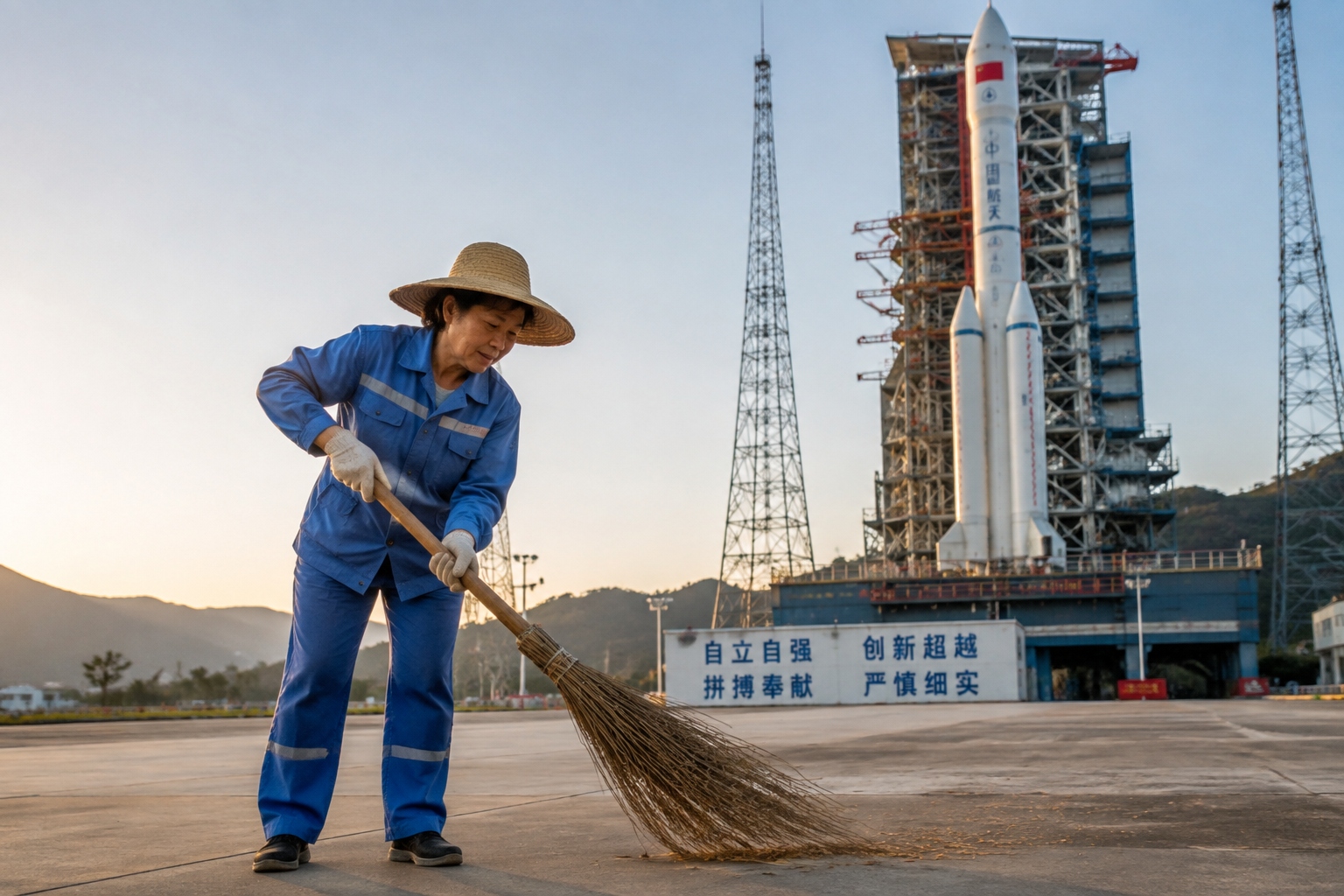
The first thing you notice at the Xichang Satellite Launch Center at 5 a.m. is not the rocket. It’s the sound of a bamboo broom sweeping concrete. That’s Li Guifang, a 52-year-old cleaner who has worked here for eleven years. She wakes up before dawn to sweep the ground around the launch pad, making sure no stray leaf or pebble could interfere with the mission. “The rocket is like my child,” she told me. “I have to get it dressed clean.”
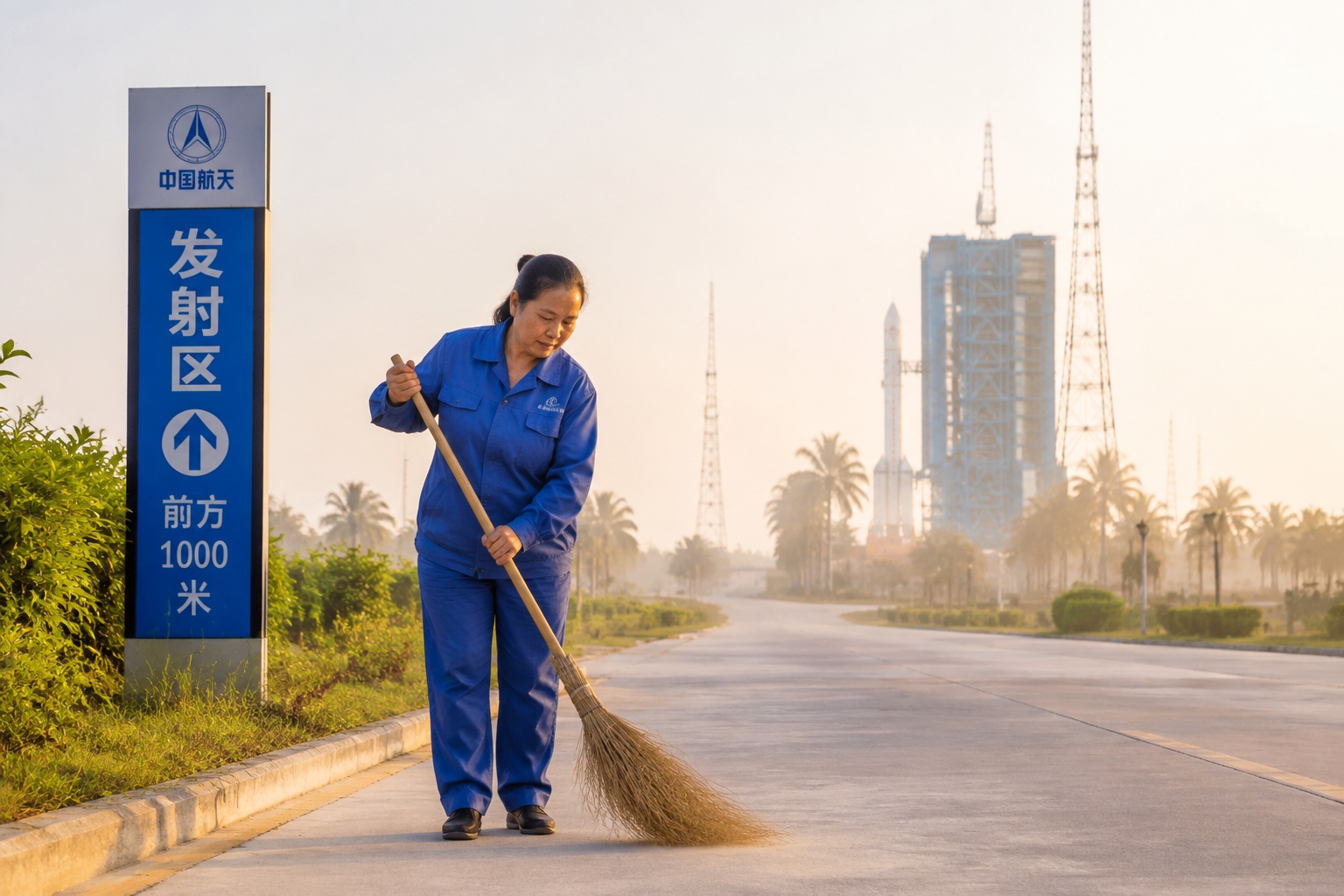
Li is one of thousands of ordinary people who keep China’s space program running behind the scenes. We often hear about brilliant scientists and brave astronauts, but less about the cleaners, cooks, drivers, and security guards who make their work possible. For every engineer at a control console, there is a woman like Li, wiping down handrails and checking that every square meter of the facility is spotless.
The People Who Keep the Machine Running
At the same launch center, chef Wang Dahai starts his day at 3 a.m. He oversees a kitchen that produces more than 1,000 meals a day during a launch campaign. “Engineers work long hours and need proper food,” Wang says. “If they don’t eat well, the rocket won’t fly well.” His team prepares steamed buns, rice porridge, stir-fried greens, and braised pork from local farms. During intense countdowns, they deliver midnight snacks to the control rooms.
Behind the scenes, there is also a small army of drivers. They ferry engineers between dormitories, assembly buildings, and the launch tower, sometimes on winding mountain roads. Security guards check badges at every gate, and firefighters stand by during fueling operations. None of them will appear in the news, but each of them knows that their shift matters.
Local communities also get involved. In the towns around Xichang, residents are used to hearing the roar of rockets. Some have volunteered for evacuation drills during launches. Others have joined “space culture” teams that clean up debris after rocket stages fall to the ground. The local government coordinates with the space agency to make sure everyone is safe, turning a national project into a neighborhood routine.
Citizen Scientists and Local Collaborators
Beyond the launch base, ordinary citizens contribute to space science in quieter ways. Astronomical hobbyists across China participate in “satellite watch” programs, tracking the orbit of the newly launched satellites with binoculars and cameras. They share their observations on online forums, and the data is sometimes used by universities to verify orbital parameters.
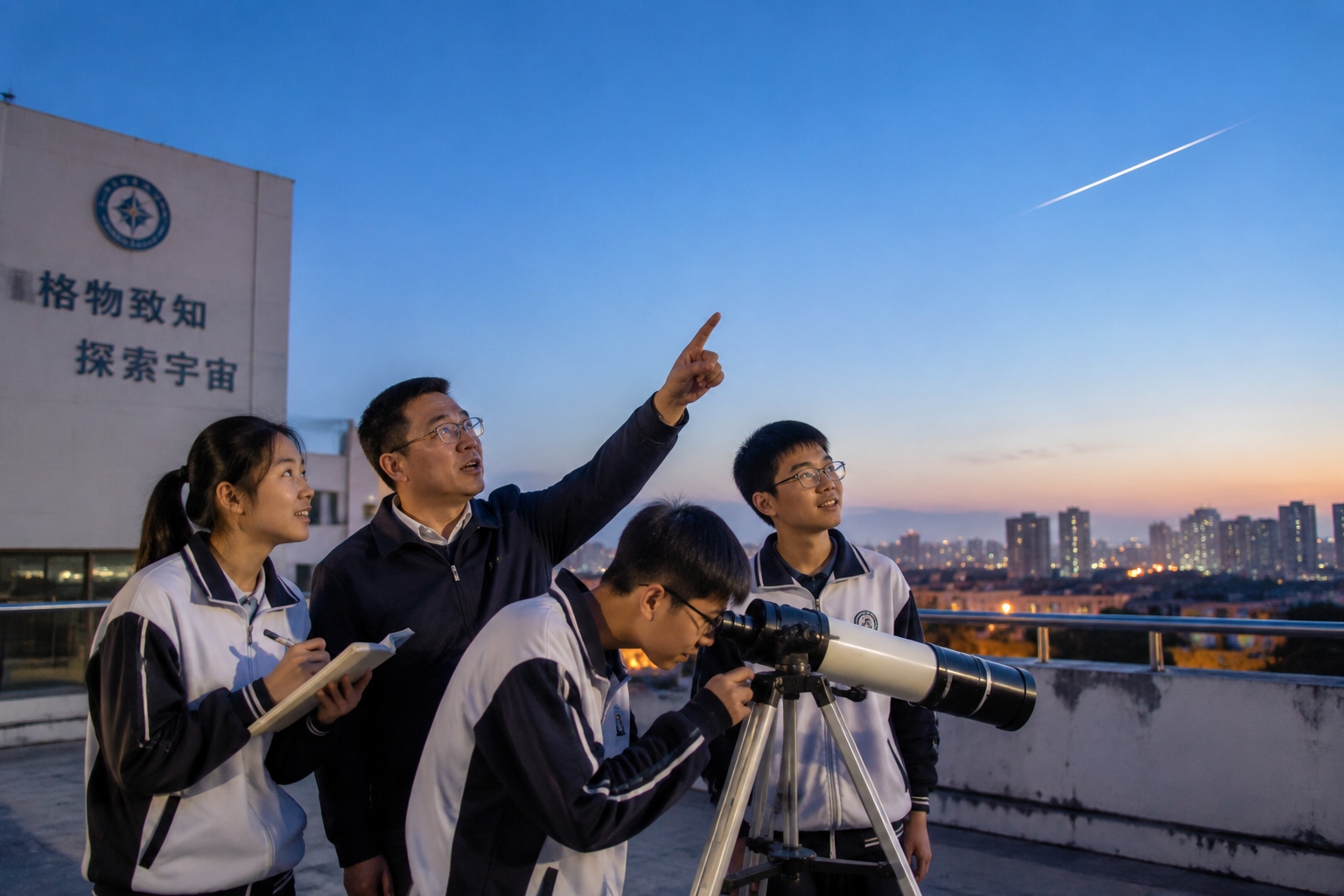
One such hobbyist is Zhang Chen, a high school physics teacher in Nanjing. He runs a small astronomy club for his students. “When the Tiangong space station passes overhead, we go out and watch it,” he said. The students calculate its trajectory from known orbital data and photograph it with simple telescopes. Their photos are often shared on social media, and once, a student’s observation helped professional astronomers double-check a minor anomaly. Zhang’s students may never work at a launch center, but they feel connected to something vast.
There are also more formal collaborations. Local universities often partner with ordinary volunteers for data collection. For example, students and rural teachers have joined bird-spotting and weather-observation networks that feed environmental data into satellite calibration studies. These efforts are small, but they underscore how space exploration touches down in everyday life.
The Pride of Being Part of Something Big
What drives these individuals? Li Guifang, the cleaner, says her favorite moment is when she sees a successful launch on television. “I know that I helped make that moment clean,” she laughed. “My grandson once said, ‘Grandma, the ground you swept is where the rocket took off.’ I felt so proud.”
Wang the chef echoes that sentiment. When the Long March rocket thunders into the sky, he stands outside the kitchen with his staff, watching for a minute before returning to the pots. “It’s like a big family dinner that ends with fireworks,” he said. His pride is not loud; it is a quiet, steady awareness that his labor is part of a story bigger than himself.
The Everyday Reality Behind the Headlines
Of course, the work is not always glamorous. Many of these jobs are physically demanding, with long shifts and modest pay. Li Guifang earns around 3,500 yuan a month (roughly $490), and her job is seasonal, tied to launch schedules. She does not have a college degree, and she sometimes feels invisible next to the young scientists in white lab coats. But she has learned that visibility is not the same as value.
There is also a gap between the official narrative and personal experience. Not everyone feels personally invested in every mission. Some locals grumble about road closures during launches. Others worry about environmental effects of rocket fuel. But even the skeptics admit that the space program brings jobs, infrastructure, and a sense of collective purpose to their region.
In the end, what struck me most was how ordinary these extraordinary contributions feel. There is no dramatic heroism, only men and women who show up, do their jobs, and return home to cook dinner or watch TV. They are not trying to make history; they are trying to make a living. But in the process, they become part of something historic.
A Street That Stays Ordinary
One evening, I walked through a residential neighborhood near the Xichang base. Kids were playing soccer, old men were playing chess, and a woman was selling fruit from a cart. In the distance, the launch tower glowed under spotlights. That mixture of the cosmic and the mundane is what I remember most. China’s space achievements are not just about rockets and satellites; they are about the people who sweep, cook, and drive so that others can reach for the stars. Sometimes the most convincing side of China is not in the headlines, but in the street you pass on your evening walk.
Start the discussion at forum.chinacomes.com