

At 9 p.m. on a typical Tuesday in a Chinese megacity, the skyline glows. Inside an apartment, a young woman curls up on a sofa, phone in hand, scrolling through short videos. The ceiling light suddenly flickers—just one heartbeat—then steadies again. She barely moves. If she knew how much work goes into that steady glow, she might pay attention.
Electricity does not come out of the wall. It travels through a high-voltage network that in China is the largest synchronized power grid in the world. Its transmission lines, if added together, would wrap around the planet twice. Managing that system—especially at night, when most people are home—is a challenge that never pauses.
The Invisible Control Room: An 8:30 P.M. Snapshot
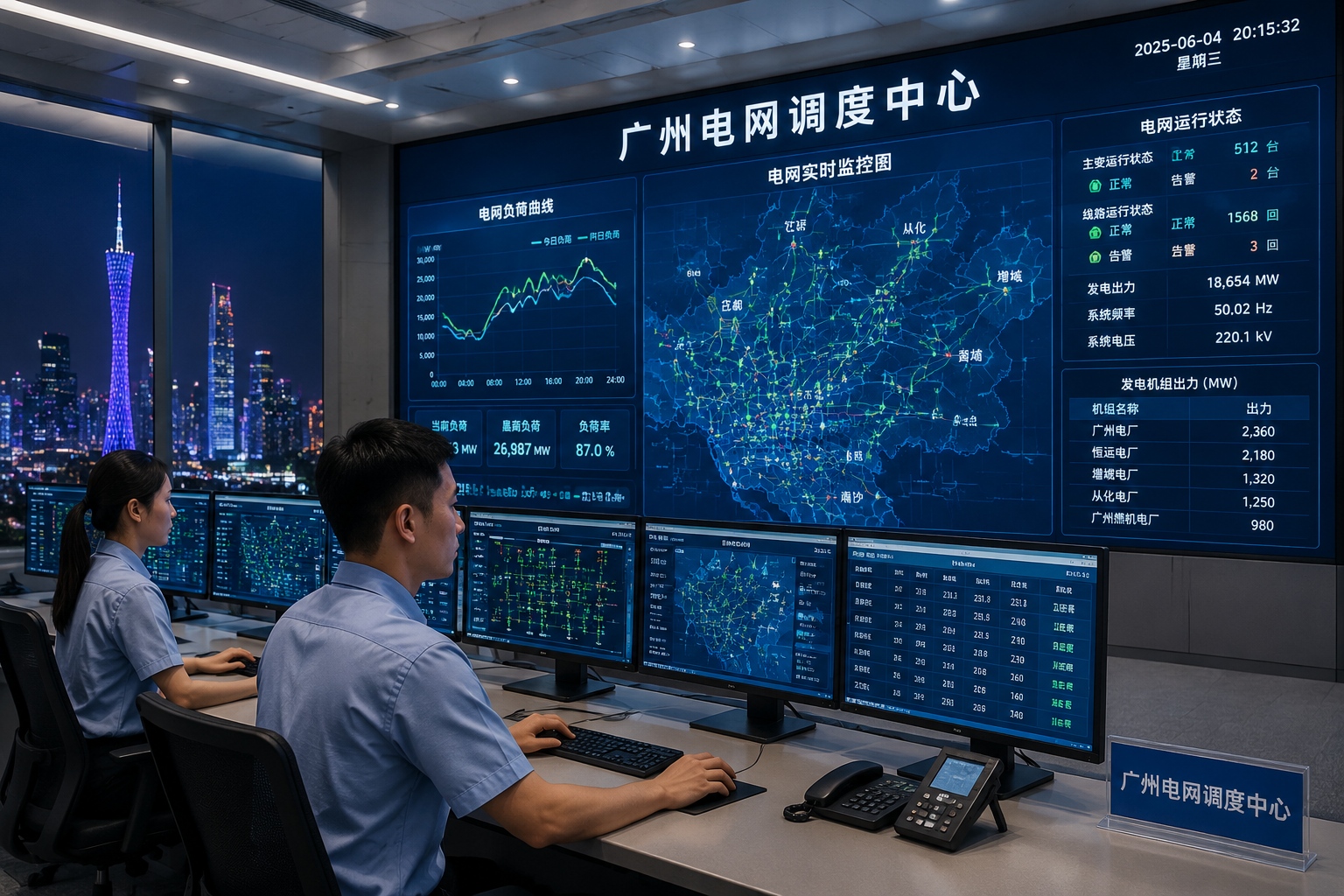
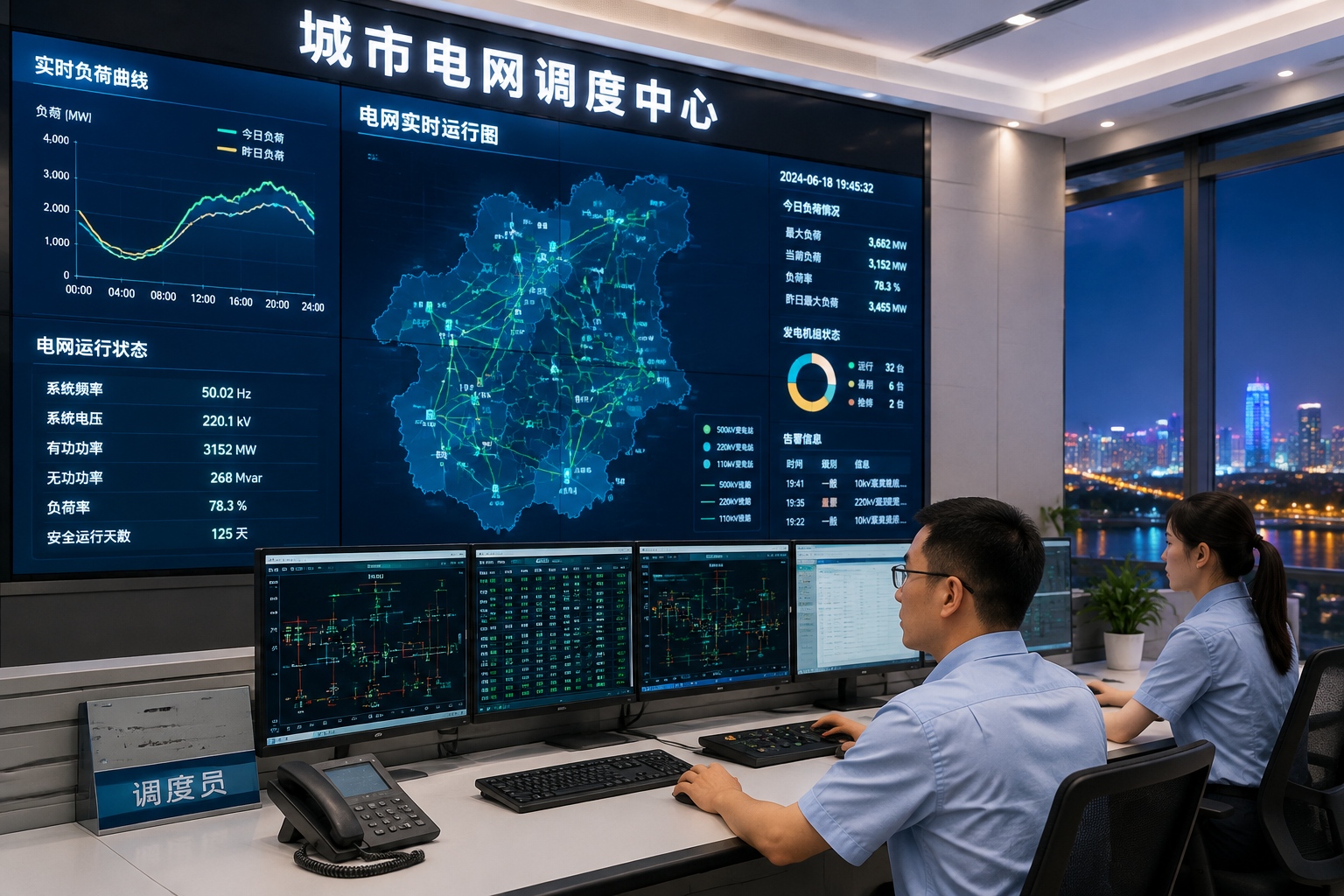
At the city-level dispatch center of State Grid, the control hall is bright, quiet, and filled with giant screens. On them, curves show electricity consumption across districts. Dispatcher Liu Wei, 34, sits at a console with two monitors and a headset. It is 8:30 p.m., and the load curve is climbing toward its evening peak. “Dinner time,” he says with a smile. “People come home. They cook. They watch TV. They charge their phones.”
Liu’s job is to keep this moving curve within a safe band. The grid’s frequency must stay at exactly 50 hertz. If more power is consumed than generated, the frequency drops; if less, it rises. Both can damage equipment. So Liu constantly checks real-time data: how much wind power is coming in, how much coal is available, whether a maintenance outage at a plant is over. When a big city factory suddenly shuts down at 9 p.m., he needs to rebalance supply within minutes.
“We are like air traffic controllers for electricity,” he says. In the background, a colleague calls a gas-fired power plant to increase output by 200 megawatts for a sudden surge in downtown air conditioners. Liu notes that on a hot summer night, air conditioning can account for more than a third of the city’s total demand. “The system helps us predict,” he adds. “But it is still human judgment that makes the final call.”
The Night Walkers: Repair Crews Doing the Invisible Work
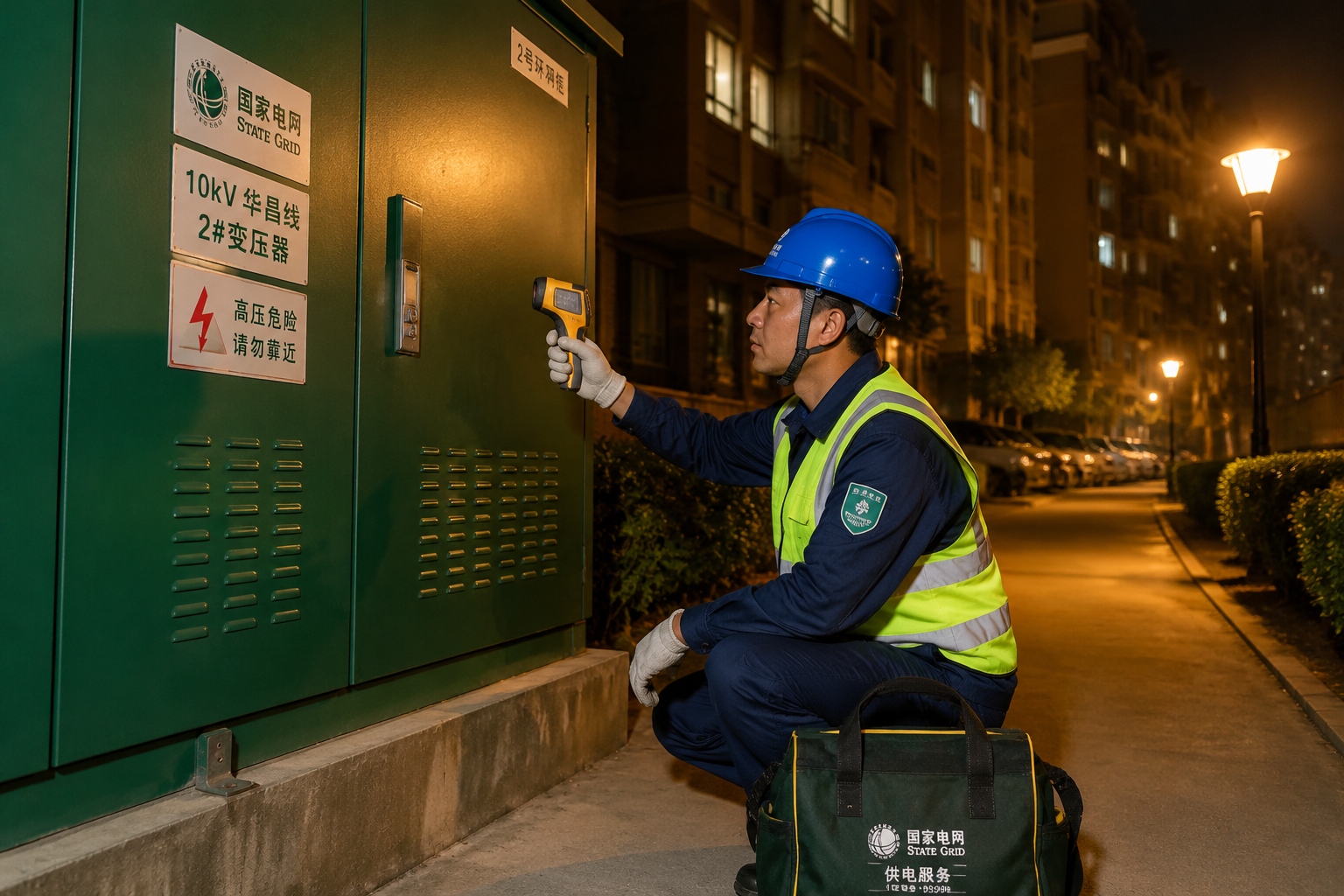
Fifty kilometers away, Li Gang is walking down a residential street with a toolbox that weighs 10 kilograms. He has been a power maintainer for 18 years. It is now 10:20 p.m., and the streets are quieter, but many windows are still lit. Li stops at a green transformer cabinet, opens it, listens for a moment, then points an infrared thermometer at the cable connections. “A loose connector heats up before it breaks,” he says. “We find hot spots early so you don’t notice them later.”
His team patrols dozens of such installations every night. Routine checks like this prevent many blackouts. But sudden failures still happen. Not long ago, Li got a call at 2:45 a.m. An underground cable in a residential compound had failed, cutting power to three buildings. Li and two colleagues arrived within twenty minutes. They located the fault, then used temporary cables to add power to the water pump and corridors while they worked on the main line. By 4 a.m., service was restored. He remembers an elderly man who came down with a flashlight, stood in the dark watching them, and said, “Son, take your time.” But Li said they could not take time because the man needed his fridge and his phone to work.
Drones, AI, and Sensors: New Colleagues on the Night Shift
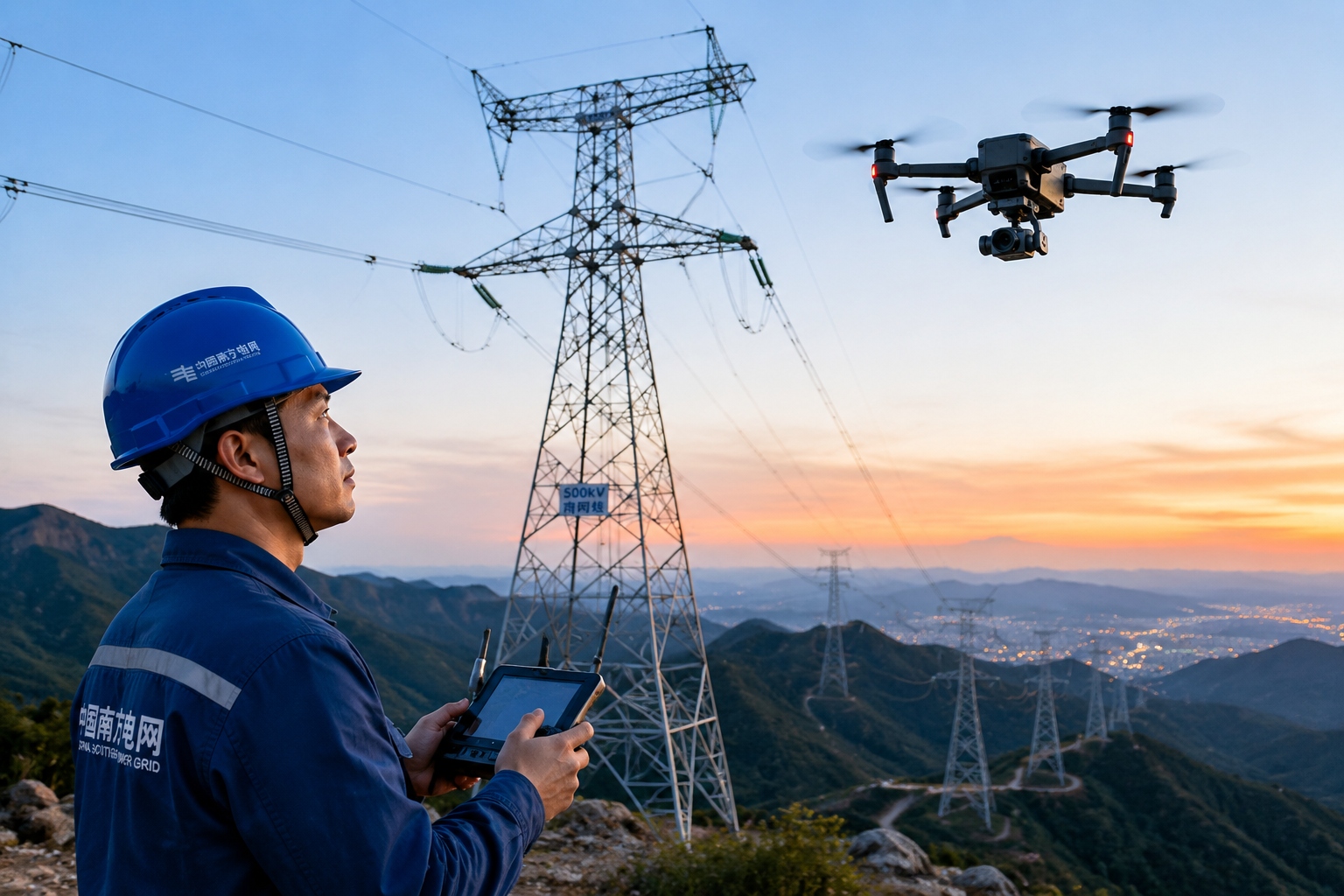
While Li walks the streets, another kind of worker is in the air. In the outskirts, a technician launches a quadcopter equipped with thermal cameras. It follows a high-voltage line that crosses mountains—territory that used to take a foot patrol half a day. Now the drone covers the distance in twenty minutes and automatically detects abnormal heat spots on insulators and connectors.
Sensors on transmission towers gather data on vibration, temperature, and tilt. These small devices transmit continuously to a central platform that uses artificial intelligence. The system can predict that a certain cable will be overloaded tomorrow evening at 9, taking into account weather reports, holiday schedules, and even the schedule of a major football match. In a trial in a northern Chinese city, the forecast error for the evening peak was less than 2%.
Still, technology does not replace human expertise. One engineer explains: “AI may suggest the mathematically optimal way to save power, but it cannot see that a hospital must not be curtailed even if its load is high. That kind of judgment needs a person.”
When a Typhoon Hits: The Relay Race of Repairs
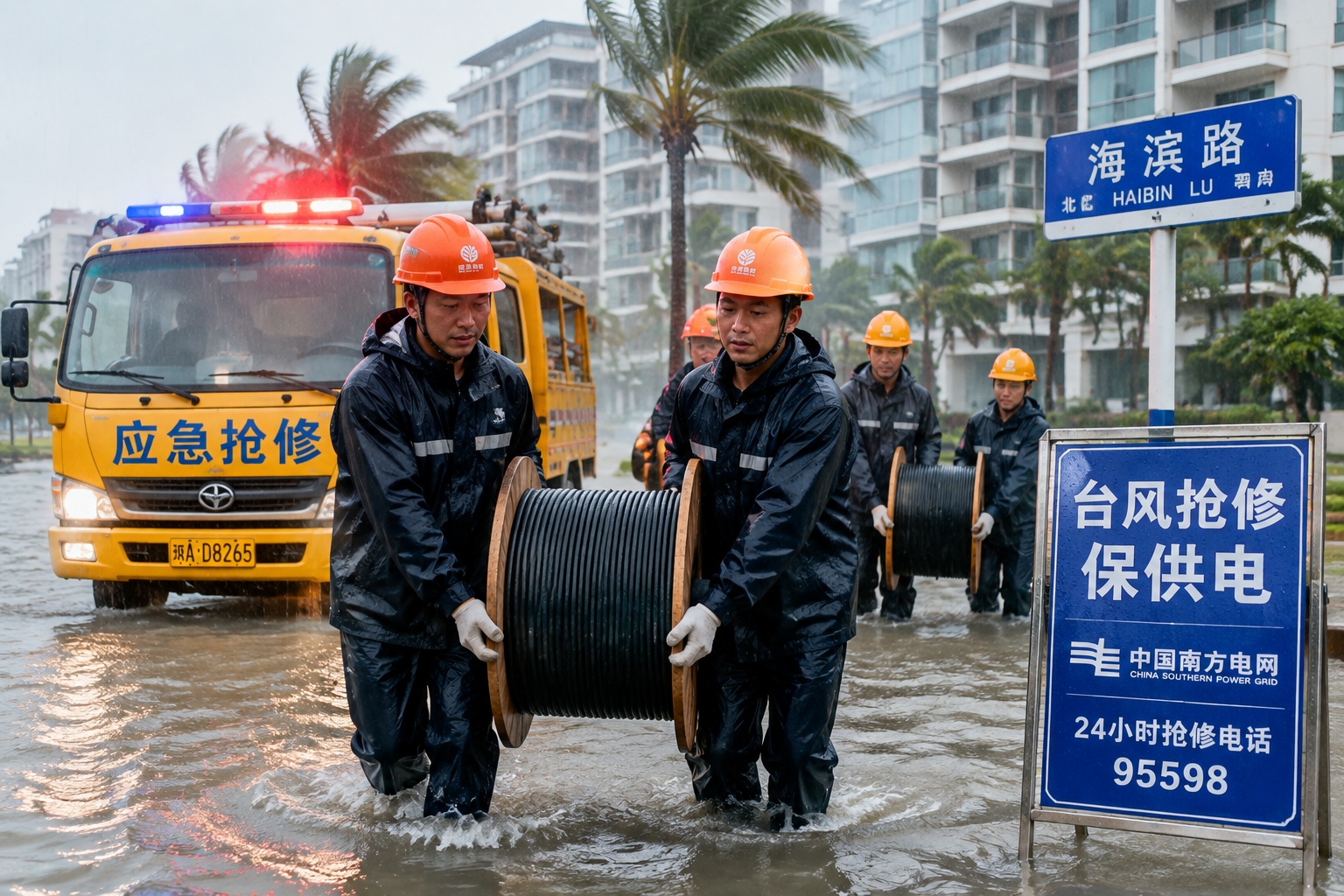
The hardest test for the power grid is not an ordinary night; it is a typhoon. In the summer of 2024, Typhoon Gaemi struck the coast of Fujian Province. Wind speeds exceeded 120 kilometers per hour, and a major transmission line tripped. Nearly a million residents in surrounding districts were left without electricity.
Dispatch centers immediately switched to emergency mode. They sent push notifications to cell phones in the affected areas, giving an estimated repair time and safety advice. Neighborhood coordinators, who in Chinese cities are called wáng gé yuán, went door to door to check on elderly residents.
Out in the field, repair crews in raincoats and helmets pushed through flooded streets. Some support teams arrived overnight from neighboring Zhejiang and Jiangsu provinces, bringing mobile transformers. One worker, surnamed Chen, said: “We worked in relay shifts. When I saw children playing outside after the lights came back, I felt we had done something meaningful.”
The Quiet Allies: How Ordinary People Keep the Lights On
Dispatchers and technicians are essential, but ordinary consumers also support the grid. Electric vehicle owners in China often schedule charging to start at 10 p.m. or later, when demand is lower and rates are cheaper. Many buildings dim their decorative lighting after midnight. Some factories adjust their shifts to off-peak hours, especially during summer heat waves.
Residents are quick to report downed wires or sparking transformers through city apps. Recently in the city of Changsha, someone used a local app to report an exposed cable in a parking lot. A repair team arrived within two hours. The app saved inspectors half a day of searching, as one grid employee said.
Conclusion: A Quiet Kind of Miracle
At 9 p.m. again. The young woman on the sofa laughs at something on her phone and keeps scrolling. The light above her remained steady, because behind it is a network of effort: Liu watching his curves, Li listening to transformers, a drone buzzing above hills, a typhoon crew pulling on wet boots, a neighbor charging her EV at midnight. None of these people know the woman on the sofa. But all of them are, in some small way, keeping her connected.
The grid achieves its greatest success when it becomes invisible. And that is what happened tonight. The next time you scroll late into the evening, maybe you will remember the people who made that little act possible. They are not superheroes. They are dispatchers, inspectors, and ordinary citizens who together make sure that when you reach for a light switch, the light is there.
Start the discussion at forum.chinacomes.com