

A 38°C evening, a slice of watermelon, and a warning
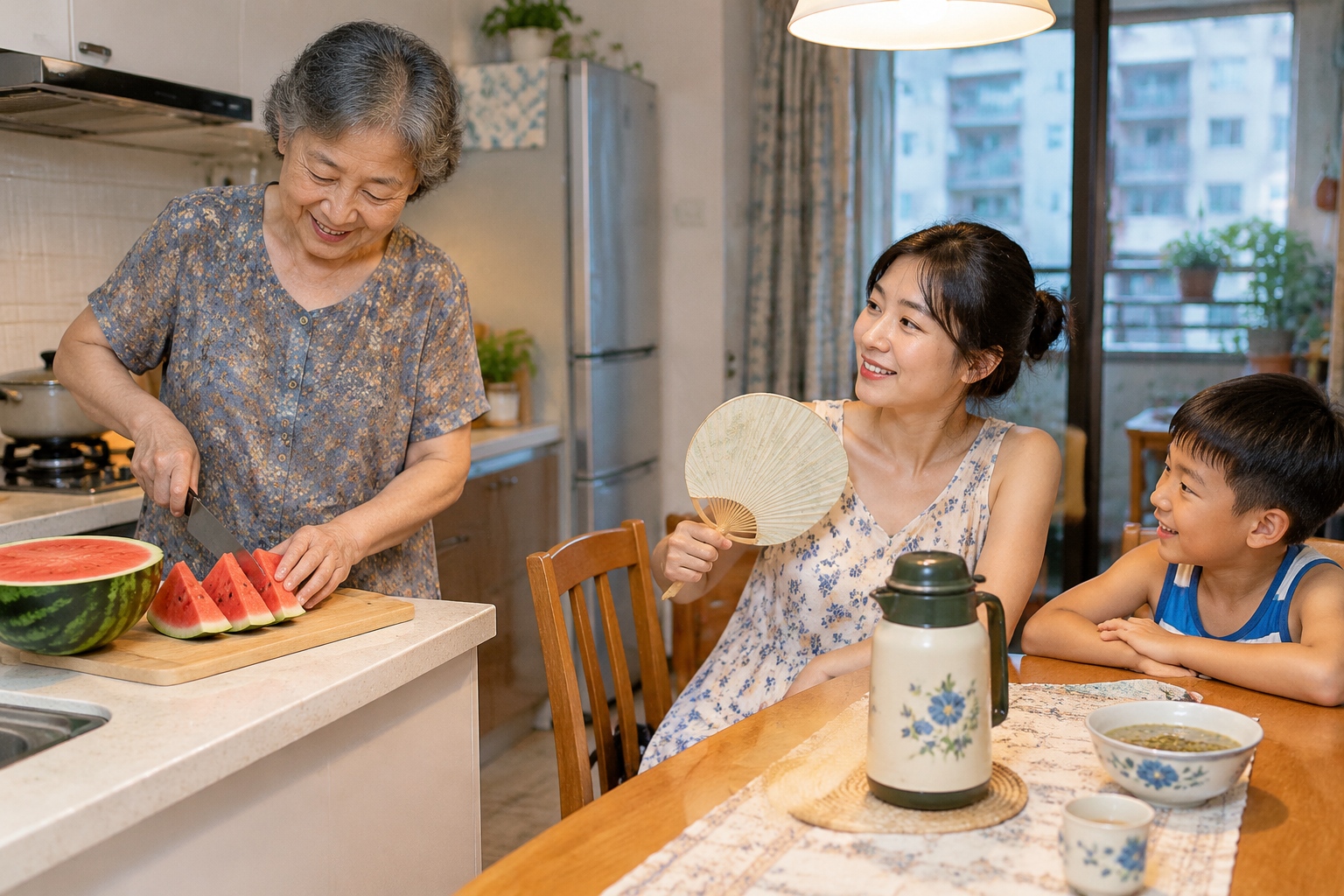
Last July in Guangzhou, the pavement was still radiating heat at nine in the evening. A friend’s mother set a plate of sliced watermelon on the table, red and dripping, and her daughter reached for a third piece. “少吃点,凉的。” Eat less, it’s cold. The watermelon had been sitting on the counter, not in the fridge. Its temperature was room temperature. In the family’s food vocabulary, it was still cold.
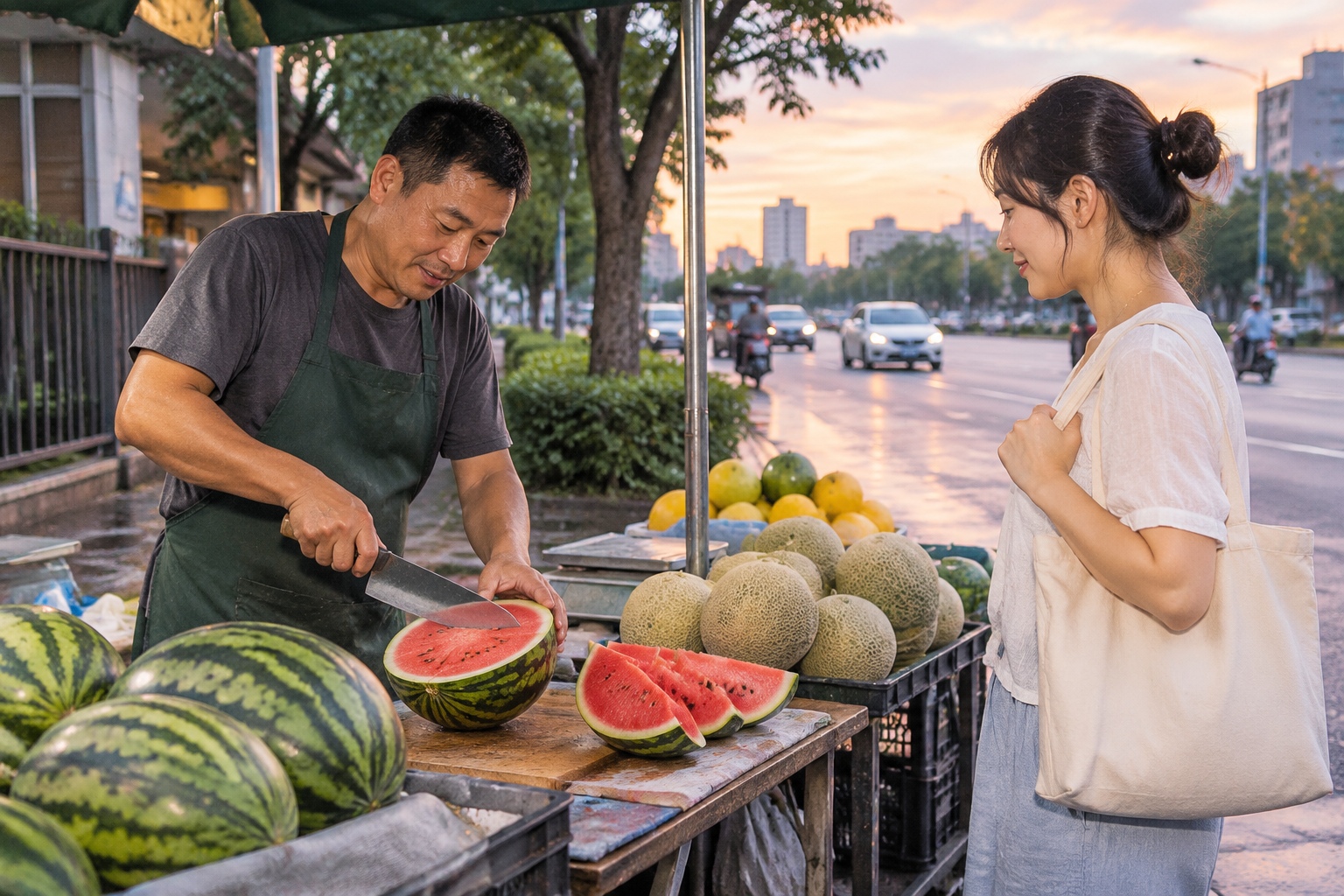
China grows roughly six of every ten watermelons in the world, so the fruit is less a seasonal dessert than a summer institution. You see it at fruit stalls, in office break rooms, on plastic tables outside noodle shops. But the warning is part of the ritual too. In Chinese food culture, “cold” and “hot” are not primarily about ice or steam. They describe what a food is believed to do inside the body.
That is why ginger tea can be “hot” even after it has cooled in the cup. It is why a slice of watermelon, straight from the shade, is still “cold.” For an outsider, this sounds like a riddle. For many Chinese families, it is ordinary grammar.
What “cold” means in a Chinese kitchen
Traditional Chinese medicine sorts foods into natures: cold, cool, neutral, warm, and hot. These labels are not about the thermometer. They are about a perceived effect: cooling, clearing heat, warming, or pushing the body upward. Watermelon, bitter melon, mung beans, crab, and pear are on the cool side. Ginger, lamb, chili, lychee, and longan are on the warm side. Rice and many vegetables sit near neutral.
This is not a scientific consensus, and it is not how every Chinese person eats. TCM is a broad tradition with many schools, and modern doctors would not treat a fever with watermelon. Yet the categories are still useful in daily life. They give families a shared script for talking about sleep, digestion, sore throats, and the consequences of eating too much of a good thing.
Shanghuo, or rising fire
One of the most common phrases at a Chinese table is shanghuo, literally “rising fire.” Eat too much lamb hotpot, too many lychees, or too much fried food, and someone may say you have shanghuo. The signs are familiar: a sore throat, a mouth ulcer, a pimple, a feeling of dryness, maybe constipation. The remedy is usually not a pill. It is a change of menu: more water, less chili, a bowl of mung bean soup, a pear, or a cup of bitter herbal tea.
The opposite logic applies to “cold” foods. Too much watermelon, too much cold drinks, or too much raw cucumber, and an older relative may warn that your stomach will feel cold, or that you will feel tired or loose. The warning is not usually a ban. It is a nudge toward portion and combination.
Some people translate the system into modern terms. Chili and ginger can stimulate circulation and sweat; too much can irritate the stomach. Watermelon is mostly water and sugar; it is refreshing, but it is not a meal. These explanations overlap in places, but they are not the same as the traditional categories. A lychee’s “heat” is not a lab measurement. It is a cultural model that helps people decide what to eat next.
At the table, balance is the recipe
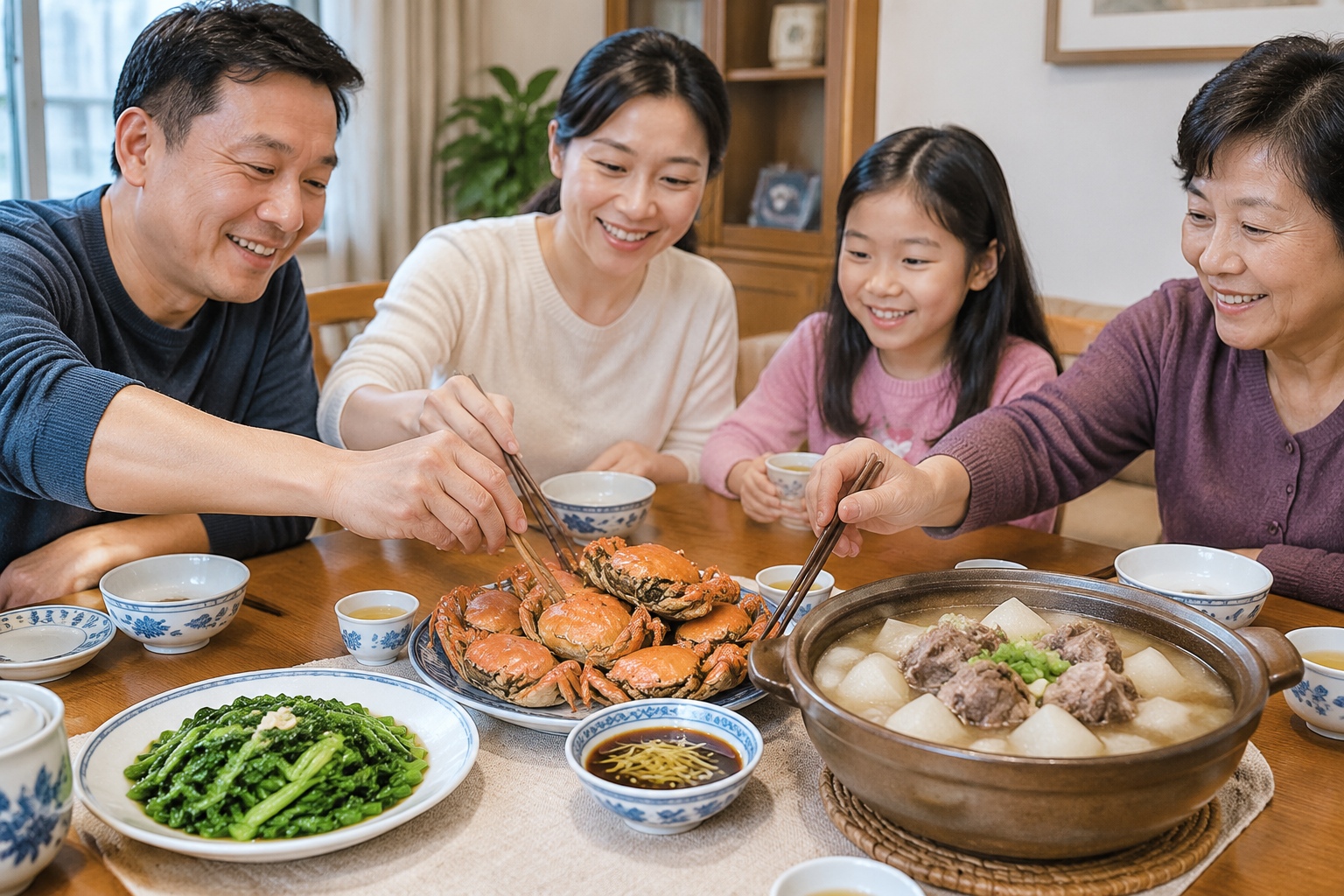
The clearest way to see the system is not in a textbook but on a dinner table. Steamed crab, which is considered cooling, is often served with ginger and vinegar. The ginger is there for flavor, but also to “warm” the dish. A winter lamb stew, considered warming, is often cooked with white radish, which is seen as cooling and helps cut the richness. Hotpot in Sichuan comes with a bowl of sesame oil and garlic, and often a sweet herbal tea on the side.
In Guangdong, herbal tea shops are part of the street landscape. They sell bitter brews with names like twenty-four flavors, and customers drink them quickly, without ice, often after a late night or a week of spicy food. In the north, lamb soup is a winter food; in the south, mung bean soup is a summer one. These are not medical prescriptions. They are habits, repeated until they feel like common sense.
The balancing act can be small. A mango, considered warm, may be eaten with a little salt. A pineapple may be soaked in salt water. A plate of lychees may be followed by a reminder to drink water. None of this is dramatic. It is the quiet arithmetic of a meal: this food is heating, that one is cooling, so put them together.
Why it survives in a city of iced coffee
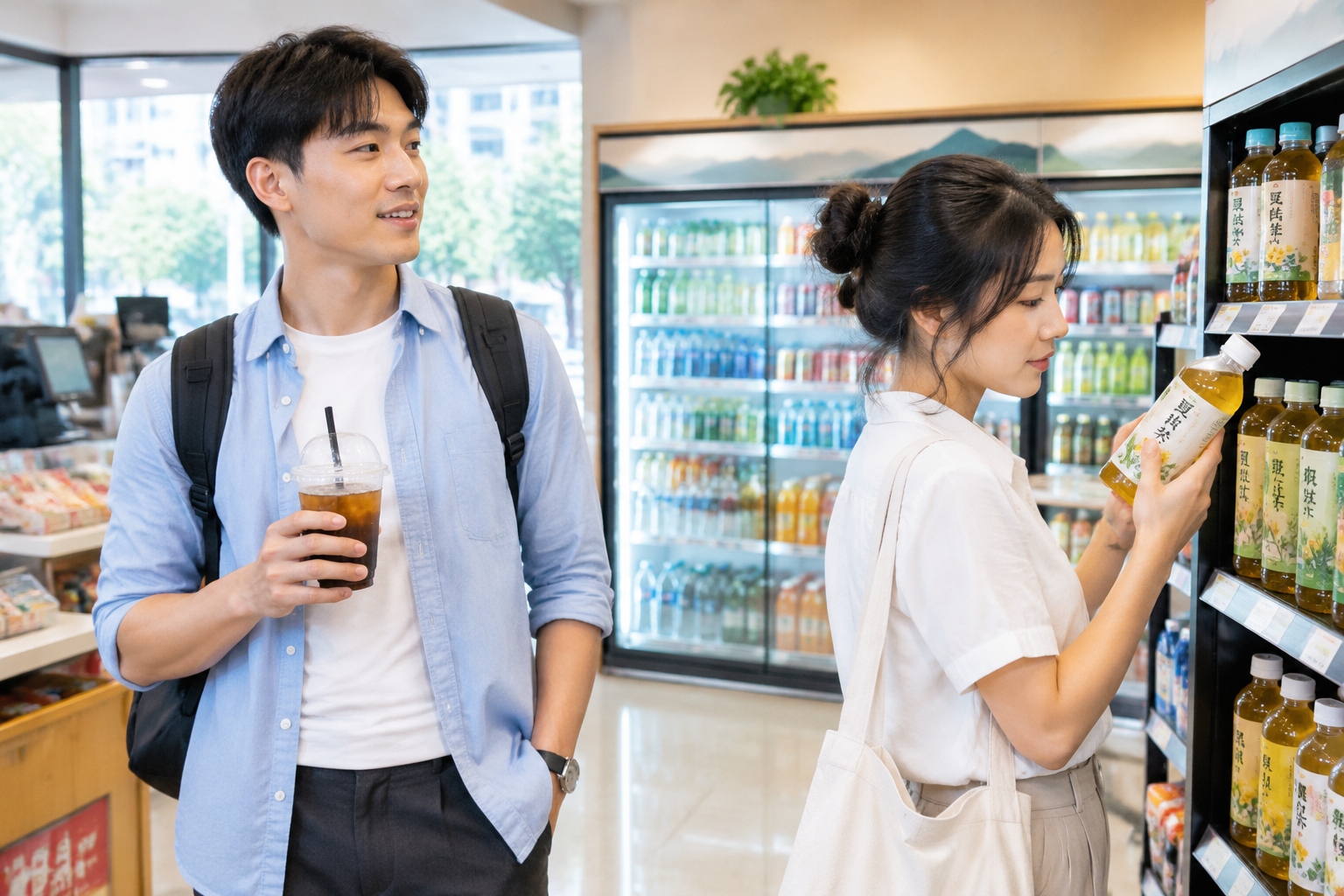
Walk into a convenience store in Shanghai or Shenzhen in August and you will see the contradiction. Young office workers buy iced coffee, cold sparkling water, and ice cream. The same store may stock room-temperature herbal tea and warm soy milk. A delivery app offers cold milk tea and “cooling tea” in the same scroll. People do not live inside one belief system. They move between air conditioning, gym classes, hospital checkups, and their mother’s voice on WeChat telling them not to drink cold water after exercise.
Many younger Chinese people are skeptical of the hot-cold framework. They ask for ice. They eat watermelon from the fridge. They may still say they have shanghuo after a week of hotpot, because the word is useful and everyone understands it. The practice is not a test of belief. It is a shared vocabulary that can be picked up, ignored, or argued with.
Regional differences matter too. Herbal tea culture is stronger in the south. Lamb and dairy are more prominent in the north and among pastoral communities. In Sichuan, the local answer to hotpot is often more chili, not less. A visitor should not expect a single rulebook. The one common thread is moderation: the idea that a food can be good and still be too much.
What a visitor can notice
You do not need to study TCM to see the pattern. Watch what locals pair. Crab with ginger. Lamb with radish. Fried food with tea. Watermelon after dinner, not instead of dinner. Listen for the word shanghuo when someone touches their throat after eating lychees. Notice that “cold” drinks are not always served with ice, and that “hot” tea can be drunk on a hot day.
Also notice the exceptions. A teenager may drink iced cola with a spicy meal. A doctor may recommend oral rehydration salts, not herbal tea. A grandmother may insist on warm water while her grandson quietly orders bubble tea. The system is real in everyday life, but it is not a wall. It is more like a family dialect: widely spoken, loosely enforced, and constantly negotiated.
The watermelon is still cold
Back at the table in Guangzhou, the daughter ate the third slice anyway. Her mother sighed, then pushed the plate closer. That small exchange captures the way the system works. It is not a law that forbids pleasure. It is a way of paying attention: to the weather, to your body, to the company you are feeding.
So the next time you see a Chinese family eating watermelon in the summer heat, look for the other things on the table. There may be a thermos of warm tea, a bowl of mung bean soup, or a jar of ginger. The watermelon is at room temperature. In the local logic, it is still cold. And the meal is still a balancing act.
Start the discussion at forum.chinacomes.com