
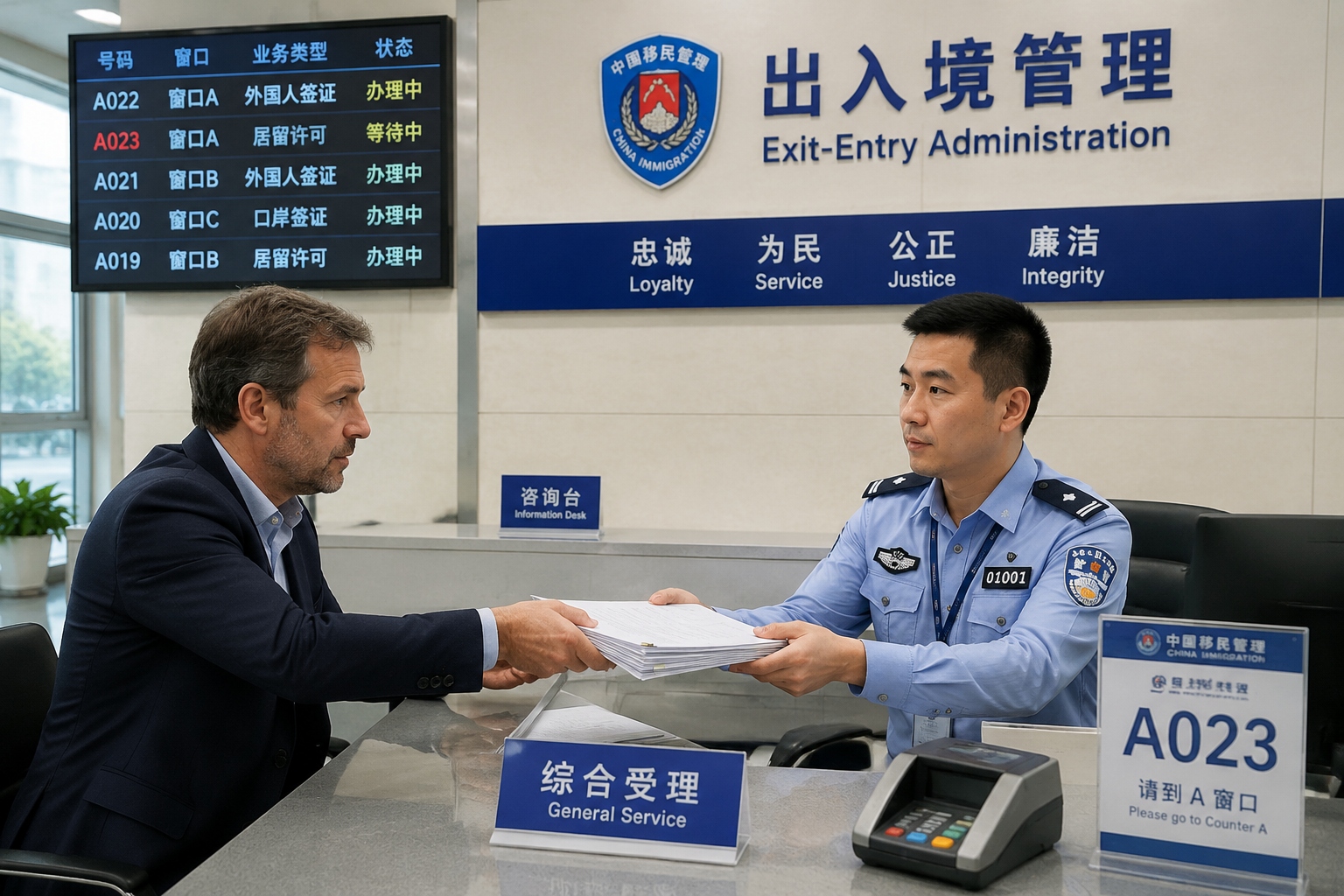

In Suzhou, I sat across from Philipp, a German control-systems engineer who has lived in China since 2016. When I asked why his permanent residence application had taken nearly two years, he did not describe an interview or an exam. He opened two binders and said: “Every document is easy to get. The problem is keeping them all alive at the same moment.”
Philipp first met the general eligibility standard in 2019. His employer then transferred him between two legal entities within the same multinational group, and his residence permit expired for 23 days while the new work permit was processed. The local exit-entry office treated that as a break in the required consecutive period. While he was waiting to build a new uninterrupted chain, an overseas police clearance certificate from his student years expired, and the document process had to start again.
What China’s Permanent Residence ID really is
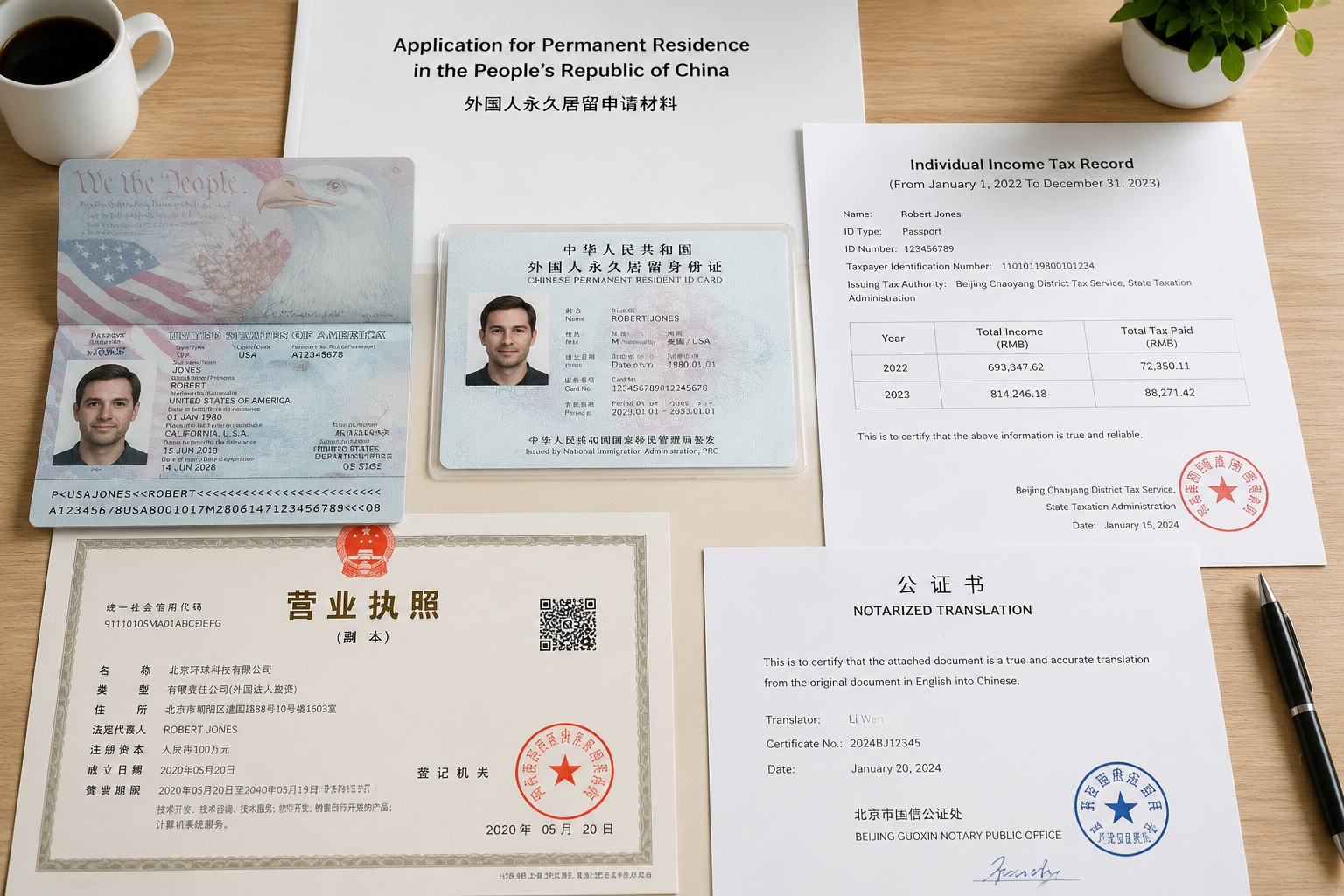
The English phrase “Chinese green card” is only a nickname. Since 2017, the official document is the Foreigner’s Permanent Residence ID Card. It is a chip-embedded, credit-card-sized identity document, not a visa sticker. It lets a foreign national live in mainland China indefinitely without renewing a residence permit every year or two. Holders can use the card at railway ticket gates, hotel front desks, bank counters and many government self-service machines.
Permanent status itself does not expire. The physical card, however, does: it must be renewed every 10 years for adults and every 5 years for children. And unlike a US green card, this card is not a visible path toward citizenship. It mainly makes long-term residence feel less temporary and more ordinary.
Why it earned the “hardest green card” label
The reputation is partly a numbers story. China introduced its current permanent residence framework in 2004. Widely cited media estimates suggest that fewer than 10,000 cards were issued during the first decade of that system. In roughly the same period, the United States was admitting about one million lawful permanent residents per year. Even after major immigration reforms around 2017 and 2023, the annual number in China remains small relative to the population of long-term foreign professionals.
The difference is not just volume. China has no green-card lottery, no publicly published national points table, and no automatic green card after a fixed number of working years. Each application travels through local police review and national immigration review. The rules are written to make you prove not only that you meet a condition, but that you met it continuously, in dated documents, for years.
Work and talent route: four consecutive years, high salary, no gaps
The route most working professionals think about is the work or talent category. Cities and pilot zones adapt some details, but the national outline generally requires legal employment in China, a valid work permit and residence permit, a clean criminal record and a recommendation from either the employer or a local government body. Applicants are usually expected to be at least 18 and under 60.
In the pilot zones that publish concrete numbers, a frequently cited bar is an annual salary around 600,000 yuan (roughly US$83,000) and paid personal income tax of at least 120,000 yuan per year. These numbers are not one national standard. Some high-level research and special recommendation channels do not rely on salary at all. For most senior managers and engineers, however, salary plus tax records are what turn eligibility into evidence.
The word “consecutive” matters more than the salary
China’s system uses entry-exit records, residence permit validity and work permit validity to calculate your years. A break of even a few weeks can reset the chain. Philipp’s 23-day gap happened because his old residence permit was tied to his previous employer. When the job changed on paper, the work permit and residence permit were not issued on the same day. His total time in China meant nothing for that particular application line.
Another hidden trap is the tax record. The tax office does not automatically merge records if your salary was paid by different legal entities or in different cities. Many foreign professionals are employed by one subsidiary, pay social insurance through another, and receive part of their compensation from headquarters abroad. For a green card file, every official record should show the same employer name and the same unified social credit code.
Family reunion route: five years of marriage is only a starting point
A foreign spouse of a Chinese citizen or of a foreign permanent resident can apply through the family reunion category. The official criteria include marriage lasting at least five years, residence permits held for five years, and actual stays in China of at least nine months in each of those five years.
This means a marriage certificate alone is not enough. If you returned home for a long stretch in one year, that year may not count. You also need to prove stable income and stable housing. Some applications are delayed because a lease is in the name of the spouse, the owner does not come to the police station, or the property deed does not match the current community registration. These are not legal barriers, but they are very real administrative ones.
Investment, special contribution and other channels
Older rules included an investment-based channel and a special contribution channel. Investment thresholds vary by region and industry, and an investment file still involves proof that the money actually arrived, remains in the business and has paid taxes. Special contribution cases rely on formal awards or recognition from a Chinese ministry or research institution. Such files are rarer and are often handled directly by specialized immigration consultants rather than by ordinary applicants.
The real barrier is the document circle
If you talk to immigration lawyers in Shanghai or Beijing, they will often say the same thing: few applicants are rejected outright for lack of qualifications. They are delayed because they cannot complete a closed loop of documents. Every paper must point to the same person, the same employer, the same dates and the same legal status.
Overseas police clearance certificates
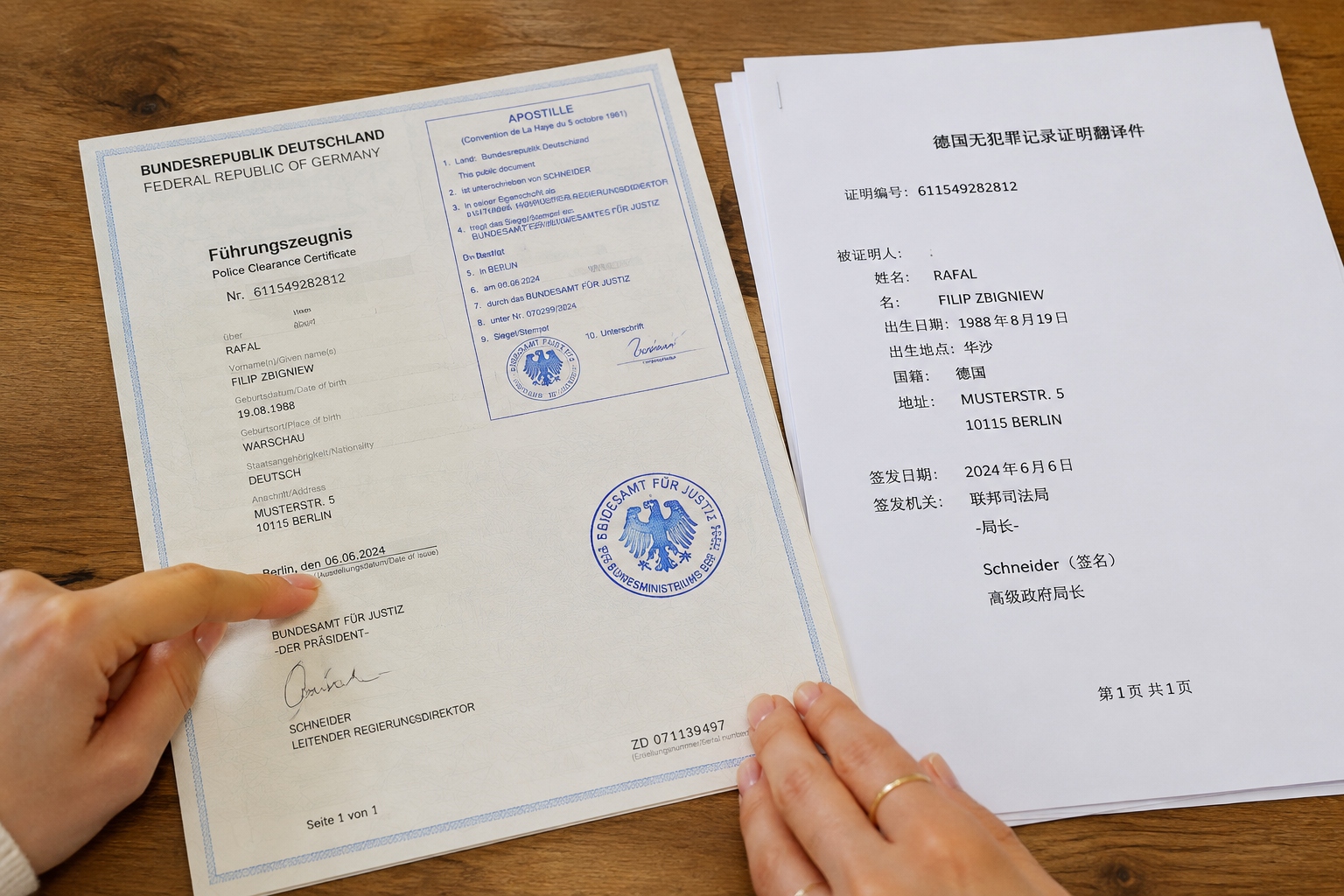
Most applicants must provide a certificate of no criminal record from their country of nationality and from countries where they previously lived for a long period. Many Chinese public security offices expect overseas police certificates to be issued no more than six months before filing. If a certificate arrives late, or another document is found missing first, the police certificate may expire before you ever submit.
There was an important change in late 2023. Before November 7, 2023, an overseas public document usually needed consular legalization from the Chinese embassy, which could add weeks or months. Since mainland China joined the Hague Apostille Convention, documents from other participating countries can use a simpler apostille stamp. The document still needs a Chinese translation. In most cities, the translation must come from a certified translation company and carry a stamp or translator certificate.
Unified social credit code: the employer’s own identity card
Chinese companies are registered with an 18-digit unified social credit code. Permanent residence applications ask the employer to supply a copy of its business license or registration certificate showing this code, with the company seal. If the company recently changed its name, merged with another entity or moved between tax districts, discrepancies appear between this license, your tax payment slips and your social insurance record.
The employee rarely controls this part. HR departments understand payroll and visas, but not necessarily immigration files. If the employer is a large group, you may need someone to coordinate between the local subsidiary, headquarters and the tax bureau. This step is why many applications pause for months.
What has become easier after 2023
The Permanent Residence ID card has been redesigned and is now more useful in daily life than the old green booklet. Immigration authorities also run the 12367 bilingual hotline, which can answer general questions and point you to the right service hall. In several large cities, appointments and document pre-checks are handled online before you submit your paper file.
These improvements reduce office visits, but they do not reduce the need for a precise chronological record. A pre-check can tell you what is missing; it cannot make an 23-day gap from seven years ago disappear.
Advice for anyone thinking about applying
If you are considering a Chinese permanent residence application, start at least 12 to 18 months before you plan to file. Even if you believe you already meet the requirements, begin by reconstructing your own timeline.
- Print your entry-exit record from the local immigration service center and compare it with every residence permit page in your passport.
- Ask your tax bureau for a multi-year individual income tax record. Check whether the employer names on the tax record match your current company.
- Ask HR for the company’s current unified social credit code and business license copy with an official seal. If the company has been renamed, find out what name appears on older tax records.
- For an overseas police certificate, do not request it too early. Confirm the validity accepted by your local office, request the document only after your Chinese records are complete, and then send it for translation immediately.
- If an early template tells you there is a gap in residence permits, do not submit. Wait until you have built a new continuous period.

When Philipp finally received his card in 2023, there was no ceremony. It arrived in an ordinary envelope with his Chinese name, photo and a chip. After two years and two attempts, he could walk into a bank or a train station and use the same card as any Chinese resident, without explaining where his visa was.
China’s Permanent Residence ID is not a lottery ticket you can buy and not a prize for long suffering. It is a system of proof, and the proof has to line up at one moment. Understanding that earlier can save you from the most common answer in the system: “Please submit one more document.”
Start the discussion at forum.chinacomes.com