
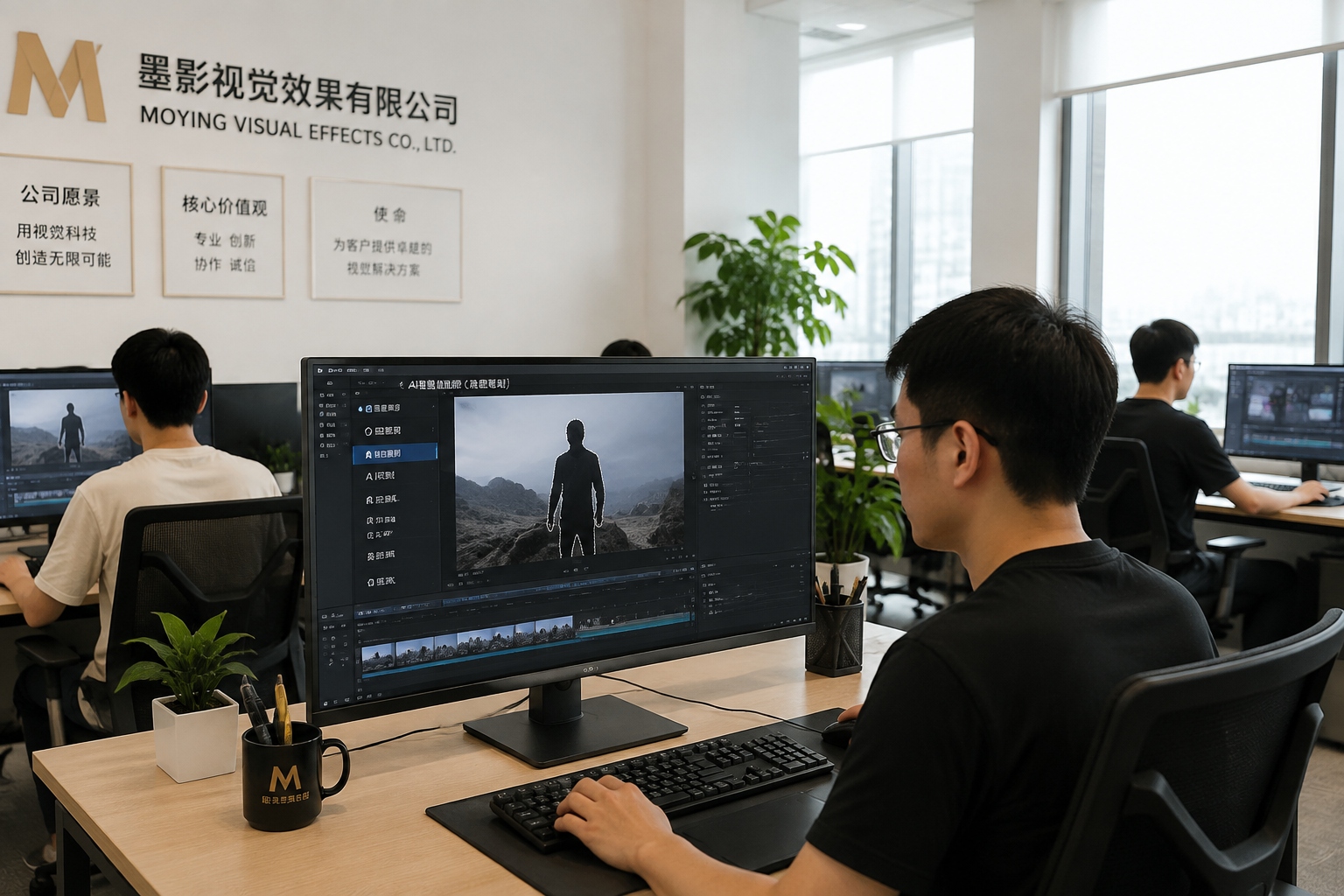

A Night Shift That Ended With a Cardboard Box
In late 2024, a 31-year-old colorist named Zhang Wei (a pseudonym) was working on a costume drama for one of China’s streaming platforms. He had been at a Beijing post-production studio for six years. The schedule had him locked in a dim suite from noon to past midnight, adjusting skin tones, matching shots, and cleaning up digital artifacts.
One cold morning in March 2025, he was called into a meeting with the studio’s founder. The founder told him that the company was adopting an AI-based finishing pipeline and that roughly 30 percent of the team would not be renewed. Zhang Wei was one of them. He went back to his desk, collected a calendar that still showed his deadlines, and tried to imagine the next step.
His experience is not unique. It is part of a large, quiet shift that is reshaping China’s post-production industry. The people who once spent endless hours in front of screens are now being replaced by software that runs in the cloud and draws the same frames without blinking. But the story is not only about unemployment. It’s also about an industry using technology to rethink what it does.
What Exactly Are the AI Tools Used in Chinese Studios?
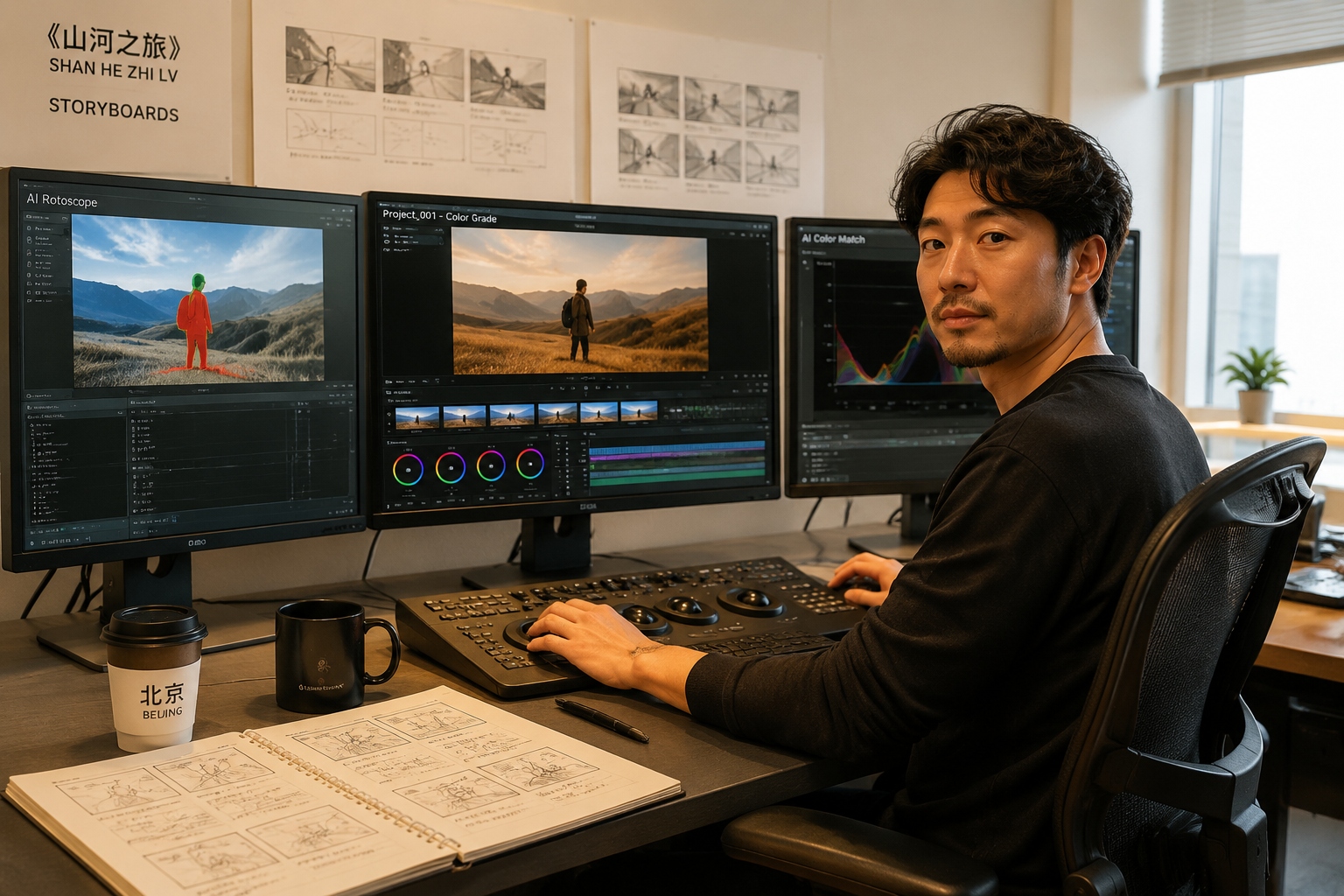
China’s biggest tech companies, along with a new generation of video startups, have been building tools that feel both practical and terrifying for traditional artists. The most widespread are the ‘smart’ versions of old compositing tasks.
One favorite feature is automatic motion tracking and rotoscoping, which makes removing a moving human figure from a background almost instant. A tool called ‘segment anything’ (broadly available in Chinese editing software) lets artists select any object in a frame with one click and manipulate it separately. This alone has eliminated a huge amount of hourly wade work.
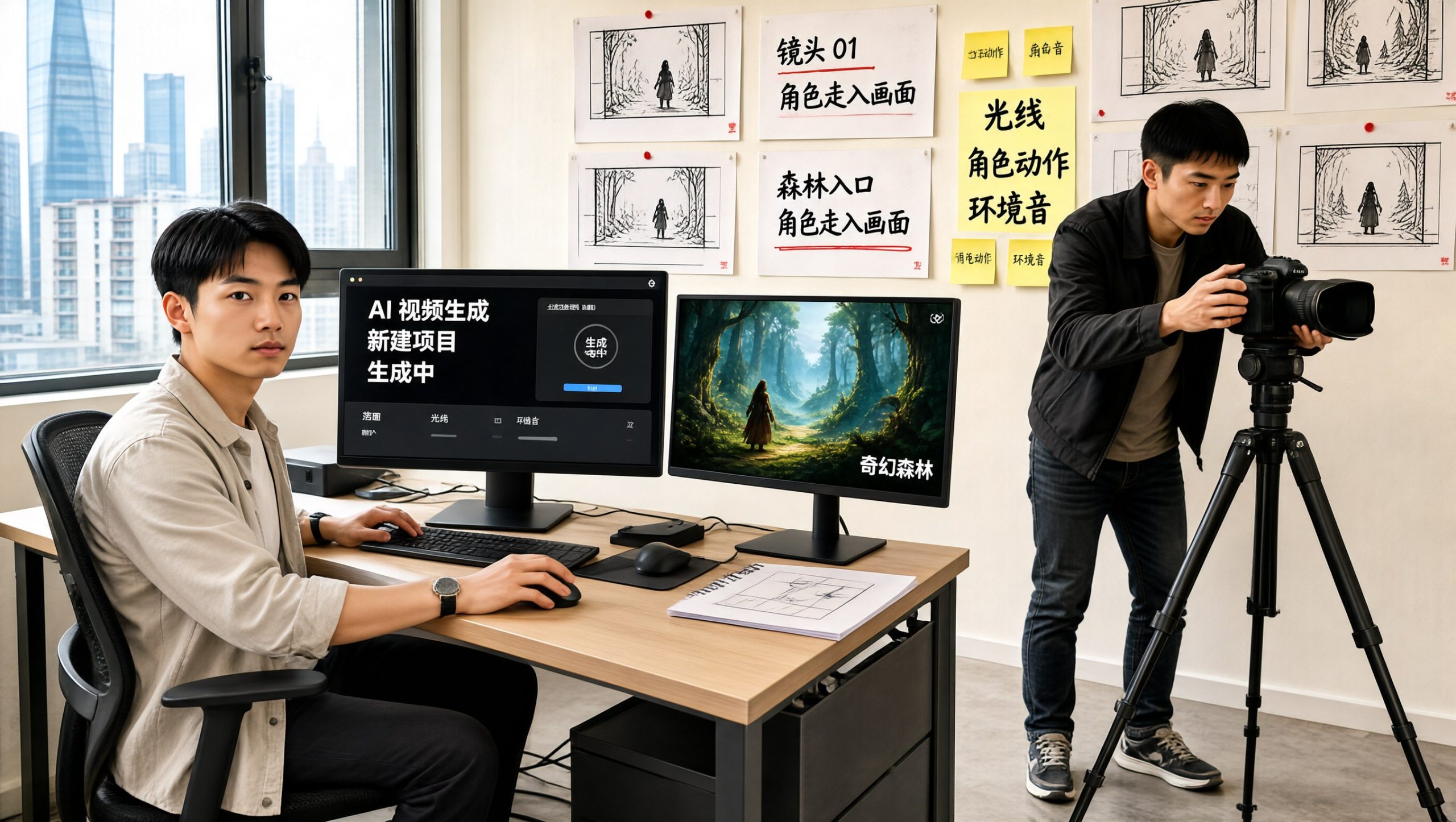
Another breakthrough is text-to-scene expansion. If a director wants a view of a crowded Tang dynasty street, the team can shoot a few extras against a green screen and ask an AI video generator to fill in the rest, including the crowd, the stalls, and the drifting smoke. This used to be the domain of high-end 3D simulation teams. Now it is done by a handful of creatives and a powerful graphics card.
Even sound editing has changed. Tools that separate dialogue, music and ambient noise automatically after one click are now common in smaller studios. A senior sound editor told me that the ‘trash removal’ part of the job, once the most tedious, is now a robot’s task.
During the making of a popular short-drama series in 2024, an engineer said that the entire visual effects (VFX) team had been reduced from eleven to five, with two of the remaining members writing prompts and supervising AI output. The new workflow allowed a production that normally needed 45 days of post-production to be completed in 18 days. The same speed difference is reported by commercials and film studios.
Behind the 30% Layoff Figures
Understanding why these jobs are disappearing requires looking beyond the AI hype. The sectors that employed many of China’s VFX artists were the web-drama factories and the feature-film service companies. Yet the web-drama market is no longer growing in volume. According to the National Radio and Television Administration, the total number of allowed online dramas fell by 15% in 2024, after a 12% decrease in 2023. Slower content licensing means fewer projects and fewer hours for FX companies.
At the same time, platforms like iQiyi, Tencent Video and Douyin are asking suppliers to use AI to lower their license fees. They see adoption as a way to cut budgets by a third or more. For many studios, accepting AI is not a free choice; it is a condition for renewal.
In an interview, the CEO of a Hangzhou-based effects company explained how the numbers added up. ‘Before, we had 100 full-time staff and took on 20 projects a year. With AI, me and three project leads can handle the same volume plus extra requests by hiring freelancers. Why keep a big payroll?’
But that explanation ignores the rising role of human taste. Some creatives argue that the use of AI in post-production is not about eliminating the artist but about moving the artist to a higher level of decision-making. ‘AI is a machine that obeys instructions, but it has no instinct,’ says a veteran art director. ‘You still need someone who knows how a shadow falls on a face to give the right command.’
What Happens to the Fired VFX Artists?
The most painful chapter of this transition is what happens to ordinary workers.
Some, like Zhang Wei, try to become independent. He learned to use a local AI video editor through weeks of online lessons and now takes small commercial jobs. He says that while his monthly income dropped by 20 percent, his workdays have shortened from fourteen hours to eight. ‘I have less money, but I also have less hand pain.’
Other artists are moving into adjacent fields. A VFX supervisor who lost his company’s entire department now works as a ‘content operator’ at a new media agency, where his knowledge of image quality helps brands produce low-cost but polished product videos. Another former keyframe animator now writes prompts for an AI model company that supplies several video platforms.
There are also those who cannot make the jump. A unit manager, who is 46 years old and has spent his career doing practical film effects, told me he was rejected from a job because he did not know how to ‘talk to machines’. Small workshops may welcome him, but the pay is too low. For those mid-career artists, the wave of layoffs is not a quick reset; it’s an unplanned early retirement.
New Ecology: The Rise of Small, Nimble Studios
Beyond the pain, however, a new structure is taking shape. In Shanghai’s Jing’an district, a 300-square-meter brick-and-mortar space has been converted into a shared ‘video art laboratory’. It rents out GPU-powered workstations, access to powerful AI tools, and one expert mentor who can help solve technical problems. On any given night, you will find three or four small teams huddled together, each working on a different short-drama or commercial commission.
These small studios are the main winners of the current change. Their overheads are low, they can start working on a project in the morning and deliver a clean edit by midday, and they charge a fraction of what traditional companies needed. This has widened the palette of what is possible. Online influencers and ordinary brands, which previously could never afford elaborate visual effects, can now request a tiny spaceship explosion or a period-environment transition.
A documentary filmmaker in Chengdu told me that she cleaned 50 hours of interview audio with an offline AI tool in a weekend, saving about two months of manual work and something like 2,000 yuan in labor. That money was instead used to hire a musician to compose an original score.
This is why several observers argue that China’s post-production industry, while contracting in headcount, is expanding in output. The number of visual effect shots created for Chinese video content is rising, not falling. The difference is that more shots are generated with fewer hands. For the platforms, the throughput is a dream.
Human Creativity Is Still the Missing Frame
If there is a key lesson from this transition, it is that AI in this context is a magnifying tool, not a human censor. It magnifies the talent of people who understand story, pacing, and emotion. It also magnifies the speed with which bad ideas can become real.
As the director of a small production house explained, ‘The people who lose their jobs are not the ones who can use the tools, but the ones who can’t. Now everyone can use the tools, so what differentiates you is your eye.’
Zhang Wei has started to see his new situation from that angle. He is taking online courses in cinematography and colour theory, not just learning software buttons. He believes that being displaced gives him a chance to focus on the art direction side of the business, where the human point of view beats any algorithm. ‘I am not leaving the industry. I am leaving the old desk, and that desk is no longer there.’
Start the discussion at forum.chinacomes.com