
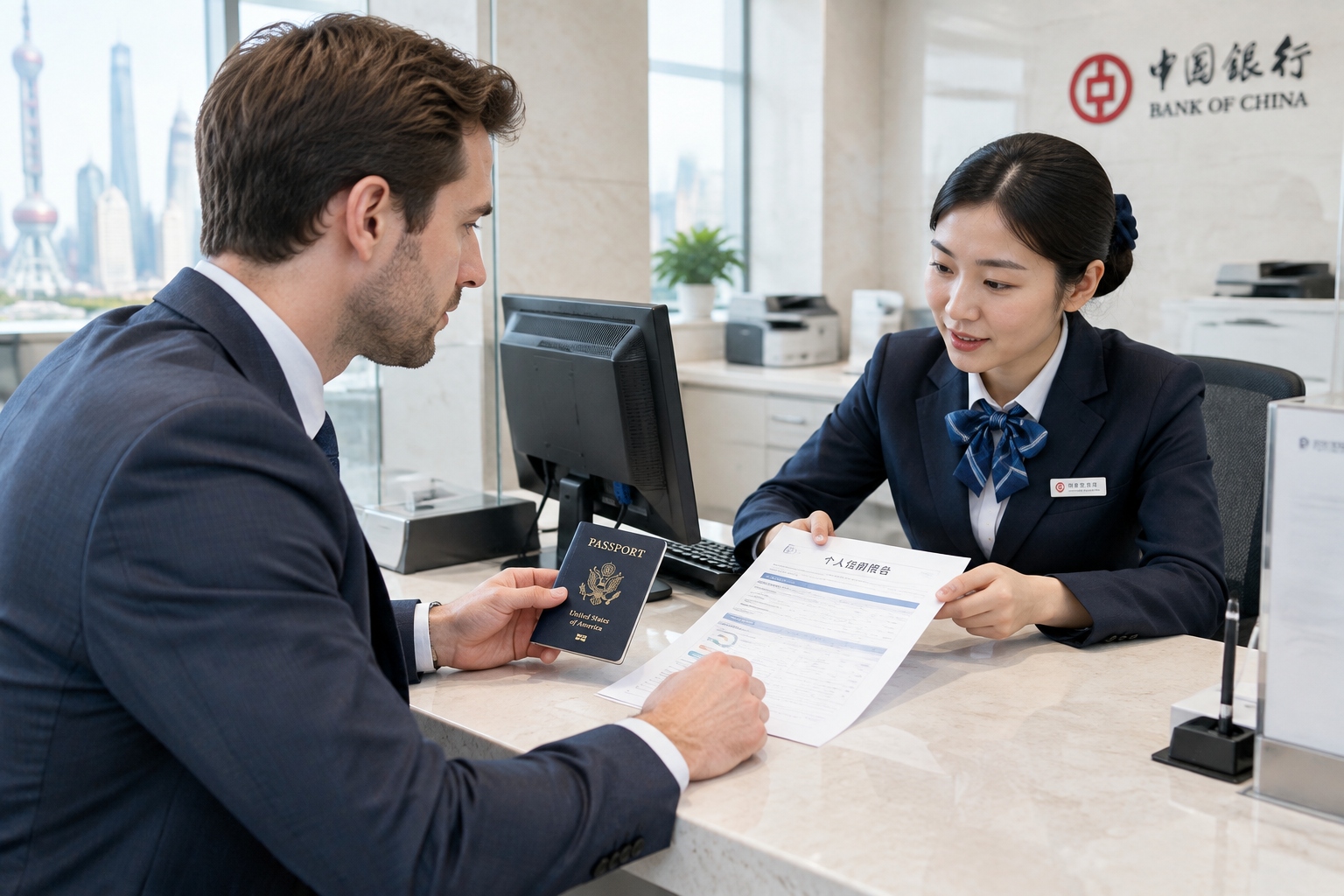

A banker’s question that surprised an expat
Daniel is a graphic designer from France who has worked in Shanghai for four years. Last spring, he decided to buy a small apartment and asked two banks about a mortgage. Both asked him for the same document: his personal credit report (个人信用报告). He had never seen one before.
‘I assumed I didn’t have a credit history in China,’ he later told a friend. He was wrong.
The report is kept by the Credit Reference Center of the People’s Bank of China (PBOC), the country’s central bank. It collects repayment information from banks and other licensed lenders who have done business with you — from credit cards and installment plans to car loans and mortgages. If you have lived in China for a few years, chances are high that some of your financial actions are already in the system. For many expats, the whole thing remains a mystery until a loan application forces them to look.

Do foreigners actually have credit records in China?
Yes. The central credit database covers anyone who has had a credit relationship with a Chinese financial institution, regardless of nationality. After you open a bank card, apply for a credit card, or take out a loan for a phone, a car, or an apartment, that lender is required to report your repayment behavior to the central database. This is often a surprise for foreigners who think credit history is something they left behind in their home country.
What does ‘credit relationship’ mean? It does not mean your everyday debit card spending. It means credit products: a credit card with a real limit, a cash loan, a mortgage, or a consumer financing plan such as phone installment payments. These activities create a tracing record inside the PBOC system.
What if you have never borrowed money while in China? Then the database may have no record for you at all. Chinese bankers call such a client a ‘blank account’ (白户). A blank account is not a bad record, but it makes it harder for a bank to judge your financial behavior. Many expats in this situation are asked to provide extra paperwork — or they are told to build a little credit history first. The cleanest way to do this is usually a credit card used responsibly for a year or so.
What is actually inside your credit report?
- Identity information: a profile that links your name to your passport number and, when available, your visa or residence permit details.
- Credit information: a list of each credit account — credit cards, loans — including the credit limit, opening date, and your repayment record for the last 24 months.
- Public records: where applicable, court judgments, tax arrears, or enforcement information that might be relevant to financial risk.
- Query history: a log of every institution that has looked at your report. This helps you keep an eye on who has been checking you.
By the way, your report does not include a score like the classic 300–850 FICO score used in the United States. Banks in China receive the factual record and make their own internal credit decisions. So a ‘good credit history’ means a record with no serious late payments and no pattern of risky behavior.

How negative records happen and what they change
Missing a repayment date is the most common cause of a negative entry. Chinese credit card issuers usually offer a grace period of about three days after the due date. If you pay after that grace period, the bank records a late payment. One short delay may not destroy your application, but repeated or very recent late payments will be seen as a warning signal.
More serious issues include ‘cash-out’ (套现), which means using a credit card to obtain cash in a way not intended by the bank. For example, a friend asks you to pay him for a fake transaction so he can get the money in cash. When banks suspect cash-out, they often close the card and add a note to your credit file. That can be far more damaging than a simple missed payment.
Another legal but quite painful consequence is the ‘dishonest person’ blacklist (失信被执行人名单). This list is managed by courts, not by the credit center, but it appears in some forms of background checks. If a court judgment against you is not complied with, you may be banned from buying high-speed train tickets or plane tickets. Foreigners are not automatically exempt from this system if they are in China.
What does a negative record actually affect?
- Loans: If you ask for a mortgage or a small business loan, a negative record makes the bank cautious. You could be rejected outright, or offered less money at a higher interest rate.
- Rental housing: Landlords generally do not check the PBOC report directly. However, some upmarket apartment management agencies and co-living operators now ask for a credit report as part of their tenant screening. A poor report can mean paying a larger deposit or being turned down.
- Employment: When you apply for a job in finance, compliance, or a sensitive corporate role, some employers run mandatory background checks that include credit data. This also applies to foreign applicants at many multinational companies that operate in China.
If you do cause a negative record, it is not permanent. According to China’s Regulations on the Administration of the Credit Reference Industry, negative information is kept for five years from the date the overdue amount is fully paid off. After five years, the system removes it automatically. That means there is no need to panic after a one-time mistake — but you should take action as soon as you realize you missed a payment.
How to check your own credit report safely
Before you make a big commitment — a loan application, an expensive lease, or a job offer — you should know what banks and employers might see. The official channels are simple, but a few small details matter.
1. Online through the PBOC Credit Reference Center
Visit the center’s official website at pbccrc.org.cn and go to the ‘My Credit Report’ area. You will need to verify your identity with a Chinese mobile phone number, a connected bank card, and sometimes a face verification or video call. Foreign passport holders are usually able to complete the process, although registration can be a bit tedious. Once verified, you can request a report in an easy-to-read PDF.
2. Offline at a PBOC service point
Take your original passport and your valid visa or residence permit to a People’s Bank of China local branch or to one of the designated commercial bank service points. Fill out a short application form and ask for your personal credit report. Reports are usually provided within minutes if the line is short.
Note for international residents: not every commercial bank branch accepts foreign passports for credit inquiries. It is safer to call the local PBOC branch in advance or check its official website for the list of designated service counters. If you happen to have a second-generation Chinese ID card, you can use the self-service machines, but most expats will need to go to a counter.
Also remember that each individual is entitled to two free reports per year. Extra queries may cost a small fee (usually around 10 yuan). Never use an unofficial third-party app that claims to reveal your ‘credit score’, because those apps often ask for too much personal data and are not connected to official sources.
How to repair errors or clean up your record
If your report contains a mistake
Under Chinese law, you have the right to file an objection with the PBOC Credit Reference Center or directly with the institution that submitted the incorrect information. You will need to show your passport, write a clear statement explaining the error, and provide supporting evidence — for example, a bank statement that proves you repaid a loan on time. The credit center must respond within 20 working days.
If the negative record is real but old
The only legal fix is to pay off the overdue amount and wait. The five-year countdown begins after the debt is cleared. Anyone who offers to ‘clean’ or ‘delete’ a true negative record for a fee is almost certainly running a scam. No one has special access to delete accurate information from the central system.
Daily habits that keep your record healthy
- Enable automatic repayment on your Chinese credit card so you never miss a due date.
- Use your credit card for normal purchases, but do not use it to turn a quick cash profit or help friends do so.
- Check your report at least once every two years, and always before an important loan application.
- Keep your address and contact information updated with your bank so you never miss a statement or a warning letter.
The practical takeaway
Your credit record in China is not an ominous file compiled in secret. It is simply a mirror of how you have handled borrowed money while you are here. Daniel, after checking his own report, found a clean record with twelve months of on-time payments. His mortgage went through without drama.
The system works the same for foreigners as for locals: learn the rules, keep your promises, and check your record through official channels. If you plan to stay in China for several years, treat your credit report like an important piece of paper that follows you around. Knowing what it says can save you from unpleasant surprises, and keeping it healthy opens doors that would otherwise stay closed.
Start the discussion at forum.chinacomes.com