


Maybe you have been living in Shanghai for three years. You speak enough Mandarin to order coffee and read metro signs, but you are still an expat. Renting works, yet you are thinking about putting down roots. So you wonder: as a foreign national, can I actually buy a home in China? And if I can, how do mortgages work?
That is the question this guide is built on. Before you start house-hunting, you need to understand the legal gatekeepers, the banks that lend to foreigners, and the price you will pay in down payment and interest. Because policies change across cities and even between bank branches, I will flag where you must verify with local regulators.
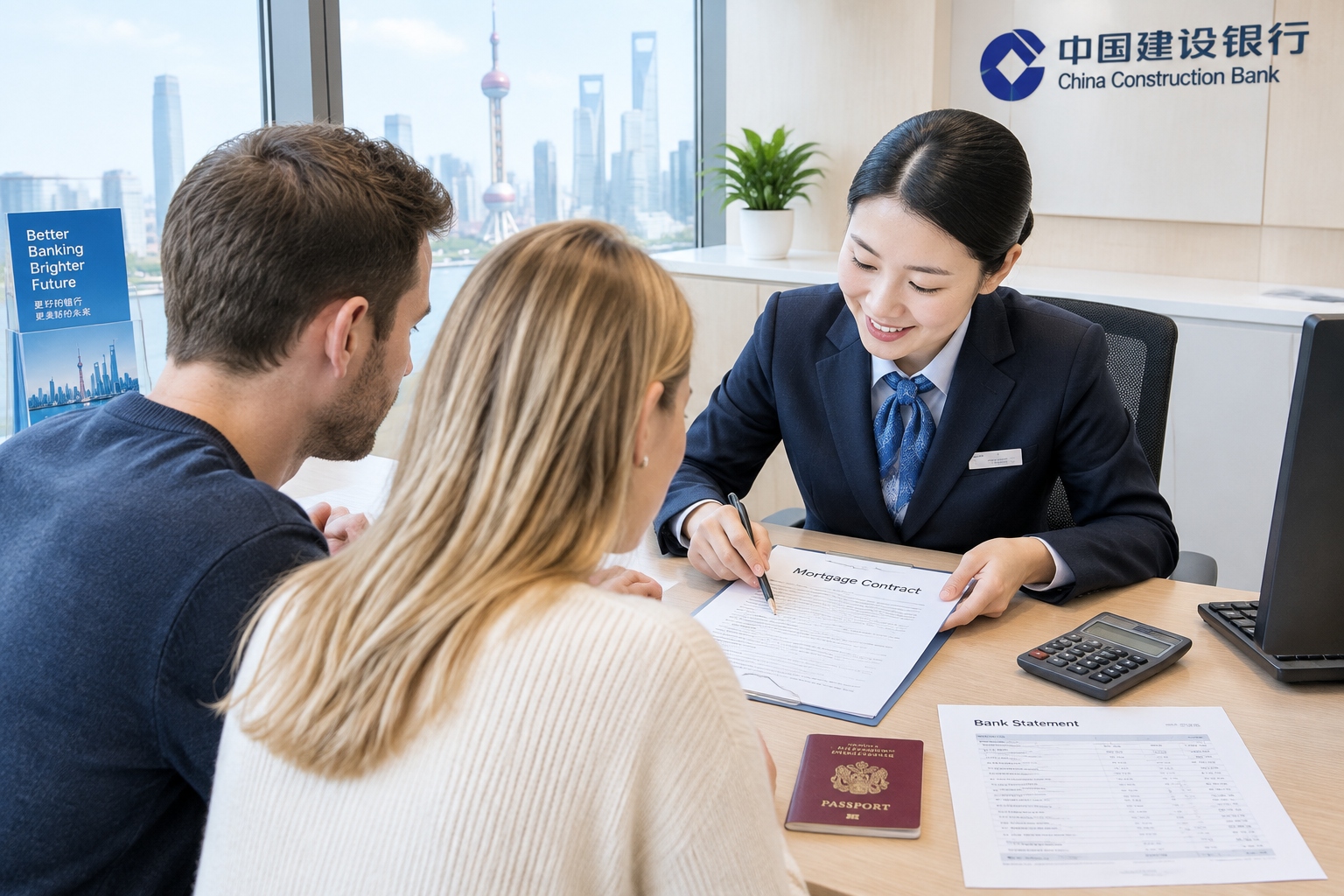
What is the actual buying rule for foreigners in China?
China”s national policy says foreign nationals who live and work or study in mainland China can purchase one self-occupied home, provided they have no other home in China. That sounds straightforward, but cities enforce it differently.
In Beijing and Shanghai, you generally need proof that you have worked or studied in the city for at least one year, and you often need to show income tax payments or social insurance contributions. Some cities, like Guangzhou, have looser requirements. And “no other home” means no residential property anywhere in mainland China, including a property owned jointly with your Chinese spouse. This is why a foreign buyer must first apply for a home purchase qualification check (购房资格审核). Real estate agents call it “the seal of approval” you need before you even discuss a mortgage.
Here”s another layer: mortgage regulations themselves do not limit how many homes you can buy, but local housing policy does. As of 2025, most large cities restrict second or third mortgages for residents too, so as a foreigner, expect that your realistic route is exactly one home.
Which banks will lend to a foreign national?
You have two main choices: Chinese banks and foreign banks.
Among Chinese banks, the big names – Bank of China, Industrial and Commercial Bank of China, China Construction Bank, and Bank of Communications – have branches with substantial experience handling expat mortgages. In first-tier cities, they often have bilingual staff. The advantage is that their interest rates are typically priced off the national Loan Prime Rate (LPR), plus a margin that can be negotiated for strong applicants.
Among foreign banks, HSBC, Citibank, Standard Chartered, and Deutsche Bank have mortgage products aimed at expats. They sometimes require you to hold an account with them or meet a minimum salary threshold, but they are also comfortable with foreign income paperwork and may approve loans on a cross-border basis.
Let me make this concrete. Suppose you work in Shenzhen and your salary is paid in euros from a Hong Kong account. A Chinese domestic bank may find it hard to confirm your income without Chinese pay slips. HSBC”s mainland mortgage team, by contrast, is used to foreign bank statements and salary certificates if you provide translated, notarised copies. Among Chinese banks, Bank of China is often the most accommodating – its expat mortgage product is explicitly marketed to foreigners and accepts foreign income up to a certain limit.
So which is the “best” bank? Not necessarily the one with the lowest rate, but the one that understands your paperwork. The next section will help you see why that distinction matters so much.

What documents will you need?
Every bank has its own exact checklist, but expect to be asked for these:
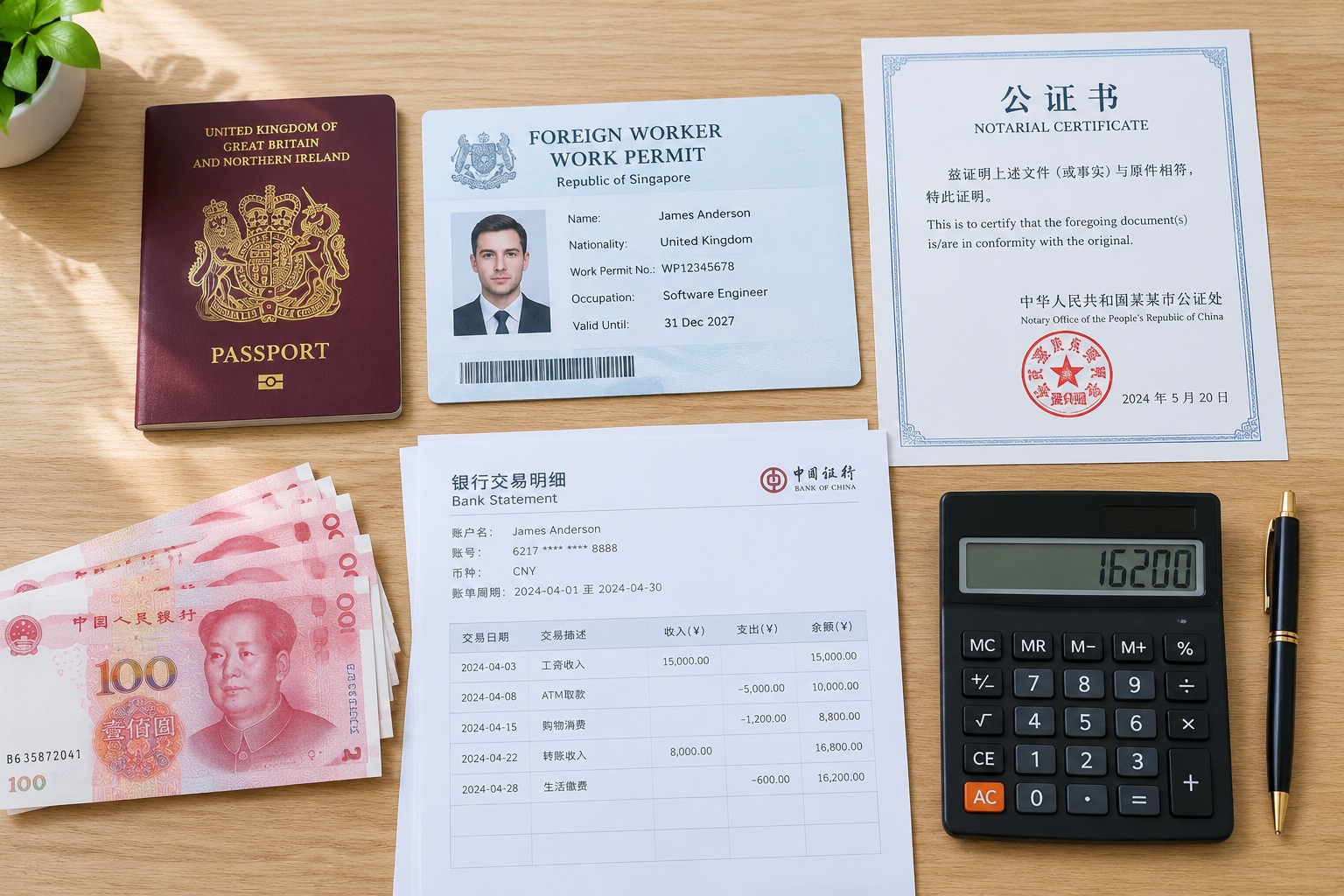
- Passport with a valid residence permit (usually a work or study residence permit)
- Home purchase qualification certificate from the local government
- Proof of your down payment, showing the money sits in your own Chinese bank account or a joint account
- Income proof: salary statements, tax records, and bank statements from the past 6 to 12 months
- If any income comes from abroad, a translated and notarised version
- Credit history report from the national credit system, if you have been in China long enough to have one
Take every original document plus photocopies to the bank. Most banks also want an official employment letter from your employer. In some cities, you have to ask your company to verify your work contract with the tax bureau before the loan is approved.
A subtle point: even if your spouse is Chinese and you will co-own the property, the bank assesses your combined income and debt burden. Unless you are not married, the mortgage will likely be held in both names.
What percentage of the price can you borrow?
Loan-to-value ratios (LTV, or 贷款成数 in Chinese) describe how much the bank will lend as a percentage of the property price – or more precisely, of the bank”s own valuation of the property. The rest becomes your down payment.
For a foreign national buying one self-use home, the down payment is usually at least 30 to 40%. In Beijing, some banks require 40% for high-priced units. Second-home mortgages are not something you can access as a foreign buyer anyway. LTV also depends on the property”s age: if the building is older than 20 years, the bank may reduce the loan amount or demand a higher down payment.
If you are buying a new apartment from a developer, LTV is often capped at 70%, leaving you a 30% down payment. For second-hand homes, the valuation is the key variable. The bank sends an appraiser to value the property, not the asking price. If the seller asks for ¥10 million but the bank values it at ¥9 million, your down payment must fill the gap – the bank will only lend 70% of ¥9 million, not ¥10 million.
How banks set your interest rate
Almost every new mortgage in mainland China is tied to the Loan Prime Rate. LPR is a benchmark set each month by the People”s Bank of China. In early 2025, the five-year LPR was 3.5%, but it changes periodically. On top of that, each bank adds a premium margin, called 加点. Your final contract rate is LPR plus (or minus) a number of basis points.
Foreign nationals are not automatically placed in a more expensive bracket. Most banks assess your financial profile and then set the margin. If you show stable income and a clean credit history, you can often get the same rate a local resident would receive. Foreign banks tend to price their mortgages slightly higher because their funding costs are higher, but they can be more flexible on income checks. So again, your paperwork profile drives the final number.
Today, lenders typically offer a variable rate that rises and falls with LPR. Fixed-rate mortgages do exist but are rare for primary residences.
Foreign income, repayment accounts and common pitfalls
Everything in China is paid in RMB, including your mortgage. That simple fact has bigger implications than you might think.
Most banks require you to open a local RMB account with them. If you earn in USD or EUR, you must keep enough local currency in that account to cover each monthly payment. Foreign exchange regulations for property purchases are strict. You cannot simply carry cash into the country and pay a seller. The legitimate path is to prove the funds are your legal salary, declare them to the tax bureau, and convert them through the bank”s official channel.
On foreign income: salary paid in Hong Kong is often treated as domestic income if your employer is a foreign-invested company. Other overseas income needs a recognised translation. Some banks cap how much foreign income they accept when calculating your loan – a common ceiling is 70% of total verified income.
Keep in mind these pitfalls:
- Never sign a sale contract before you receive the home purchase qualification certificate.
- Make sure the down payment is traceable – unexpected cash deposits can trigger anti-money-laundering reviews.
- Check whether the city imposes a “one outstanding mortgage only” rule. Many do, and it can block a second home loan even if you have strong income.
- Always get the bank”s pre-approval in writing before you pay any deposit.
Where to go from here: a quick 10-step path
- Apply for the local home purchase qualification certificate.
- Choose a bank and ask for its expat mortgage pre-approval checklist.
- Gather all documents, including notarised translations if necessary.
- Move your down payment into your RMB account with a clear paper trail.
- Sign the sales contract and confirm the bank”s valuation order.
- Sign the mortgage agreement.
- Complete any extra notarisation the bank requests.
- Register the property under your name at the local real estate bureau.
- Wait for the bank to release the funds to the seller.
- Begin repaying the mortgage.
That, in a nutshell, is how foreign nationals navigate the Chinese mortgage system in practice. It involves more paperwork than a local resident deals with, but it is absolutely possible. The bank you select should be the one that is most familiar with your type of income document. Before signing anything, confirm the details with a bank manager and the local housing authority – policies and processing times differ from one district to another.
Right now you probably need to find a real estate agent who is comfortable working with expat clients, and start checking which banks in your city have bilingual mortgage staff. But that is another Playbook.
Start the discussion at forum.chinacomes.com