

A Studio in the Rain
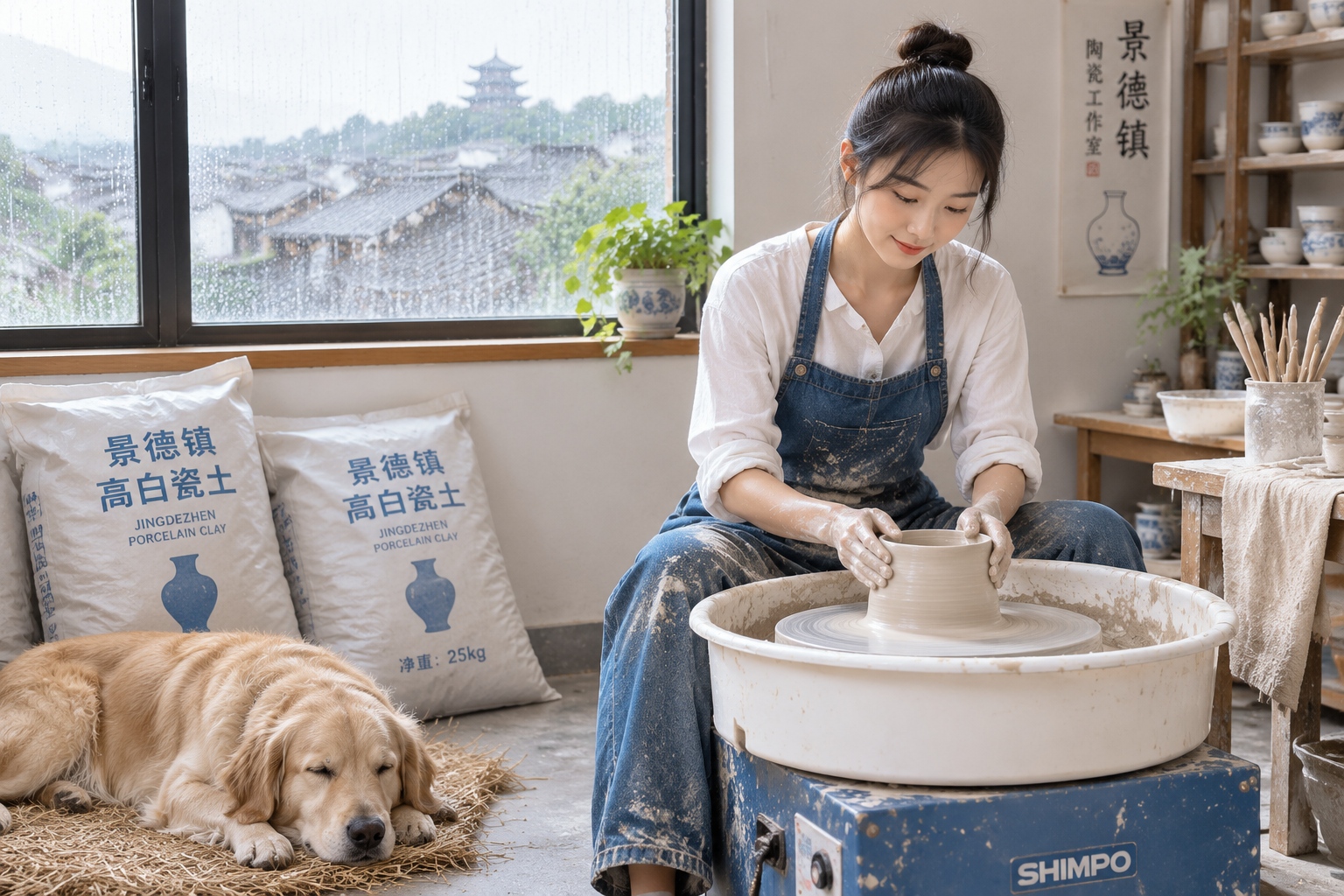
The first thing you notice when you step into Chen Yu’s workshop is not the pottery. It’s the sound — a low hum of the electric wheel mixing with the patter of rain on the tin roof. A dog, half-asleep, lies on a pile of straw that used to wrap freshly fired vases. Bags of gray porcelain clay lean against the wall like sandbags. There’s a faint smell of wood smoke, even though the kiln is off.
Chen, 30, is part of a wave of young ceramicists who have moved to Jingdezhen, a city in central China that has been making porcelain for more than a thousand years. “When I first came here, I thought I would stay for one year,” she says, wiping white slip from her hands. “That was eight years ago.”
She grew up in Zhejiang Province, a few hours’ drive away, but never touched clay until she was in college. Now, her studio is a typical entrance to the city’s hidden creative economy: one part art space, one part workshop, one part a mess.
What Makes Jingdezhen Special?
Jingdezhen is often called China’s porcelain capital, and it’s not just a nickname. For centuries, the city supplied imperial kilns that produced some of the most famous ceramic works in Chinese history. The blue-and-white porcelain made here was traded as far as East Africa and Europe. By the time the industrial age arrived, the craft had become deeply rooted in every part of the city’s bones.
Today, the city has something rare: a complete ceramics ecosystem. You don’t need to make everything yourself. There are specialized workshops that can throw a mold, mix a custom glaze, or fire your pieces in a large kiln at extreme temperatures. If you’re an artist, this means you can try almost any idea without needing to master every step. As Chen puts it: “You can have a thought in the morning and find someone to help you finish it by the afternoon. That’s not true in most places.”
That ecosystem has survived for hundreds of years because of density. Walk along a street in the old part of town, and you’ll find shops selling brushes, pigments, slabs of clay, and other raw materials. Many of these shops are run by families that have been in the same trade for several generations. The old craft has not been preserved like a museum; it’s alive, practical, and mixed with the everyday.
From Factory Work to Personal Expression
Chen’s own path reflects that mix. She studied industrial design in Shanghai and after graduation spent two years working at a large ceramics factory in Guangdong, producing tableware for export. “The factory taught me a lot about precision and how to work with a team,” she says. “But after a while, I felt I was making thousands of plates instead of a single meaningful object.”
She started applying for residencies in Jingdezhen and eventually stayed. The turning point came when she first set up her own small kiln. “The first firing was terrifying,” she laughs. “I opened the kiln door and everything was different from what I expected. Some pieces were better. Some were broken. That’s when I understood that every firing is a conversation with fire. You can’t fully control it.”
Contemporary Shapes, Ancient Glazes
Her current series plays with form and balance. Some bowls look almost traditional on the outside, with celadon glazes that mimic Song dynasty aesthetics. But the interior surfaces are covered in bright, abstract speckles or smooth, glossy patterns that would never be found on historical objects.
She also experiments with materials. “Porcelain is a difficult material because it wants to be white and refined. I try to push it to feel more raw,” she says. That means letting visible fingerprints remain on some surfaces, or deliberately creating tiny cracks that are then filled with gold dust — a technique known as kintsugi, which originated in Japan but is now popular around the world.
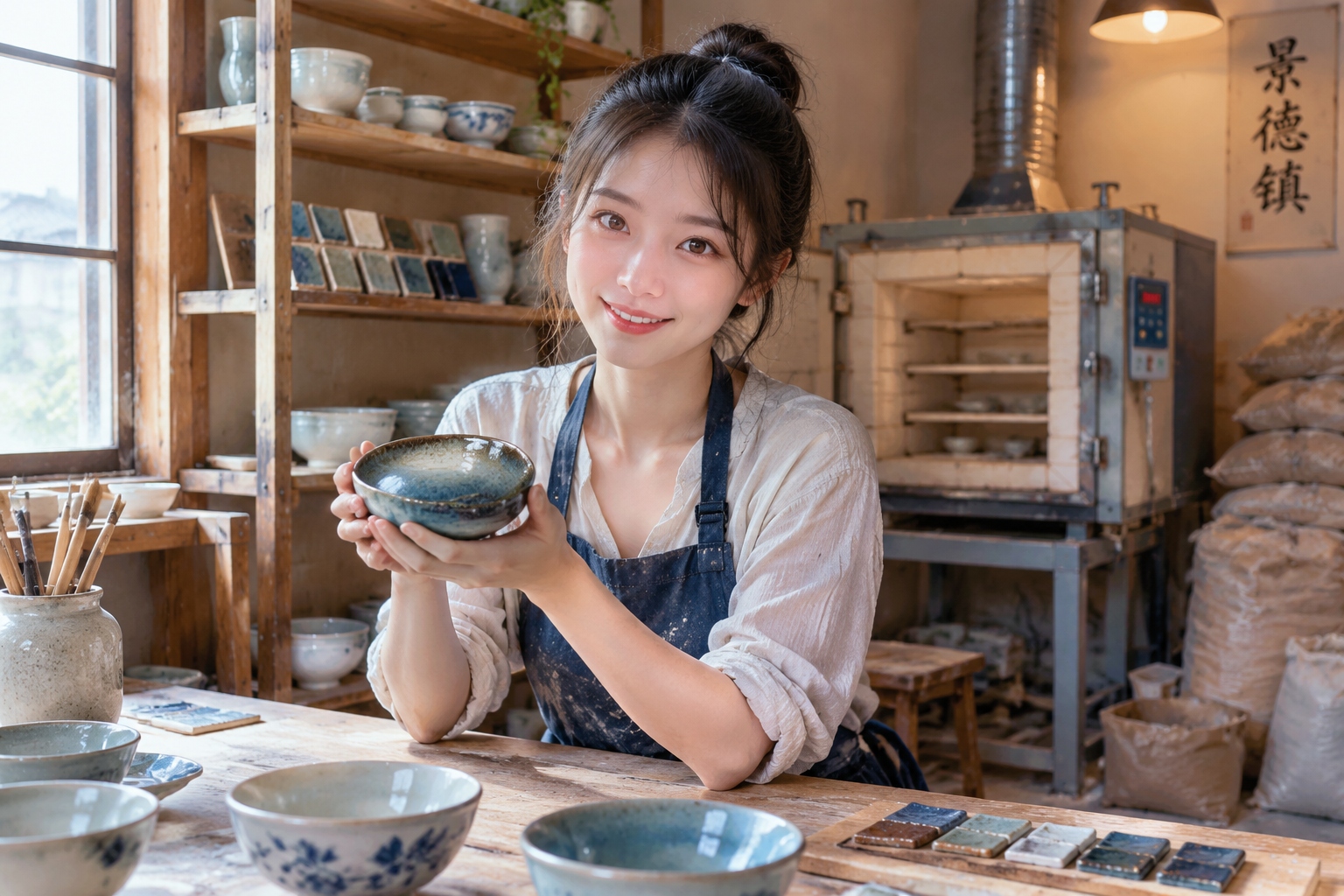
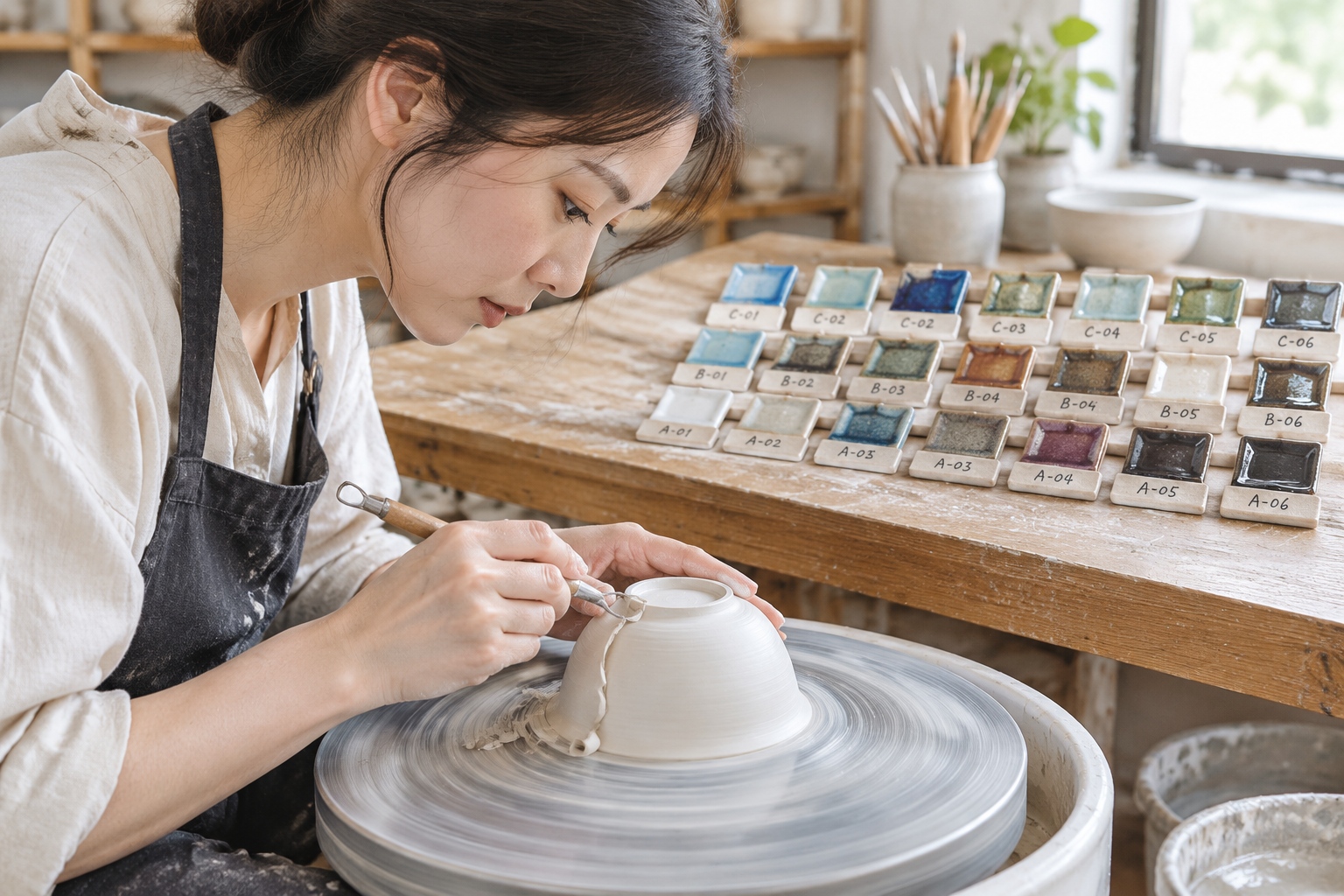
Her studio wall is lined with tests — dozens of small square tiles, each labeled by date and mixture. On a recent afternoon, she was trying to recreate a particular green color she saw on a broken sherd from an archaeological site. “It’s like a detective story,” she says. “You have to figure out which combination of minerals and firing temperature made that exact tone.”
Not Just a Tourist Destination
Tourists often come to Jingdezhen to see the ancient kilns or buy souvenirs. But the area that most young creative people inhabit is Taoxichuan, a former state-owned porcelain factory complex that has been converted into a sprawling cultural district. The red-brick chimneys and old kiln buildings now house modern galleries, cafés, bookstores, and shared workshops.
On Friday and Saturday nights, the Taoxichuan weekend market fills with stalls where local ceramicists sell their work directly to visitors. The prices vary from a few dollars for small trinkets to hundreds or even thousands of dollars for one-of-a-kind pieces.
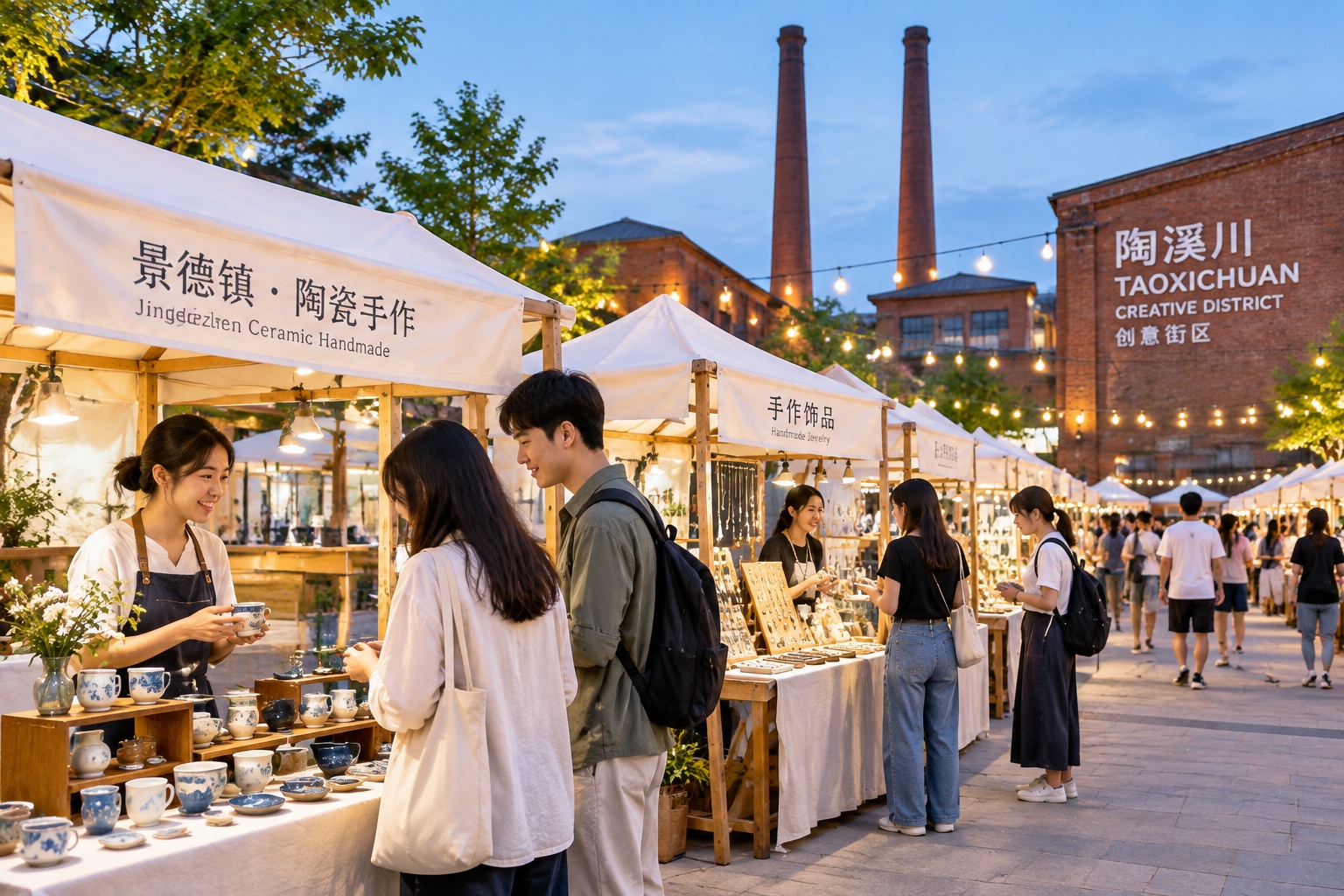
Chen participates in the market from time to time. “It’s a great way to meet people and see what other artists are doing,” she says. “You also get immediate feedback from customers. That’s important.”
For Chen, the market is also a reality check. Many young makers struggle to make a stable income from studio sales alone. So they diversify: some teach kids’ pottery classes, others collaborate with homeware brands, and a few have set up successful online stores with short videos showing the entire making process.
How the Internet Changed the Game
In the past, ceramicists in Jingdezhen relied on regional dealers and export networks. Today, most young artists like Chen use social media and live-streaming to reach buyers all over China and beyond. A 15-second video of a bowl being thrown on the wheel can attract thousands of followers.
“Sometimes my online orders come from cities I have never visited,” Chen says. “The buyer just saw the video online and trusted the ancient craft of Jingdezhen, plus my own style.”
But that visibility also brings pressure. “You have to keep posting, keep engaging, keep making content. Some days I’d rather just sit at the wheel and make pots. But if you don’t appear online, it’s hard to survive.”
What Does the Future Hold?
Jingdezhen is becoming more international each year. Residency programs bring artists from Europe, the US, and Southeast Asia. Private galleries offer exhibitions that mix traditional craftsmanship with installation and digital art. The city is actively supporting young entrepreneurs with low-cost studio spaces and maker incubators.
Yet the core challenge remains personal. As Chen says: “People ask me if it’s risky to stay in such an old city doing such an old craft. But I see it differently. I get to live in a place with a thousand years of history and I can still make something that has never been seen before. How many people can say that?”
She picks up a freshly trimmed cup and turns it in the light. “Maybe someday someone will see this cup in a museum, and they’ll know it was made in this era. That’s what I’m aiming for.”
Start the discussion at forum.chinacomes.com