
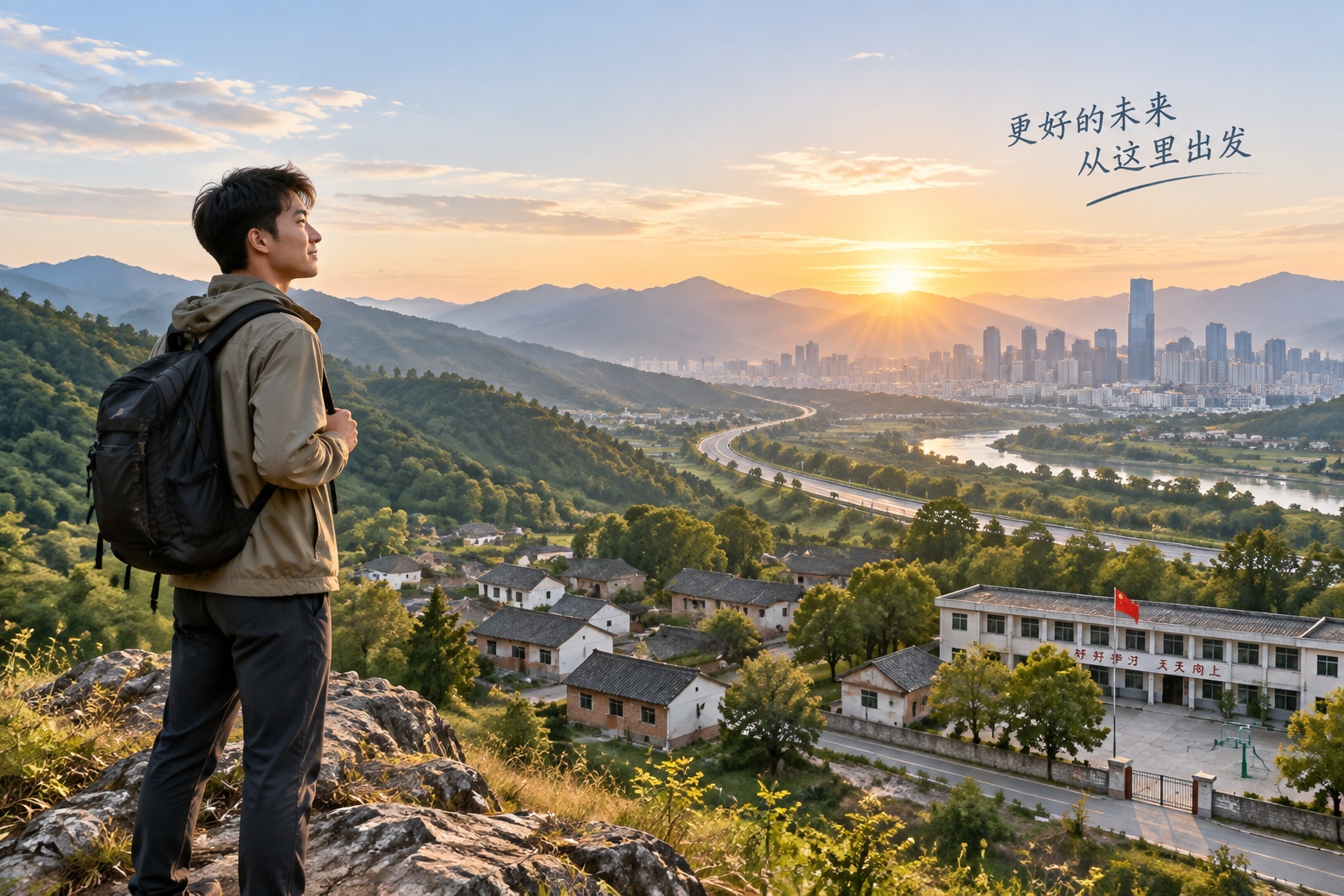

The Morning Walk That Started It All
At 5:40 a.m., I stepped out of our wooden house, my feet sliding into a pair of rubber boots that had been patched more times than I could count. The mountain air was cool and damp, and I could hear the rooster still crowing in the distance. The stone-and-mud path down to the village primary school took forty-five minutes on a good day, over an hour when it rained. I was seven years old, and I walked with a pack of other kids from the village, each carrying a bag of cold rice and pickles for lunch. We talked about the stars still visible in the sky and wondered what the city kids ate for breakfast.
My name is Li Ming. I grew up in Xizhou, a village tucked into the mountains of Yunnan Province, in southwest China. If you look at a map, you won’t find it. It’s the kind of place where the nearest bank is two bus rides away, and where the term “internet” was something we heard about on a crackling radio. When people ask me how a boy like me ended up a graduate of Tsinghua University, I always think back to that cold morning trail, because it’s where my dream, if you could call it that, first learned to walk.
A School With No Sports Field—and No Limits
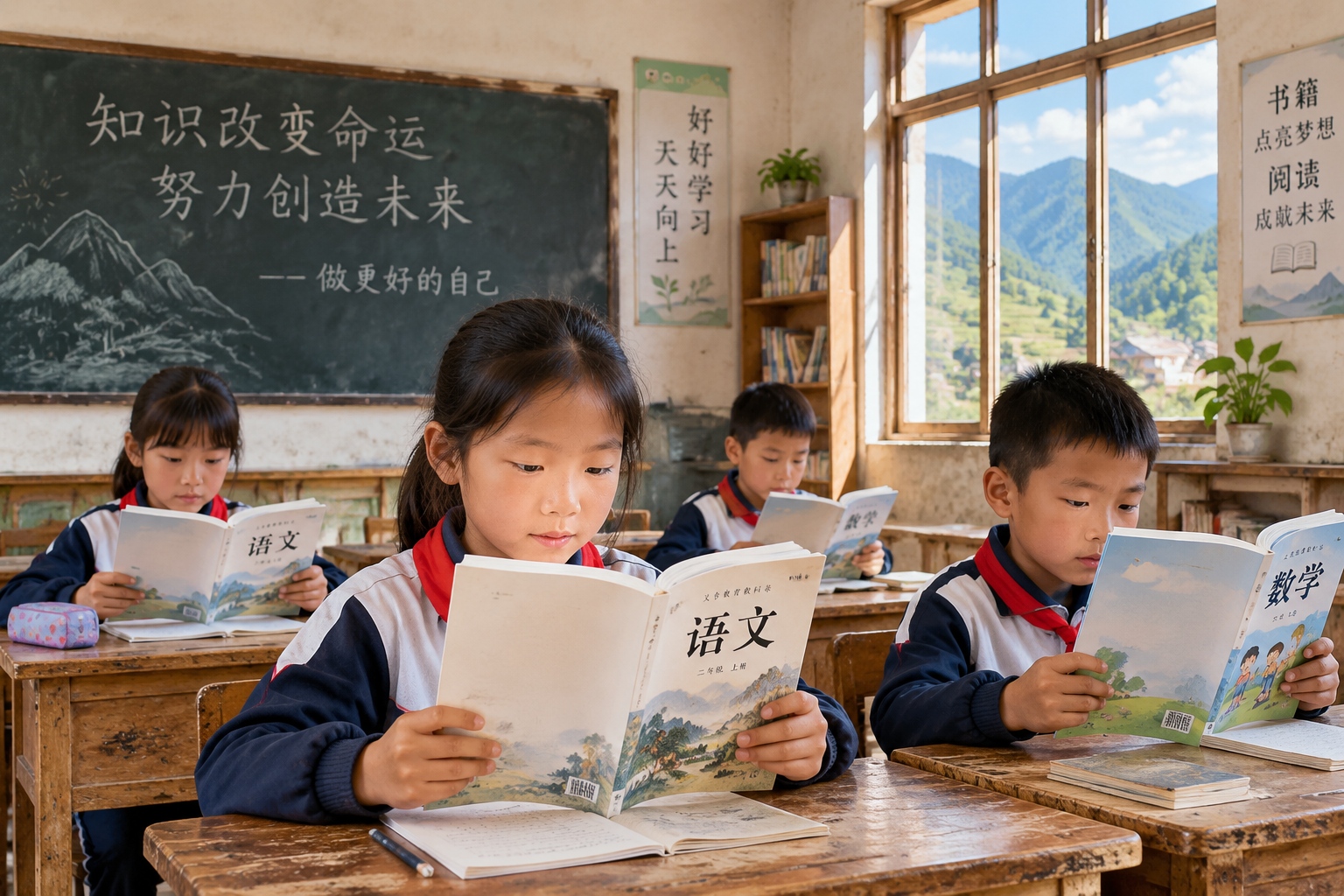
The Xizhou Primary School consisted of three buildings: two classrooms and a storage room that doubled as a library. The library had maybe a hundred books, many of them torn and outdated. There was no sports field, just a dirt patch where we chased a homemade soccer ball. We had no electricity in the classrooms until I was in the third grade. Before that, we studied by the light of a kerosene lamp on cloudy days.
Our teachers were ordinary, hardworking men and women from the local area. They taught us Chinese, math, and handwriting. But they didn’t know English, and we didn’t have any computers. I remember in fifth grade, when a new teacher appeared at the door. Her name was Ms. Chen, a girl in her early twenties from Hunan Province, part of a government program that sent college graduates to teach in poor rural schools. She wore a bright orange backpack and carried a laptop, the first I had ever seen.
Ms. Chen could sing like a bird and drew diagrams on the blackboard with colored chalk. She taught us English, not as a subject, but as a game. We repeated “Hello” and “Thank you” until she laughed and said we sounded like little birds. But more than English, she taught us about the world. She showed us pictures of Beijing, of a university called Tsinghua, with high towers and green lawns. Once, when I asked if she had been there, she said, “Not yet. But maybe someday you will go.” Those words lodged in my chest like a seed.
That same year, the government introduced the “nutrition improvement program,” giving each child in the rural areas a free lunch at school. Before that, many of us went without lunch or survived on seasoned water. The first meal I had was rice, a piece of pork, and a boiled egg. I remember the taste, but I also remember how it felt: for the first time, the classroom didn’t feel so cold.
From Village to County: The Long Climb
In the spring of my sixth-grade year, Ms. Chen helped me prepare for the entrance exam to the county’s best middle school. She stayed after class, coaching me on math problems until the evening. The school was sixty kilometers away, in a small town with paved streets and a three-story building. I passed the exam, becoming the first student from our village in a decade to win a place there.
The middle school offered me a scholarship that covered tuition, room, and board. My parents, both rice farmers, could barely afford to pay for my daily necessities. They scraped together a small amount of money and sewed it into the lining of my jacket. “Don’t spend it unless you’re desperate,” my mother said. I didn’t spend it until my last year of college.
At the county school, I quickly realized I was behind. City students from the county seat had already learned English and even knew how to operate computers. I had never touched a keyboard. In the computer lab, my fingers froze on the keys. But I stayed up late at night, studying the English vocabulary lists under a desk lamp and practicing typing on a paper cutout of a keyboard. Within six months, I was in the top ten of my class.
High School and the Power of the Internet
I later entered the prestigious provincial high school in Kunming, the capital of Yunnan. Again, I felt the gap between me and my classmates. Their parents were doctors, lawyers, and university professors. My father had completed only elementary school, and my mother could barely write her name. But I had learned that effort could be a great equalizer. I set a schedule: wake up at 5 a.m., study until 10 p.m., with only short breaks for meals.
The school had a computer room with twenty computers and access to the internet. It was my window to the world. I learned about online courses, open educational resources, and practiced math on free websites. I also learned about the “Gaokao,” the national college entrance examination, which is the single most important test in a Chinese student’s life. Every summer, millions of students take it, dreaming of a spot at a university like Tsinghua.
Tsinghua became my obsession. I hung a picture of the campus over my desk. It was a photograph cut from an old magazine. Whenever I felt tired, I looked at the image and thought of the possibilities. My teachers encouraged me. My homeroom teacher once said, “For students from rural areas, the Gaokao is not just an exam. It’s a bridge across a chasm.”
The Day the Red Envelope Arrived
When I took the Gaokao, I felt ready. I scored 688 points, high enough to be admitted to the computer science department at Tsinghua University. On the afternoon I received the letter, my father was repairing a fence. He walked into the courtyard, his hands shaking, holding the thick red envelope. He couldn’t read the characters, but he recognized the name “Tsinghua” from the logo. He wept. My mother stood in the doorway, wiping her eyes with the edge of her apron. Word spread through the village. Neighbors came to offer congratulations. My grandfather, who had never traveled farther than the next county, raised a cup of rice wine and said, “Today, our little hamlet has sent a messenger to the capital.”
Finding My Footing at Tsinghua
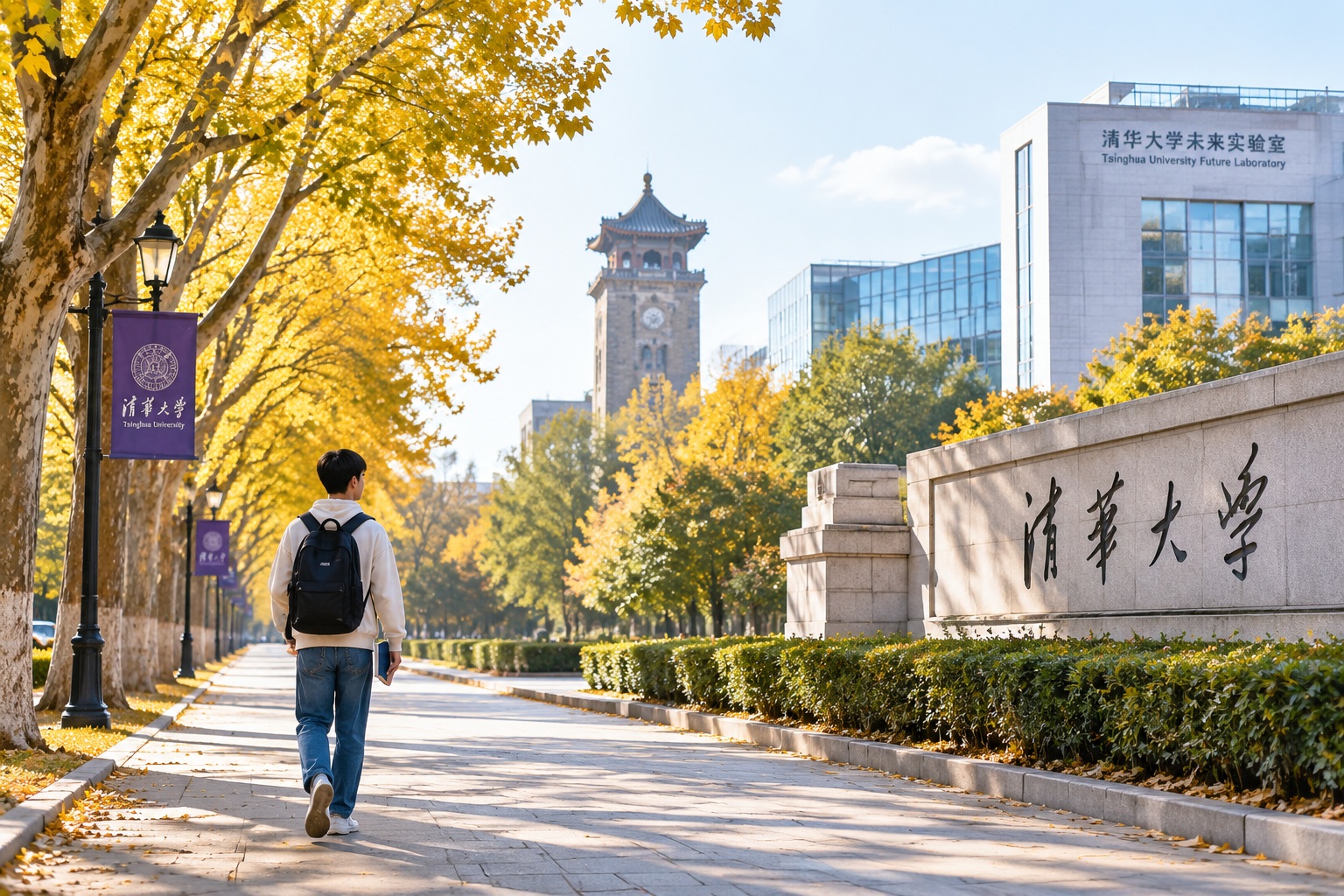
The first time I walked through the Tsinghua Gate, a grand stone archway in Beijing’s Haidian district, I felt a mixture of awe and fear. The campus was a small city in itself, with wide avenues, ancient trees, and sleek laboratories. My dormitory had four bunk beds and a common area. My roommate, who had attended an elite high school in Shanghai, was already reading a textbook in English. He spoke a kind of English that I couldn’t follow. I wondered if I had made a terrible mistake.
The first semester was the hardest of my life. My high school education had been solid but limited. I had never seen calculus proofs or written a line of code. In the introductory computer science class, I was lost. I sat at the back of the lecture hall, taking notes I didn’t understand. At night, I went to the library to study textbooks, sometimes until closing time.
But Tsinghua also offered me a network of support. The university had scholarships for students in financial need, plus a tutoring center where older students helped struggling freshmen. A kind advisor, Professor Liu, encouraged me to attend her office hours each week. She patiently explained the fundamentals of algorithms. Slowly, I caught up. By the end of sophomore year, I was scoring above the class average.
At the same time, I began to see that my identity as a rural student didn’t have to be a disadvantage. It gave me a unique perspective and a deep sense of purpose. I joined a volunteer group called “Sunshine,” which organized weekly activities for children of migrant workers on the edge of Beijing. Every Sunday morning, I took the subway and a bus to a crowded neighborhood where kids lived in temporary constructions. I taught them basic math and played ping-pong with them. I saw their curious faces and recognized something familiar.
Building for Others What I Didn’t Have
In my third year, I chose to specialize in computer science and started a project that aimed to create a cheap, offline learning tool for rural students. The idea was simple: many villages in China still have unreliable internet, but they have smartphones. I designed an app that could download a small set of textbooks, videos, and quizzes via one-time packages, then operate entirely offline. It wasn’t a revolutionary algorithm, but it was practical. My professor helped me refine it, and it was tested in a few schools in Guangxi. The pilot reached nearly a thousand students.
When I told my parents about the app, they were proud but puzzled. My mother said, “So you are making a box that teaches?” I said, “Sort of.” She smiled and said, “That’s what a good teacher does.”
Choosing the Country Road Over the Big City
Graduation arrived in 2023. I had job offers from tech companies in Beijing, Shenzhen, and Shanghai, with starting salaries higher than my parents’ annual earnings combined. It was tempting. But during my senior year, I had spent the spring break in Yunnan, visiting rural schools. I met a middle school student who asked if I knew how to change the default language on his computer. When I showed him, he looked at me with a mixture of disbelief and gratitude. That look stayed with me.
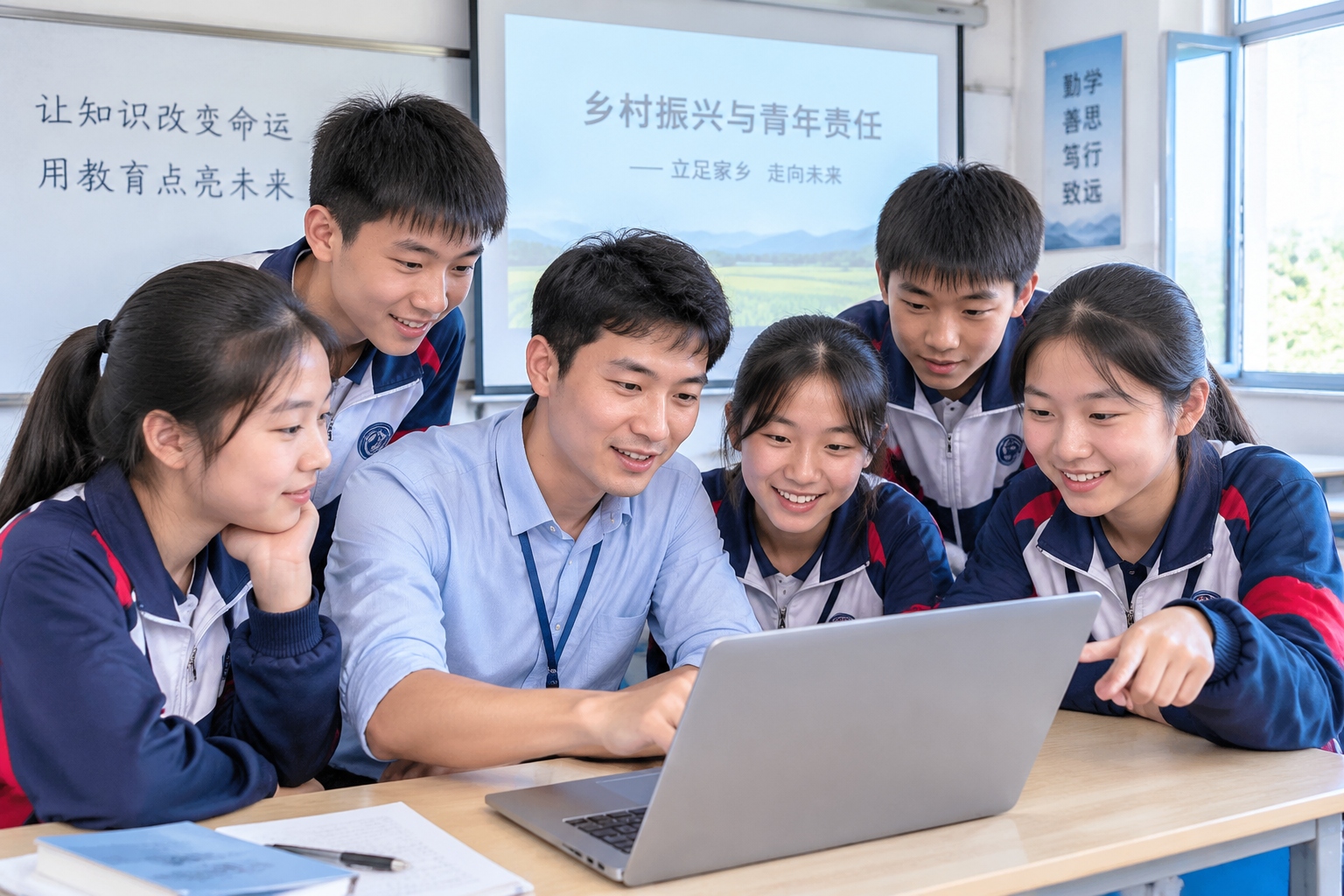
I decided to return to the province. I now teach computer science at a vocational high school in a county town in Yunnan. The school serves two thousand students, most from rural families. I also run a weekend “Coding Club” for middle schoolers, where they learn to build simple apps and websites. My first batch of students had never used a mouse outside of a video game. Now they can put together a simple webpage. A few of them are starting to dream about polytechnic universities. That is enough for me.
The Chinese Dream as a Road
When I hear the phrase “Chinese Dream,” I think not only of the country’s economic growth or its technological advances. I think of the millions of students who now have a chance that didn’t exist for their parents. In 2023, about 51 percent of Chinese university freshmen came from rural areas or small towns, according to educational statistics. That is an astonishing shift from a generation ago, when higher education was reserved for a small elite.
This shift is a result of deliberate policies: building millions of kilometers of rural roads, installing broadband in villages, expanding scholarships and student loans, and recruiting young teachers to go where they are needed most. It is also the result of individual grit. My classmates at Tsinghua included a boy from a fishing village in Guangdong who had never seen an escalator before arriving at university, and a girl from Inner Mongolia who herded goats before going to school. Their stories are not exceptions. They are the product of a social contract: if you work hard and learn, the country will provide a ladder.
Of course, the ladder is still uneven. Rural schools face shortages of trained teachers, especially for English and science. Urban children often start piano lessons at five, while rural kids may be doing chores. But I have seen the gaps closing, not as a headline, but in the eyes of my students. One of my eighth graders wrote to me last week, “Teacher Li, I made a calculator app with your code. Now I want to make a game that teaches other kids math.” That is the Chinese Dream in action: small steps, repeated, building a path where none existed.
The Road Ahead
Today, I sometimes drive back to my home village. The mountain trail where I once walked at dawn is now overgrown, because a new paved road runs along the valley, and a school bus carries children to a renovated school with solar panels and a satellite internet station. The children still carry rice, but they also carry tablets provided by the state. They learn English from a screen, but they also have a real teacher who came from a city and decided to stay.
I often think about Ms. Chen, who opened the first window for me. She left our village after two years, but she still sends photographs of her students in Africa. She taught me that a person can be a bridge. I now try to be a bridge for others.
From a one-room schoolhouse in the mountains to the halls of Tsinghua, and back to the same mountains with a piece of technology and a genuine faith—that is my journey. The Chinese Dream is not simply a dream about becoming rich or successful. It is the belief that every child, regardless of birthplace, should have a real chance to turn their dreams into a walkable path. It is a long road, but each morning, I see more feet finding it.
Start the discussion at forum.chinacomes.com