
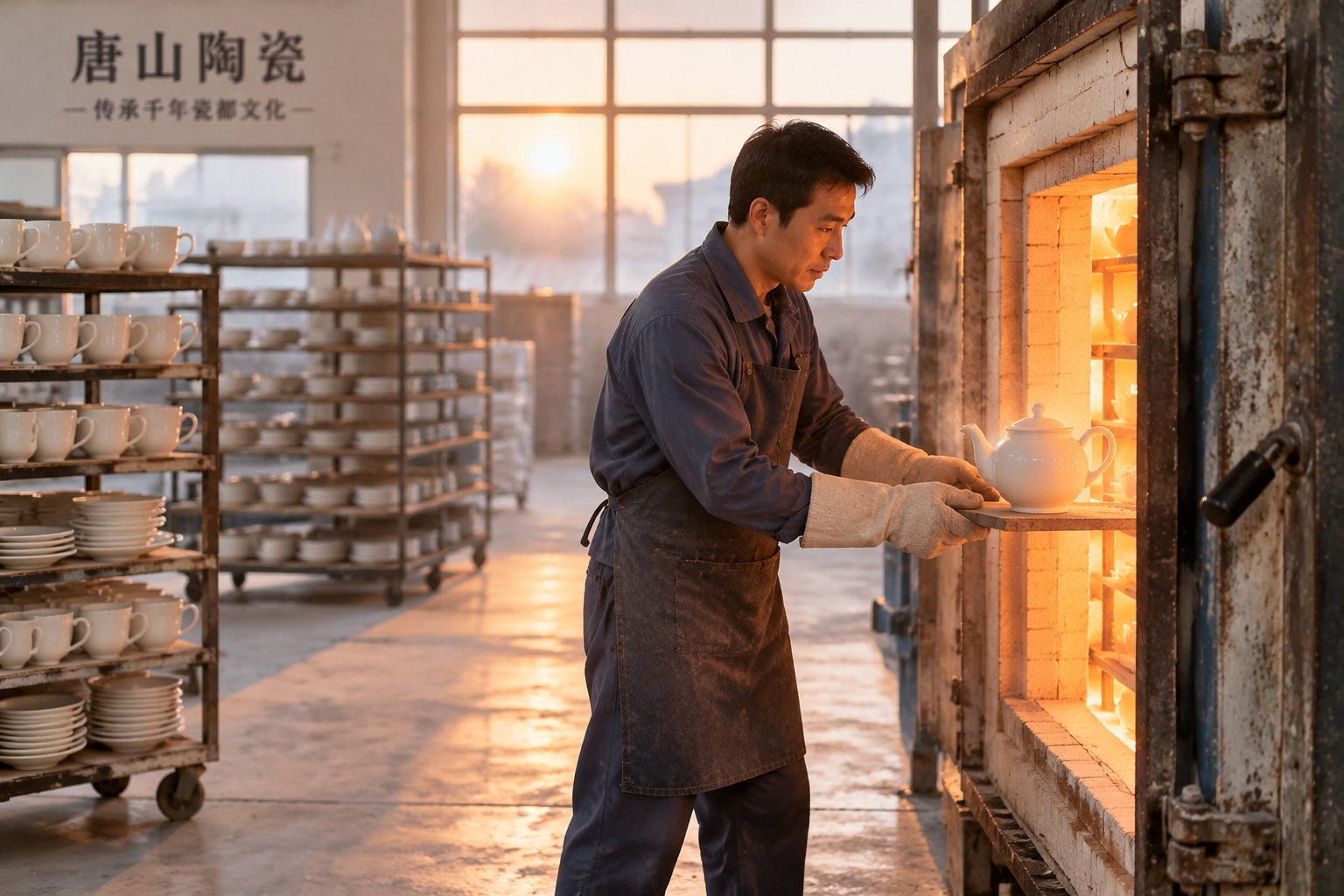

The Kiln Door Opens at Dawn
At 6 a.m., Tangshan’s ceramic district already hums with electric carts hauling crates of the previous night’s work. In one old factory, a kiln door swings open and heat pours into the cool autumn air. Master Li, 54, pulls out a still-warm porcelain teapot and taps it with a fingernail — the clear ring tells him it fired well. To the visitor, it could be a village craft shop, but this is Tangshan, the city that quietly supplies much of the world’s everyday china.
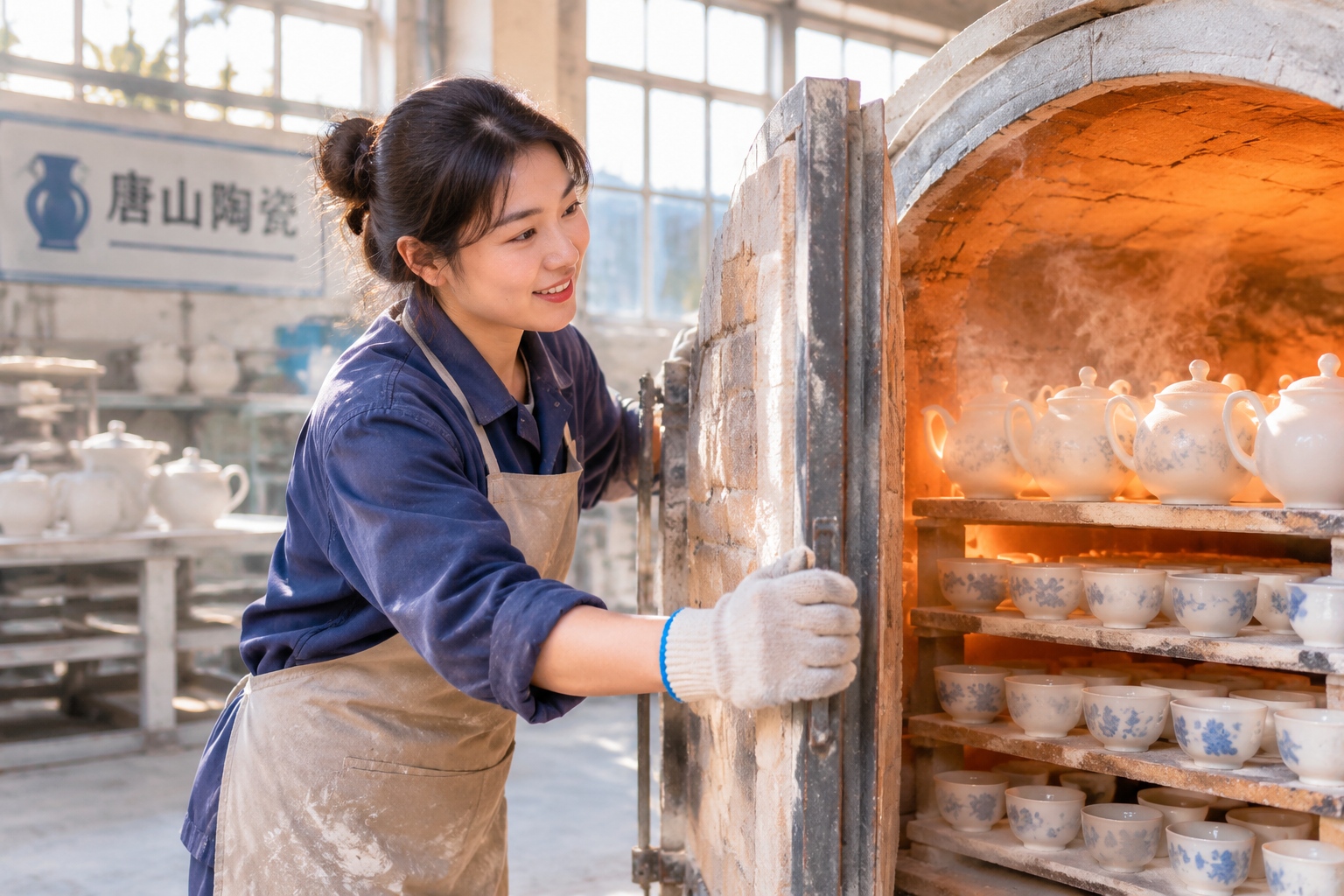
A Porcelain Capital You’ve Never Heard Of
If overseas buyers think of Chinese porcelain, the name they usually know is Jingdezhen, famous for its fine artwork. But for daily-use porcelain — plates, bowls, mugs, hotel dishware — Tangshan is the real heavyweight. Its industry dates back to the early 20th century, when it became one of the first Chinese cities to adopt mechanized porcelain production. After 1949, the city built large state-owned plants and later became the country’s biggest export base for household ceramics. At the industry’s peak, one in every four Chinese-made ceramic cups or dishes left a factory in Tangshan.
The city’s “bone china” is especially prized — a translucent, high-strength porcelain made with up to 45% animal bone ash. That production skill kept cementing Tangshan’s reputation, but in the 2000s, things got harder. Cheap competition from other regions, rising environmental costs, and a global shift toward design-focused brands left many local factories with slim margins.
The New Fire: Design and Coffee Cups
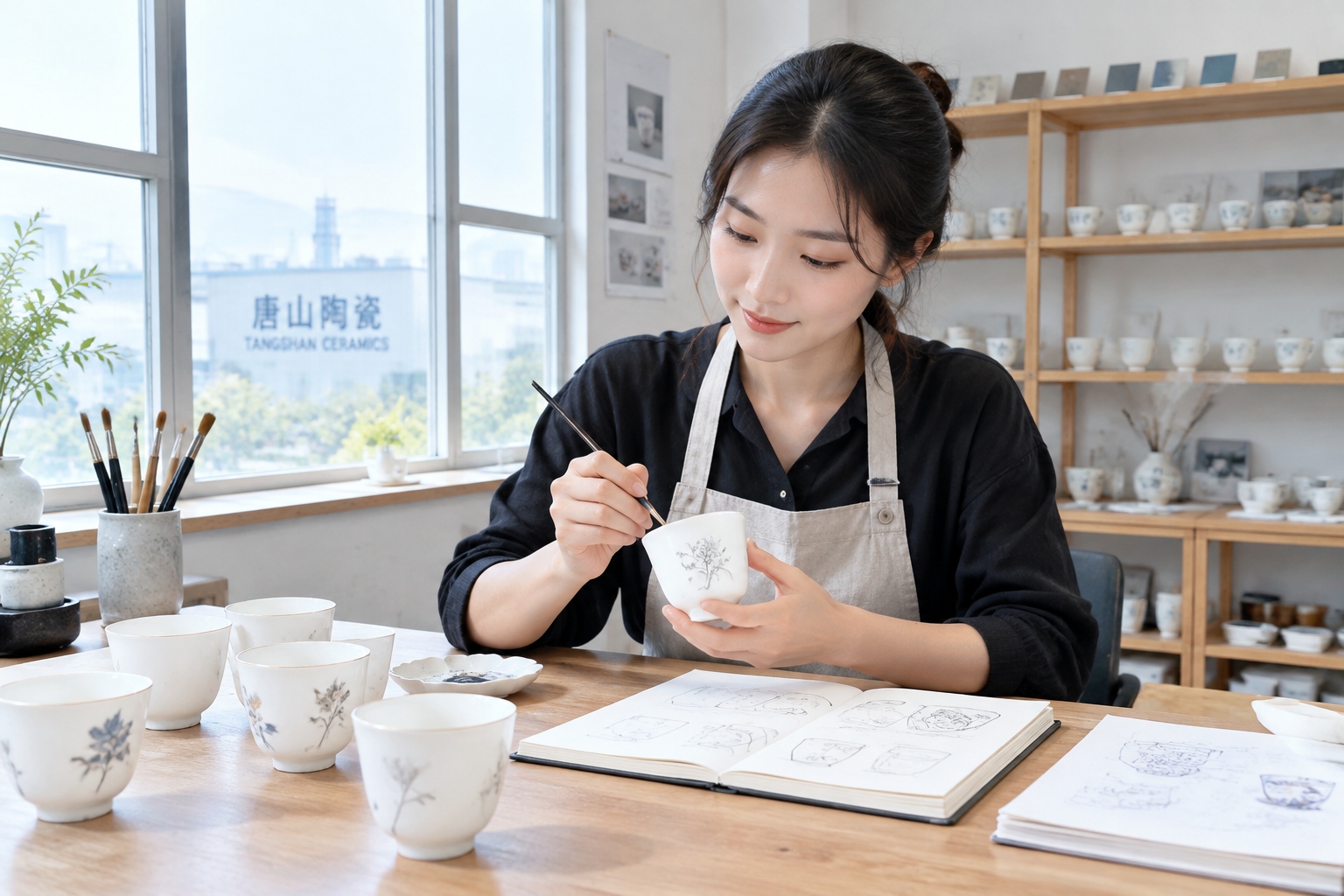
A quiet transformation is now visible in former industrial districts. Where factory runs of plain white plates once chugged out at scale, small studios are testing hand-painted glazes for specialty coffee chains. Millennial designers from Beijing and Shanghai have moved here, drawn by low rent and a skilled workforce that understands ceramics better than almost anyone.
Take the Cup Studio, a two-year-old workshop next to a refurbished kiln site. Its founder, Wang Yan, used to design packaging for a cosmetics brand in Shanghai. She moved to Tangshan to experiment with “bionic celadon,” a finish that mimics sea glass. “It’s not that Tangshan can’t make something trendier,” she says, while adjusting a porcelain cup under a raking studio light. “The city just never had a reason to try. Now coffee is the reason.”
What made the shift possible? Faster prototyping. Many factories have invested in 3D printers and CNC grinding for molds, cutting the time from sketch to sample from several weeks to a single day. That means customized small-batch orders are profitable instead of a headache. Hotels, airlines, and restaurant chains in Europe and North America now order limited runs of customized tableware directly from Tangshan’s midsized plants.
From Mass Production to Smart, Green Kilns
The modern transformation isn’t only about trendy aesthetics. Environmental regulation, long a sore point for the ceramic industry, has forced factory owners to shutter polluting coal-fired kilns and switch to natural gas or electric kilns. Some new plants look more like chip labs than dirty workshops: robots move saggers from kilns, real-time sensors monitor temperature and humidity, and wastewater is recycled several times before disposal.

In one of the oldest quarters, Jieyun Ceramics converted a 1990s warehouse into a shared workstation for fourteen small brands. Each has a separate room with a gas kiln, and central hoppers handle waste clay and glaze. “Last year, we cut our carbon footprint by 30 percent,” says the warehouse’s manager, Zhang Qi. “It wasn’t because we were green-minded. It’s because the new equipment gives us better yield and less breakage.”
Porcelain Tourism: Seeing the Craft With Your Own Hands
Tangshan is also learning to welcome outsiders. Several factory sites now run guided heritage tours, complete with a heated workshop where visitors shape their own bowls on a potter’s wheel. The Tangshan Ceramic Expo, hosted annually since 1998, now fills twelve exhibition halls and draws buyers from more than 80 countries. Local guides are quick to point out that the expo isn’t just for trade professionals; anyone can sign up for a glass-blowing-meets-ceramic demo.
“Most tourists come expecting nothing,” says tour guide Liu Yang. “Then they watch a skilled worker throw a teapot in forty seconds, and they leave with a self-made mug in a box. It changes their image of a factory city.”
What Locals Think
For Tangshan residents, the ceramic revival is a matter of pride mixed with hard-earned lessons. A 58-year-old retired worker who spent 30 years stacking kiln carts says, “In the old days, we never asked why we made everything in white. Now the young kids say we can make all colours a person can dream of. It’s not easy, but at least work is not gone.”
Others point out that there is still a gap between making prototypes and building global brands. “The factories here can produce anything, but marketing is weak,” says Li Jing, a business consultant who advises local firms. “That’s the next step for Tangshan: not to copy Jingdezhen’s art route, but to become a global destination for everyday design.”
The Future Is Still Being Fired
At the end of the day, walking through Tangshan’s ceramic quarter, you hear the roar of kiln fans and the clinking of porcelain. It’s easy to feel industry’s heavy past, but just as easy to see how a new layer is being painted on. A city that once counted only in tens of thousands of identical cups is now learning to count in ideas and identities. Some firms have started to sell directly to American and European households via e-commerce, bypassing middlemen for the first time. The youngest workshop owners often joke that their “DNA” is a mix of 800-year-old clay and a Twitter thread on colour trends.
The kiln fires have not gone out in Tangshan — they’ve simply grown smarter, more responsive, and a lot more colourful. So the next time a bright speckled mug lands on your café table, check the stamp on its bottom. It just might say Made in Tangshan, and that stamp is becoming a new kind of story.
Start the discussion at forum.chinacomes.com