

First Light in the Lab
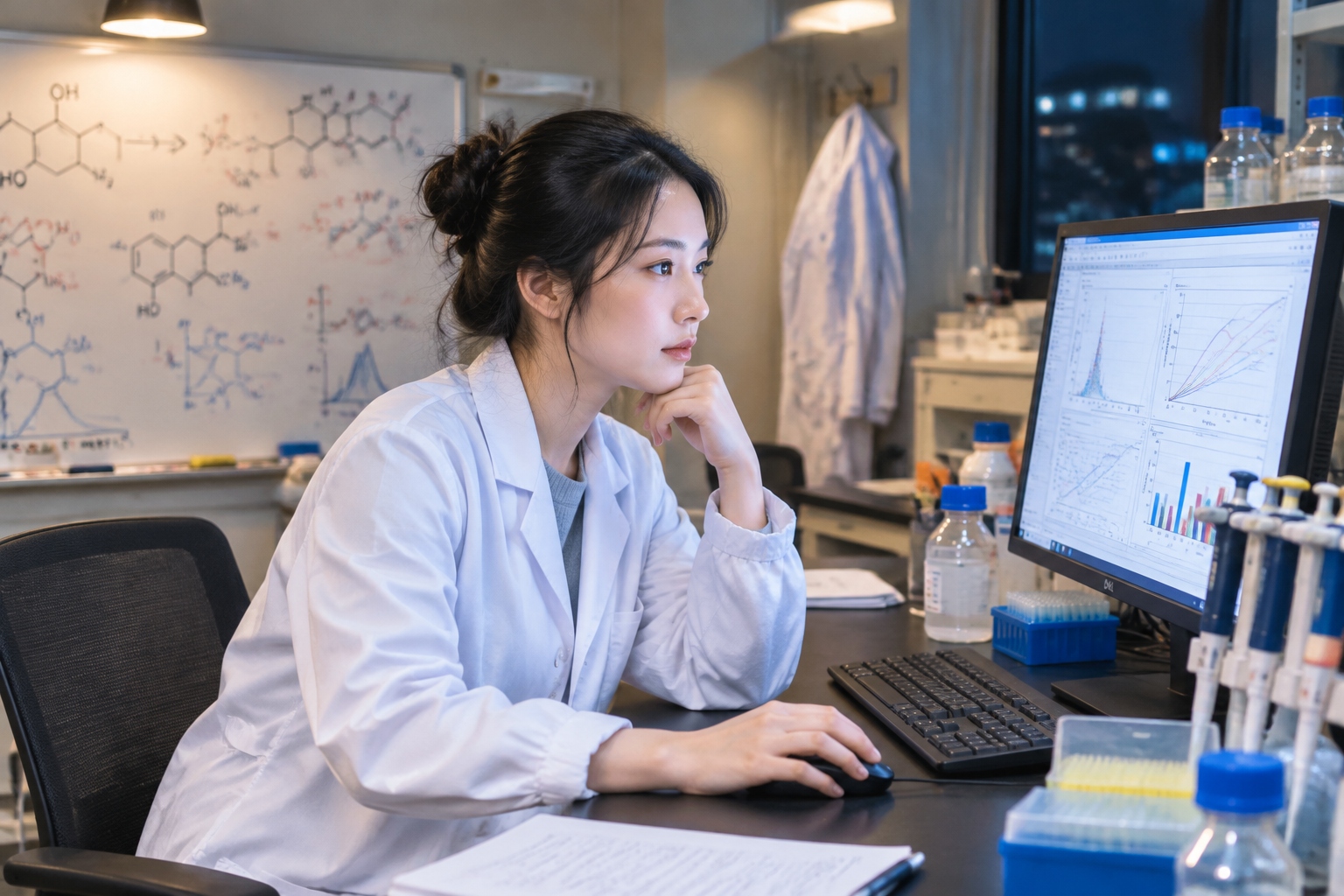
At 8:15 a.m., Liu Xin opens her lab notebook to a drawing she made the night before: a row of little gels with colored bands, one of them circled. She is 26, a PhD candidate in chemical biology at a Shanghai university, and this notebook is the closest thing she has to a diary. The lab smells of ethanol and faintly sweet culture medium. Before she takes off her jacket, she checks her cells under an inverted microscope. “If the cells look happy, the day starts well,” she says.
Liu Xin belongs to what people in China call the “post-90s” generation — the cohort born between 1990 and 1999. They entered university laboratories just as Chinese doctoral education expanded quickly. Today, Chinese universities host more than half a million doctoral researchers, and a large share of them are still in their twenties. To understand what this generation is actually bringing to Chinese science, I spent a day following Liu through the ordinary routines of her PhD life.
A Morning of Small Accurate Movements
The morning work is repetitive, but the repetition is the point. Liu seeds 96 wells with cells, adds a compound made in a neighboring lab, and writes the numbers in a blue notebook. Every reagent bottle carries a QR code; when someone takes one off the shelf, the lab manager scans it into the shared inventory. It sounds dull, but it prevents the all-too-common nightmare of discovering that a reagent expired last month.
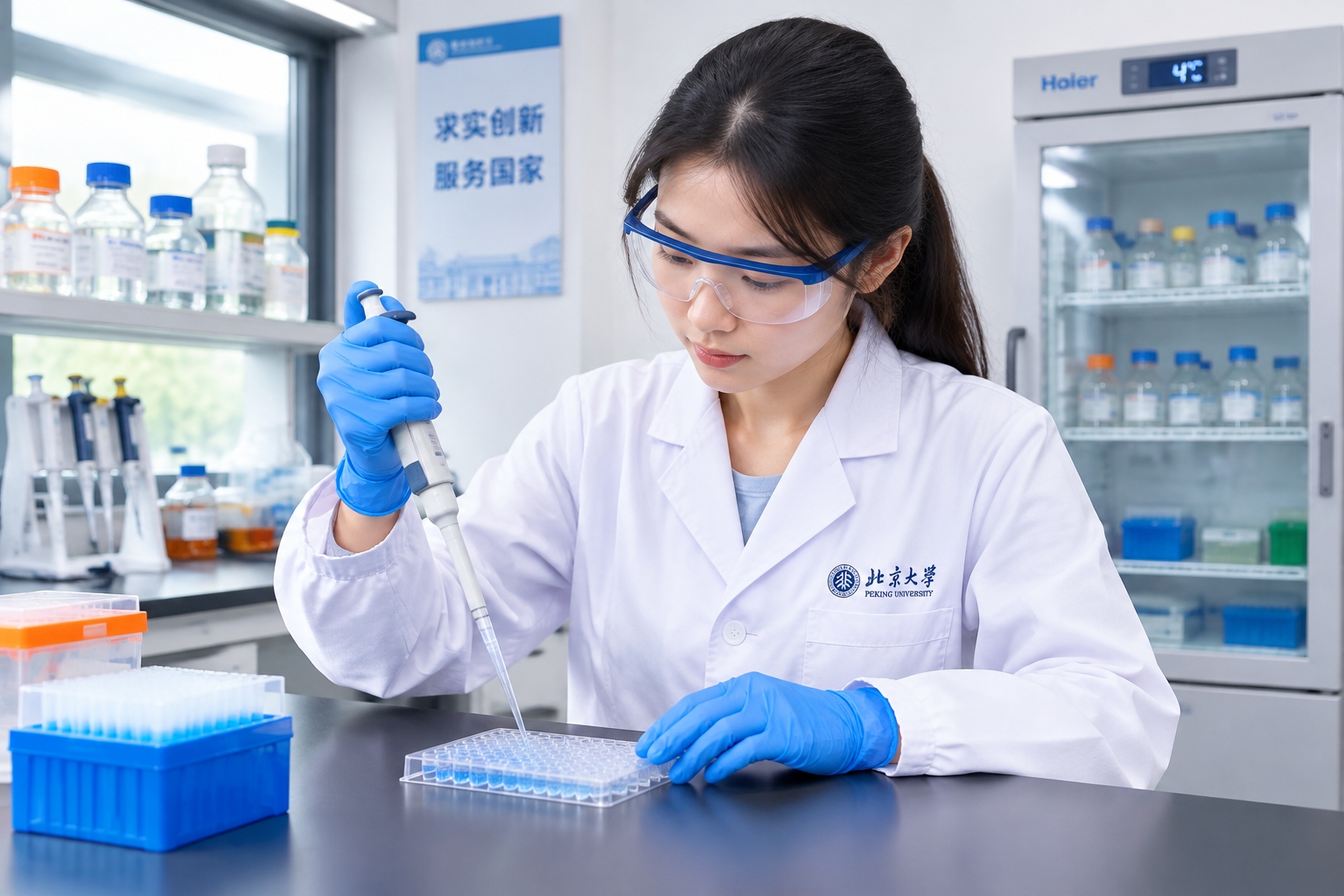
This is not a showcase laboratory. It has two clean benches, a fluorescent microscope, an old freezer that hums a little too loudly, and a brand-new real-time PCR machine bought with a grant from the National Natural Science Foundation of China. “The equipment is good enough,” Liu says. “The bottleneck is usually me, not the machine.” She says this without a hint of false modesty.
The Weekly Group Meeting
At 10:30, the group gathers for its weekly meeting. Liu stands in front of a projected slide and walks through the latest data. Her supervisor, Professor Zhou, nods at the solid parts but stops at an uneven curve. “The experiment may be fine, but your logic has a gap,” he says quietly. The postdocs follow with a couple of sharp questions. Liu answers by listing the reasons that could explain the outlier.
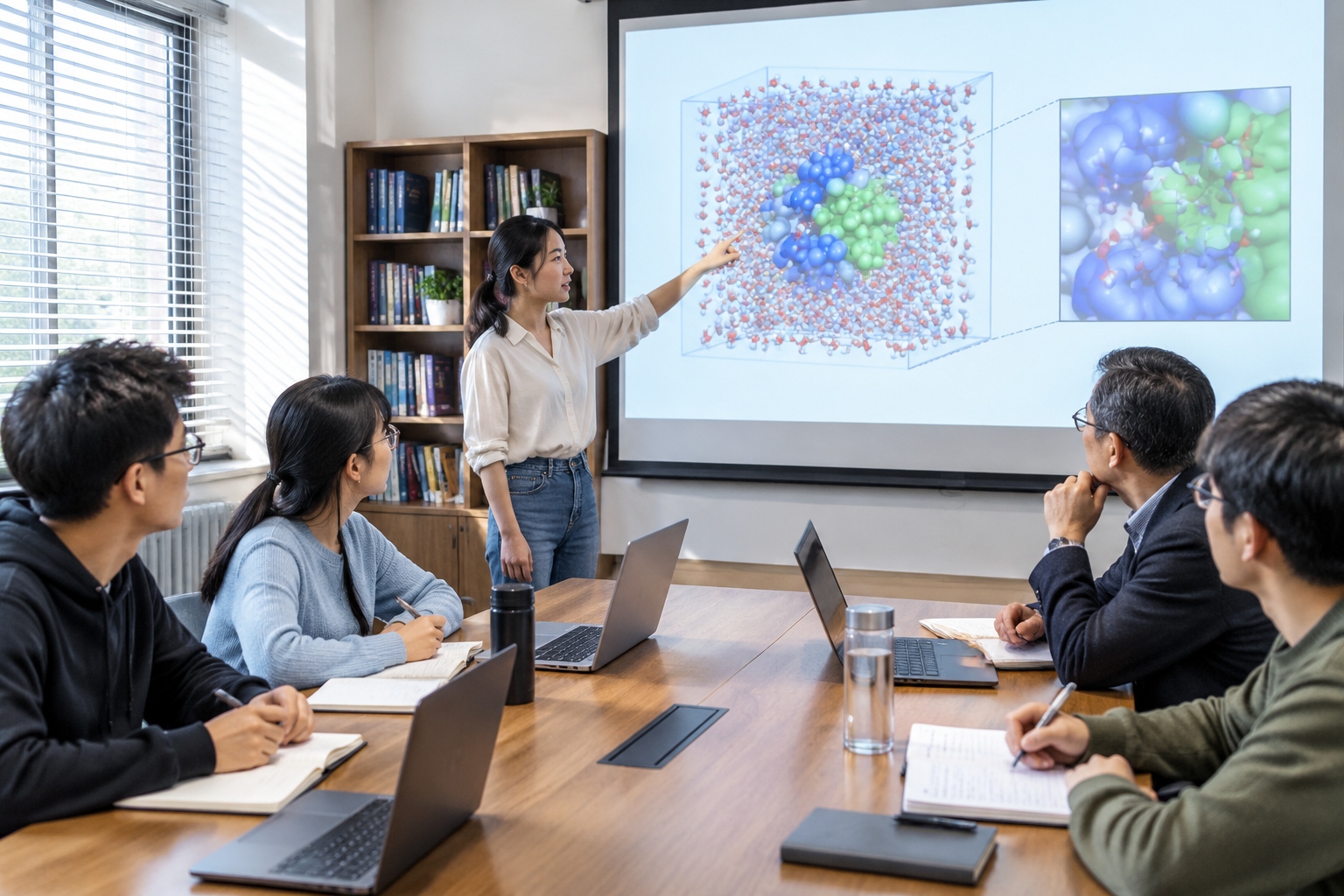
For a Chinese PhD student, the group meeting is the center of daily life. It teaches you to defend your work in front of people who will not be impressed by how many hours you spent. It is also fast transmission: master’s students and visiting scholars sitting around the table absorb months of experience in an hour.
Lunch and the Other Future
At noon, Liu and her labmates walk to the university canteen. A bowl of noodles with greens and an egg costs 11 yuan, less than two dollars. They talk about the meeting, and a third-year student mentions a job opening at a biotech company in Suzhou: starting salary around 250,000 yuan a year. For many doctoral students, this is the other future — not a postdoc abroad, but a direct path into industry.
Liu waves her chopsticks. “I still want to try an academic postdoc first,” she says. “But I also check job posts. I don’t want to pretend academic jobs are the only answer.” Around her, several labmates nod. In Chinese research today, the academic route is no longer the only one that pays respect.
The Quiet Weight of Expectations
After lunch, Liu returns to the lab and spends the afternoon running 48 samples, cleaning data in Python, and half-reading two papers she saved over the weekend. At 6:30 she goes to the university gym for a short workout, because her neck and back have already learned the price of sitting.
The graduate school recently put up posters for a counseling hotline, and a peer support group meets once a month in a conference room down the hall. No one talks about it much, but the posters exist for a reason. “The pressure is real,” Liu says. “It is not about being scared of your supervisor. It is that small voice inside saying other people are publishing papers while you are still collecting data.”
Not Just a Work Machine
By 8 p.m., the lab building is still full. In the shared office, several PhD students sit in front of double screens. A phone on a stand is playing a web drama; a bag of oranges sits beside an open laptop; a cardboard “cake” made from a delivery box sits in the corner because someone in the group had a birthday this week.
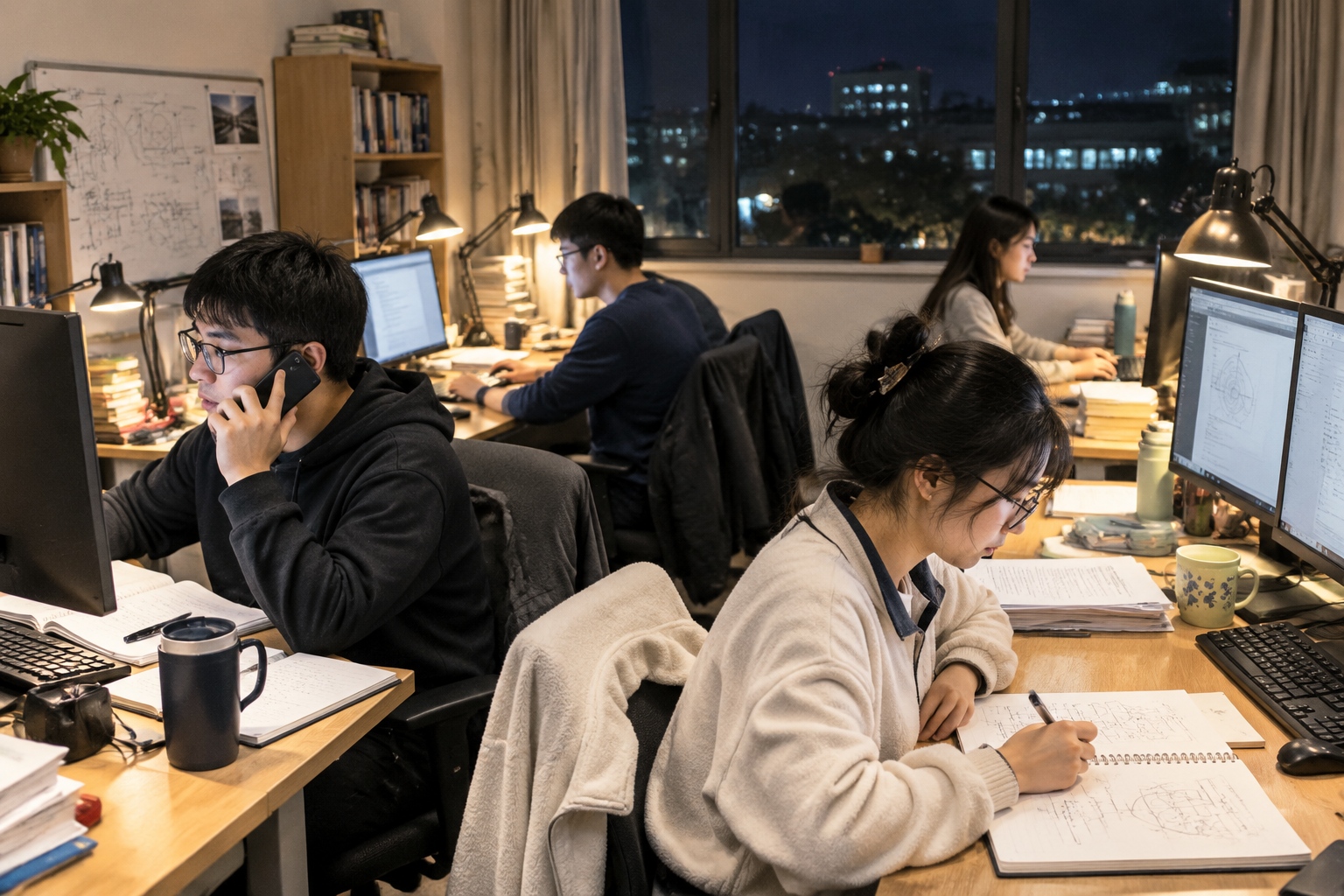
Liu also runs a science communication WeChat account that explains her research with cooking metaphors. She has about 14,000 followers, most of them high school students and younger researchers. “People outside think post-90s PhDs are machines,” she says. “But the lab is full of people who dye their hair, complain about reviewers, and send each other cat videos.”
Late-Night Gels
At 10:45, Liu puts a fresh gel into the imager. The green bands appear on the screen, and one lane is exactly what she hoped to see. She doesn’t fist-pump or call anyone. She takes a screenshot, sends it to her supervisor with the line “Looks good, will repeat tomorrow,” packs her laptop, and rides a shared bike through the emptying campus.
In Chinese research, one clean result late at night is not a breakthrough. It is only permission to keep going. But tonight, that is enough.
China spent two decades building one of the largest higher-education systems in the world. Whether it becomes a real engine of innovation will be decided not by policy documents alone, but by ordinary days like this one — one gel, one group meeting, one repeated experiment at a time.
Start the discussion at forum.chinacomes.com