
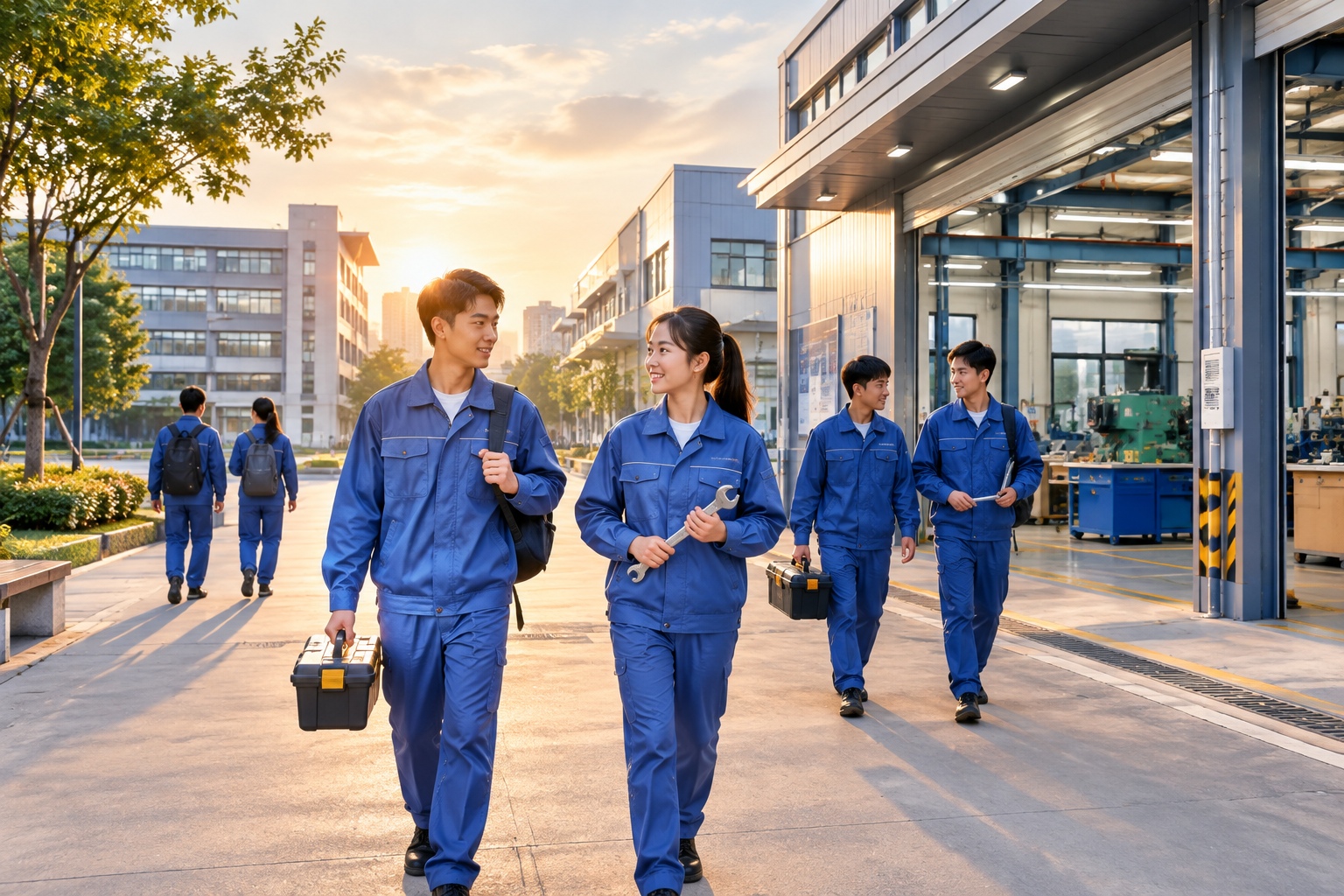

The Morning Shift in Foshan
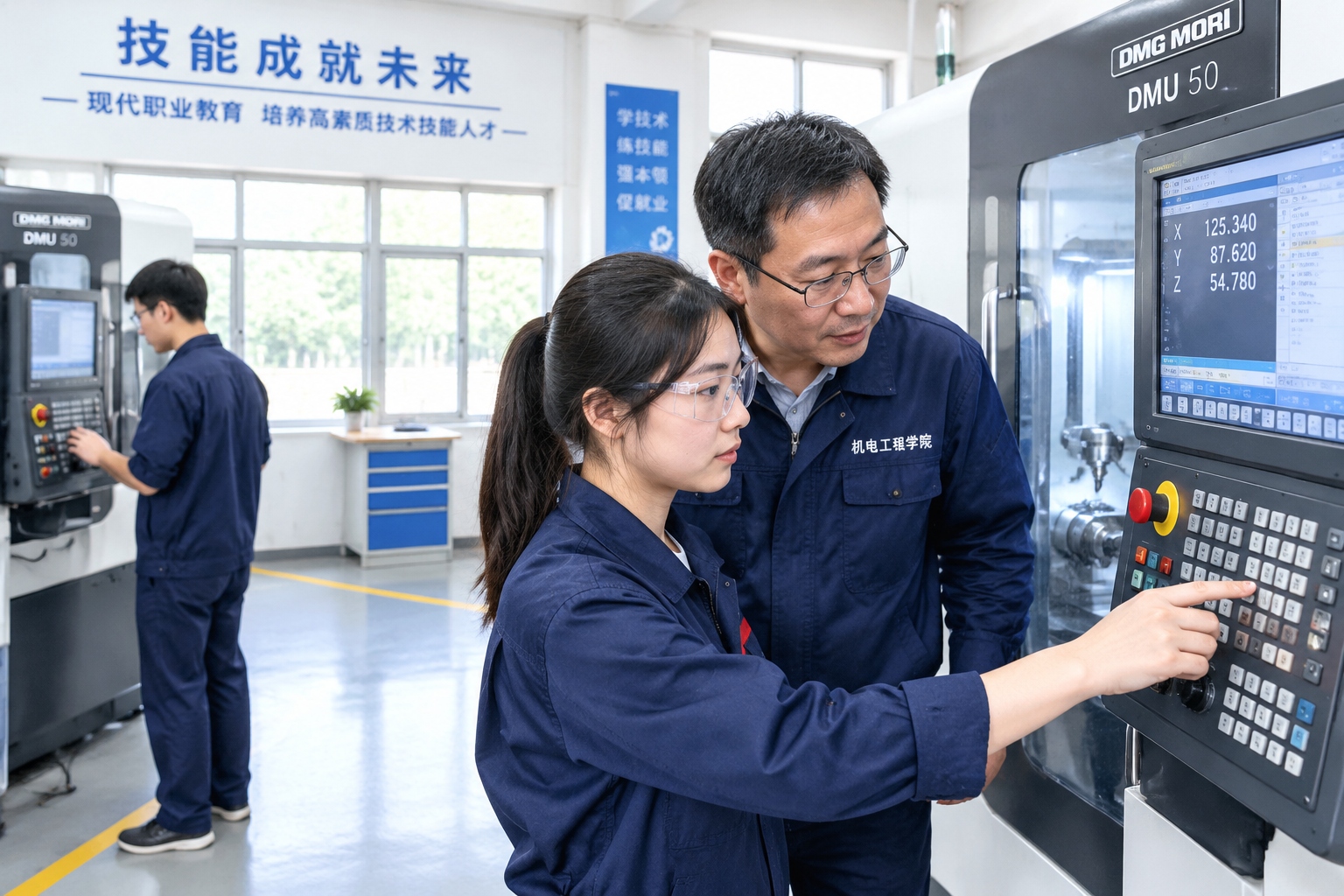
At 8:30 in the morning, 19-year-old Chen Xiaoting is programming a CNC milling machine in a vocational school workshop in Foshan, southern China. Dressed in navy overalls and safety glasses, she pauses to measure a steel part with a digital caliper. Her trainer, 45-year-old Mr. Liang, stands nearby, reminding her that “precision means zero tolerance for guessing.” A year ago, Chen could hardly tell a drill bit from a screwdriver. Now she is learning to build robotic arms for a local company as part of a school-enterprise training program.
This scene is becoming familiar across China. For decades, vocational education was seen as a second-class option for students who failed the high school entrance exam. Today, it is being repositioned as a serious career track — one that produces “new artisans” who can handle smart machines, read digital blueprints, and take pride in their work.
Why China Rethought Vocational Education
The change started with a skills shortage. As Chinese factories moved from cheap assembly to higher-value manufacturing, they needed more technicians — but not just any workers. They needed people who could install, debug, and maintain automated equipment. Universities were not producing enough graduates willing to do this kind of hands-on work. Meanwhile, millions of young people faced the stigma of failing the academic track.
In 2019, the central government launched a major reform plan for vocational education. The message was clear: vocational graduates deserve equal respect, and their skills matter for the country’s future. Vocational schools began to upgrade equipment, redesign courses, and build partnerships with leading companies.
Factories Become Classrooms
One of the most visible changes is the rise of “dual-system” education, adapted from Germany’s model. In a typical arrangement, a vocational school and a manufacturing company sign a contract. The company sets up a training station in the school, providing industrial robots, CNC machines, and experienced technicians as part-time instructors. Students spend half their time on theory and half on real production tasks.
Take the example of Heilongjiang Agricultural Engineering Vocational College in the north. It runs a campus factory that makes precision metal parts for agricultural machinery. Students work in shifts under real deadlines and get paid for their output. “We don’t do fake exercises,” one instructor told me. “If a part is wrong, it goes to the scrap bin. The customer won’t accept it.”
This is a huge departure from the old days, when students practiced on rusty equipment with no consequences.
Skills Competitions Turn Students Into Stars
Another driver is the national skill competition system. Every year, hundreds of thousands of students compete in events like CNC machining, mobile robotics, and auto repair. Winners receive medals, cash prizes, and — most importantly — job offers from top companies. Some provinces even give direct entry to a university for competition winners.
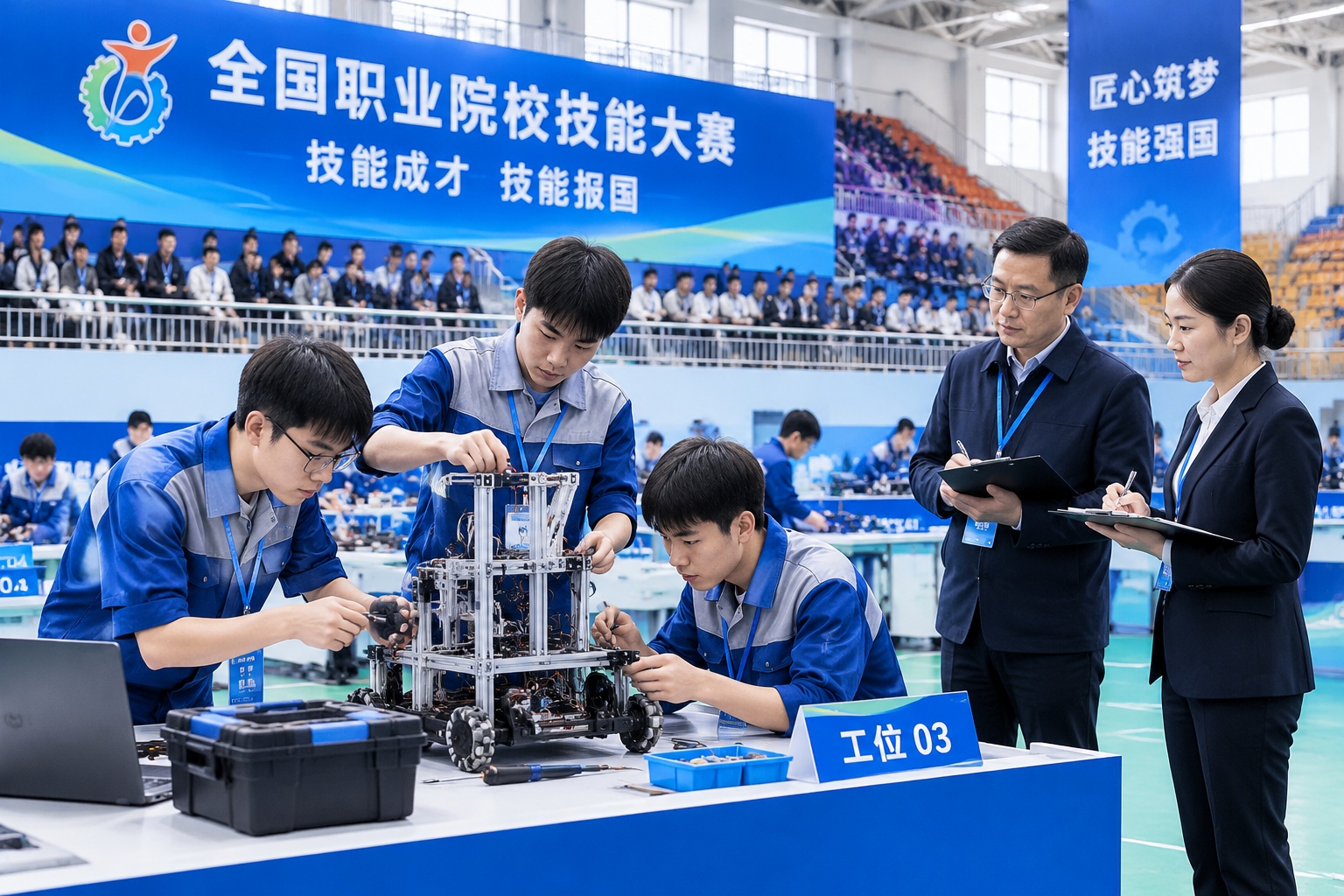
In 2022, at the WorldSkills Special Edition, Chinese competitors won 15 gold medals, topping the league table. These victories are broadcast on Chinese social media, helping to change the image of blue-collar workers. “My father used to say only a loser gets dirty hands,” says Liu Wei, a 21-year-old electrician and gold medalist. “After my medal, he showed the video to all our relatives.”
Who Becomes a New Artisan?
The new generation of artisans is different from the old one. They are often graduates of three-year vocational colleges, not dropouts. They are comfortable with digital software and app-based tools. Many can read English manuals and write basic code. And they carry professional certificates, recognized across the country.
For young people, vocational programs now offer a path to decent wages. A skilled CNC operator in the Pearl River Delta can earn 8,000–12,000 RMB a month ($1,100–$1,700), comparable to entry-level office jobs. With overtime and bonuses, senior workers earn more. And because demand exceeds supply, job placement is rarely a worry.
“When I finished middle school, I cried,” recalls Zhang Li, now 24 and a quality inspector at a drone factory. “I thought my life was over. But I was lucky — my city had a good vocational school. I got a certification in industrial electronics. Today, my sister is in a regular university, and she tells me she has no idea how she’ll find a job after graduation. I have three offers waiting.”
What Still Needs Work
It would be wrong to paint a flawless picture. There are still big disparities between coastal and inland vocational schools. Some small and medium companies are reluctant to invest heavily in training. And many parents continue to push their kids toward academic universities, believing that a white-collar degree is the only sure path.
Also, the curriculum lags behind industry in some places. Teachers may be strong in theory but out of touch with the latest factory technology. The government has launched programs to send teachers to companies for regular training, but progress is uneven.
Still, the direction is clear. China’s vocational education is moving from a compromise to a choice — one that offers young people a concrete way to become skilled artisans, and offers the economy the talent it needs.
How to See It Yourself
If you are curious about this change, visiting a vocational school is easier than you think. Many schools hold open days where you can tour the workshops. National skill competitions are open to the public, and some are televised. In big cities like Shenzhen or Hangzhou, you can also visit “training academies” set up by companies like Huawei or BYD. Just search for “vocational education open day” in the city you are in, or ask a local friend to connect you with a school.
For a foreign visitor, these places offer a window into what “Made in China” is becoming — not just cheap goods, but patient, skilled human craft.
Start the discussion at forum.chinacomes.com