
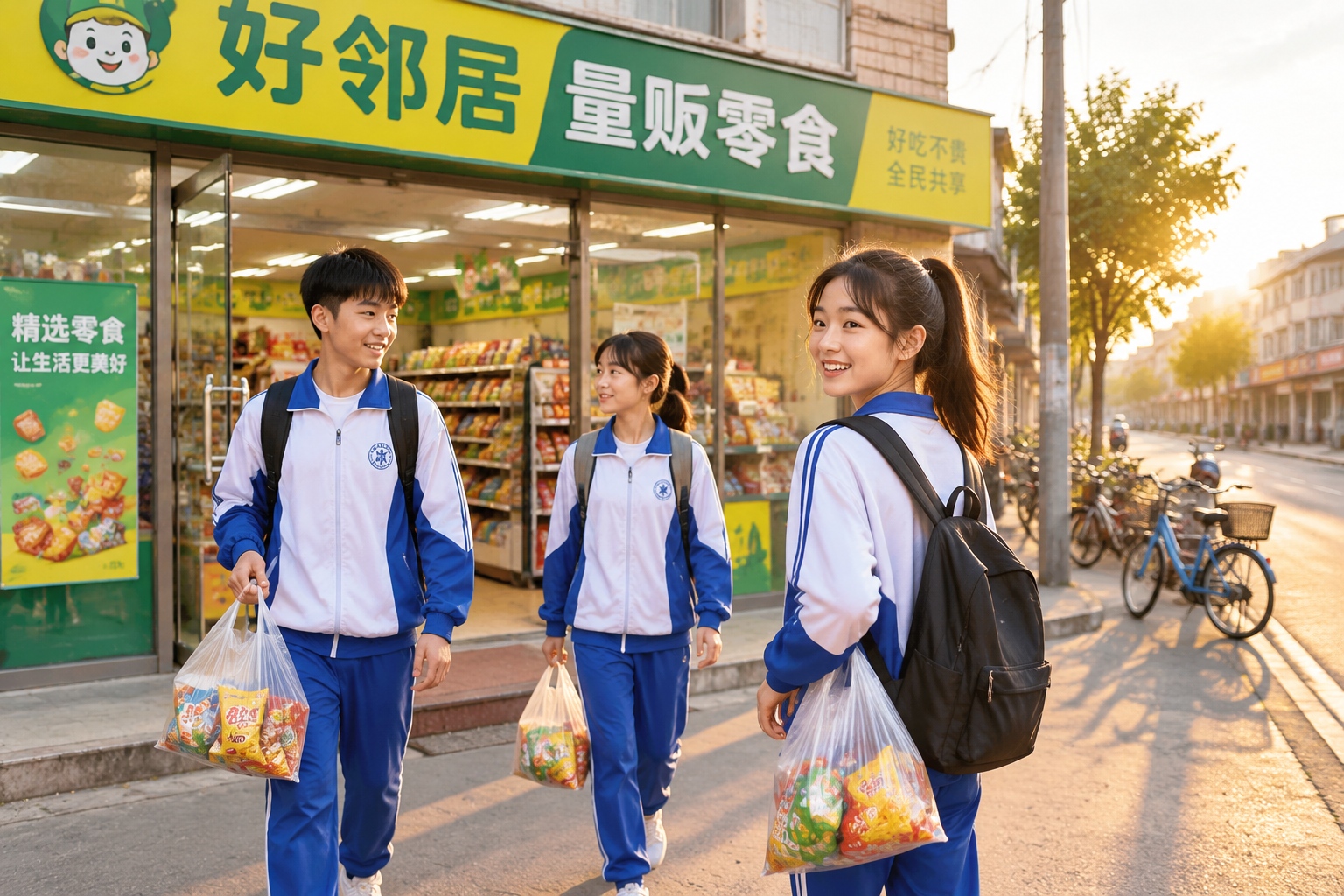

At 5:12 p.m. on a Tuesday, the glass door of a Haoxianglai snack store in a county-level city in Henan Province slides open. Inside, the sound of school bags dropping onto the floor is as predictable as a bell. Two kids in blue-and-white school tracksuits head for the chilled drink shelf; a girl in round glasses squats next to a transparent bucket of chocolate peanuts, studying the nutrition label; a tall boy counts coins at the counter—6.5 yuan, enough for a small bag of snacks and a lollipop. In the next ninety minutes, dozens more students will walk in. Many will stay longer than it takes to eat what they buy.
It is not a special event. It is the everyday rhythm of thousands of small Chinese towns where a new type of discount snack shop is quietly becoming what a community center might be: a place that welcomes teenagers before they go home. The chain is called Haoxianglai — the name roughly translates as ‘come if you feel like it’ — and it is one of the fastest-growing brands in China’s ‘bulk snack’ retail sector.
The physical formula behind the wait
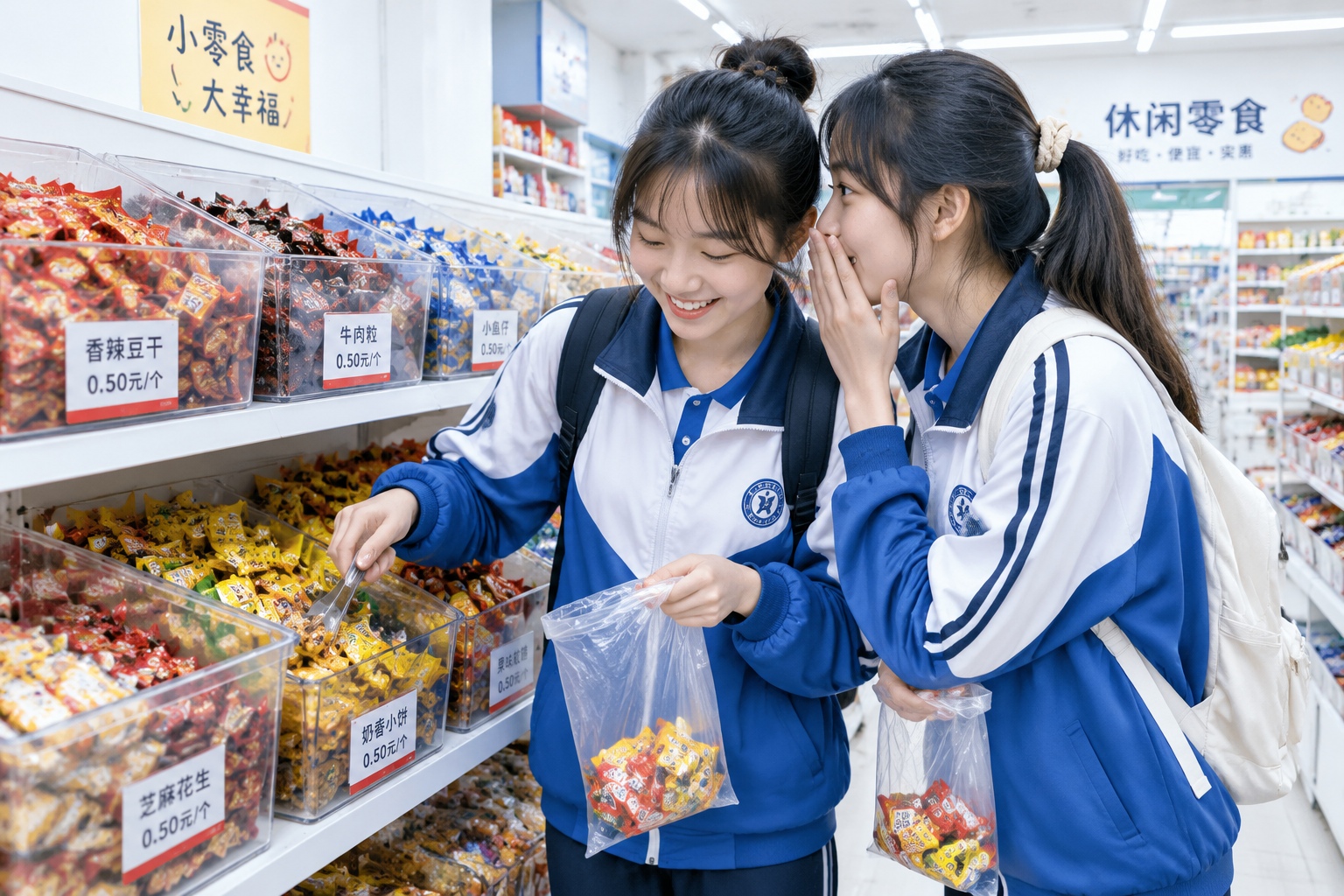
The first thing you notice is the visual noise. Down each aisle, transparent containers are stacked with snacks that many overseas shoppers have never seen: durian crisps, freeze-dried yogurt drops, salty dried plums, wasabi peas, spicy starfish-shaped crisps, and an entire section devoted to the legendary Chinese ‘spicy strip’ — puffed wheat gluten coated with chili oil and flavor powders.
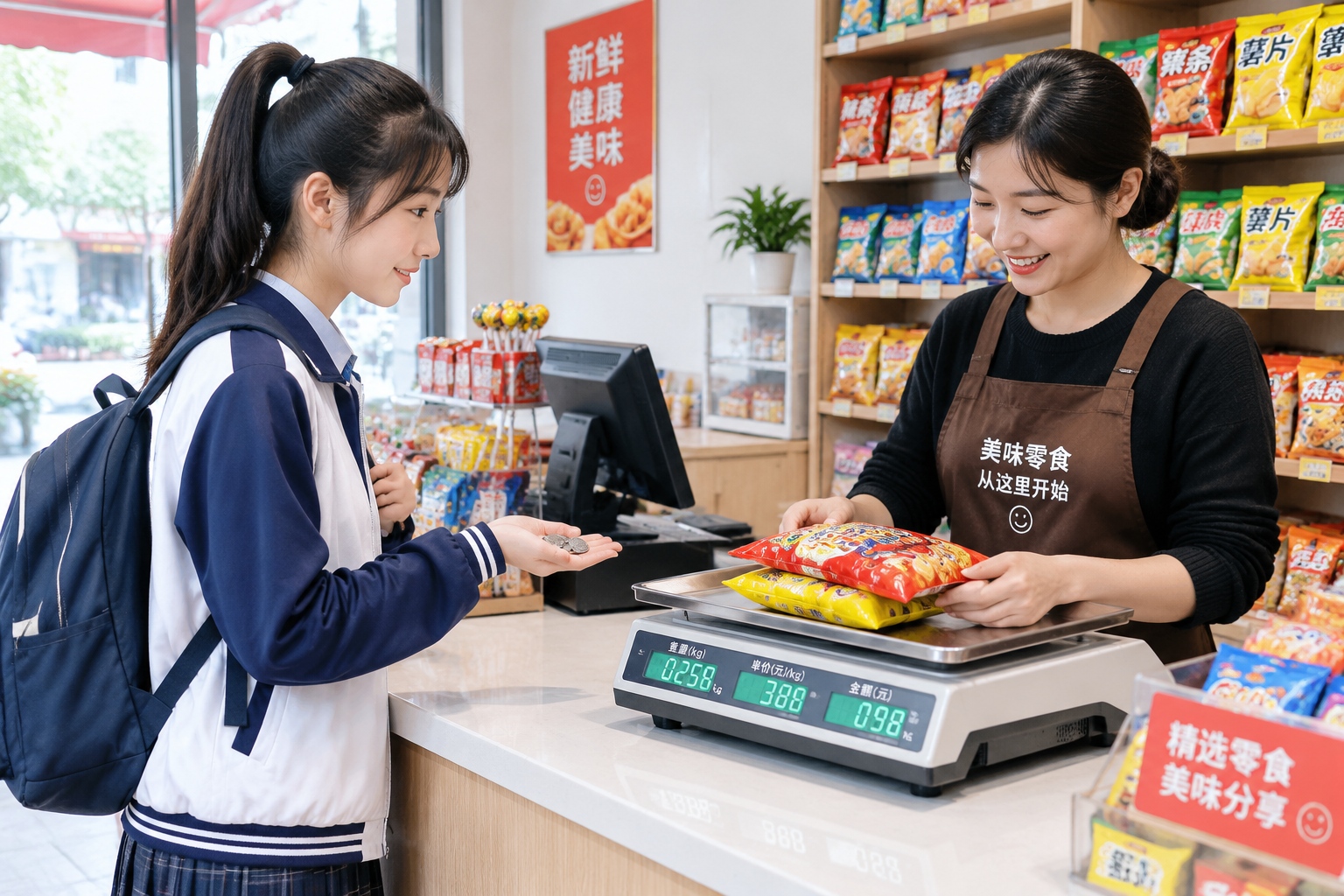
Unlike a supermarket, almost everything here is sold by weight. You take a translucent bag and scoop as little as 30 grams or as much as you like. At the checkout, a clerk weighs each bag, writes the price in marker and seals it. For adults, the process can feel tedious. For teenagers, it feels like a low-stakes game: the bag becomes a canvas and the total is their choice.
The store is also designed to lure students. The aisles are wide enough to chat with friends, the shelves are at child height, and the inside is bright and air-conditioned. On hot summer days, kids from nearby schools happily spend an hour in the cool room even if they buy just one pack of chilled mango cubes.
The 5 p.m. crowd doesn’t come mainly to eat
Most students arrive in groups of three to five, and I noticed that shopping together is a small exercise in negotiation. One friend is the finance minister, adding up 2.5 yuan here and 1.8 yuan there. Another one scouts for the newest flavor and tries hard to convince the others. Once they pay, they often stand outside the glass door, tear open the communal bag and start the real conversation.
Chen Wei, 14, said that they often do not even eat all they buy. ‘I could buy snacks at the mini-mart near my school,’ he said as he pulled an ice-cold soda from the shelf. ‘But then everyone would just go their own way. Here, we can wander for a while, choose together. Then we find a spot near the door and talk, sometimes until even our phone batteries die.’
His classmate Luo Lin, a quieter girl, put it more plainly: ‘At home we are all heads-down staring at screens. Here we are allowed to be silly out loud.’
What I heard from students over several visits was that the exact snack matters less than the ritual. The ritual is to walk in without purpose, compare a strange product with friends, and walk out with the shared memory of deciding something small. For adolescents who rarely have decision-making power at home, this is powerful.
Behind the cheap bins, a serious retail plan
The charm of Haoxianglai is not purely spontaneous—it is engineered. China’s “snack volume retail” chains have adapted the dollar-store model to a country of 1.4 billion snack lovers. Because they buy stock directly from manufacturers in huge quantities, they can keep prices low. Because the stores are located in small cities and neighborhoods with fewer shopping options, customers visit more often.
Xu Min, who runs a franchise unit in a residential area in Weinan, Shaanxi, said that students are both her challenge and her best marketing team. ‘They bring a family member on the weekend and say, look, this is the jelly I told you about,’ she said with a laugh. ‘They are honest reviewers. If something tastes wrong, they will tell everybody in class before the day is over.’
This kind of local commentary is bringing new energy to old streets. Small Chinese cities are often losing young people to provincial capitals, and storefronts remain empty for years. A bright bulk-snack store occupies retail space quickly and creates foot traffic that draws shoppers to surrounding fruit shops and bakeries. It may not sound like economic development, but for a county town that needs reasons to walk, it works.
Parents grumble, children gather
Not all neighbours welcome the trend. During my conversations, some parents admitted they limit their children’s visits because of sugar and salt. Local teachers sometimes have to ban certain pungent snacks from the classroom after a smell test gone wrong. There are also concerns about single-use plastic: every tiny scoop ends up inside its own disposable bag, though some stores have begun offering paper loops and encouraging people to bring their own jars.
Those are fair critiques, but they don’t stop the children. The attraction has persisted because, in many small towns, there are no other ordinary, free-to-enter places where a group of teenagers can just exist after school. Most public facilities close early; shopping malls are far away; parks can feel empty in winter. Haoxianglai is an unreliable but functional shelter for the interval between the last class and bedtime.
A hangout Chinese teenagers made themselves
When I asked Chen Wei why he wouldn’t just order snacks online or go straight home to play games, he answered with the matter-of-fact tone that 14-year-olds perfect: ‘Because I need to be with people.’ His friend added, a little more gently, ‘The food is a reason, but it’s not the point.’
That is the answer behind the global fascination with Chinese consumer habits. The same country that moves through payment apps and drones still has millions of teenagers whose deepest wants are not new at all: to feel chosen, to feel welcome, and to share a bag of something sweet with someone their own age. In China’s small towns, a discount candy store just happened to offer that space.
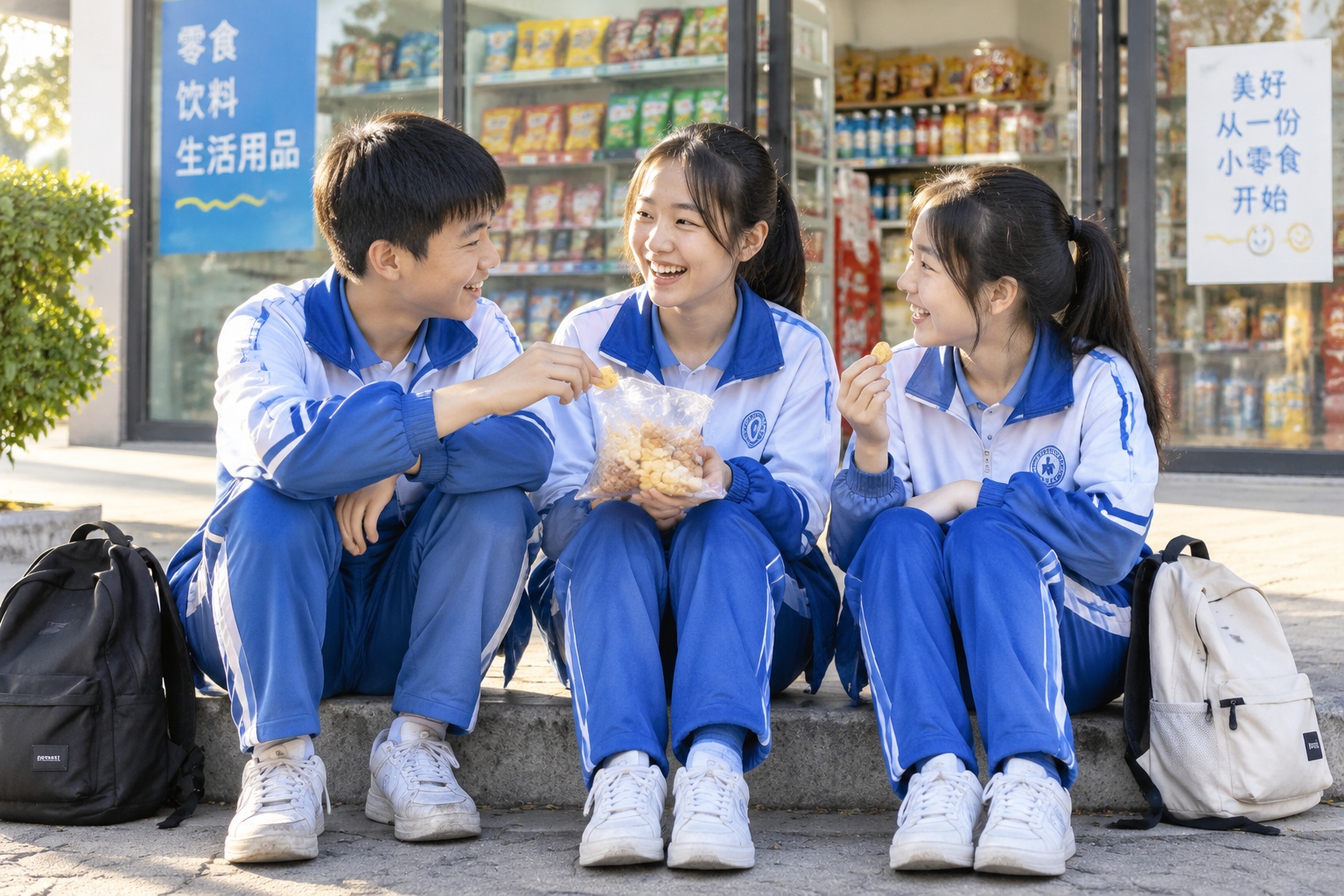
So the next time you see a picture of colorful snack bins marked ‘好想来’, look beyond the candy. Behind the glass door is a low-key social experiment. No membership is needed. No one is judged for buying only three lollipops. And at a sunny hour between school and dinner, a small Chinese town can feel as warm and crowded as the largest city.
Start the discussion at forum.chinacomes.com