
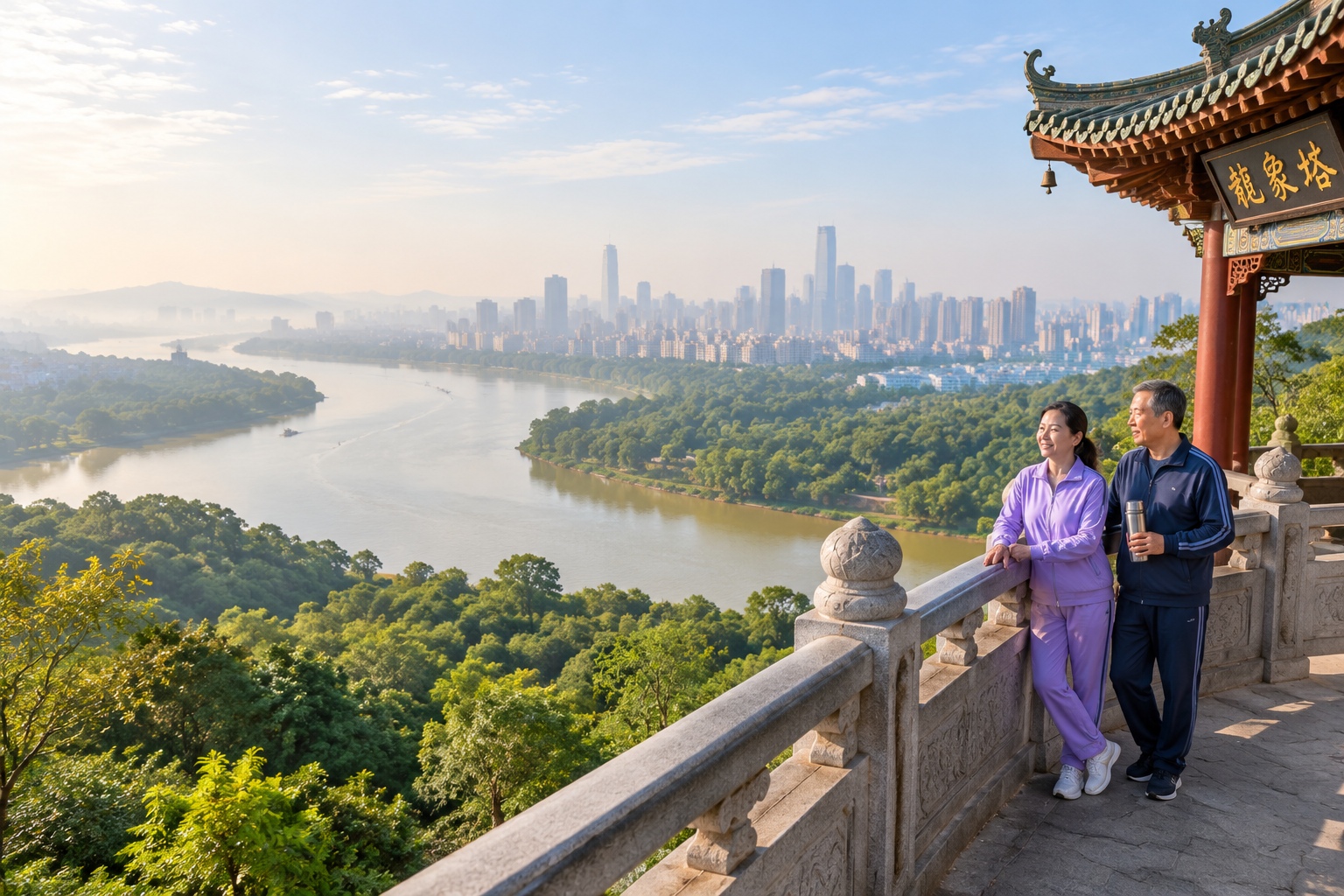

7:20 a.m., the North Gate of Qingxiu Mountain
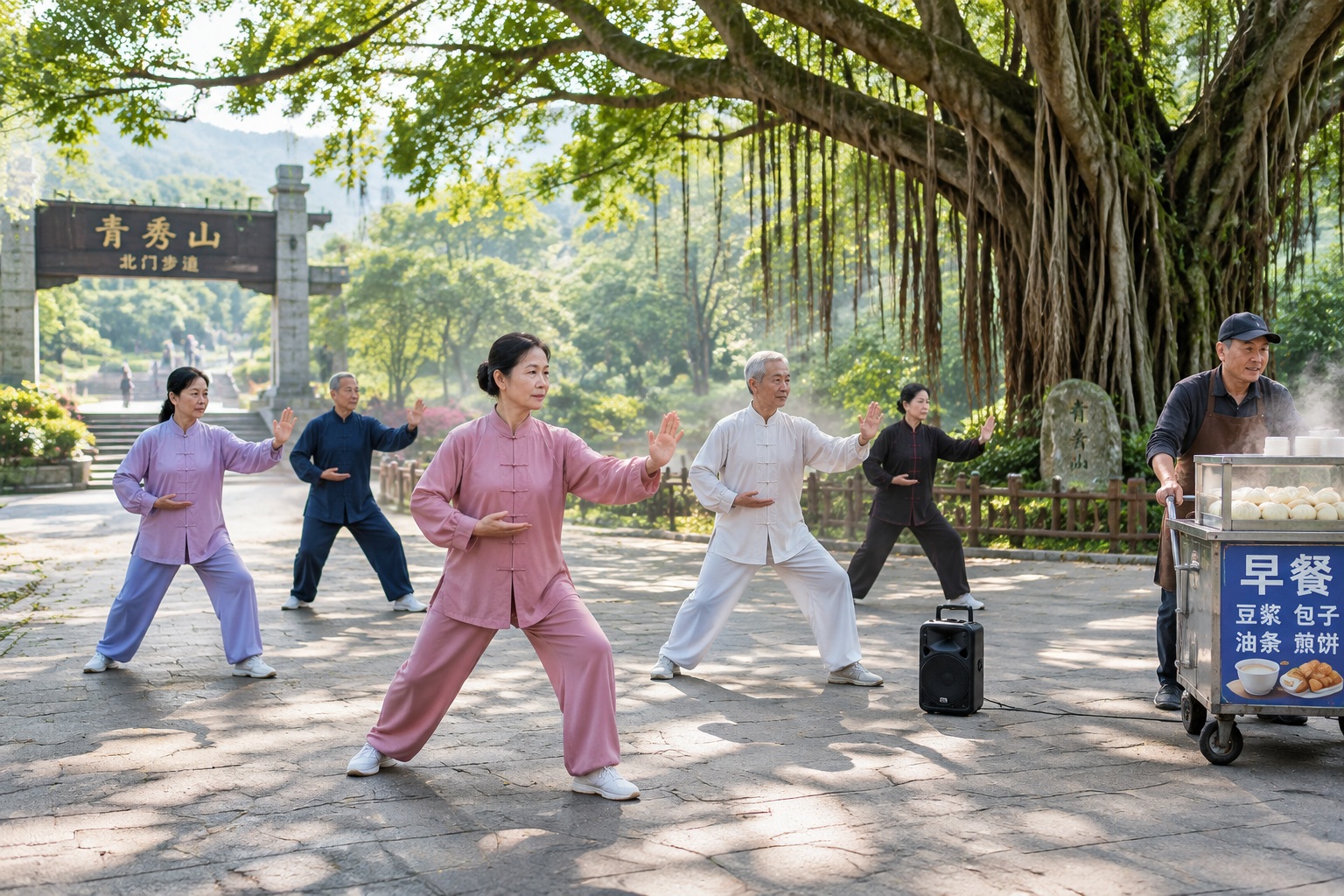
The gate opens and the morning arrives all at once: the slap of sneakers on wet stone, a portable speaker playing something halfway between tai chi music and Cantonese pop, the smell of diesel from the sightseeing carts and, underneath it, crushed leaves and damp earth. A man in his seventies walks past with a thermos in one hand and a bag of steamed buns in the other. Two women in matching pink tracksuits are arguing cheerfully about which path is shorter. Almost nobody here is climbing the hill for the pagoda. They are here because in July it can be 27°C before eight in the morning and 35°C by two in the afternoon, and this is the hour that belongs to them.
Qingxiu Mountain — Qingxiu Shan, roughly ‘green and elegant’ — is a hill park of about 13 square kilometres on the south bank of the Yong River. In 2014 it was given China’s top scenic rating, 5A. It rarely appears on foreign visitors’ itineraries, which is part of the point: on a weekday morning the paths belong to Nanning residents, not tour groups.
Climbing Longxiang Pagoda
From the north gate, Longxiang Pagoda is a 25-to-40-minute uphill walk on paved paths, or a five-minute ride on one of the park’s shuttle carts. Walk it. The route passes orchid beds, a palm grove, and small pavilions where retirees write calligraphy with water on the stone floor — the characters dry and vanish behind them as they move on.
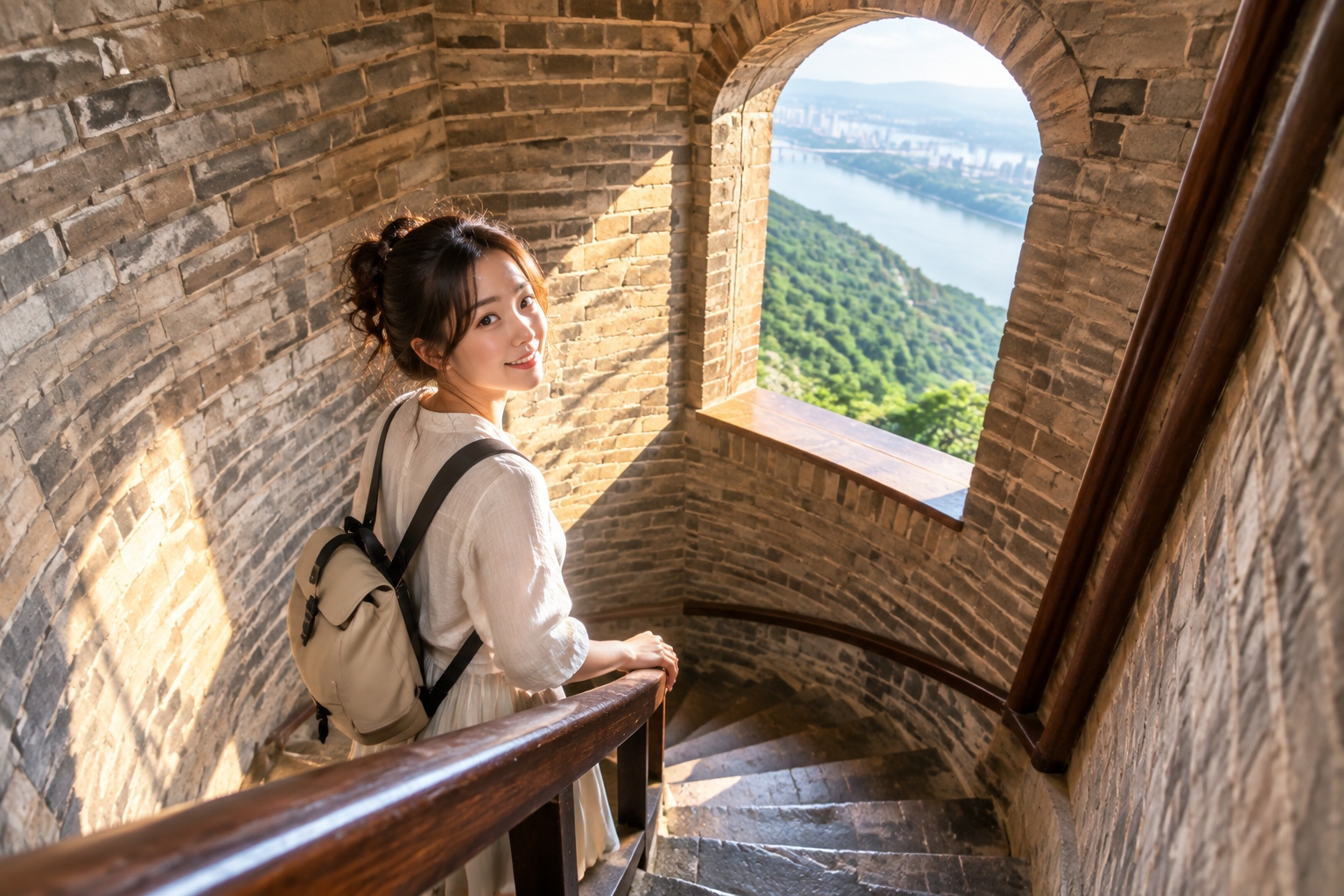
The pagoda is a reconstruction, and it is worth saying so plainly. The original went up in the Wanli era of the Ming dynasty, in the late 16th or early 17th century, and stood for about three hundred years. In 1937, during the war with Japan, it was deliberately demolished: it was tall enough to serve as a landmark for enemy aircraft. What you climb today was rebuilt in the 1980s — nine storeys, octagonal, brick, a little over fifty metres, with narrow arched windows that frame the view in slices as you spiral upward.
The View, Honestly
From the top, the Yong River bends below in a wide brown-green curve, and the city spreads north in grey blocks interrupted by an unusual amount of green. Nanning calls itself the Green City; from up here you can see the claim being kept. Trees fill the gaps between buildings, and bougainvillea — the city’s other floral signature, after the hibiscus — spills magenta over walls and overpasses. In the far distance, the glass towers of the Langdong business district catch the light.
You will probably not spot the convention centre. It sits about seven kilometres north, and on most days the subtropical haze wins. That is the honest version of the ‘two faces of Nanning’ postcard: the pagoda and the exhibition hall do not share a view. They share a city. To see the second one, you have to come down.
Down the Hill and Onto Metro Line 3
Nanning’s metro is clean, cheap and bilingual, and it makes this route genuinely easy. From the station nearest the park’s main gate, take Line 3, change at Jinhu Square to Line 1 heading toward Nanning East Railway Station, and get off at Huizhan Zhongxin — ‘Convention and Exhibition Center.’ The trip takes under half an hour and costs a few yuan; fares start at 2 yuan. Follow the exit signage and you surface in front of a plaza the size of several football pitches, with a white steel structure on the roof of the halls that looks, from a distance, like a flower the size of a building.
The Flower on the Roof
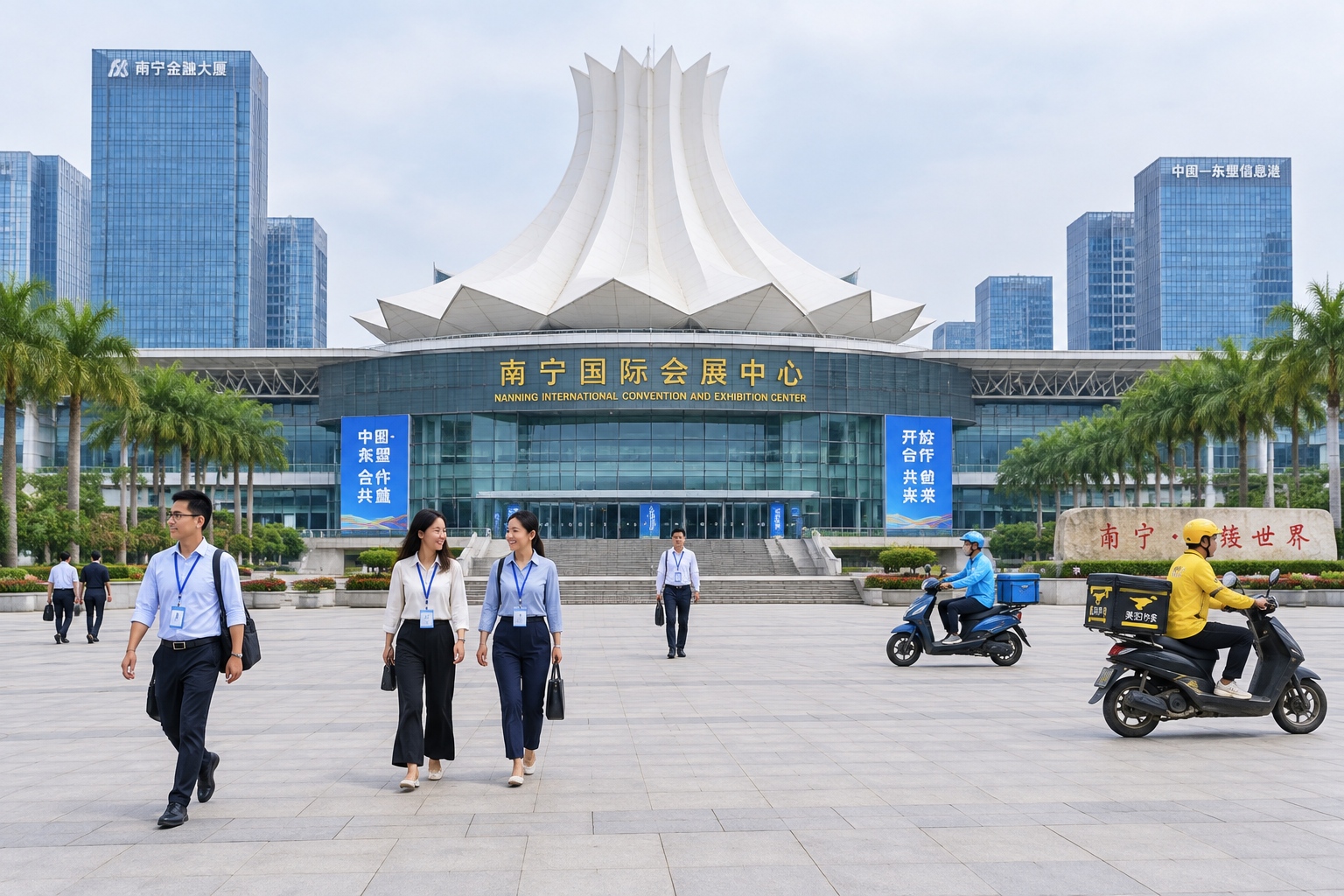
That shape is deliberate. The roof of the Nanning International Convention and Exhibition Center is modelled on the hibiscus, the city flower of Nanning — a fan of white steel petals opening over the main hall. The complex opened in 2003 and hosted its first China–ASEAN Expo in November 2004; a second phase of halls was added around 2018. Every September since, the expo has filled these halls with companies from across Southeast Asia, and Nanning — often described as China’s closest provincial capital to Southeast Asia, roughly 180 kilometres from the Friendship Pass border crossing into Vietnam — has used that week to make an argument about itself.
Whether or not you care about trade fairs, the building tells you something about the city’s ambition. The pagoda looks south over the river and the hills. The exhibition centre looks out at a region.
What the Plaza Does on an Ordinary Tuesday
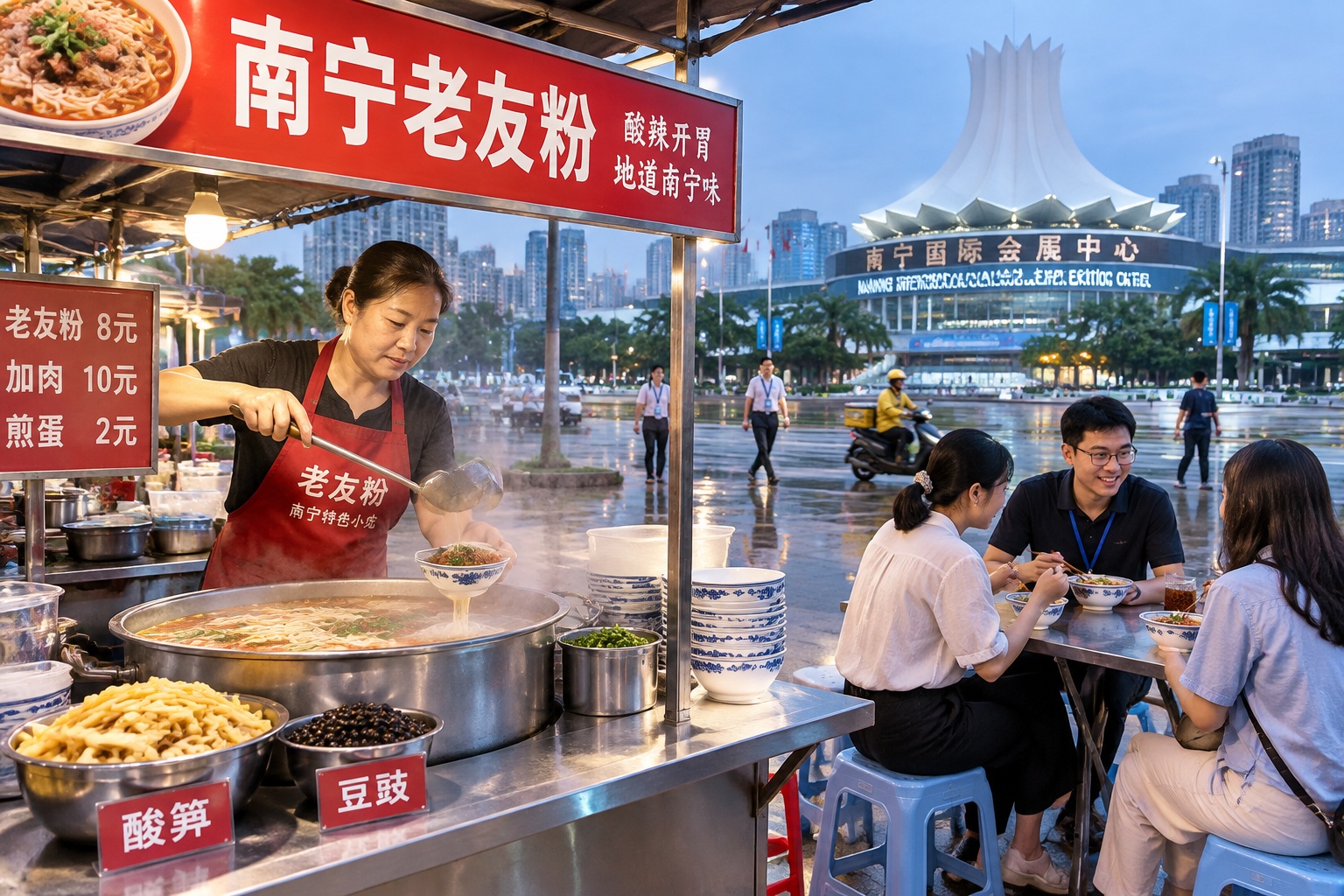
Outside expo week, this is not a monument. It is a large, hot granite square with ordinary life running across it: office workers in lanyards cutting between the towers at lunch, delivery riders weaving past with insulated boxes, school students hanging around the metro steps. Under the exhibition halls there is a food court, and in it the Nanning dish you should not leave without trying — laoyou fen, ‘old friend noodles,’ a sour, spicy rice-noodle soup built on fermented black beans, pickled bamboo shoots and tomato. Locals argue about who makes it best the way other cities argue about football.
By evening the plaza fills with families, children running in circles, and the walkways toward the nearby MixC shopping mall turn into a slow river of takeaway bags. It is a soft, ordinary scene, and that is the point: the same city that hosts a regional trade expo also uses the space outside it to let a six-year-old burn off the day’s energy.
The Half-Day Route, Step by Step
7:00–7:30 Arrive at Qingxiu Mountain’s north gate as it opens. Buy your ticket at the counter — entry is around 20 yuan, though the park runs free-entry promotions from time to time, so check the day before.
7:30–9:30 Walk up toward Longxiang Pagoda, detouring wherever looks interesting. Spend twenty to thirty minutes at the top; climb the tower if the interior is open, since it closes occasionally for maintenance.
9:30–10:30 Walk back down, or take the shuttle cart if the heat has already arrived. Drink something cold at the gate.
10:30–11:00 Metro Line 3, change at Jinhu Square, Line 1 to Huizhan Zhongxin. A few yuan.
11:00–13:00 Walk the plaza. The hibiscus roof photographs best from the north side, in late-afternoon side light if you can wait. Eat laoyou fen in the food court under the halls, or at the MixC mall a few minutes away.
Practical Notes
Tickets. Qingxiu Mountain entry is around 20 yuan (prices change; check before you go). Shuttle carts and the cable car cost extra, and the park is huge — choose two or three areas instead of trying to cover all of it.
Metro. Fares start at 2 yuan; trains run roughly 6:30 to 23:00. Signage and announcements are in Chinese and English, which makes the pagoda-to-exhibition-centre transfer unusually painless for a Chinese city of this size.
When to come. October to March is the comfortable window. April to September is hot, humid and rainy — you will be soaked through a shirt by nine in the morning. Nanning is subtropical all year, so pack mosquito repellent in every season.
Expo timing. The China–ASEAN Expo usually falls in September. Hotel prices rise, security checks tighten around the venue, and some nearby roads close. Come if you want the energy; stay away if you want the plaza to yourself.
Climbing the pagoda. Interiors of historic towers in China open and close with little notice. Ask at the gate rather than building your day around it.
Paying and speaking. Mobile payment through Alipay or WeChat Pay is near-universal, and foreign cards can often be linked. English is thin in small restaurants; a translation app and a photo of the dish you want solve almost everything.
At dusk, standing on the granite with the hibiscus roof fading against the sky, you cannot see the pagoda at all. It is seven kilometres and a century or two behind you. The two faces of Nanning do not face each other — you carry one to the other, on a metro line that costs less than a coffee.
Start the discussion at forum.chinacomes.com