

The Setup: Two Neighborhoods, Two Rent Checks
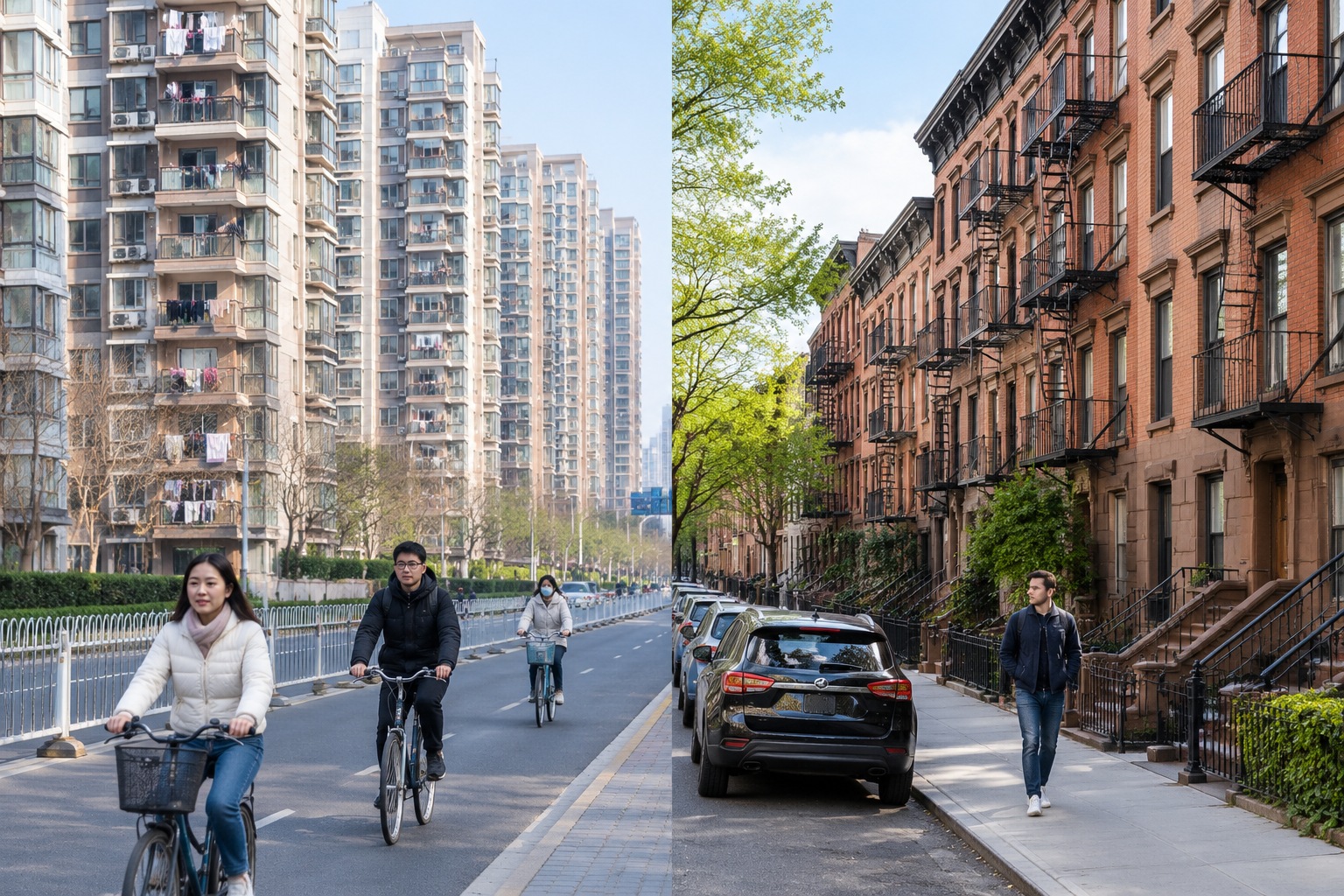
On a Tuesday evening in Beijing’s Chaoyang District, 28-year-old marketing manager Li Wei checks her banking app. She just paid 6,800 yuan (about $945) for her 60-square-meter one-bedroom inside the East Fifth Ring Road. In Brooklyn, 33-year-old graphic designer Emily transfers $3,200 to her landlord for a similar-sized apartment in Bushwick. The numbers look like they come from different planets. Yet both women have the same complaint: there is barely anything left at the end of the month.
This is not a story about which city is more expensive. It is a story about two different math problems that lead to the same result: a generation of urban workers who can afford to live in the city only by giving up something else—space, time, or savings.

The Numbers: Rent, Deposit, and the Cost of Living
Start with the rent itself. In Beijing, the average rent for a one-bedroom apartment inside the Fifth Ring Road is roughly 5,000 to 7,000 yuan per month, depending on how close you are to a subway line. A 60-square-meter flat in a decent Chaoyang neighborhood typically goes for 6,500 yuan. In Brooklyn, the median rent for a one-bedroom is $3,000 to $3,300. A 650-square-foot apartment in Bushwick—roughly the same size—will set you back $3,200.
At the exchange rate of 7.2 yuan to the dollar, that Beijing apartment costs about $900. The Brooklyn one costs $3,200. On paper, New York is more than three times as expensive.
But the upfront cost tells a different story. In Beijing, the standard lease is “押一付三” (ya yi fu san): one month’s rent as a deposit, plus three months’ rent in advance. For Li Wei, that means writing a check for 27,200 yuan—about $3,780—on move-in day. In New York, Emily pays first month’s rent plus a one-month security deposit: $6,400. If she used a broker, she would also owe a broker’s fee of 15% of the annual rent, roughly $5,760. Her move-in cost could easily exceed $12,000.
Monthly utilities add another layer. Beijing’s electricity, water, and gas for a small apartment run about 300 yuan ($42) per month. In Brooklyn, Emily pays around $150 for electricity and gas, and heating is often included in older buildings—but not always. Internet is 100 yuan ($14) in Beijing and $70 in New York. A subway ride is 3 to 10 yuan in Beijing; a single ride on the New York subway is $2.90. A bowl of noodles costs 25 yuan in Beijing; a sandwich in Brooklyn costs $12.

Rent-to-Income Ratio: The Real Stress Test
Here is where the comparison gets uncomfortable. Beijing’s average monthly salary for a young professional in marketing or tech is around 12,000 yuan. Li Wei earns 13,000 yuan. Her rent of 6,800 yuan eats 52% of her take-home pay. For an entry-level worker earning 8,000 yuan, a 5,000-yuan room in a shared apartment still takes 62%. Many young Beijingers spend more than half their income on housing.
In New York, the median personal income is about $50,000 a year, or $4,200 a month. Emily earns $68,000, or $5,600 a month. Her $3,200 rent is 57% of her gross income. A junior designer making $45,000 a year—$3,750 a month—would pay 85% of her income for the same apartment. Most young New Yorkers don’t rent alone. They share.
The rent-to-income ratio, the percentage of income spent on rent, is the number that matters. In both cities, the traditional advice is to keep it under 30%. In Beijing and New York, the reality for young workers is 50% to 70%. The absolute numbers differ, but the squeeze is the same.
Beyond the Rent Check: Space, Commute, and Daily Life
Money is only part of the story. The living experience is shaped by space, time, and what you can walk to.
A typical Beijing apartment inside the Fifth Ring Road is functional: white walls, tile floors, a small kitchen, maybe a balcony. Buildings are often older, elevators are slow, and heating is central and reliable in winter. The neighborhood is dense with convenience stores, noodle shops, fruit stands, and parks. Li Wei can walk to a wet market in five minutes and take a 20-minute subway ride to her office in Guomao.
Emily’s Brooklyn apartment has more character—exposed brick, a fire escape, a clawfoot tub—but also more problems: a radiator that clanks all night, a bathroom with peeling paint, and a landlord who takes weeks to fix a leak. Her commute to Midtown takes 45 minutes on the L train, which is frequently delayed. She pays $2.90 each way. Li Wei pays 5 yuan (70 cents).
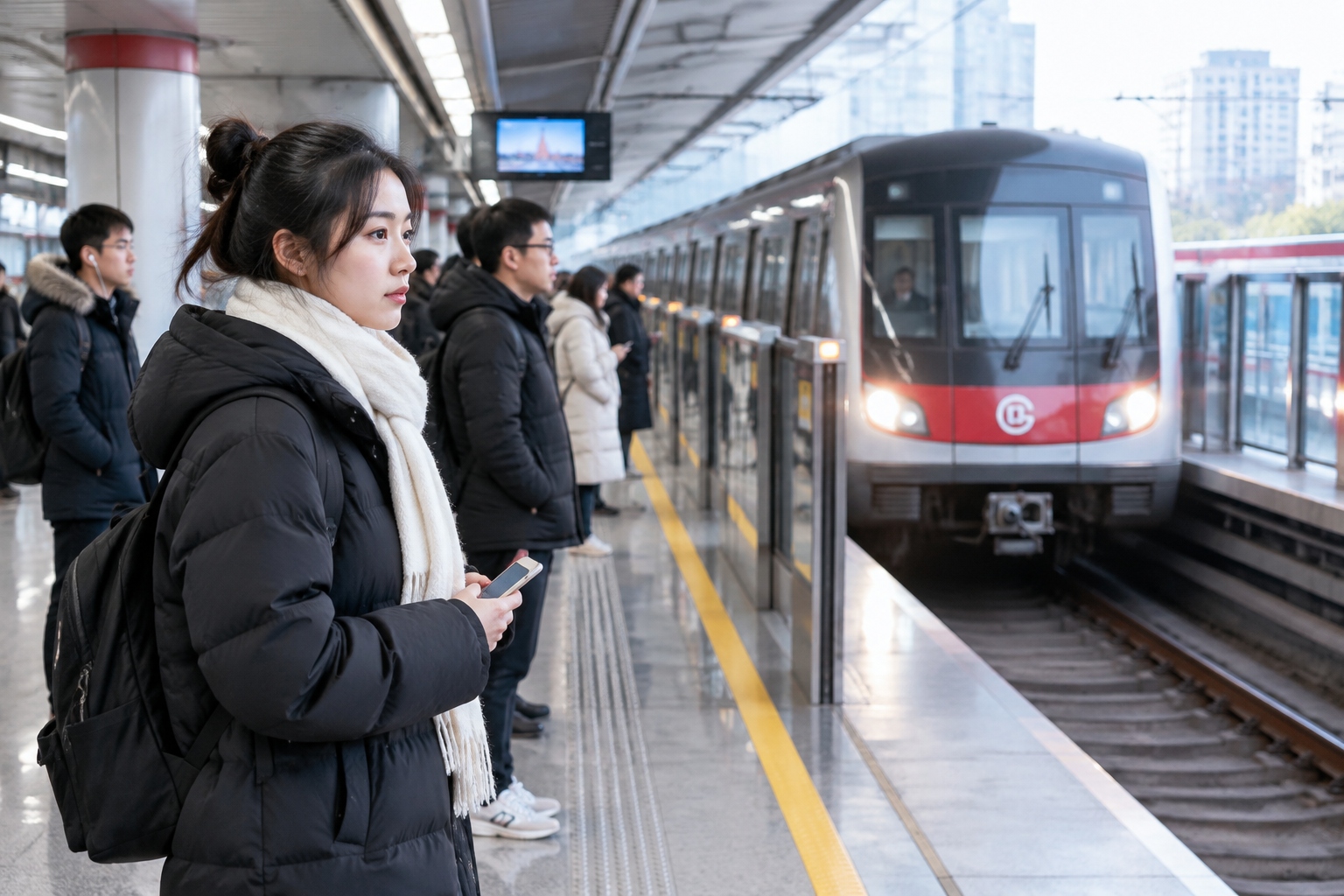
Commute times are surprisingly similar. The average one-way commute in Beijing is about 47 minutes; in New York, it is 43 minutes. But the quality of that time differs. Beijing’s subway is clean, air-conditioned, and cheap. New York’s subway is gritty, often crowded, and prone to signal problems. Both cities have made commuting a daily test of patience.
Survival Strategies: Roommates, Far Suburbs, and Side Hustles
How do people make it work? In Beijing, the most common strategy is to share. A two-bedroom apartment in Chaoyang rents for 8,000 yuan; split between two roommates, each pays 4,000 yuan. That is still 30% to 40% of a typical young salary, but it is manageable. Others move to the outer districts: Tongzhou, Daxing, Changping. A one-bedroom there costs 2,500 to 3,500 yuan, but the commute stretches to 90 minutes each way.
In New York, the same playbook applies. Emily lives with two roommates in a three-bedroom Bushwick apartment. Her share is $1,400, not $3,200. She gave up a private bathroom and a quiet living room. Some New Yorkers move to Jersey City or deeper into Queens, trading a 40-minute commute for $500 in monthly savings.
Side hustles are another coping mechanism. Li Wei teaches English online two evenings a week, adding 2,000 yuan to her monthly budget. Emily does freelance branding work on weekends. In both cities, the gig economy is not a lifestyle choice; it is a rent subsidy.

What This Means for Global Cities
Beijing and New York are not unique. London, Tokyo, Sydney, and Toronto all face similar housing crises. But the comparison reveals something important: the problem is not just high rent. It is the gap between wages and housing costs, a gap that has widened in both cities over the past decade.
In Beijing, rent has risen roughly 5% to 8% per year in popular districts, while entry-level salaries have grown more slowly. In New York, rents have surged past pre-pandemic levels, with median asking rents in Brooklyn hitting record highs in 2024. The result is a generation of urban workers who are highly educated, hardworking, and permanently priced out of the neighborhoods they serve.
For Li Wei and Emily, the solution is not to move to a cheaper city—their jobs, friends, and lives are here. It is to accept a smaller space, a longer commute, and a smaller savings account. That is the brutal arithmetic of the global city. The rent is not just a bill. It is a quiet tax on ambition.
Start the discussion at forum.chinacomes.com