
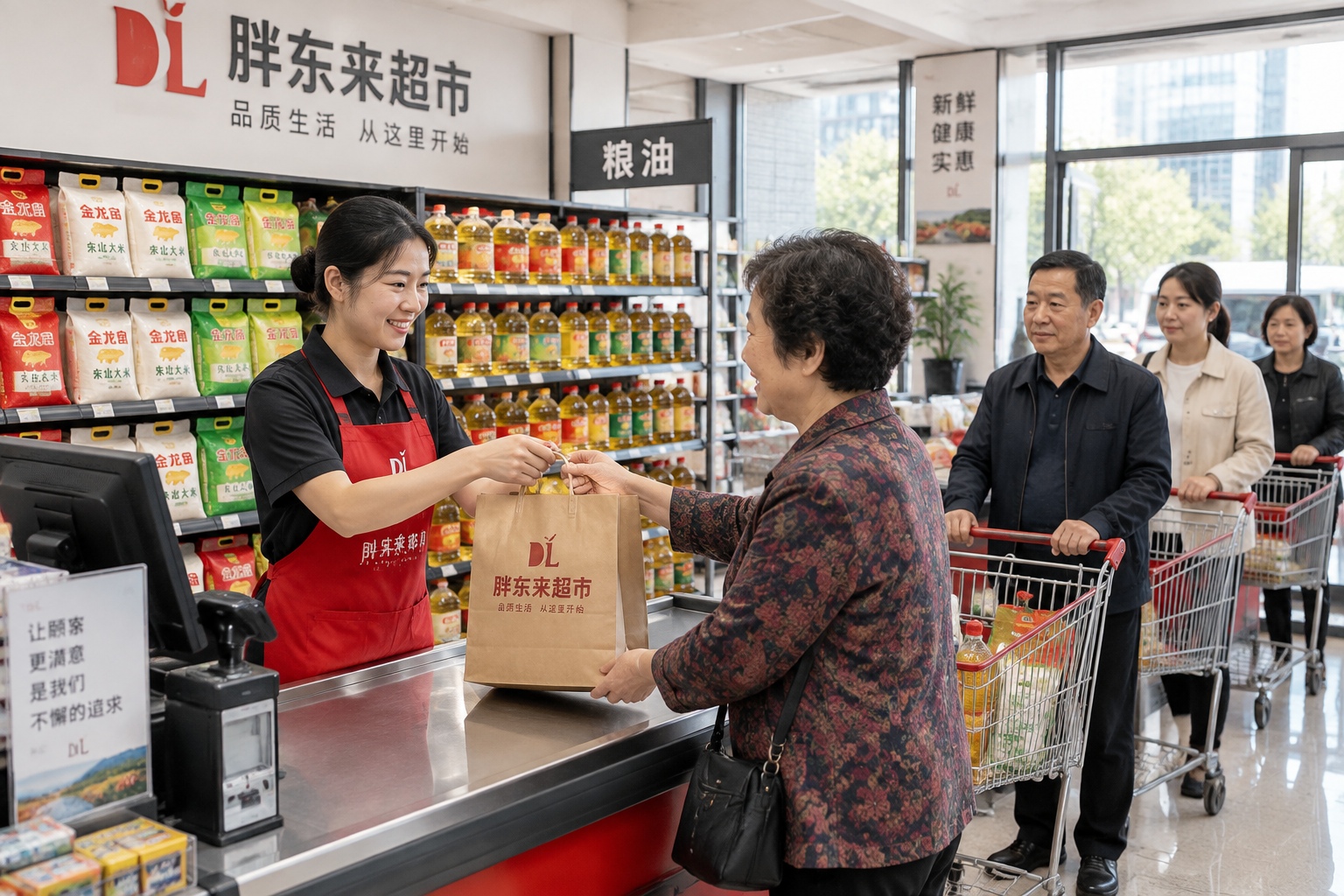

In Xuchang, the busiest supermarket in town is dark on Tuesdays
Walk through the center of Xuchang, a city of about four million people in central China’s Henan province, on a Tuesday afternoon and you will see something rare in Chinese retail: the most popular supermarket chain in town is shut. Every Pangdonglai store closes one day a week — not for restocking, not for renovation, but so that its more than 10,000 employees can rest.
Pangdonglai began in 1995 as a small shop selling tobacco, drinks and snacks, run by a former salesman named Yu Donglai. Today it operates roughly a dozen stores in Xuchang and the nearby city of Xinxiang, and it is known for two things that rarely travel together: intense customer service and unusual treatment of staff. Shifts run six to seven hours. Paid annual leave is 40 days. Since 2024, employees can take an extra ten days of “unhappy leave” — no explanation required.
Shoppers see the other half of that culture. Many price tags list the wholesale cost and the margin the store takes, so a customer can work out exactly what Pangdonglai earns on a bag of shrimp. Staff tuck handwritten cooking notes into packages of meat and fish.

Then came four rules, posted on Douyin
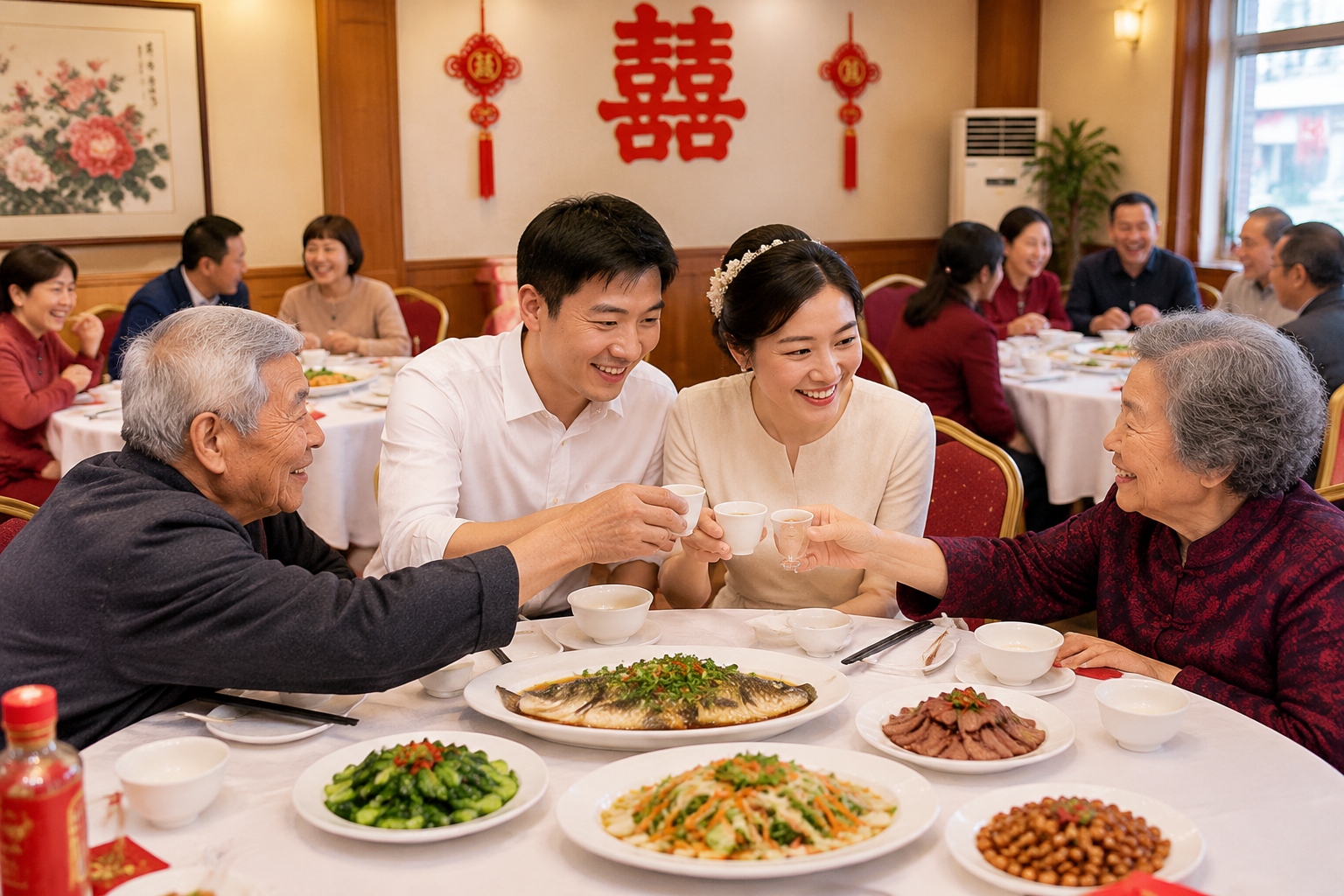
On January 3, 2025, Yu published a short list of rules on Douyin, China’s most-used short video app. They were aimed at his own employees’ weddings.
No bride price paid, and none accepted. Wedding banquets capped at five tables, for close relatives and friends only. No asking parents for money to buy an apartment or a car. Employees who ignored the rules, he wrote, would lose everything “beyond what the law requires” — in practice the bonuses, holiday gifts and extra leave that make a Pangdonglai job desirable in the first place. Wages and statutory benefits would stay.
The post became one of the most argued-about workplace stories of the year in China. Supporters, including many parents of adult children, said someone finally had the nerve to admit that the price of getting married has gotten out of hand. Critics said a boss has no business telling grown adults how to run their own wedding, and that tying family decisions to company benefits is control dressed up as care. Labor lawyers pointed out that an employer cannot legally fire someone for accepting a bride price — but it can attach conditions to voluntary extras.
Weeks later, Yu was invited to a symposium in Beijing hosted by Xi Jinping, seated among a small group of prominent private entrepreneurs. That appearance signaled something no press release could: a regional supermarket owner from Henan had become a national figure whose opinions people argue about.
Bride price is the part outsiders underestimate
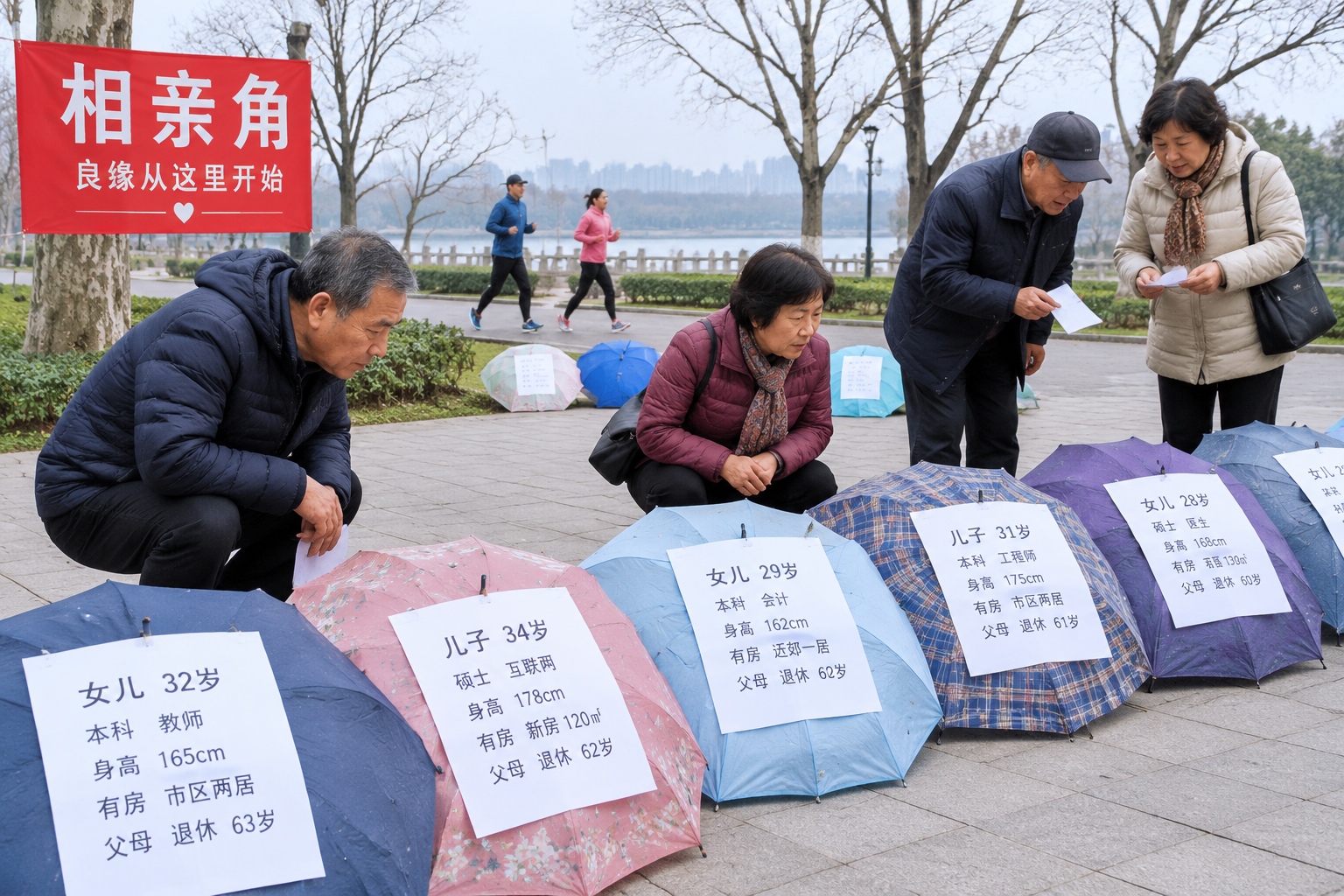
Bride price — caili, literally “colorful gift” — is a cash payment from the groom’s family to the bride’s family. Chinese law does not require it, and it is far from universal. In big coastal cities many couples skip it entirely. In parts of Jiangxi, Henan, Gansu and other inland provinces it is close to obligatory, and surveys of rural households regularly put it between 100,000 and 200,000 yuan, with a commonly cited national average of about 140,000 yuan, or roughly $19,000.
In local terms, that is more than three years of the average Chinese person’s disposable income. And it is only one line of the bill. Add a down payment on an apartment — parents usually contribute, which produced the phrase “six wallets,” meaning the couple plus four parents — a car, gold jewelry, a banquet, a honeymoon and furniture.
Western readers will recognize some of this. The average American wedding cost about $33,000 in 2023, according to The Knot; British couples spend roughly £20,000. But the shapes differ. A US wedding is mostly a services bill — venue, catering, photographer, band. A Chinese banquet is a social ledger: 200 or 300 guests hand over red envelopes of cash, known as fenzizhang, and the couple will owe the same amount at other people’s weddings later. That system spreads the cost, but it also locks families into a contest none of them can exit alone. Yu’s five-table rule is designed to break the loop: with almost no guests, nobody owes anybody anything.
The numbers behind the mood
In 2024, 6.1 million couples registered marriages in China, down about 20 percent from 7.68 million in 2023 and the lowest figure since 1978. Births edged up to 9.54 million, the first increase in eight years, but the total population still fell by 1.39 million — a third consecutive year of decline.
The reasons are familiar to anyone who has watched housing, work and childcare costs climb. A flat in a decent city can cost 20 to 30 times a household’s annual income. Jobs feel less secure. Long hours leave little room for a second shift at home. China’s 2020 census counted roughly 35 million more men than women, a gap concentrated in rural areas and poorer provinces, which pushes bride prices up in exactly the places where incomes are lowest. Expectations have shifted too: women with degrees and careers are less willing to marry into a household where care work falls mostly on them.
Beijing is responding. A national childcare subsidy of 3,600 yuan per child per year began in 2025; the final year of preschool became free in the autumn of 2025; and since May 2025, couples can register a marriage in any city without producing a household registration permit. Provincial campaigns against “excessive bride prices” have run for several years, mostly by nudging villages to write their own caps into local charters.
Why weddings are also an economic story
A wedding season pulls money through banquet halls, gold shops, photo studios, airlines, furniture stores and appliance sellers. When marriages fall by a fifth in a single year, that demand falls with it: China’s gold jewelry consumption dropped by roughly a quarter in 2024, according to industry data, and chains that expanded on wedding demand have been closing stores.
Households, meanwhile, are saving rather than spending. Boosting consumption became the government’s first-listed economic priority for 2025; trade-in subsidies for cars, appliances and phones have been extended; and there is an official push against “involution” (neijuan) — competition for its own sake. In early 2025, appliance maker Midea told managers to stop scheduling meetings after 6 p.m., and drone maker DJI reportedly began clearing its offices at 9 p.m.
Pangdonglai’s rules fit that same logic, from the other direction. If young people had enough money and enough time, and if marrying did not mean draining a family’s savings, more of them might do it — and then buy the things families buy. That is the argument. One company cannot enforce it.

Why a boss feels entitled to say this at all
Foreign readers often ask why a Chinese employer would comment on a wedding in the first place. There is a long history behind it. Under the planned economy, a work unit — the danwei — had to approve a marriage application before a couple could register, and it supplied housing, clinics and kindergartens. That system is gone, but the expectation that a good employer behaves a little like an extended family survived, especially in smaller cities.
China is not alone here. Japanese companies historically arranged omiai introductions for staff and still provide company housing; South Korean conglomerates have run blind-date programs for employees; American employers shape family life through health insurance that may or may not cover a spouse. Every society lets employers into private life somewhere. The arguments are about where the line sits.
Yu is an unusual messenger. He is a celebrity boss with a devoted online following, quoted for sayings about patience and not being in a hurry, and he has said that most of the company’s profit share goes to staff. In a business culture that spent a decade arguing about 996 — 9 a.m. to 9 p.m., six days a week — his stores are a live experiment in the opposite direction.
What five tables can and cannot change
One retailer in Henan will not reverse a demographic trend driven by housing prices, job insecurity and the cost of time. What Pangdonglai did was put the arithmetic of an ordinary wedding on the table in public: the bride price, the guest list, the four parents’ savings, the honeymoon. If a couple in Xuchang now argues about inviting 30 people instead of 300, that argument is happening partly because a supermarket boss said it out loud.
And on Tuesdays, the shutters come down anyway. For employees deciding whether to marry or have a second child, a guaranteed day off may be a more honest answer than any rule about how many tables to set.
Start the discussion at forum.chinacomes.com