

A Knot You Can Wear
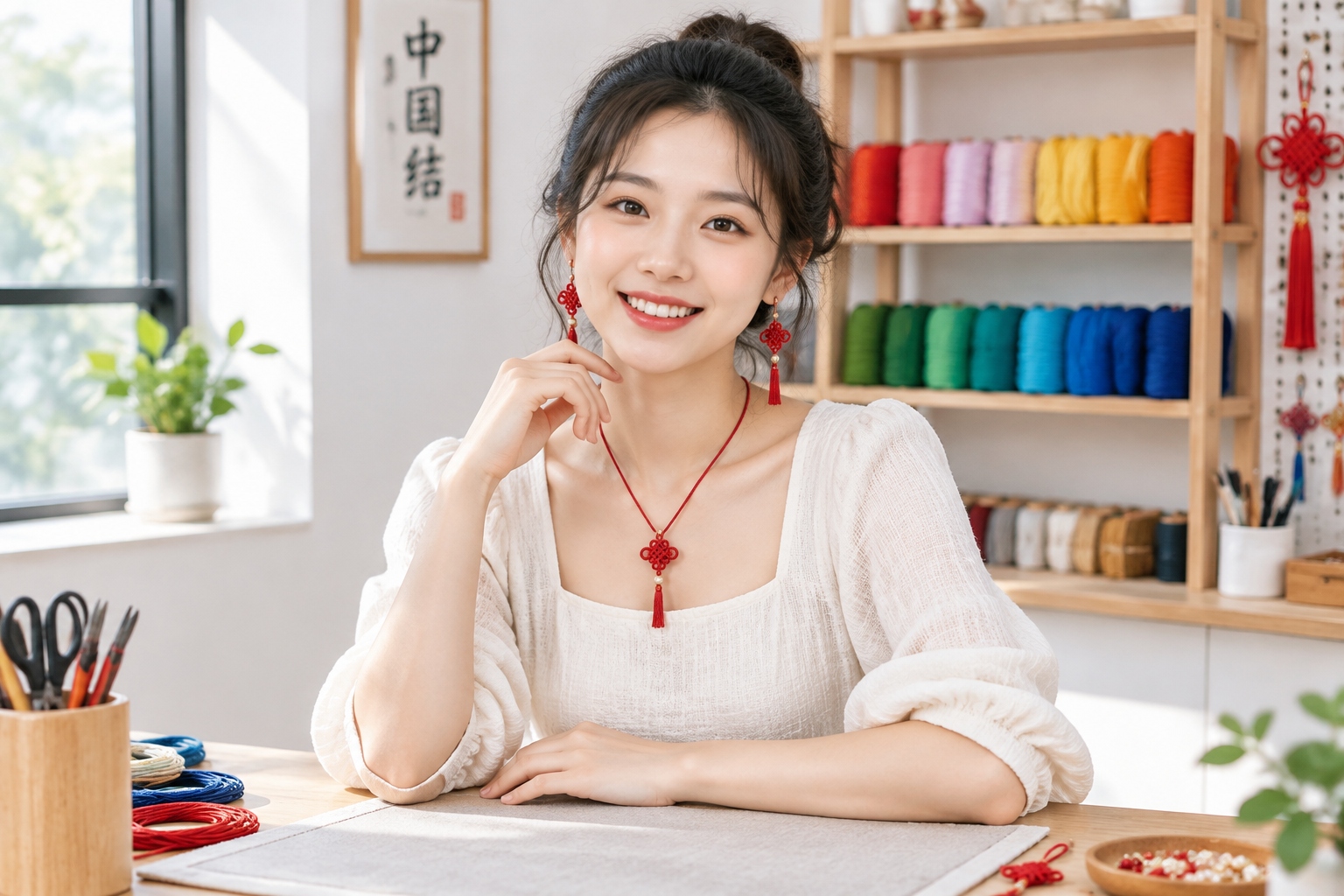
On a Saturday afternoon in Beijing’s 798 Art District, a small workshop is packed with young women in their twenties. They’re not here for a painting class or a coffee tasting. They’ve come to learn how to tie a Chinese knot — but not the kind your grandmother hangs on the wall. These are tiny, delicate knots meant to become earrings, necklaces, and even phone charms.
This scene, repeated in cities across China, points to a quiet transformation. The Chinese knot, once a strictly festive decoration for Spring Festival, has jumped into the world of fashion and daily accessories. And it’s not just a domestic trend. International designers like Louis Vuitton and Gucci have incorporated knot motifs into their collections, while millions of young Chinese are rediscovering this ancient craft.
What Is a Chinese Knot?
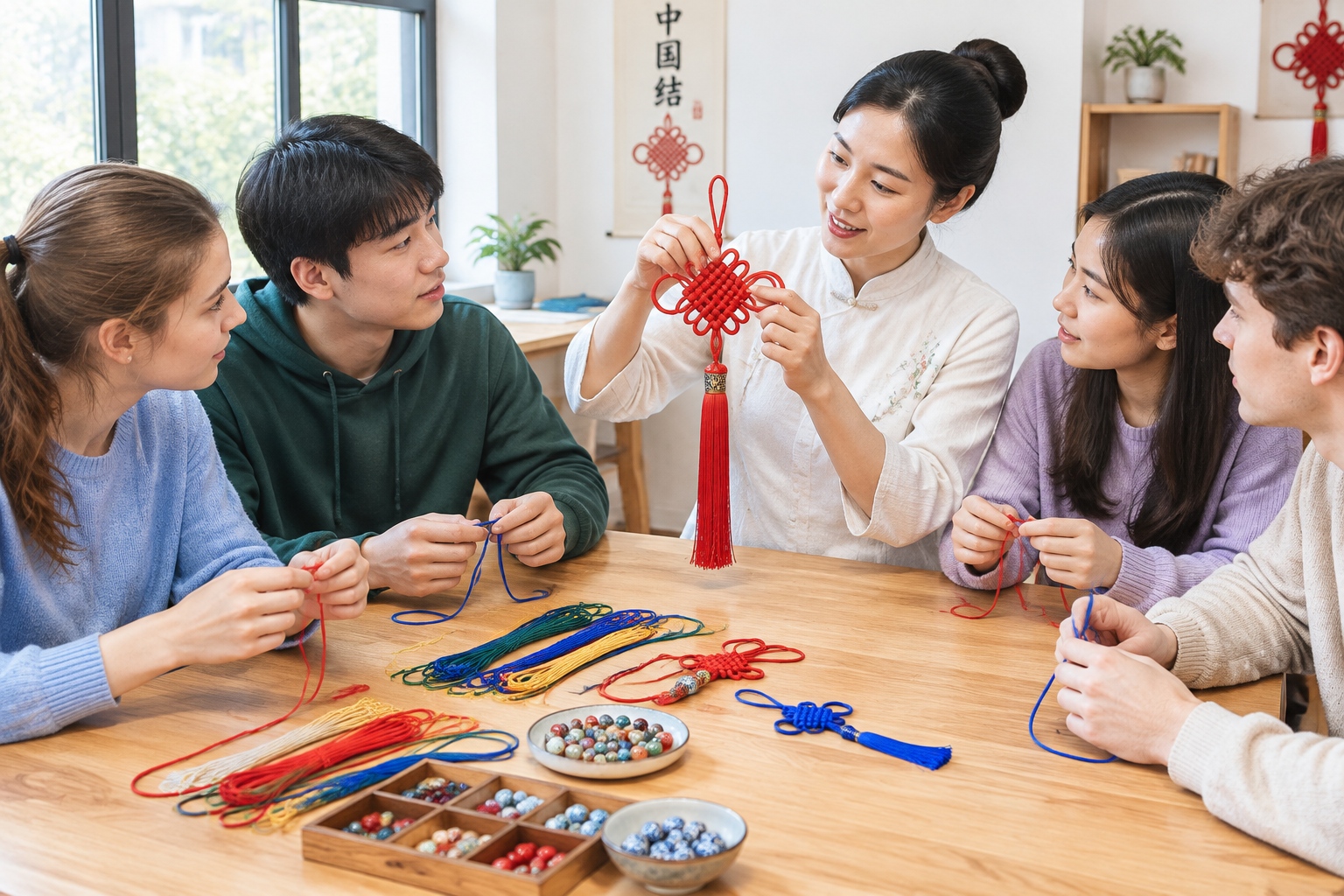
For those unfamiliar with Chinese culture, the Chinese knot (中国结, zhōngguó jié) is a traditional handwoven decoration made from a single piece of cord. It has a long history, dating back to ancient times when knots were used for record-keeping and fastening before writing was widespread. Over centuries, they evolved into decorative art, symbolizing luck, prosperity, and unity.
There are many types of knots, each with its own name and meaning. The ‘pan chang’ knot, for example, symbolizes the Buddhist concept of eternity. The ‘double happiness’ knot is used in weddings. Traditional Chinese knots are usually made of red silk or cotton cord and are elaborate, symmetric, and complex.
From Wall Decor to Wearable Art
For most of the 20th century, Chinese knots were seen as old-fashioned. They were hung on walls or doors during Chinese New Year, then packed away until the next year. Young people rarely gave them a second glance.
That started to change around the early 2010s. A growing number of artisans and designers began experimenting with new materials and forms. Instead of thick red silk cord, they used fine metallic threads, leather, or even recycled plastic. They also scaled down the knots — from palm-sized ornaments to pieces small enough to dangle from a earring hook.
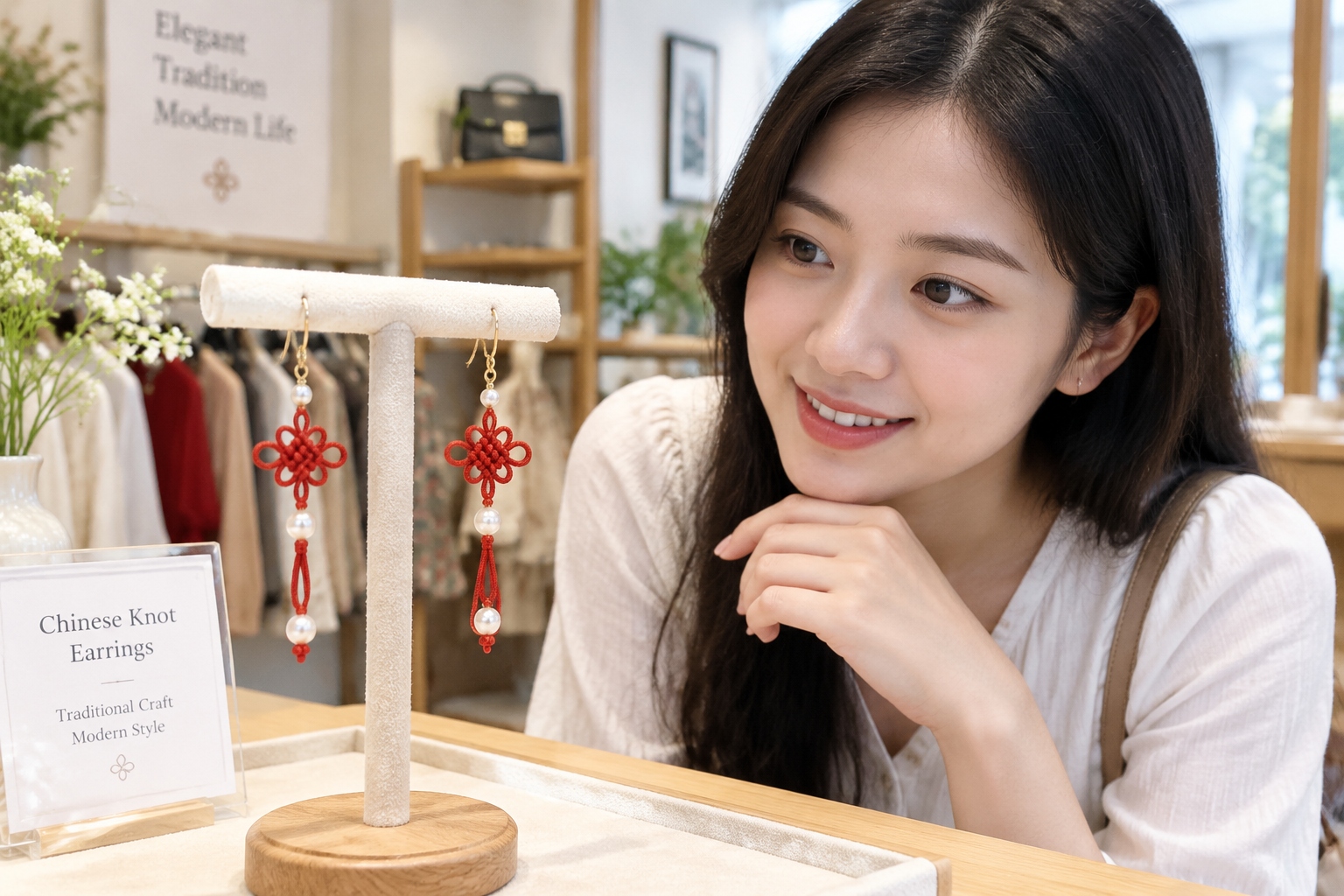
‘Our customers are mostly women aged 18 to 35,’ says Li Mei, a Beijing-based knot artist who runs an online store. ‘They want something that looks unique but also fits their daily outfits. Traditional knots are too chunky for that, so I started to combine them with pearls and crystals.’
The result is a hybrid accessory: part traditional craft, part modern jewelry. On e-commerce sites like Taobao, you can find hundreds of variations — knot earrings, knot chokers, knot handbag charms, even knot hairpins. Prices range from a few yuan to several thousand for handcrafted luxury pieces.
Why Did This Change Happen?
Several factors have driven the transformation. First, the desire for cultural identity. As China’s global influence grows, many young Chinese are looking for symbols of their heritage that feel relevant today. The Chinese knot, with its rich history and aesthetic appeal, is an obvious candidate.
Second, the DIY culture and social media. Platforms like Xiaohongshu (Little Red Book) and Douyin (Chinese TikTok) are full of tutorials on how to tie modern knots. A video showing a simple bracelet knot can get millions of views. Learning a traditional craft has become a trendy hobby.
‘It’s like yoga or knitting in the West,’ explains Zhang Wei, a sociology professor at Fudan University. ‘Young people use it to escape the digital world and to make something with their hands. The fact that it’s Chinese adds an extra layer of meaning.’
Third, the international fashion industry has picked up on the trend. In recent years, Chinese elements have been a recurring theme on runways. The knot, with its geometric elegance, translates well into jewelry and clothing design. Western designers use it as a nod to East-meets-West style, while Chinese designers use it to assert a distinct cultural voice.
How Young Designers Are Reinventing the Knot
Take the designer Wang Yining, who graduated from Central Academy of Fine Arts in Beijing. Her brand ‘Jie’ sells modern knot accessories online and at pop-up stores in Shanghai and Shenzhen. ‘I wanted to keep the spirit of the knot but give it a contemporary feel,’ she says.
Her designs often combine ropes with silver or gold-plated metal, creating a contrast between soft and hard materials. One best-selling item is a pair of earrings where two small ‘auspicious’ knots are suspended from a delicate chain. It sells for about 300 yuan (about $45) and looks nothing like the traditional hanging ornaments.
Another innovator is Chen Yu, a designer based in Hangzhou. He uses eco-friendly materials like bamboo fiber and plant-dyed cotton. His knots are often asymmetrical, breaking the traditional symmetry rule. ‘The old knots are perfect in their symmetry, but our aesthetic today values irregularity and imperfection,’ he explains. His work has been featured in a number of fashion magazines and has been exported to Japan and South Korea.
Redefining Tradition in the Age of Fast Fashion
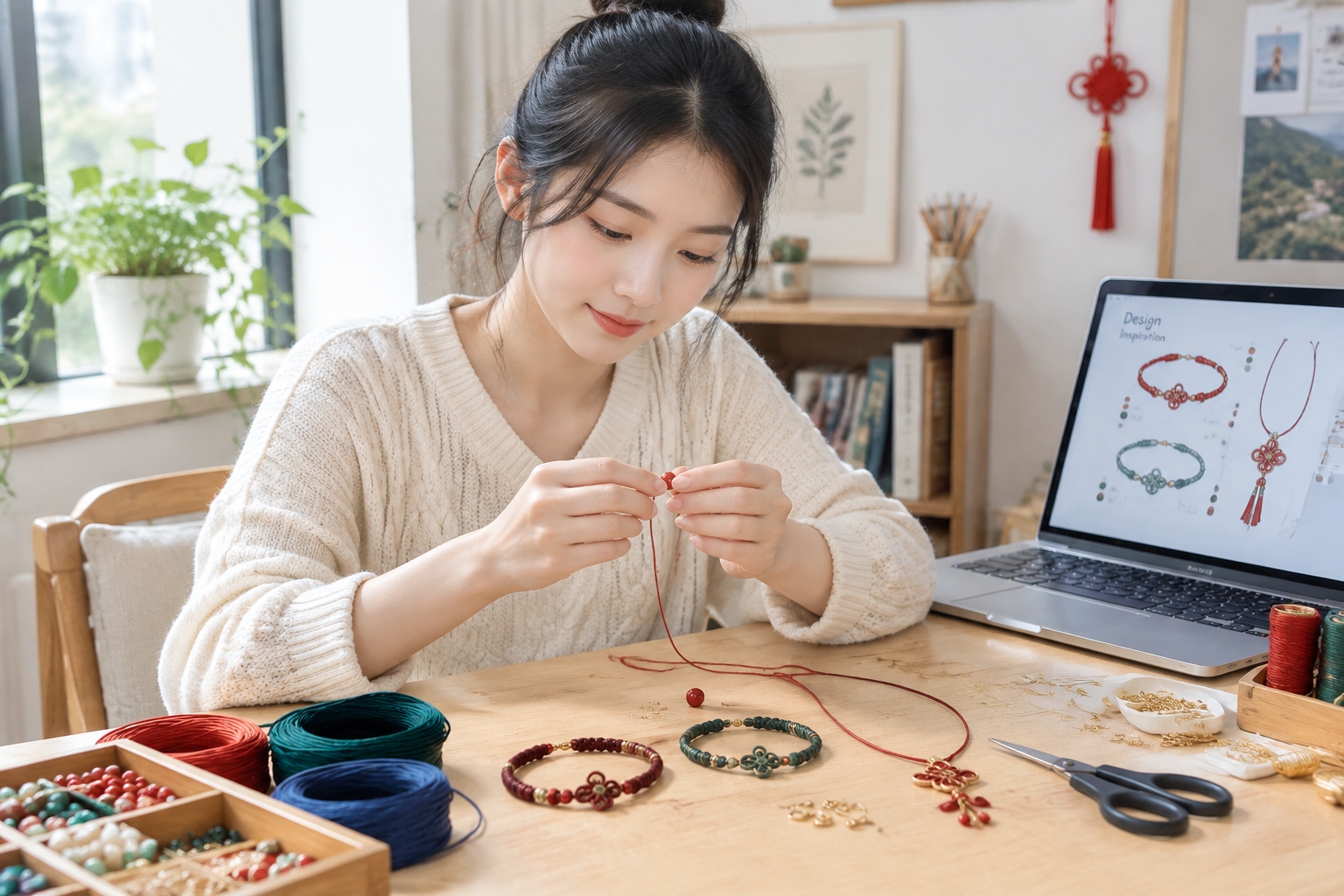
The modern Chinese knot is not just a product; it’s a statement about sustainability and mindfulness. In a world of mass-produced fast fashion, handcrafted items carry a sense of authenticity and slowness. The process of tying a knot is meditative. It requires patience and precision.
Despite the modern twists, the essence of the knot remains the same. It still symbolizes good fortune and connection. As people wear these knots, they carry a small piece of Chinese culture with them, whether they are in Beijing or in Paris.
How to Make Your Own Modern Chinese Knot
If you’re interested in trying it yourself, here’s a simple project: a macrame bracelet with a button knot. You’ll need about 50 cm of cord (waxed cotton works well for beginners).
1. Fold the cord in half and make a loop at the center.
2. Tie a simple button knot by wrapping the loops.
3. Adjust the size to fit your wrist.
4. Trim the ends and add a sliding knot closure.
There are plenty of video tutorials online. Once you learn the basics, you can experiment with different colors and beads.
The Future of the Knot
The Chinese knot has come a long way from the Spring Festival door decoration. It has become a canvas for creativity, a bridge between generations, and a global fashion accessory. As more designers and enthusiasts pick up the craft, the possibilities are endless.
What’s certain is that the knot will continue to evolve. It may never replace the traditional red knot that brings luck during the New Year, but it will also never be confined to a dusty shelf again.
Start the discussion at forum.chinacomes.com