


When I helped a Dutch industrial supplier review a contract with a packaging company near Ningbo, the first blank space wasn’t in the price list. It was the termination clause. The Chinese sales director had left the entire section empty. “We don’t need to decide this now,” he said. “If cooperation works, we will never use it. If it doesn’t, paper won’t save anyone.” The Dutch side replied with three pages of exit options. The Chinese team signed politely, and the relationship never fully warmed up.
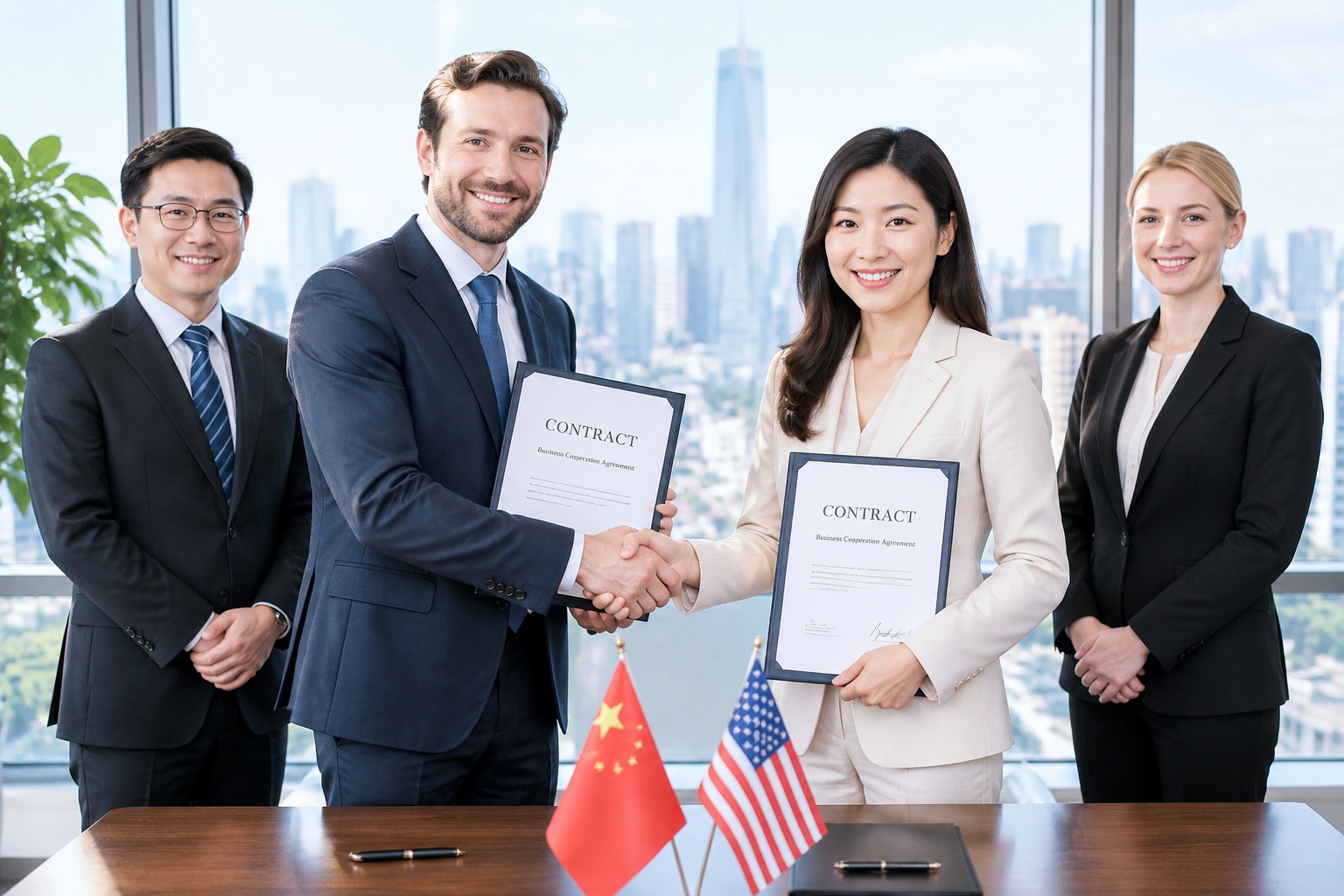
That small moment explains something about negotiating with Chinese companies. In a U.S.- or German-style business culture, a contract is the final container for every promise. In many Chinese commercial settings, a contract is a formal starting point for a relationship. Both sides understand that legal language matters, but they also know that changes, delays, and unfair surprises are normally handled through conversation before anyone goes back to contract text.
This does not make Chinese negotiation less professional. It makes it more contextual. Here are practical lessons for preparing clauses and handling cultural expectations when you negotiate with partners in China.
Before You Meet: Know Who Actually Sits Across the Table
Due diligence in China should include an extra step: verify the exact legal entity. The group whose factory you visit may not be the entity that signs your invoice. Chinese companies often split manufacturing, export, and sales into different subsidiaries. Start with the National Enterprise Credit Information Publicity System, the official register, or with commercial tools like Qichacha and Tianyancha. Look at shareholders, registered capital, legal representative history, and administrative penalties. If your contract is with a small subsidiary, ask the parent to sign as guarantor.
Also ask for the Chinese-language version and decide which language governs. Many Chinese companies accept a bilingual contract. If the Chinese text is signed, it usually contains terms that are not exactly the same as the English. Clarify in the contract that Chinese prevails in case of ambiguity. If you insist that English prevails, expect resistance; in a contract with a Chinese party performed in China, it is a genuinely hard sell.
Finally, delegate someone with authority. Chinese procurement teams are often efficient because the senior manager sitting in the room can approve exceptions. If every point requires “back to headquarters”, you look weak. If your own delegation must be remote, set up an immediate decision-making lane; do not make them wait a week to get a yes.

Key Contract Clauses to Review Line by Line
The Civil Code is the foundation of Chinese contract law. Several familiar common-law concepts work differently. Spend extra time on these areas.
Governing Law and Dispute Resolution
An international contract can choose a non-Chinese governing law under China’s private international law rules, if the transaction has a foreign element. But if your partner sees their obligations as tied to Chinese regulatory approvals, local demand, and local customs, they will often prefer Chinese law.
For dispute resolution, be specific. If you write “arbitration in Shanghai”, a court may need to decide which commission you meant. The arbitration agreement must identify an existing arbitration commission, not just a city. Several workable options exist: mainland arbitration through CIETAC, arbitration in Hong Kong through HKIAC, or arbitration in Singapore through SIAC. A common compromise is Chinese law plus HKIAC arbitration. Hong Kong awards can be enforced in mainland China under the special arrangements, and foreign parties usually find the process easier to predict.
If you expect to sell in China over years and need speed of domestic enforcement, you may prefer CIETAC. If this is a single export contract, HKIAC or SIAC often gives greater comfort. Whatever you choose, write the institution and seat clearly; a vague arbitration clause is a known trap in Chinese dispute resolution.
Breach, Damages and Liability Caps
Chinese courts can adjust penalty payments. If you set a cancellation charge or late-delivery penalty far above the actual loss suffered by the other side, an arbitral tribunal may reduce it. This is not a sign of corruption; it reflects the Civil Code principle that an agreed penalty ought not create a windfall.
Likewise, carve-outs for consequential loss are less automatic in China. You can include them, but should not assume a Chinese court will enforce them exactly as an English solicitor would. If profits are lost because a factory stops production, a Chinese party may still claim those losses despite a broad exclusion, unless it signed clear limitations in an individual negotiation rather than in standard terms. Ask a lawyer familiar with enforcement practices in the relevant province to review the liability cap.
Intellectual Property and Confidentiality
If you send tooling designs, software configurations, or proprietary product specifications into a Chinese factory, use specific wording: define which pre-existing IP remains yours; define which new designs the Chinese supplier may use only for your products; and state that even if the supplier modifies a drawing for local production, ownership stays with you. Non-disclosure agreements in China are common, but they are only useful if both sides actually treat them seriously. Include notification deadlines and damage definitions that fit the digital age.
Force Majeure
The Civil Code defines force majeure as events that are unforeseeable, unavoidable, and insurmountable. In practice, disputes turn less on that definition and more on whether the affected party sent prompt notice and proof. Since the pandemic, many companies add more specific events to avoid relying on the code. Include pandemics, restrictions by Chinese government authorities, port closures, and export bans on raw materials. Set a clear notification window, such as seven calendar days, and say that the affected party must inform the other side before the event begins to affect performance. This clause is one where Chinese suppliers and Western clients often find common ground; nobody wants to litigate a pandemic.
Termination and Renewal
As my opening story suggests, a Chinese team may not want to model exit scenarios. But you can make exit easier to talk about by framing termination as a problem-solving mechanism, not a prediction of failure. You might say, “If the production plan changes, we will all need to know who has the responsibility to stop.”
Then define objective triggers: missed delivery by 45 days, repeated failure to meet quality certificates, or legal dissolution. Include a 30-day cure period for minor defaults and define what makes a default incurable. It may be hard to get a Chinese supplier to accept unilateral termination unsupported by breach, and such “termination for convenience” clauses are rare unless the state is a partner.
Relationship First, But Not in the Way You Think
Ask a Chinese businessperson why they chose to work with you, and they may say “because you are reliable” before they mention price. In many Western transactions, the contract is the floor and the relationship is the ceiling. In China, it is often the opposite: the relationship is the operating system, and the contract is the file format. That does not mean you can be less careful. It means you need to be more observant.
The Chinese word guanxi is overused in English-language business guides. In a contract negotiation, it is best understood as accumulated reciprocity. You do favours before you need them; you show respect to the person, not just to their job title; you follow through on small promises so they become willing to take risks for you later. For many Chinese partners, sending a junior manager to a negotiation signals low priority, regardless of what the e-mail says. Your senior people should appear early and often.
Face, or mianzi, is another practical concern. Saying “that is wrong” in front of the whole procurement team can make the proposal or the person unacceptable inside their own company. It is not only politeness; it changes how much internal support your project gets. Try a softer structure: “I understand the logic, but would the finance department prefer something else?” Avoid treating every issue as a point to win. The lawyer who negotiates exclusively from an English-language rights template can easily be seen as a blocker rather than a partner. A better tactic is to say “this protects both of us” and explain the practical risk you have seen in other markets.
Finding a Workable Balance Between Flexibility and Legal Rigidity
The word “flexible” has a different meaning at different points in a Chinese negotiation. In a Western price negotiation, flexibility means a concession in exchange for a promise. In a Chinese negotiation, it often means a principle that can be adjusted later when detailed conditions change. That can be unsettling if your legal system expects every adaptation to require a formal amendment.
Chinese teams often accept a “change order” clause more readily than a vague right to renegotiate. Build a straightforward process: if a raw material price moves more than 10 percent for three consecutive months, either side may request a meeting to adjust the unit price. If delivery dates depend on government inspections, define the notice procedure. If a project lasts more than a year, include an annual price review, not as a right to modify unilaterally, but as a formal economic adjustment. Many Chinese suppliers also prefer this because they do not want to promise future costs that neither side can predict.
At the same time, do not over-specify trivial operational details that invite dispute. In some jurisdictions, detailed lawyer-drafted specifications bring comfort. In China, a two-page annex on how emails should be formatted seems bureaucratic and often makes the counterparty wonder if the relationship will be painful. Use annexes for technical specifications and quality checkpoints; keep the main body clean enough so that it can serve as a shared memory of the deal.
Cultural Etiquette That Influences Commercial Outcomes
If this is your first negotiation in China, remember that business culture there is not one monolithic thing. State-owned companies in Shanghai behave differently from a privately owned OEM in Shenzhen. Still, a few general habits are useful.
First, keep part of your negotiating margin for the last round. Chinese procurement managers are expected to deliver an improvement after “reporting to management.” The improvement may be symbolic, but the process matters. Second, do not respond to an unacceptable proposal with a blunt “no”. Instead, explain what has to be checked and confirm your constraints in writing after the meeting. Third, use pauses. Silence in a cross-cultural meeting often means the other side is consulting internally or waiting for you to fill the gap with a concession. Let the silence sit. Fourth, share meals. In many Chinese industries, a business dinner is part of the negotiation, not a reward for finishing it. If you do not drink alcohol, say your health does not permit it, but do not leave early unless it is urgent. Fifth, whenever someone promises something outside the meeting, send a short email to “help both sides remember”. Explain that it is for administrative clarity, not a signal of distrust. Sixth, choose a lawyer who can explain why a clause is needed, not only what it says. An arrogant lawyer can kill a million-dollar project faster than any competitor.
After the negotiation phase, keep a China-friendly review habit: hold quarterly calls not only about compliance, but also about forecasts. Chinese suppliers make capacity and staffing decisions based on real demand, not legal notices. If a product engineer tells you they changed a minor component to improve quality, thank them in writing once you accept the change. That creates the kind of paper trail that protects both parties.
Conclusion: A Contract Is Not the End of Negotiation
Successful partnerships in China do not fit the simple stereotype that “relationship replaces contracts.” In the projects that work, both sides bring a tough, well-drafted contract and a conscious effort to maintain the relationship after signatures. The best formula is concrete wording at the start and routine communication after it. Get the key clauses right, respect the culture, and you will find many Chinese companies are less interested in trapping you legally than in building a long-term income stream.
The empty termination clause from my early story was not lazy drafting. It was a Chinese businessman’s way of saying “I would rather trust the relationship than model the failure.” Once you understand that, you can negotiate the clause you need without destroying the relationship you are also buying.
Start the discussion at forum.chinacomes.com