
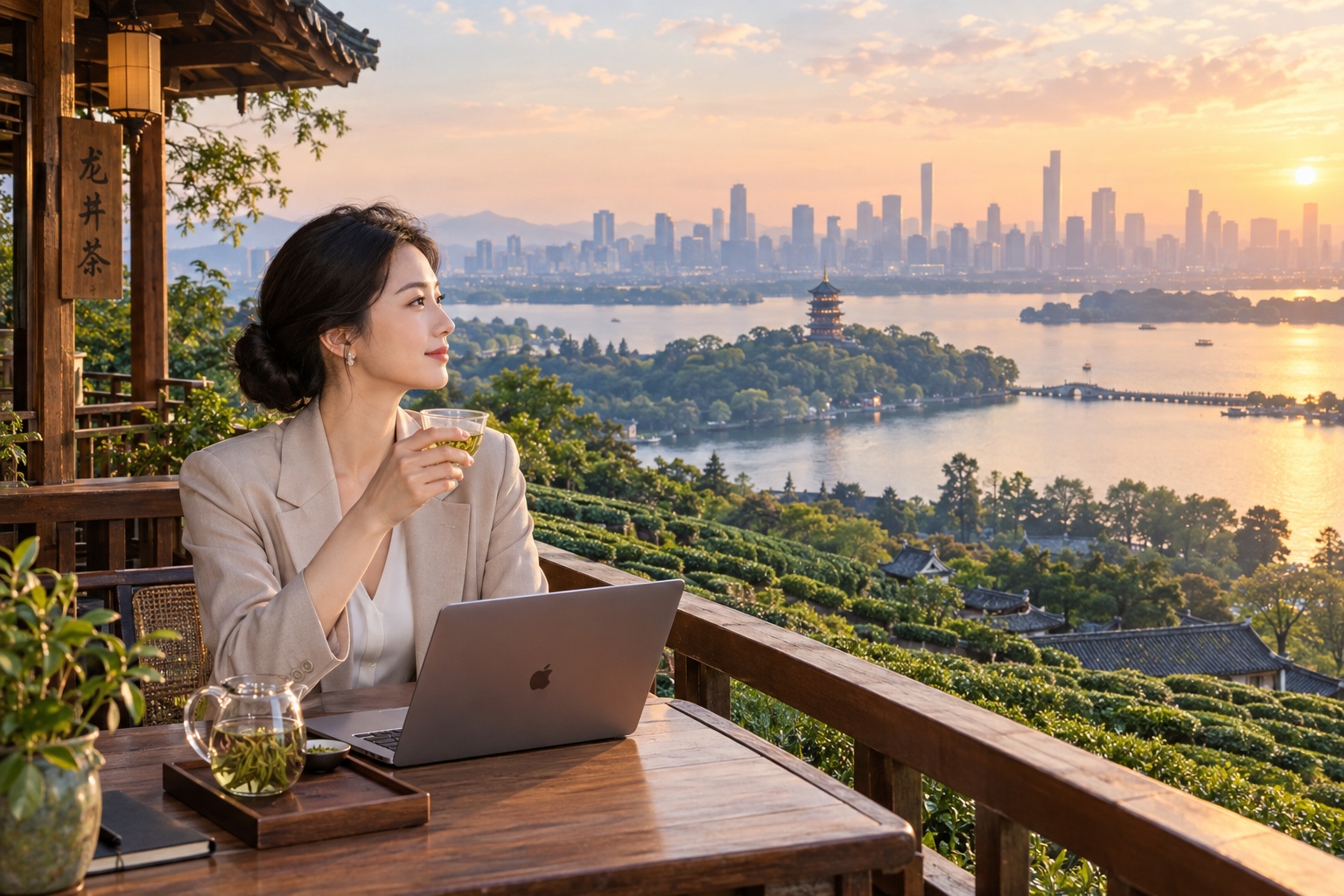

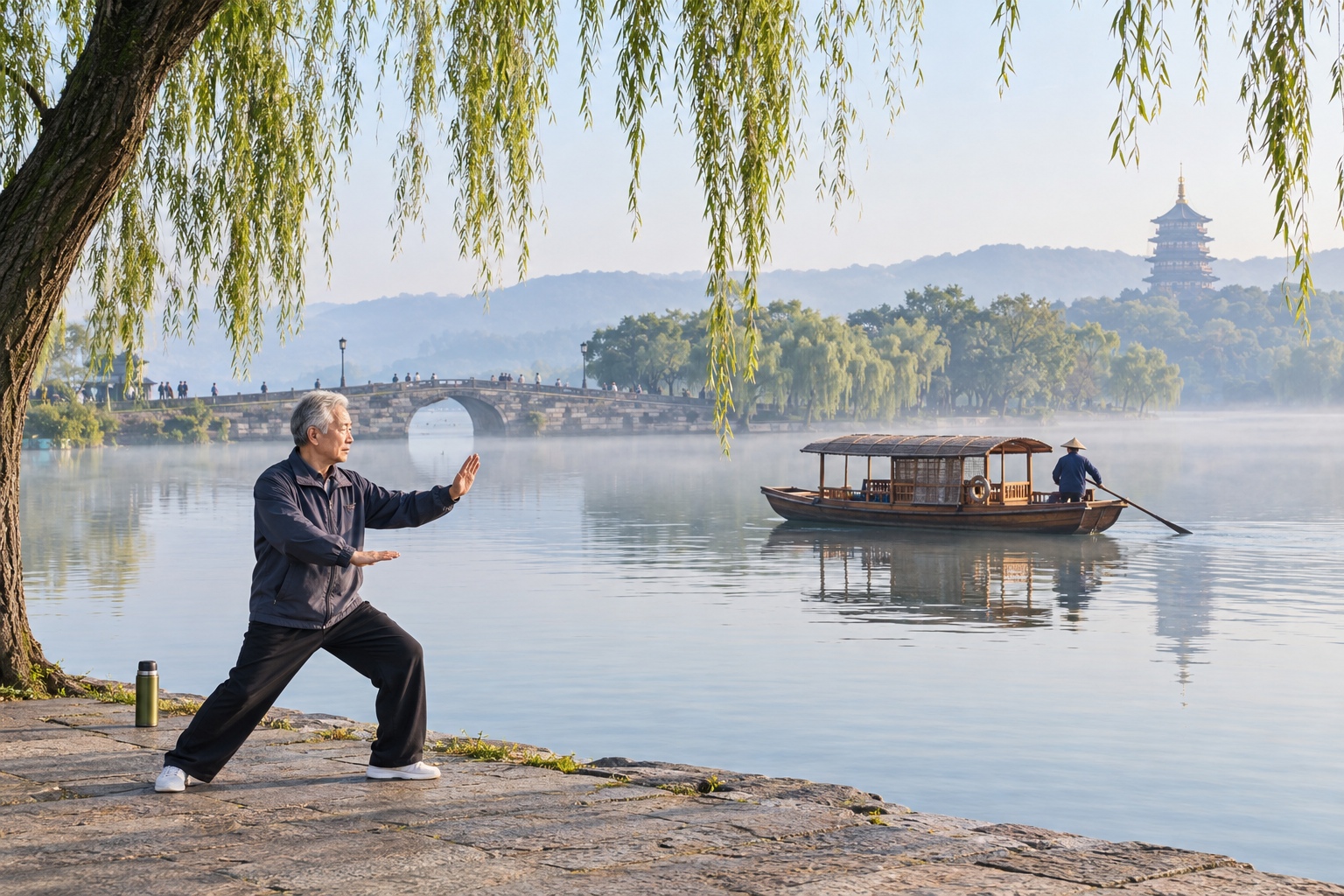
I arrived in Hangzhou just as the sun was burning off the morning mist over West Lake. A group of retirees were practicing tai chi along the causeway, their slow movements mirrored in the still water. On one side, a centuries-old stone pagoda rose from the willows; on the other, a glass-and-steel skyline blinked in the distance. That juxtaposition—ancient calm and futuristic energy—is exactly what makes this city one of China’s most compelling destinations for both travelers and business professionals.
West Lake: A Morning Immersion in Classical China
Walking along the Su Causeway, I could smell fried scallion pancakes from a nearby stall. The lake was calm, and a traditional wooden boat glided past, its oars slicing the surface. Hangzhou’s West Lake is not just a scenic spot; it’s an urban living room. In the early hours, locals jog, practice calligraphy with water on the paving stones, or gather to sing traditional opera under the trees. Later, they sip longjing (dragon well) tea in lakeside teahouses, often for hours.
The tea culture here runs deep. A short ride from the lake brings you to Longjing Village, tucked in the green hills that frame the lake. Here, tea farmers still dry leaves in large wok pans over open flames, a craft handed down for generations. I sat down with a farmer who explained the difference between “pre-Qingming” tea—picked before the festival, sought after for its delicate flavor—and the more common harvests that follow. She smiled and served me a cup from last spring’s batch. The flavor was mild, almost vegetal, with a faint chestnut note. It’s easy to see why this single leaf has occupied emperors, poets and, today, busy executives.
Lingyin Temple and the Grand Canal: Layers of History
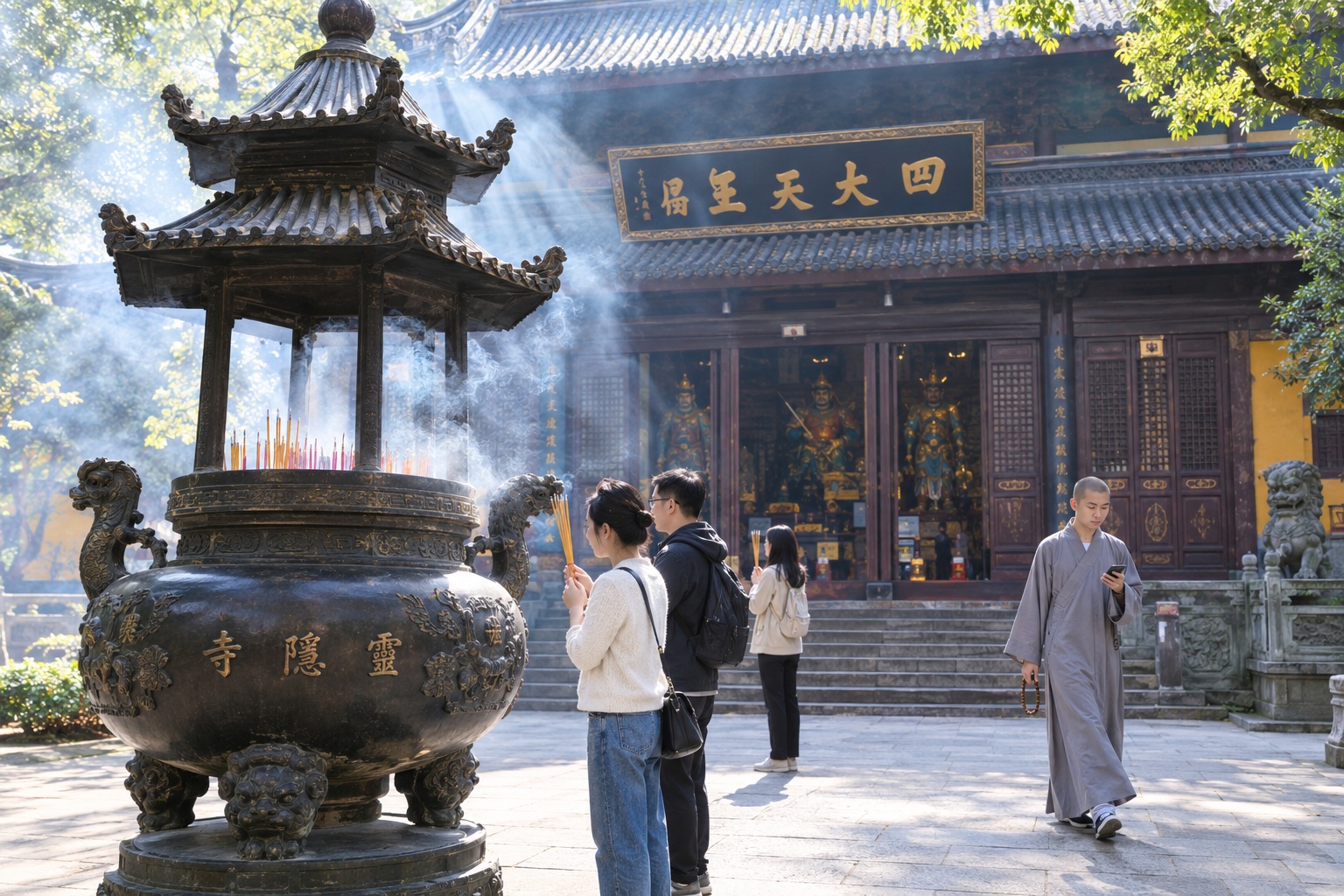
A 20-minute taxi ride northwest of the lake brought me to Lingyin Temple, one of China’s largest and oldest Buddhist monasteries. The air was thick with incense, and the low murmur of chanting monks mixed with the occasional ring of a bronze bell. Behind the temple, in the hills of Feilaifeng, hundreds of Buddhist grottoes dating back to the tenth century are carved into the rock. Stand long enough in front of the laughing Maitreya Buddha, and you can almost feel the centuries of pilgrim footsteps beneath you.
In the evening, I took a stroll along the Beijing-Hangzhou Grand Canal, a UNESCO World Heritage site that once transported rice, silk, and salt from the south to the imperial capital. Today, cargo barges still move slowly through the city, passing under gleaming footbridges. The contrast is striking. On one bank, converted stone warehouses now house independent art galleries and specialty coffee shops; on the other, new apartment towers glow with LED lights. This is history that isn’t locked behind a ticket booth—it’s a working waterway and a lively public space.
From Ancient Capital to Tech Hub: Hangzhou’s Innovation District
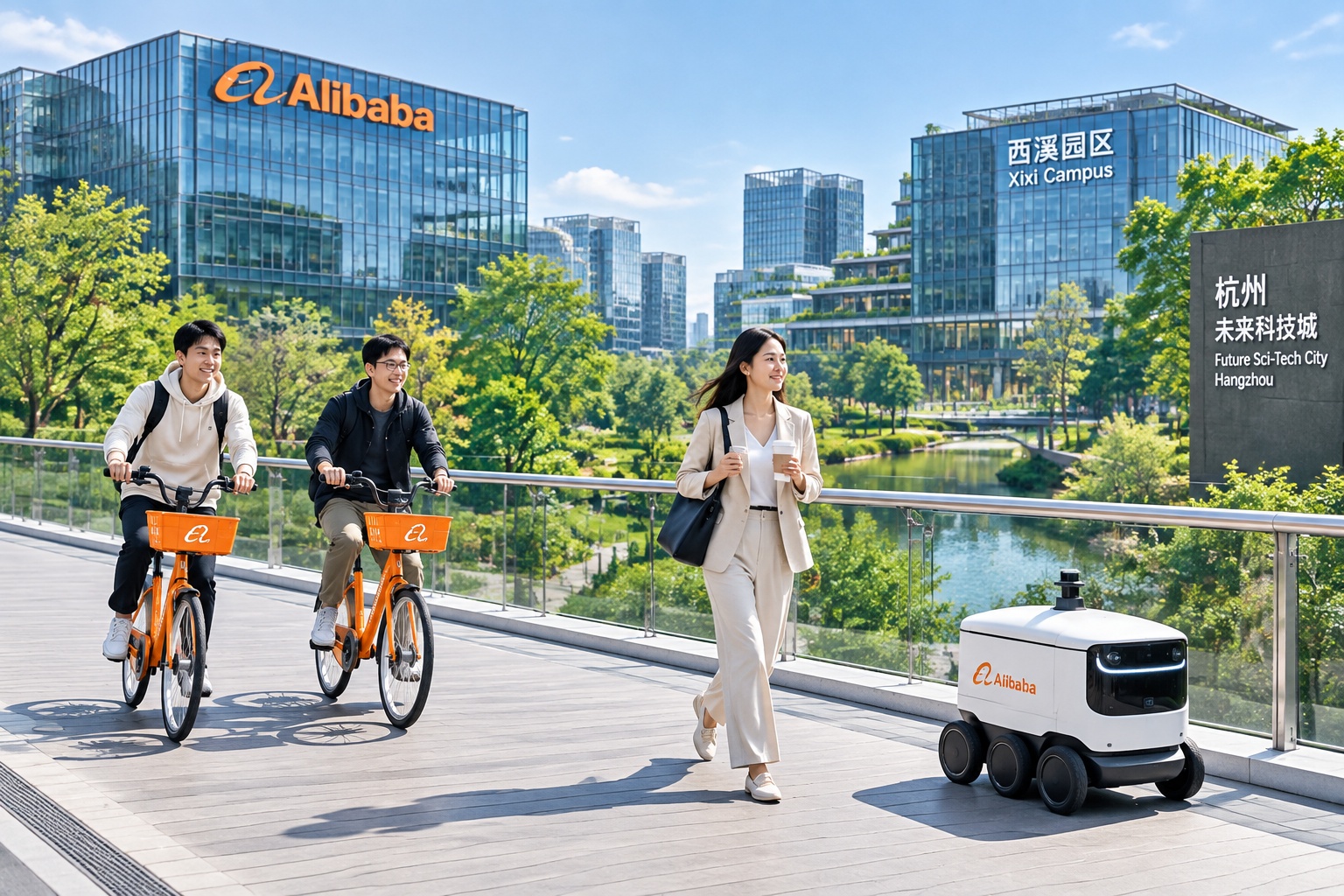
The next morning, I took Line 5 of the city’s metro to the Future Sci-Tech City, a district about twenty kilometers west of downtown. Here, the streets widen, the architecture gets sharper, and electric scooters seem to outnumber pedestrians. The unofficial heart of this area is Alibaba Group’s Xixi Campus, a sprawling complex of interconnected office buildings, glass walkways, green courtyards, and even a sculpture garden. While visitors can’t enter the main offices, you can walk the perimeter and peer through the glass to see rows of programmers in T-shirts and slippers—the uniform of Chinese internet companies. At noon, staff members stream out to lunch on shared bikes, and delivery drones occasionally hum overhead.
For a closer look at the startup ecosystem, I headed across the street to “Dream Town,” a former rice granary transformed into a government-backed incubator. The white-walled buildings are now home to hundreds of early-stage tech companies, cultural studios, and venture capital offices. I grabbed a coffee at a café packed with young founders debating user acquisition and algorithm tweaks. One of them, a 27-year-old working on a smart manufacturing dashboard, told me he’d moved from Shenzhen because Hangzhou’s e-commerce and logistics environment was more relevant to his industry. He also admitted the competition is fierce—for every success, dozens of startups quietly close their doors after their funding runs out.
Around the campus, start-up culture spills into daily life. Formerly dusty lanes are now lined with shared workspaces, milk-tea shops, fitness studios, and cheap noodle restaurants. Many workers arrive from nearby universities on shared bikes, and lunch spots serve both Hangzhou’s famous dongpo rou (red-braised pork) and flat whites. It feels less like a traditional Chinese business district and more like a cross between Silicon Valley and a southern Chinese garden city. For business travelers, this is where your potential partners can switch effortlessly from discussing logistics algorithms to quoting a Song-dynasty immortal about the moon over West Lake.
A Balanced Weekend: Where to Go and What to Do
So, how do you pack all of this into a short business trip? Here’s a sensible, stress-free itinerary that covers both the classic and the futuristic Hangzhou.
Friday evening
Check into a hotel near West Lake. If you still have energy, walk along the Broken Bridge at sunset. Have dinner at a local “nongjiale” (farmhouse restaurant) to taste home-style dishes such as West Lake vinegar fish and fried river shrimp.
Saturday morning
Wake early. Walk or rent a bike for a slow loop around the lake’s northern section. Take a small boat ride from the Huagang pier to get a close-up view of the famous Three Pools Mirroring the Moon. Then ride or taxi to Longjing Village for tea tasting. The village is also a great spot for lunch—ask for seasonal bamboo shoots and tender tea-smoked eel.
Saturday afternoon
Head to Lingyin Temple and Feilaifeng. Spend at least two hours roaming the temple complex and the grottoes. When you exit, catch a taxi to Gongchen Bridge by the Grand Canal, where you can walk along the historical Xiaohe Street with its local snack shops and beer bars. End the day with a riverside dinner.
Sunday morning
If you don’t have a meeting, take the metro to the Future Sci-Tech City. Visit Dream Town’s public plazas and maybe sit in a café to soak up the start-up vibe. Even without a scheduled appointment, you might find informal meetups. If you have business contacts in the area, this is a perfect time for a relaxed breakfast meeting. For lunch, try a staff canteen or a café in the district. Then head back to the city center and, if time permits, browse Hefang Street for silk fans and longjing tea.
Getting There and Around: Practical Tips
Hangzhou is one of China’s best-connected cities. From Shanghai, high-speed G-trains leave every 10–20 minutes from Hongqiao Station and arrive at Hangzhou East Station in about 45–60 minutes. If you fly, Hangzhou Xiaoshan International Airport connects to major Asian and global cities; from the airport, a shuttle bus or metro Line 7 takes you into town. Inside the city, the metro covers many attractions, though for some sites (like Lingyin Temple) a taxi or bus is easier. Ride-hailing via Didi is cheap and quick, and you’ll find shared bikes around every corner.
Most signage in metro stations is bilingual, but outside tourist areas English is less common. It’s useful to have a translation app and a mobile payment setup (Alipay or WeChat Pay) since many small vendors don’t accept foreign cards. Carry some cash as a backup. Also, remember that Hangzhou weather can be humid and hot in summer and chilly but bright in winter. Spring and autumn are ideal for walking.
If you’re extending your trip, consider a day trip to the ancient water town of Wuzhen or the bamboo-lined trails of Moganshan. But even without those, Hangzhou itself gives you that rare mix of history, nature, and technology—often within a single metro ride.
Start the discussion at forum.chinacomes.com