


Imagine this: a German mechanical engineer walks into the annual Shanghai auto parts show. His booth is busy, but by the end of the first day, he has no clue which of the twenty people who promised ‘we can sell everything’ is actually worth a follow-up call. He has great technology and competitive pricing, but without a reliable local distributor, his potential is locked in a time zone. This scenario plays out in trade centers all across China every year.
If you are running a small or mid-sized company from Europe, North America, or Southeast Asia and want to sell in China, you will likely need a local distributor or agent. You can set up your own branch, but that is expensive and time-consuming. A qualified intermediary can help you cross the regulatory gap, understand the local business culture, and rapidly get your products onto store shelves or into industrial supply chains.
But finding the right Chinese partner is harder than it sounds. Not because there is a shortage of candidates, but because the market is highly fragmented and the quality of distributors varies widely. There are established regional players, small trading companies, and even ‘zombie’ firms that appear on paper but have no operational team. How can you separate them? And once you find a partner, how do you build a partnership that lasts beyond the first quarter?
This playbook answers those two questions. We will give you a system to vet distributors, show you where to find them, compare common cooperation models, and trace through crucial contract clauses. Finally, we will explore what many foreign companies often ignore: maintaining a long-term relationship built on trust and guanxi (the Chinese custom of cultivating personal connections).
1. Six Core Criteria for Screening Potential Distributors
Think of the selection process as a funnel. You start with a long list of interested parties and narrow it down to a qualified shortlist. Evaluate candidates across these six criteria:
1.1 Financial Stability and Company Qualifications
Ask for their business license, tax registration, and audited financial reports from the last two years. A distributor may look sophisticated in a meeting, but if their cash flow is tight and they are swimming in debt, they may treat your products like inventory to offload regardless of price. To verify their credit standing, you can search the National Enterprise Credit Information Publicity System (NECIPS), or commission a local due diligence firm to conduct background checks.
1.2 Coverage of Target Market and Sales Network
Don’t just ask ‘Are you a national distributor?’ Ask which cities and provinces they cover. China’s logistics and retail infrastructure vary dramatically between first-tier cities (Shanghai, Beijing, Shenzhen), second-tier cities (Hangzhou, Chengdu, Wuhan), and lower-tier markets. If your product is meant for hospitals nationwide, the distributor must have relationships with hospital procurement departments, not just industrial distributors. If you are in consumer goods, you need access to key e-commerce channels since half of retail now moves online.
1.3 Industry Expertise and Regulatory Compliance
The right agent can navigate the nuances of Chinese industrial standards, labeling laws, and import testing requirements. For example, if you sell food or dietary supplements, your distributor should already know the CFDA import registration process and be able to introduce you to a testing agency. For electronic devices, they should be aware of CCC certification. A partner who lacks these skills will create expensive delays.
1.4 Sales Capabilities and Commerce Channels
Even a well-known product cannot succeed without strong sales execution. Request a detailed sales plan for the first year, covering market segments, marketing budgets, and the sales tools they use. Ask what kind of after-sales service they provide. A good distributor will have a technical support team or think about how they will install and service your product.
1.5 Reputation and Legal Integrity
Before choosing a partner, conduct a basic reputation scan. See if they appear in local court records or have received administrative penalties from the market supervision bureau. You can do this by searching their official name on the National Enterprise Credit Information Publicity System (which you must use with a Chinese professional because some sections are only in Chinese). Alternatively, ask around at industry conferences. A reputation for undercutting prices or leaking manufacturer information is a giant red flag.
1.6 Communication Quality and Corporate Culture Fit
Working with a Chinese distributor is an old-fashioned partnership. You will spend a lot of time explaining your brand philosophy and solving problems together. It is essential that you and the distributor speak the same business language. This can mean fluently speaking English or Chinese, or sharing a vision about sustainable growth. During early negotiations, pay attention to how transparent they are about their margins and customer reactions. If they are evasive, that’s an early sign of future trouble.
Verification Toolkit
After a candidate passes the six criteria, take the following verification steps:
- Request a physical or digital copy of their business license and proof of address. Check the registration date and scope of business.
- Arrange a video or in-person visit to their office and warehouse.
- Conduct employee interviews or request customer contact references (and actually call them).
- Ask for proof of payment from recent product purchases (e.g., bank receipts not blurred).
2. Where to Find Qualified Distributors and Agents
Once you have a defined profile of your optimal partner, you need to contact them through multiple channels. Here are the most effective ones for foreign companies.
2.1 Trade Shows and Industry Conferences
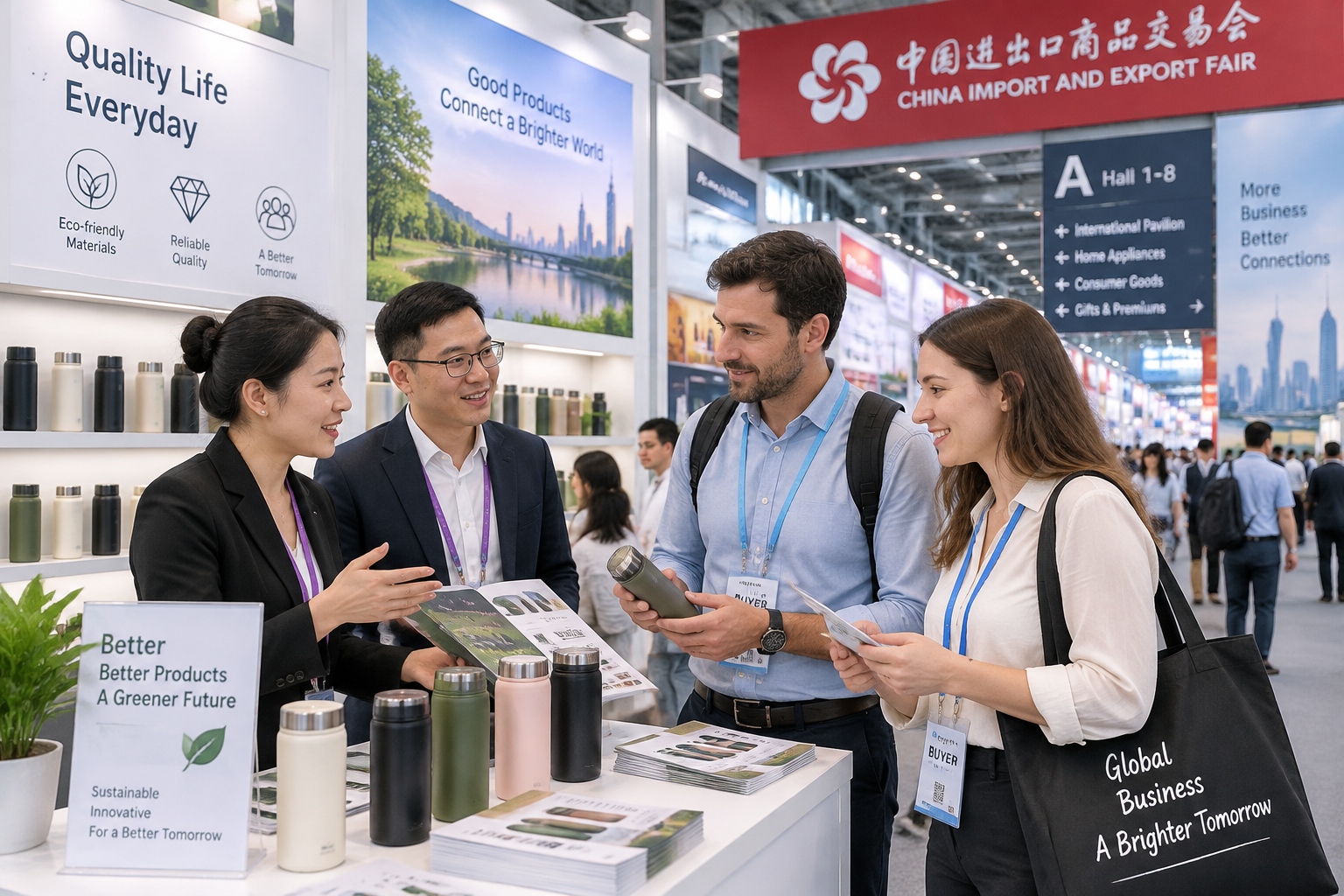
Face-to-face meetings still carry significant weight in China. Major trade fairs like the Canton Fair (held in Guangzhou in spring and autumn) cover a wide range of products. For more specific industries, you’ll want to attend vertical expos, such as the China International Import Expo (CIIE), the Paper & Tissue China Show, or Automechanika Shanghai. But don’t simply show up and collect business cards. Use the event as a scouting mission: walk around, visit potential distributor booths, and assess their professionalism. Ask them which brands they currently distribute and what they can do for you.
2.2 B2B Online Platforms
China’s digital ecosystem is advanced, and B2B platforms are an efficient starting point. Alibaba.com, Global Sources, and Made-in-China.com have tens of thousands of registered importers and distributors. You can filter by region, years of operation, and product category. About 25% of global buyers find new Chinese suppliers through Alibaba.com, but when you are the seller, be careful. Many companies on these platforms are small trading houses, not authorized distributors. Use the platform to build a list, then conduct additional checks.
2.3 Chambers of Commerce and Foreign Trade Associations
The Chinese branches of foreign chambers, such as the European Chamber of Commerce in China, the American Chamber of Commerce in China, and the German Chamber, often host networking events and publish directories of member companies. They can put you in touch with organizations that already represent foreign brands or look for one. In addition, the China Council for the Promotion of International Trade (CCPIT) maintains a database of Chinese companies by industry and province.
2.4 Local Government Investment and Trade Boards
Many provincial and municipal governments have trade promotion offices that actively court foreign investors and sellers. You can contact them at trade fairs or through their websites. These departments can introduce you to local state-linked business associations that may act as a neutral matchmaker. In some municipalities, they even run incubation centers that match you with a local agent for your first two years.
3. Distribution and Agency Models Compared
Before entering into a partnership, decide how you want the Chinese partner to function. Three common models are used:
| Model | How It Works | Main Advantages | Potential Risks |
|---|---|---|---|
| Exclusive Distribution | One appointed distributor has the sole right to sell your products in a designated territory, usually for an agreed period and with committed sales targets. | Provides high motivation, cleaner communication, and cost-efficient channel building. | Danger of over-dependence; if the distributor underperforms, you may have to give up market share. |
| Regional (Multi-Carrier) Agency | You appoint multiple non-exclusive distributors, each covering a specific region or segment. | Broader coverage, quicker market penetration, and less single point failure. | Higher channel management overhead, possible price conflicts, and fragmented support. |
| Deep Distribution / Sales Partnership | You collaborate with a logistics or wholesale group that integrates your product into their catalogue and wholesale network. The partner may not buy the inventory, but they distribute to sub-dealers. | Access to vast existing network, potentially huge volume. | Limited control over final promotions, risk of brand dilution, lower per-unit margin. |
Exclusive distributors are common for high-value capital goods, such as surgical robots or industrial automation. Regional agents are useful for consumer brands that want rapid expansion in provinces. Deep distribution is the best model for mass-market products, but it requires a sophisticated marketing plan to keep clear of competing brands.
4. Drafting a Watertight China Distribution Agreement
Now let’s step into the lawyer’s room. The distribution agreement is more than just a purchase order. It is the rulebook that governs your partnership. Too many foreign companies sign old templates with clauses that are not aligned with Chinese contract law. Here are the critical points to negotiate.
4.1 Territory Definition Number and Channel Boundaries
Define your territory in a way that covers both physical and online sales. For example, don’t just write ‘China’. Identify provinces and key cities. Decide what happens when an online retailer in another province starts selling your product into your designated territory. Many agreements include an ‘online channel clause’ that restricts the distributor from selling through specific platforms without your written consent.
4.2 Sales Target and Performance Evaluation
Set realistic but firm annual/monthly sales targets. Include a target for each major product line. If you rely on designated sales targets, you avoid the ‘best efforts’ ambiguity that has killed many contracts. Make sure the targets are not just for purchase volume, but for sell-through. Examine inventory levels and enforce reporting obligations.
4.3 Exclusivity Conditions and Termination Clause
If you grant exclusive rights, define the exact scope, and the conditions for lifting it. For instance, if the distributor fails to reach 70% of the quota within six months, you can terminate exclusivity or the contract itself. Also state the amount of notice, the possibility of selling remaining stock, and the method of winding down. In Chinese law, a permanent exclusive clause without performance obligations is risky and may be used as a shield by a weak distributor.
4.4 Dispute Resolution and Governing Law
Always include a dispute resolution mechanism. Chinese courts are not always ideal for foreign claimants due to language and procedural complexities. Many foreign suppliers prefer international arbitration, such as HKIAC (Hong Kong) or CIETAC. If you choose Chinese arbitration, it should be reliable. Choose the governing law of your home country or Hong Kong law if you want a more familiar legal base.
5. The Long Game: Building and Maintaining Trust With Your Chinese Partner
According to a survey conducted by the European Chamber, a vast majority of European companies in China agree that a trustworthy local distributor is an indispensable asset, and they underline that relationship management is as important as the commercial contract. This is not a cliché; it is rooted in China’s cultural emphasis on guanxi. Guanxi translates literally as ‘relationships’, but in business it suggests a system of personalized trust and mutual obligation that runs on shared experience, respect, and reciprocity.
Your Chinese distributor may be expected to act as your ‘ears on the ground’. They will need to spend political capital to protect your brand and explain your business to customers. That requires a level of personal investment often surpassing that of Western partners. Here is how you can strengthen the bond.
5.1 Showing Up in Person
Nothing beats a face-to-face meeting. Make at least two visits to China each year. Join your partner’s annual sales meeting or attend an industry conference alongside them. These excursions show that you view your partner as an extension of your team. Take time to visit their offices, warehouses, and some of their key customers. Use the opportunity to identify long-term goals instead of discussing orders.
5.2 Practicing Open Communication and Respect
Chinese business culture values ‘face’ (保留面子). Humiliating or publicly criticizing your partner, even if you think they are wrong, will harm trust. Instead, you can raise private discussions where open feedback is possible. In meetings, emphasize that you both are on the same side. Keep WeChat communication active and respond quickly. When you promise something, deliver on it. This consistent form of reliability creates a strong cultural bond.
5.3 Understanding the Balance Between Personal and Professional Needs
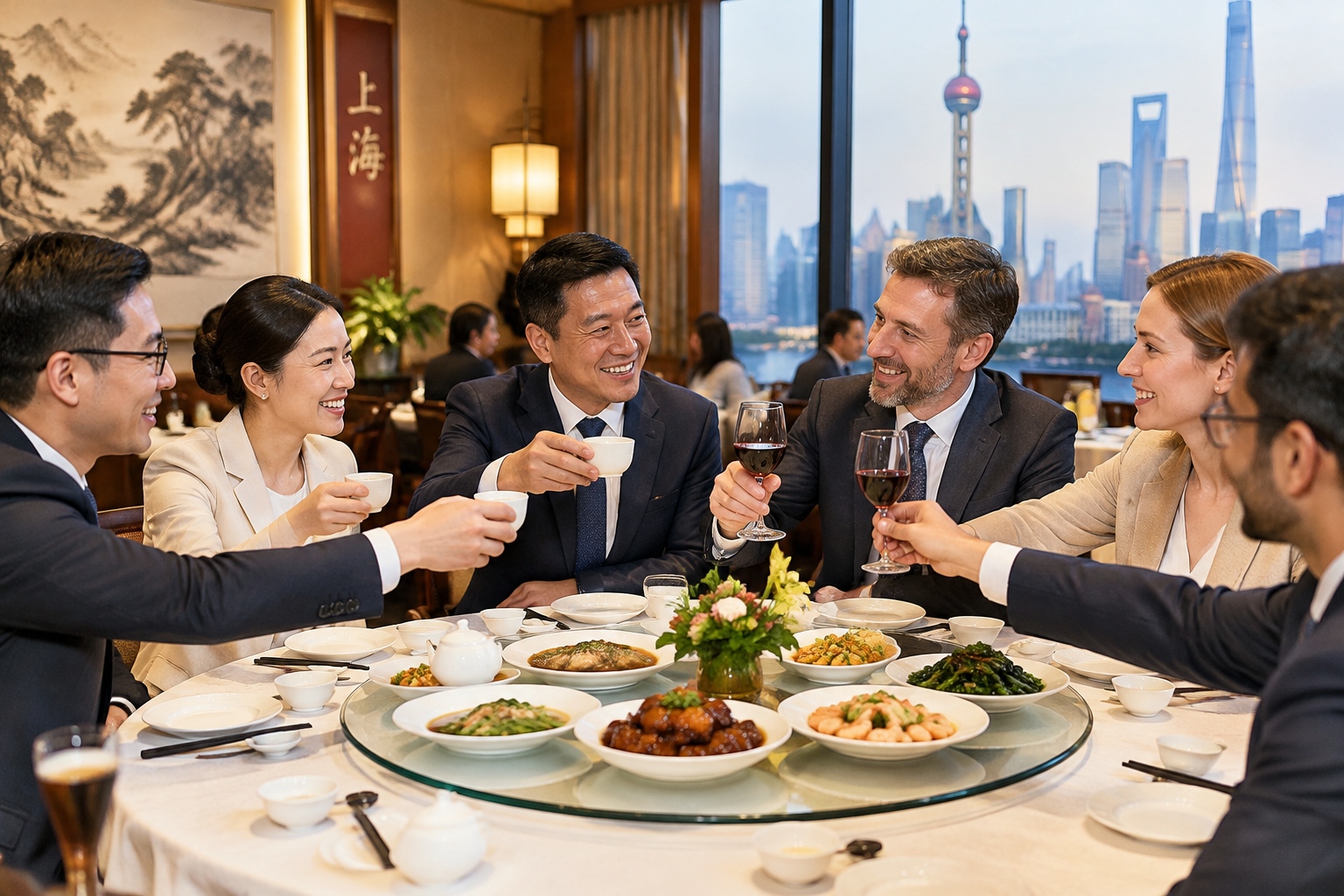
At the early stage of your partnership, your distributor may search for a long-term pact. Through gifts, dinner invitations, and talking about family, they are seeking signals of your personal integrity. Be genuine about your interest in building that relationship. It doesn’t mean you have to throw your compliance policies out of the window. A modest branded gift or attending your partner’s family celebration can work wonders. However, be careful of tipping into bribery. The new anti-bribery laws in China are strict and many Chinese companies have their own ethical codes. So balance warmth with professionalism.
5.4 Navigating Conflict with Honor
If your distributor misses targets or engages in channel conflicts, keep a cool head. Confrontation will often produce defensiveness and silence. Instead, orchestrate a joint ‘performance improvement plan’ detailing inventory, pipeline, and market activities. In severe cases, it may be wise to bring in a local consultant or lawyer to say it for you. If you must exit, deliver the news gently to preserve some residual goodwill; you may need a replacement later, and the old partner may introduce you to one.
Conclusion: The Good Partnership is Local
To enter China without a local distributor is to drive in an unknown city without a map. The right distributor speeds you around potholes and helps you avoid wrong turns.
Follow the six criteria to screen, verify diligently, use the right channels, compare distribution models, and draft your contract to anticipate the future. And when you sign, don’t treat it as an endpoint. Treat it as the beginning of a relationship that thrives on personal visits, honest dialogue, trust-building, and mutual respect over years.
Choosing a Chinese distributor is not a sourcing exercise. It is a marriage, and the effort you invest in the relationship will largely determine your success in the world’s largest manufacturing and consumer market.
Start the discussion at forum.chinacomes.com