

A Suitcase, a Metro Escalator, and a Wrong First Impression
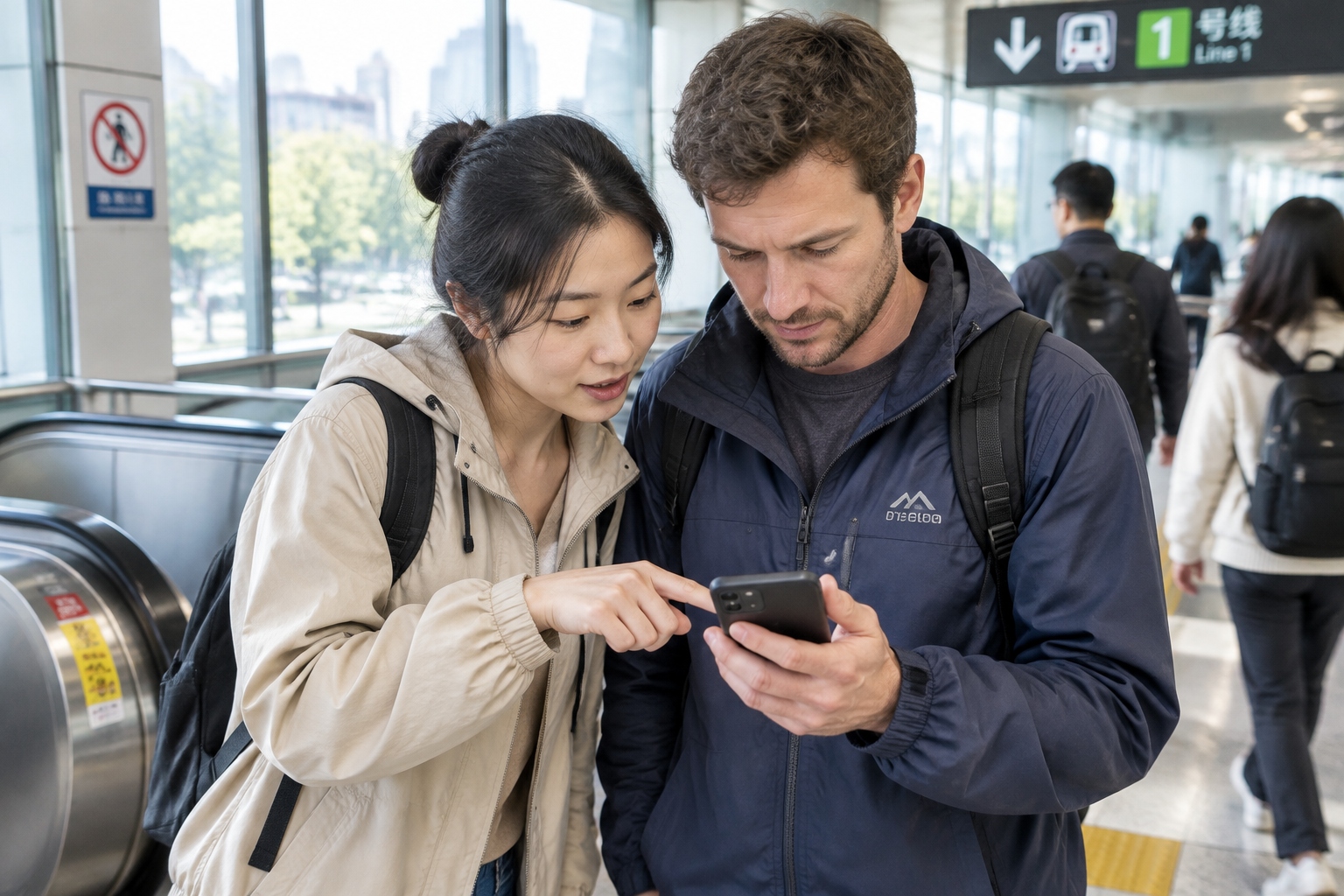
Stand at the top of the escalator in almost any Chinese metro station and you will see a version of this: a foreigner squinting at a phone, turning slowly in a circle, while a river of commuters flows around them without a word. No smile. No eye contact. No “excuse me.”
For a visitor from the United States, Ireland, Brazil or Italy, that silence can feel like a door closing. “Chinese people are cold” is one of the most common first-week judgments foreigners make here — and one of the first ones they take back.
What usually changes their mind is not an argument. It is 30 seconds of a stranger’s time.
The Small-Talk Gap
In much of the English-speaking world, talking to strangers is a social lubricant. You chat with the person in line, you thank the bus driver, you apologize when you bump someone. Silence between strangers carries meaning: it suggests anger, or danger, or at least unfriendliness.
In China, silence between strangers carries no such charge. The default setting is “don’t disturb.” That is a distance norm, not a verdict on you. Visitors who have spent time in Helsinki, Tokyo or Seoul will recognize the feeling immediately.
Chinese social life runs on a distinction English doesn’t have a clean word for: shúrén (熟人) and mòshēngrén (陌生人) — familiar people and strangers. Warmth is concentrated among the familiar: family, classmates, colleagues, the neighbor whose child you watched grow up. With strangers, the default is efficient politeness. But the threshold is thin and easy to cross. Ask one real question and you are often through it.
Help Arrives as Action, Not Conversation
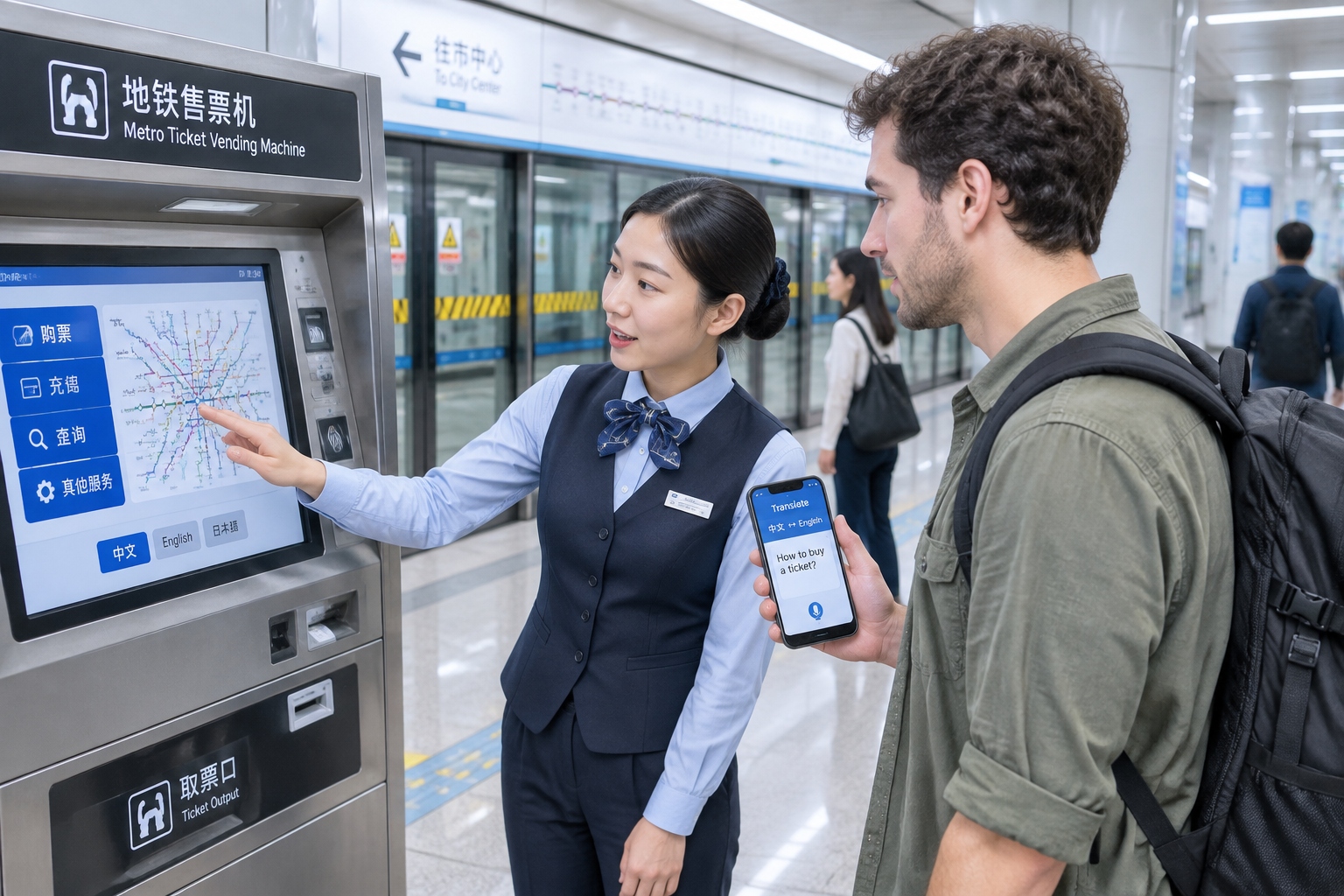
That is the part foreign visitors tend to misread. Chinese friendliness is often physical and practical rather than verbal.
Walk through the night market in Xi’an or Changsha as a foreigner, and the vendor who cannot say a word of English will pull out a calculator, type the price, wave away your attempt to pay for the free sample, and then push an extra skewer into your bag. No chat. Just the transaction, plus more than the transaction.
Order a DiDi in Hangzhou. The driver cannot ask how your day was. He types “you are at the wrong gate, I am coming” into a translation app, drives around the block, and then gets out to walk you to the hotel entrance because he does not trust your map.
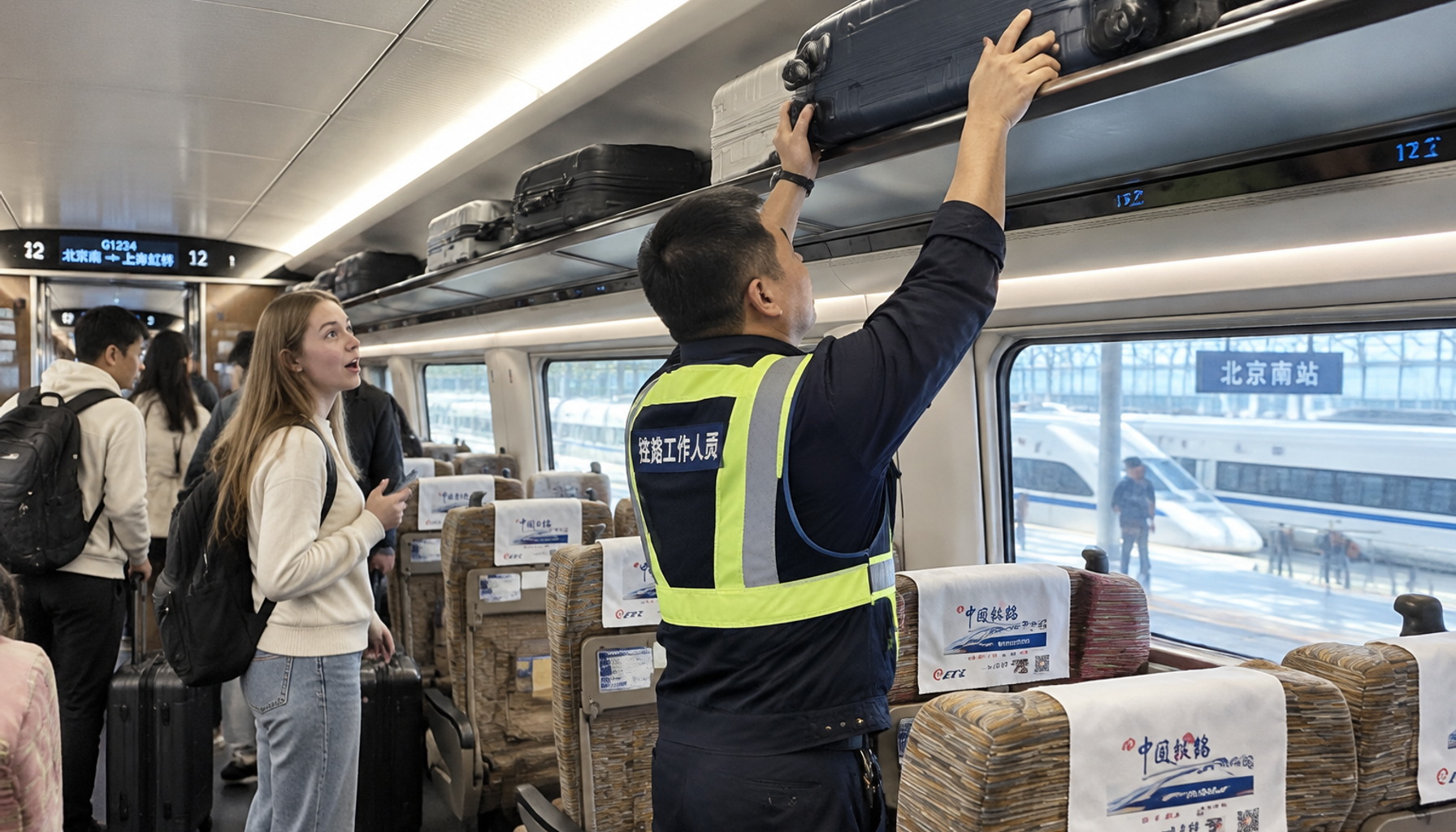
A foreign student hauls a 23-kilo suitcase onto a train at Zhengzhou East Station. Before she can lift it, a man in a construction vest has already put it on the rack and gone back to his seat. He never says anything. This is such a common experience among foreign residents in China that it has become a cliché in their group chats.

There is a financial version of the same instinct. In China, friends fight over the bill — qiǎng zhe mǎi dān, literally “rushing to pay.” It looks aggressive to outsiders the first time. It is the local dialect of affection. A person who insists on paying is saying something that would take a paragraph in English.
The 30 Seconds on the Street
The moments that really rewire a foreigner’s impression usually involve a stranger in trouble.
Someone faints at a bus stop in Chengdu. Within a minute: one person calls 120, a shop owner brings out a plastic stool, two people hold the person’s head off the pavement, and a delivery rider parks his scooter sideways to block traffic. Nobody is in charge. It just assembles.
It is worth being honest about the complication here, because Chinese people themselves argue about it. The 2006 Peng Yu case, in which a man who helped a fallen woman was ordered by a court to pay her compensation, triggered a national debate about whether helping was worth the risk. That debate was real and lasted years. It also produced a fix: Article 184 of China’s Civil Code, in force since 2021, states that a person who voluntarily rescues someone in an emergency and causes harm while doing so bears no civil liability. The legal question was settled in favor of the helper.
What “Cold” Often Really Is
None of this means every Chinese city is a warm bath. It is not.
Rush hour on Beijing’s Line 10 at 8 a.m. is a physical experience, and nobody is smiling. Shop assistants in high-end malls can be indifferent in ways that would end a career in Chicago. Customer service in a state-run office can be a test of patience.
Regional differences matter enormously. The Northeast — Harbin, Shenyang, Changchun — is loud, direct and fast to invite you to dinner. Shanghai is more reserved, Guangzhou more transactional, Chengdu more relaxed. A foreigner who spends a week in one city and generalizes about 1.4 billion people has made the same mistake as someone who visits New York and concludes that Americans are rude.
Some of what foreigners read as coldness is actually curiosity with bad manners: a stranger photographing your child on the metro, or asking your salary, or staring. It is uncomfortable. It is not hostility.
The Neighborhood Layer Most Visitors Never See
There is one form of Chinese social organization that surprises foreigners even more than the street moments, and it sits right outside the apartment gate.
Most urban neighborhoods have a residents’ committee (jūwěihuì) plus a management office — a system that looks a bit like a homeowner association and a bit like a small city hall. Its staff and red-vested volunteers organize vaccination drives, run cheap meal programs for elderly residents who live alone, mediate noise complaints, and knock on doors after a typhoon warning. During the pandemic, they were the people delivering groceries to sealed buildings.
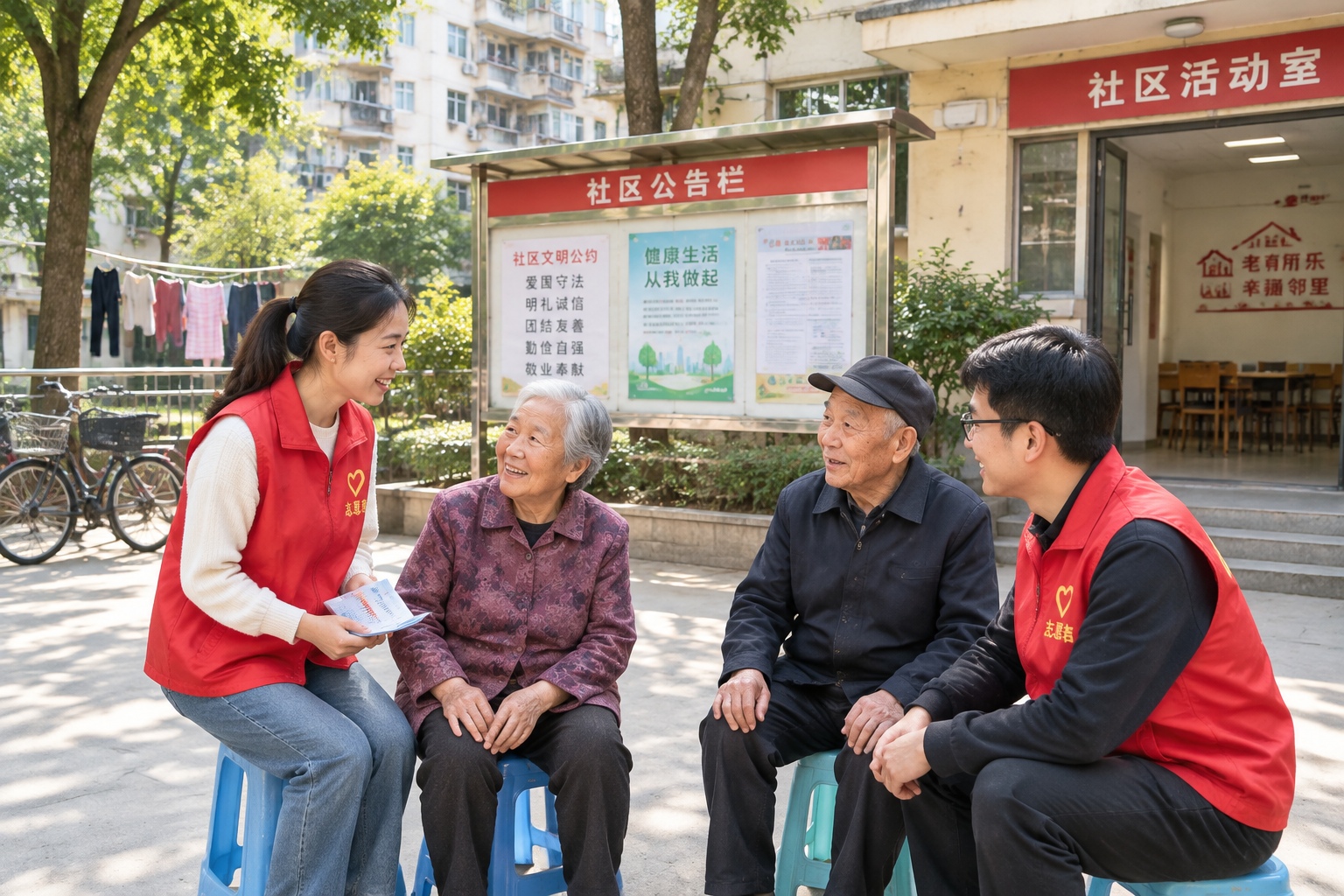
Foreigners who have lived in both worlds often say the closest Western equivalent is an HOA — except that an HOA protects property values, and this one is also expected to keep an 82-year-old widow fed. If something in the neighborhood breaks and nobody fixes it, residents can call 12345, a single city hotline that routes complaints to the responsible department and tracks whether it was answered. Many cities publicly report response rates. It is not perfect, but it is a real channel, and residents use it.
Why This Conversation Is Louder Now
More foreigners are having these experiences than at any point since 2019, largely because getting in got easier. China has been expanding unilateral visa-free entry to citizens of dozens of countries, and in December 2024 extended its visa-free transit window from 144 hours to 240 hours — ten days, enough to leave the airport and actually walk around. Foreign entries reached roughly 27 million in 2024, close to double the previous year, according to official immigration figures.
That means millions of first impressions are being formed right now, in metro stations and night markets, by people who arrived expecting one thing.
Young Chinese are also more likely to start the conversation. English proficiency is uneven, but a phone with a translation app removes most of the barrier, and people under 35 are usually happy to spend five minutes being a tour guide.
If You’re the One Arriving
A few practical things help.
Ask young people first — students, riders, anyone holding a bubble tea. They are the most likely to stop and the least likely to be annoyed. Metro station staff sit behind glass windows and are paid to help; show them the Chinese characters for your destination. Screenshot addresses in Chinese before you go anywhere. If someone helps you, they will probably refuse money; a photo together or a packet of snacks from your country lands better.
And expect help to arrive as an action rather than a greeting. Someone will pick up your bag, point, walk you 200 meters out of their way, and disappear before you finish saying thank you. That is not coldness that ended. It is warmth that was there the whole time, in a grammar you had not learned yet.
Start the discussion at forum.chinacomes.com