


An 11:40 p.m. Walk in Chengdu
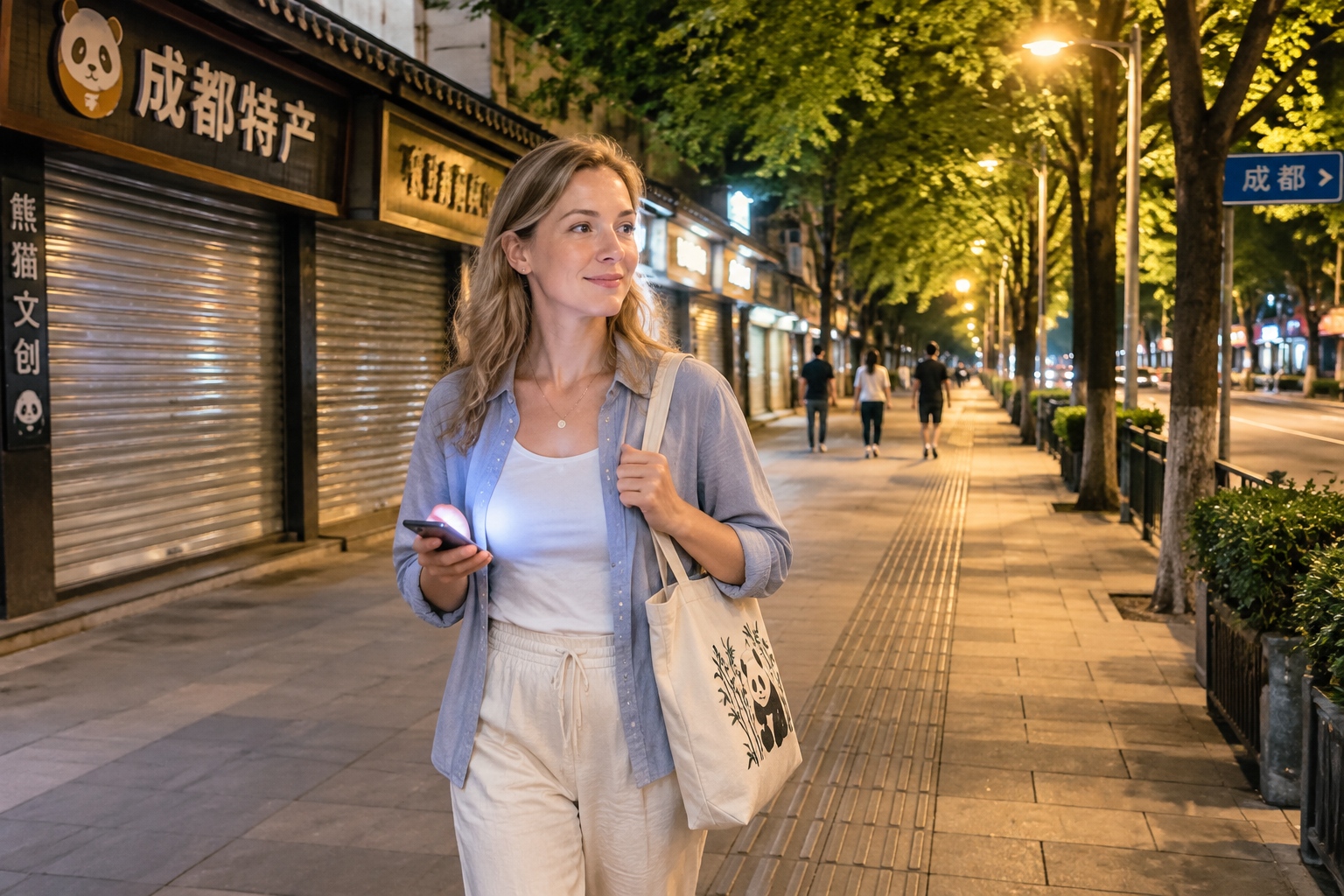
It is 11:40 on a Tuesday night in Chengdu, and a woman in her thirties — visiting from Portland, Oregon — is walking back to her hotel with her phone in her hand. Not gripped inside a pocket, not tucked into a zipped bag. In her hand, screen lit, thumb moving. Her tote bag hangs open on her shoulder.
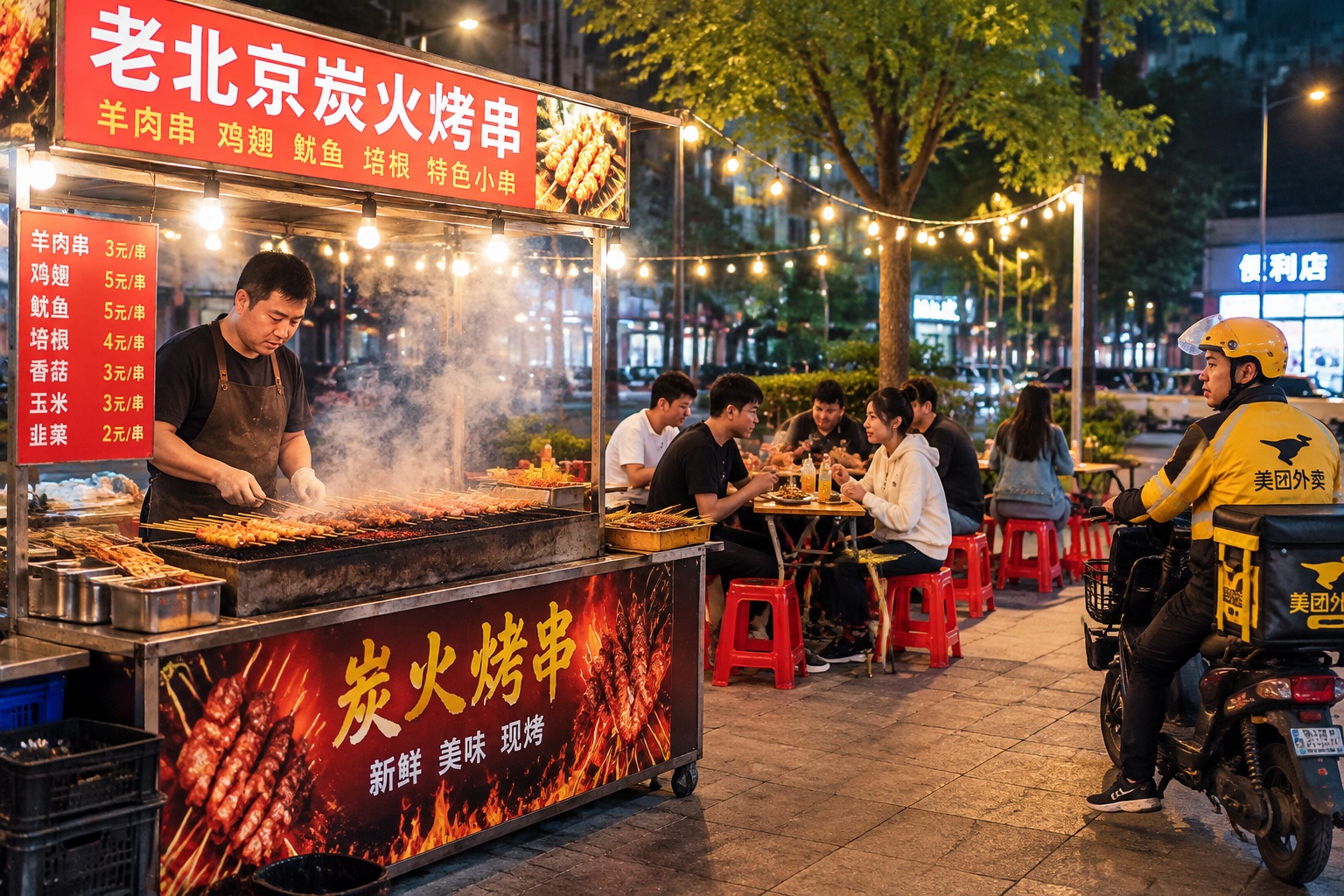
She stops at a convenience store, buys a bottle of water, and sits on a plastic stool outside to drink it. Two doors down, a barbecue stall is still full. Across the street, a man walks a small dog. A delivery rider in a blue jacket checks his phone at the curb.
Three weeks earlier, this same woman would not have done this at 8 p.m. in her own neighborhood.
Ask American visitors what surprised them most about China and you expect to hear about bullet trains or paying with a phone. Many say something else: that they stopped checking behind them. That is a feeling, not a statistic — but it has reasons, and those reasons say as much about American cities as they do about Chinese ones.
The Numbers Behind the Feeling
Start with the hard data. United Nations figures put China’s intentional homicide rate at roughly 0.5 per 100,000 people. The U.S. rate is more than ten times higher. On Gallup’s Law and Order Index — which simply asks people whether they feel safe walking alone at night where they live — China has ranked near the top of the world for years, generally ahead of the United States and most of Western Europe.
For this particular question, that index matters more than the murder rate, because it measures felt safety, not only recorded crime. And felt safety has its own architecture.
Follow the Store Lights
The urbanist Jane Jacobs argued in the 1960s that a safe street is a busy street — one with eyes on it, people who are present because they have a reason to be. Chinese cities, often without meaning to, are built almost perfectly for that.
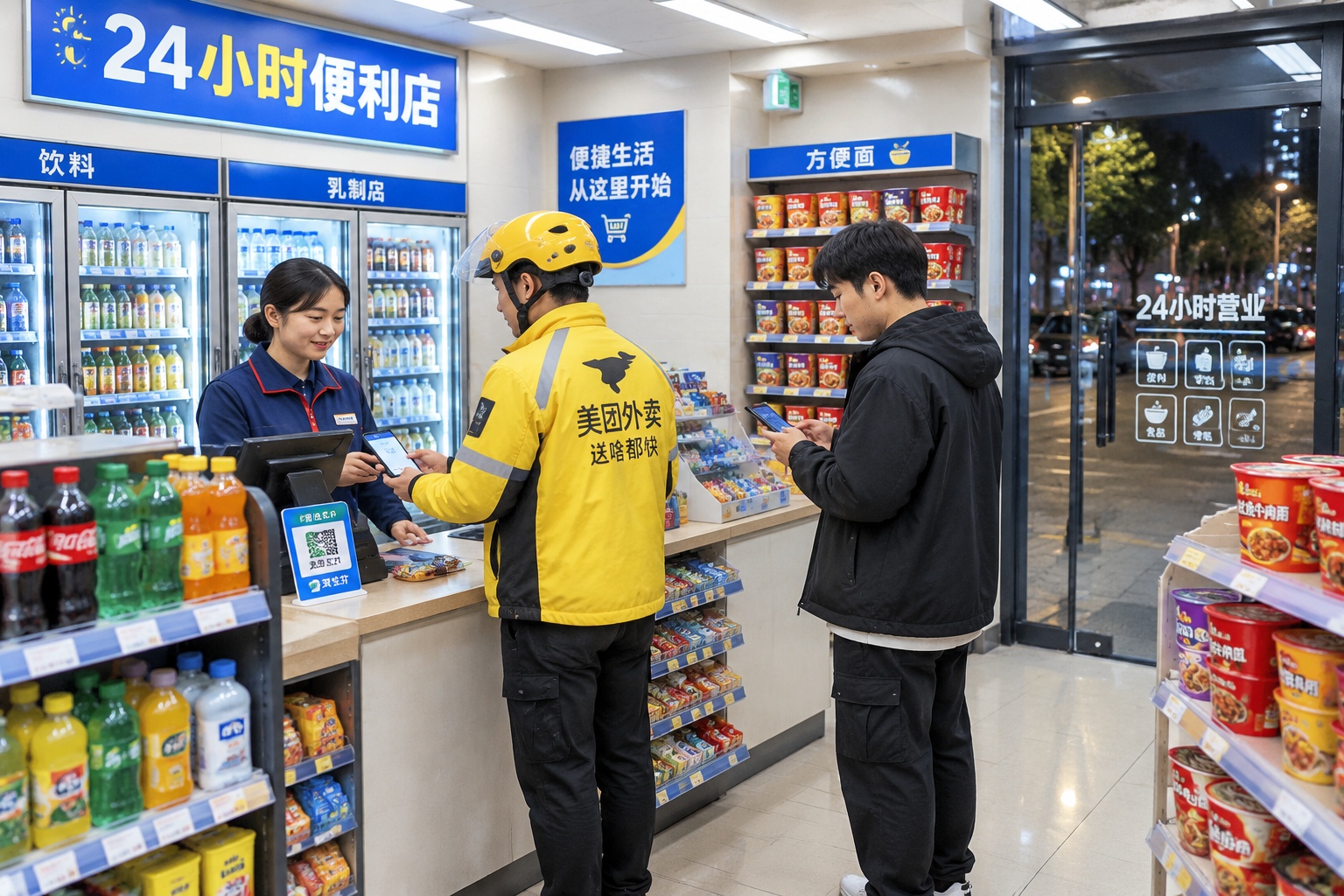
Most residential districts here are mixed-use at street level. Walk through almost any neighborhood in Shanghai, Wuhan, or Xi’an after dark and you will find ground-floor shops still open: convenience stores, noodle places, fruit stands, pharmacies, a barber shop with one customer left. Chains like 7-Eleven, Lawson and FamilyMart run around the clock in many locations, alongside local shops that simply stay open as long as somebody is buying.
Then there is density. Apartment towers put thousands of people within a two-minute walk of a single intersection. An empty street is dangerous; a crowded one at midnight is largely self-policing. In many American downtowns, by contrast, zoning separates offices from housing, so the sidewalks empty out at 6 p.m. Emptiness is what makes people nervous — and nervousness is contagious.
Why Nobody Carries Cash Anymore
There is a less romantic factor: cashless payment. Alipay and WeChat Pay handle the overwhelming majority of everyday transactions, from a 3-yuan bottle of water to a hospital bill. For a would-be street robber, that changes the math. There is little cash in pockets, and a stolen phone is locked, tracked, and nearly impossible to resell through legitimate channels.
This is not a moral story about technology. It is an economic one. When the expected payoff of street crime collapses, so does the crime. Theft has not disappeared; it has moved online, into phone scams, fake investment apps and impersonation calls. Chinese police run loud public campaigns against telecom fraud, banks ask customers what a large transfer is for, and payment apps now delay suspicious transactions. The street got quieter. The phone got more dangerous.
Cameras, and a Trade-off Americans Find Uncomfortable
Foreign visitors also notice the cameras. Estimates of how many surveillance cameras operate in China run into the hundreds of millions, and they are visible — on poles, at intersections, at the entrance of nearly every residential compound.
Most Americans I have talked to find this genuinely unsettling, and it would be dishonest to smooth that over. Many Chinese city dwellers describe the same cameras as background noise, the way New Yorkers describe subway turnstiles. That gap is real, and it reflects two different answers to one shared question: how much privacy are you willing to trade for how much order? You can disagree with China’s answer. It is harder to pretend the question is not a real one.
The cameras are not the whole picture, either. Street-level policing here is more embedded than in the U.S. Neighborhood police stations sit inside residential areas. Compounds have staffed gates. During busy periods, volunteers in red armbands — often retirees — stand at intersections and metro exits. When something happens, the response usually starts with a person standing 20 meters away, not with a 911 call.
What Foreigners Can’t Map Onto Anything at Home
Many American readers, seeing Chinese neighborhood organization for the first time, decide it is like an HOA that also does social work. The comparison half-fits. A residential compound usually has property management (物业) handling repairs, trash and gates. It also has a residents’ committee (居委会) and, in many cities, grid workers (网格员) responsible for a few hundred households each.
Their job is mundane and constant: knowing who lives where, mediating noise complaints between floors, checking on an elderly resident nobody has seen for two days, registering new tenants, organizing fire drills. It is part administration, part social work, part neighborhood watch. Most American cities have no clean equivalent, which is why visitors find it both impressive and slightly hard to read.
What Is Still Not Safe
None of this makes China a country where nothing bad happens, and visitors who assume otherwise get into trouble.
Phone snatching still happens, especially near markets and crowded metro exits. E-bikes and their batteries get stolen, as anyone who has lived in a Chinese city can confirm. Nightlife districts in any big city carry the usual risks, drink spiking among them. Women I know describe unwanted attention, staring and the occasional persistent stranger, particularly on public transport. Being safe from violence and being treated as an equal are two different things, and China’s record on the second is mixed.
Foreign visitors also face rules that have nothing to do with crime: carry your passport, register your address with local police within 24 hours of moving, and remember that only some hotels are licensed to host foreigners. Being stopped and asked for ID by police — rare, but possible — is routine here rather than a sign that something has gone wrong.
Guns Are the Missing Variable
For Americans, one part of the explanation is so obvious it gets overlooked. Private gun ownership in China is essentially nonexistent outside tightly regulated hunting and sporting contexts. A large share of American fear of the street is fear of a stranger with a gun — in an argument, in a road-rage incident, in a robbery. Remove that variable and the emotional math of a dark sidewalk changes completely.
Add dense housing, round-the-clock retail, cashless payment, visible policing and a legal culture that prioritizes order, and you have the full picture. No single cause explains the feeling. But this is what a society looks like when it has chosen a particular bundle of trade-offs — less privacy, more rules, less tolerance for disorder — and then built its cities around that choice.
What Travelers Take Home
Back on that Chengdu sidewalk, the woman finishes her water and walks the last six blocks to her hotel. She passes a group of teenagers filming a dance video, an older man doing slow stretches against a railing, and a woman in an apron closing up a noodle shop at midnight.
“It’s not that nothing bad happens here,” she told me later. “It’s that the city assumes you’re allowed to be out.”
That assumption is the real story. It is not about neon or skyscrapers or a future-city postcard. It is about whether an ordinary person, at an ordinary hour, is treated as someone who belongs on the street. If you come from a city where the sidewalks empty at 8 p.m., that is the part of China that stays with you.
Start the discussion at forum.chinacomes.com