


It Starts with a Mark
Late one night in Beijing, 26-year-old graphic designer Lin Wei finishes reading a novel by a little-known Japanese author. She opens the Douban app on her phone, taps “Read,” gives it four stars, and writes a short review: “The loneliness in this book feels like a quiet snowfall.” Within an hour, someone replies: “I’ve been looking for someone who feels the same way. Can I recommend you another book?”

That simple exchange is the starting point for millions of similar connections on Douban, a platform that launched in 2005 and has become China’s most trusted repository for book, film, and music recommendations. Unlike the algorithmic feeds of Weibo or Douyin, Douban is built around user-generated lists, curated groups, and the simple act of “marking” what you’ve consumed. It’s a place where taste precedes identity.
What Is Douban, Really?
To outsiders, Douban might look like a hybrid of Goodreads, IMDb, and Reddit. But for Chinese users, it’s something more intimate. At its core, Douban is a database: you can create a “shelf” of books you’ve read, films you’ve seen, and music you’ve listened to. Each item has a rating, user reviews, and discussion threads. Then there are Douban Groups, thousands of interest-based communities where people obsess over everything from French New Wave cinema to urban gardening in Shanghai. Finally, Douban Events lets users organize offline meetups—film screenings, book swaps, photography walks.
This ecosystem is especially appealing to what Chinese call wenyi qingnian (文艺青年, “literary youth”)—people who value cultural taste, self-expression, and genuine connection over commercial hype. On Douban, you don’t need a large following to be heard; you just need a thoughtful review or a well-curated list.
Finding Your People in a Group
Zhang Chen, a 24-year-old graduate student in Shanghai, first discovered Douban Groups when she was looking for people who loved the same obscure British TV series. “I joined a group called ‘British Drama Addicts,’ and someone posted a thread inviting members to a weekend screening of Pride and Prejudice (1995). I went, and met five other people who became close friends. We still meet every month to watch something together.”
Groups on Douban range from massive (over a million members in “These Books Changed My Life”) to hyper-specific (“People Who Love Reading About Lonely Lighthouses” has just 300 members). The beauty is that every niche has a home. You can find a group for fans of a single author, for people who collect vintage film posters, or for those who want to discuss the philosophical implications of Blade Runner.
What makes these groups different from a typical online forum is the offline dimension. Many groups encourage real-world meetups through Douban Events. A book club might meet in a coffee shop; a film group might rent a small screening room. These events are often organized by ordinary members, not professional curators.
The Trust Factor: Why Douban Ratings Matter
Douban’s rating system—a simple 1-to-5 star scale—has become a cultural reference in China. A film that scores above 9.0 is almost guaranteed to be a masterpiece; anything below 6.0 is often considered a waste of time. But what makes Douban ratings more trustworthy than, say, a commercial review site is the community’s resistance to manipulation. Users are known to be brutally honest, and “water army” (paid fake reviews) are often called out in comment threads.
This trust extends to book and music recommendations. When a new novel is released, many readers wait for Douban scores before deciding to buy. Independent musicians rely on Douban to build a fanbase, because a high rating can lead to offline gigs and festival invitations.
A Gentle Rebellion Against Algorithmic Noise
In an era of endless scrolling and clickbait, Douban feels like a quiet annex. There are no short videos fighting for attention, no ads disguised as content. The experience is deliberately low-tech: text-heavy, slow, reflective. For many users, it’s a digital sanctuary where they can be their true selves—thoughtful, curious, and unashamed of loving something obscure.
“I don’t have to explain why I love a 1950s French film to my friends on WeChat,” says Lin Wei. “But on Douban, I find people who already get it. That’s priceless.”
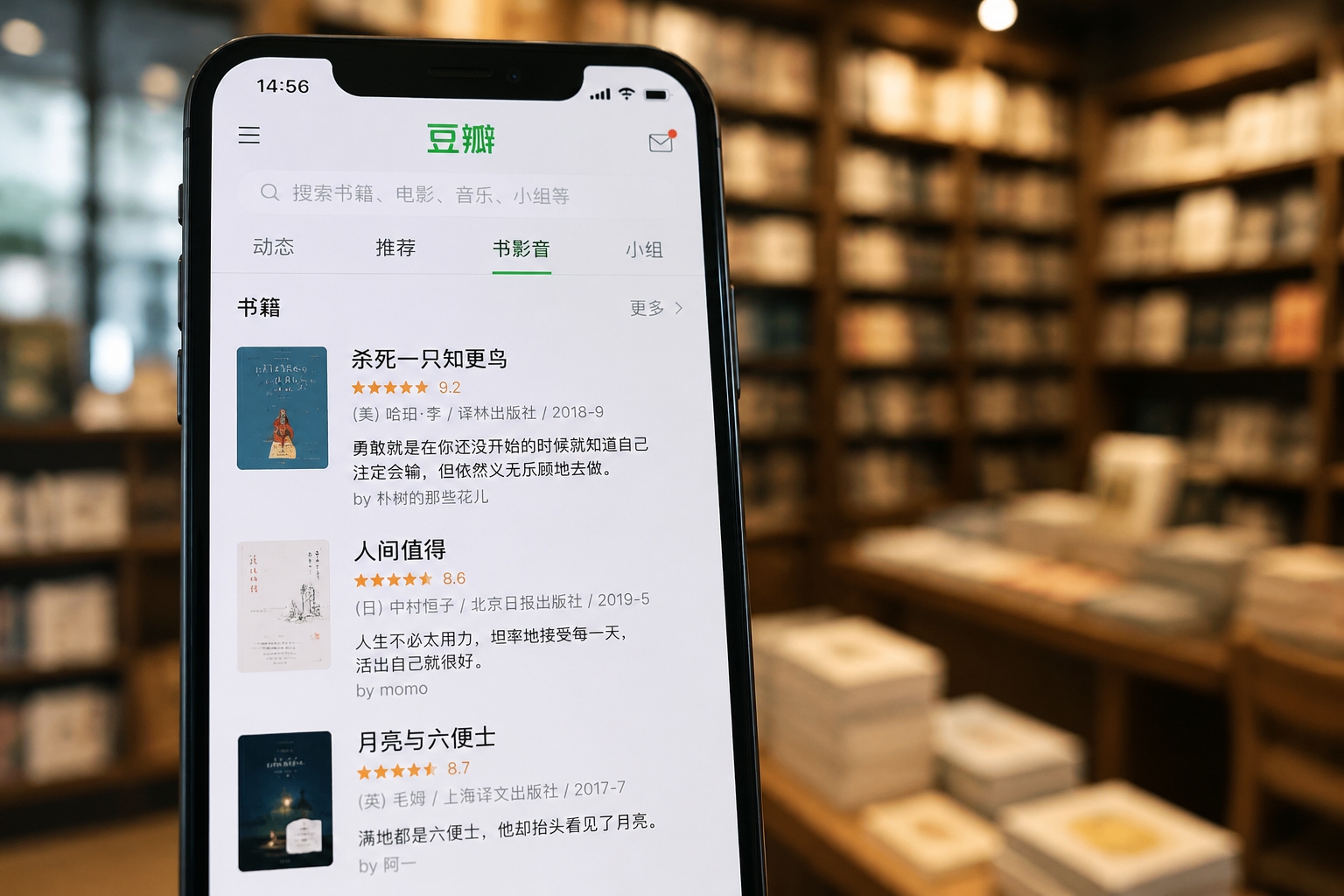
How to Start Your Own Douban Journey
If you’re new to Douban, here’s a local’s guide to making the most of it:
- Create your profile: Start by marking books you’ve read and films you’ve seen. Your profile will generate personalized recommendations.
- Join a group: Search for your favorite interest—be it “Sci-Fi Book Club” or “Japanese Cinema Lovers.” Introduce yourself in a thread; you’ll likely get a warm welcome.
- Write reviews: Even a short paragraph carries weight. Thoughtful reviews get likes and comments, helping you connect with fellow enthusiasts.
- Use Douban Events: Check the “Events” tab for offline meetups near you. Or, if you’re feeling bold, organize one yourself. Many first-time organizers start with a simple book swap.
- Trust the ratings: Before buying a book or watching a film, glance at the Douban score. It’s often more reliable than any trailer.
Conclusion
Douban is not just a website; it’s a cultural phenomenon that has quietly shaped how a generation of Chinese intellectuals discover, share, and connect. In a country where digital life is often loud and transactional, Douban offers a rare space for silence and sincerity. And on any given night, in a small apartment in Beijing or a coffee shop in Chengdu, someone is reading a review, marking a film, and finding a kindred spirit—one star at a time.
Start the discussion at forum.chinacomes.com